Chandbali Earrings Gold: Metallurgy, Weight & Structural Guide
Explore the technical metallurgy, weight distribution, and structural engineering of gold chandbali earrings for secure, comfortable, and lasting wear.

The Anatomy of a Gold Chandbali: Beyond the Crescent Shape
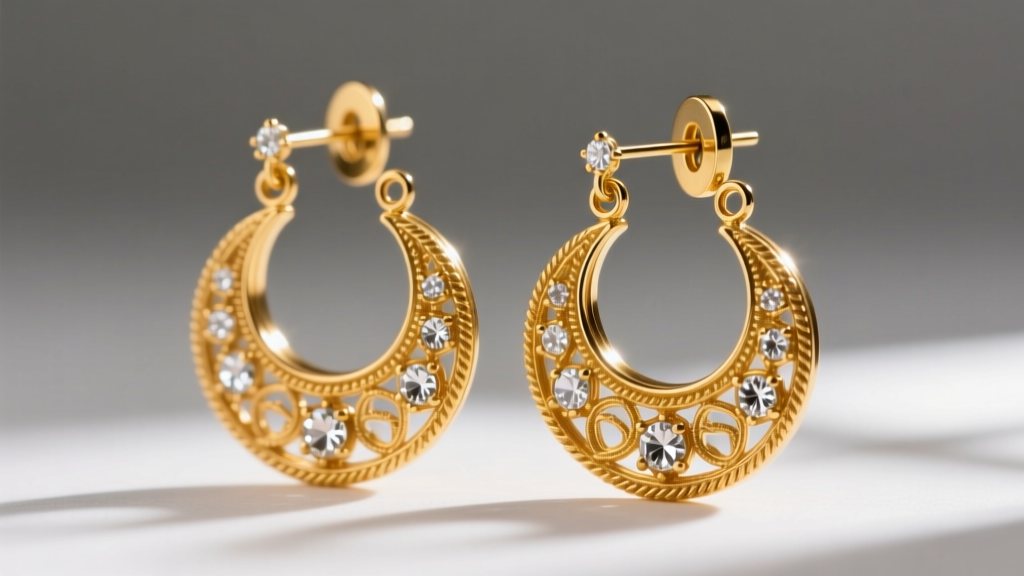
When evaluating chandbali earrings gold designs, most consumers focus solely on the aesthetic appeal of the crescent moon silhouette and the brilliance of the gemstone inlays. However, from a metallurgical and structural engineering perspective, the chandbali is a complex cantilever system. The asymmetric distribution of mass—where the heavy lower pendulum exerts continuous torque on the upper ear wire—creates unique mechanical stresses that dictate the longevity and comfort of the earring.
The fundamental anatomy of a traditional chandbali consists of three primary structural zones: the suspension mechanism (hook or post), the crescent frame (the 'chand'), and the lower dangling elements (jhumkis or gemstone clusters). In high-quality pieces, the crescent frame is not merely a decorative border; it acts as a load-bearing arch. Hand-fabricated frames, created by rolling gold ingots into sheets and cutting the crescent shape, exhibit a continuous grain structure that provides superior yield strength compared to cast frames. Lost-wax casting, while excellent for intricate 3D filigree, can introduce microscopic porosity if not executed under high-pressure centrifugal force, potentially leading to stress fractures at the apex of the crescent over time.
Frame Engineering and Solder Joint Integrity
The connection point between the main crescent frame and the upper suspension loop is the most critical failure point in chandbali earrings gold designs. Traditional torch soldering using a lower-karat gold solder (often 14k or 18k to lower the melting point) can create a brittle intermetallic compound if overheated. Modern master jewelers utilize laser welding for these joints, which offers pinpoint heat control and uses the exact same karat gold as the parent metal, resulting in a seamless, high-tensile joint that resists the shearing forces generated by the swinging motion of the lower pendants.
Gold Purity and Alloy Metallurgy in Chandbali Designs
The karat weight of the gold used in chandbali earrings fundamentally alters both the structural integrity and the color profile of the piece. While 22-karat gold is the cultural standard for Indian bridal jewelry due to its rich, warm yellow hue and high intrinsic value, its mechanical properties present significant engineering challenges for heavy, complex earrings.
Pure gold (24k) has a Mohs hardness of just 2.5 to 3, making it highly malleable but structurally inadequate for load-bearing components. To achieve 22k gold (91.6% purity), alloy metals such as copper, silver, and zinc are introduced. The specific ratio of these alloying elements dictates the tensile strength of the final metal. For instance, a higher copper content increases the yield strength and introduces a rose tint, while a higher silver content maintains the yellow hue but results in a softer alloy. For the structural hooks and the main load-bearing arches of heavy chandbalis, many contemporary structural jewelers recommend 18k gold (75% purity), which offers significantly higher tensile strength and resistance to plastic deformation.
| Gold Karat | Purity % | Primary Alloy Metals | Tensile Strength | Best Structural Use in Chandbali |
|---|---|---|---|---|
| 22K (916) | 91.6% | Silver, Copper, Zinc | Low (Soft) | Intricate cast details, lightweight frames, traditional bridal sets |
| 18K (750) | 75.0% | Copper, Silver, Palladium | High | Structural hooks, heavy gemstone settings, daily-wear contemporary frames |
| 14K (585) | 58.3% | Copper, Nickel, Zinc | Very High | Minimalist structural components, secure clutch backs, tension settings |
According to data from the World Gold Council, the addition of just 8.4% copper and silver to a 22k alloy can double its yield strength compared to pure gold, yet it remains susceptible to bending under the dynamic loads of a 30-gram chandbali swinging during movement.
Weight Distribution and Lobe Biomechanics
The human earlobe is composed primarily of adipose tissue and collagen, lacking the rigid cartilage found in the upper ear. A standard, healthy earlobe can comfortably support static loads of 7 to 10 grams. However, chandbali earrings gold designs frequently range from 15 grams to over 45 grams per earring. When an earring exceeds 12 grams, the dynamic torque generated by simple head movements can cause micro-tears in the collagen matrix of the piercing fistula, leading to irreversible lobe elongation and sagging.
Calculating Grammage and Choosing the Right Backing
To mitigate biomechanical stress, the backing mechanism must distribute the clamping force across a wider surface area of the ear's posterior. Standard push-backs (butterfly clutches) concentrate force on a 2mm pin, which is entirely inadequate for heavy chandbalis. Expert jewelers employ specific mechanical backings based on the exact grammage of the piece:
- Omega Clip Backings (15g - 25g): Utilizes a spring-loaded hinge that clamps against the earlobe with approximately 2.5 to 3.5 Newtons of force, distributing pressure across a 10mm curved pad.
- Screw Backings (10g - 20g): Features a threaded post and a screw-on clutch that allows the wearer to manually adjust the compression tension, preventing the earring from drooping forward.
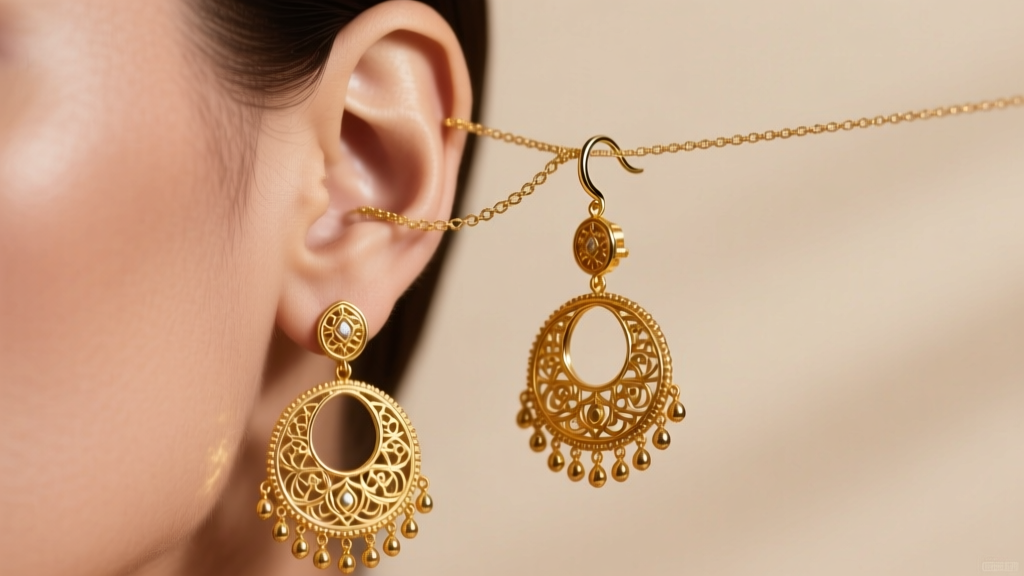
- Hair Chains / Sahaara (25g+): For ultra-heavy bridal chandbalis, a secondary gold chain connects the upper hook of the earring to the hair, bypassing the earlobe entirely and transferring the static load to the scalp.
Authenticating Gold Chandbali Earrings: Hallmarks and Failure Modes
Given the high precious metal content and complex labor involved, authenticating chandbali earrings gold requires a systematic inspection of hallmarks and structural joints. In India, the Bureau of Indian Standards (BIS) mandates the BIS 916 hallmark for 22k gold, which guarantees the metal composition. However, a hallmark stamped on the lower pendant does not guarantee the purity of the ear wire, as components are often manufactured separately.
Expert Insight: Always inspect the ear wire and the primary solder joints for independent hallmark stamps or laser-engraved purity marks. A common failure mode in counterfeit or sub-standard chandbalis is the use of 22k gold for the visible crescent frame, paired with a base-metal or low-karat ear wire to reduce manufacturing costs and increase structural rigidity without disclosure.
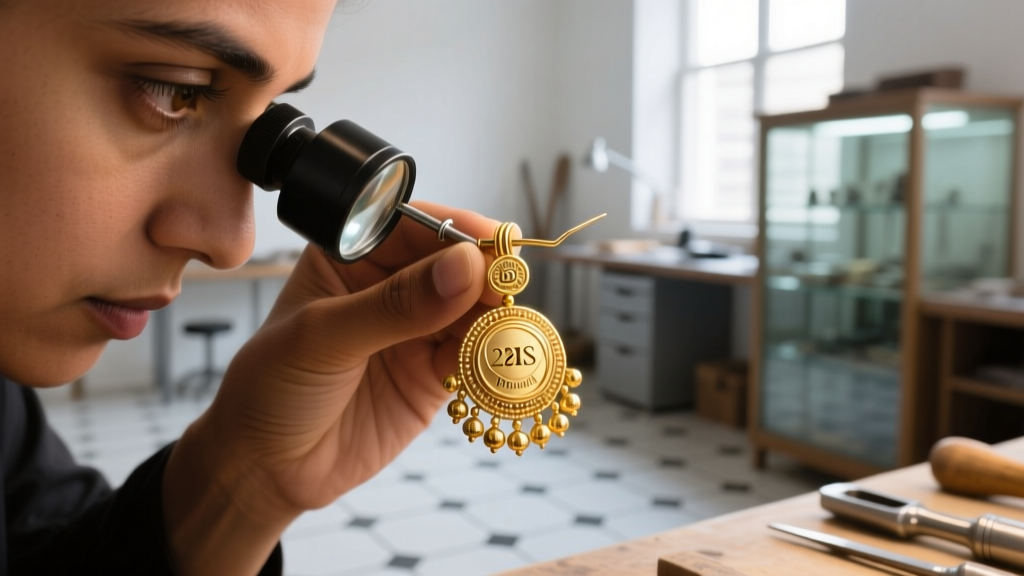
Another critical authentication step involves examining the gemstone settings. Traditional Kundan and Jadau settings utilize 24k gold foil (pure gold) because of its extreme malleability, allowing artisans to burnish the metal tightly around uncut polki diamonds without the use of prongs. If a jeweler claims a piece is traditional Jadau but the settings show rigid prongs or the foil appears dull and resistant to shaping, it is likely a modern cast imitation using silver foil or synthetic adhesives.
Maintenance and Structural Troubleshooting
The maintenance of chandbali earrings gold requires a nuanced understanding of both the metal alloy and the setting techniques. The Gemological Institute of America (GIA) strictly advises against the use of ultrasonic cleaners for any jewelry featuring Kundan, Jadau, or Meenakari (enamel) work. The high-frequency acoustic cavitation generated by ultrasonic baths will instantly destroy the delicate 24k gold foil matrix holding the gemstones and can cause micro-fractures in glass enamel.
For routine maintenance, use a non-ionic surfactant (such as a mild, ammonia-free dish soap) diluted in lukewarm distilled water. Agitate the solution gently with a soft-bristled sable brush, focusing on the posterior of the crescent frame where skin oils and cosmetic residues accumulate. For structural troubleshooting, if the ear wire exhibits plastic deformation (permanent bending), it must be annealed and re-drawn by a professional jeweler to restore its crystalline grain structure; simply bending it back by hand will cause work-hardening and eventual brittle fracture.


