Cherub Earrings Value Guide 2026: Budget vs Fine Jewelry
Evaluate cherub earrings across budget, vermeil, and fine jewelry tiers. Learn material grades, structural risks, and true value in our 2026 guide.

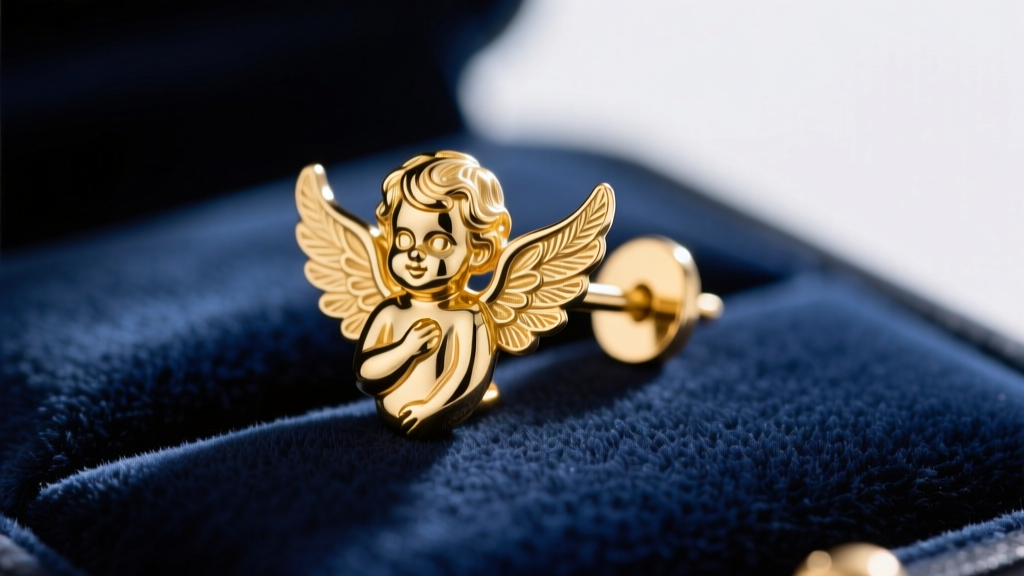
The 2026 Baroque Resurgence: Why Cherub Earrings Dominate
The jewelry market in 2026 has seen a massive pivot toward neo-baroque and renaissance-inspired motifs, with cherub earrings sitting at the absolute epicenter of this trend. Featuring intricate 3D castings of putti, angel wings, and classical profiles, these pieces are highly sought after for their romantic, vintage appeal. However, the sheer complexity of casting a 3D cherub figure creates a massive disparity in quality across the market. A pair of cherub earrings can cost anywhere from $18 at a fast-fashion retailer to over $2,500 at a fine jewelry boutique. But what exactly are you paying for?
As a domain expert in earring construction and metallurgy, I have evaluated dozens of cherub earring designs across the market to determine their true value. This guide breaks down the material grades, structural failure points, and pricing tiers to help you make an informed investment, whether you are buying for occasional wear or seeking a generational heirloom.
The Price vs. Value Matrix: Decoding the Tiers
When assessing cherub earrings, the price tag is rarely just about the brand name; it is intrinsically tied to the raw material costs, casting methods, and post-soldering techniques. Below is the definitive 2026 value matrix for cherub earrings.
| Tier | Primary Material | 2026 Price Range | Expected Lifespan | Best Use Case |
|---|---|---|---|---|
| Budget | Brass/Copper + Flash Plating | $15 - $45 | 6 - 12 Months | Costume, occasional wear |
| Mid-Tier | Gold Vermeil (925 Base) | $65 - $150 | 2 - 5 Years | Daily wear, sensitive ears |
| Fine | Solid 14k or 18k Gold | $450 - $2,500+ | Generational | Heirloom, investment, daily |
While budget options offer immediate aesthetic gratification, they suffer from rapid oxidation and structural fragility. Mid-tier vermeil offers the best balance of affordability and skin safety, while fine jewelry tiers provide unparalleled longevity and detail retention.
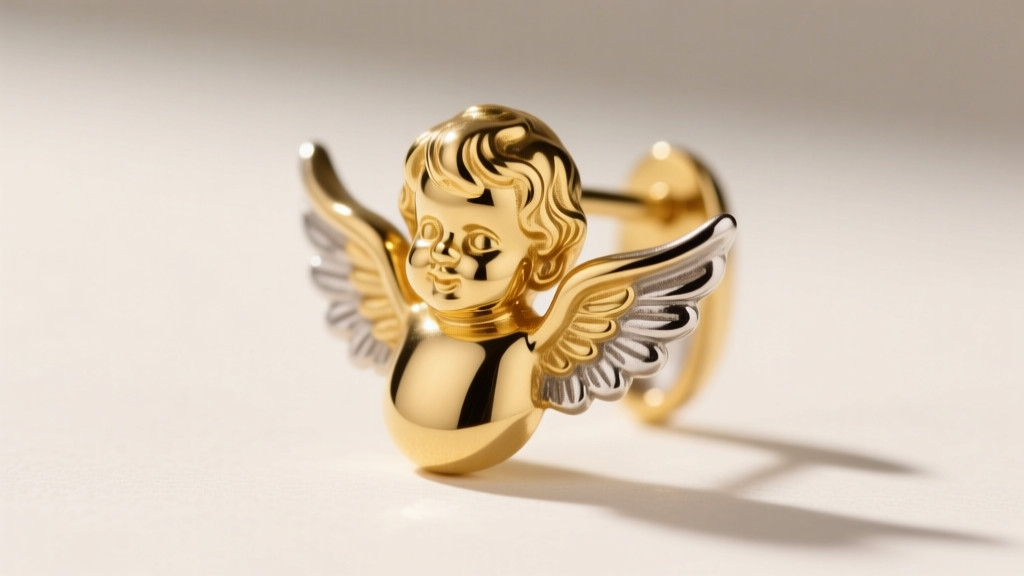
Material Metallurgy: What the FTC and GIA Say
To accurately assess value, you must understand the metallurgy behind the gold finishes. The Federal Trade Commission Jewelry Guides strictly regulate how jewelers can label their metals, which is crucial when shopping for vermeil cherub earrings.
Gold Vermeil vs. Standard Plating
Many brands market their pieces as 'gold plated,' but there is a vast difference between standard plating and true vermeil. Standard flash plating uses a microscopic layer of gold (usually 0.1 to 0.5 microns) over a base metal like brass. This wears off in months, especially on the high-friction edges of cherub wings. True gold vermeil, by FTC definition, must feature a sterling silver (925) base coated with a minimum of 2.5 microns of gold (at least 10k purity). When buying mid-tier cherub earrings, always verify the micron thickness; anything less than 2.5 microns will not survive daily wear.
Solid Gold: The 14k vs. 18k Debate
According to the Gemological Institute of America (GIA), pure 24k gold is far too soft for intricate jewelry. For highly detailed 3D castings like cherub faces and feathered wings, 14k gold (58.3% pure gold) is actually superior to 18k gold. The higher alloy content in 14k gold provides the tensile strength necessary to hold the fine details of the casting over decades of wear, whereas 18k gold can slowly warp or lose definition in the wing tips due to its softer nature.
Structural Engineering: The 'Heavy Head' Failure Mode
The most critical, yet frequently overlooked, aspect of evaluating cherub earrings is structural integrity. Cherub motifs are inherently dense and heavy. A standard 3D cherub head or full-body putti casting can weigh between 2.5 and 4.5 grams per earring. This creates a specific point of failure known in the industry as the 'heavy head' problem.
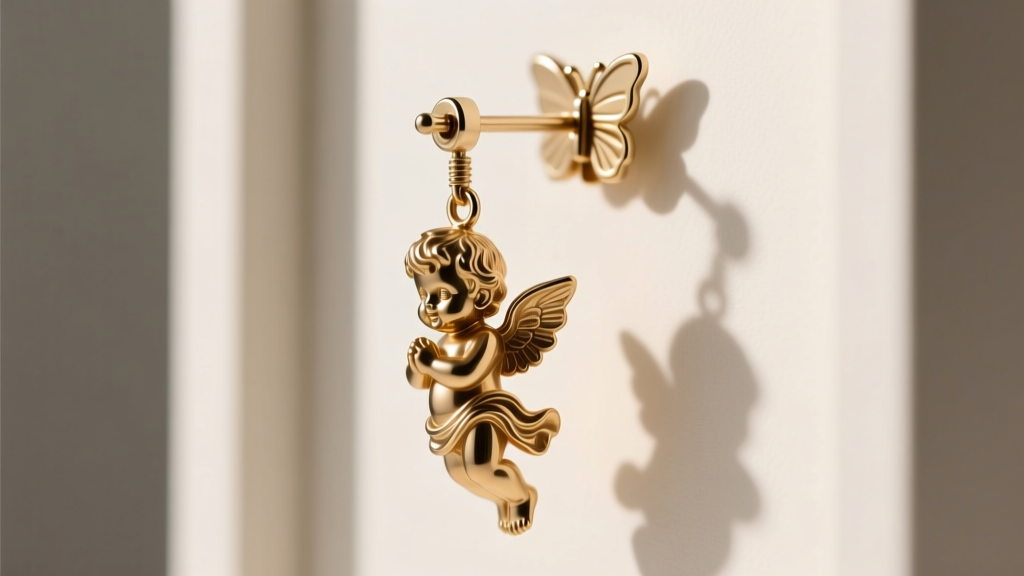
Post Gauge and Soldering Techniques
Budget manufacturers often attach heavy 3D cherub heads to standard 20-gauge (0.81mm) posts using cheap silver solder. The moment the earring catches on a sweater or hair, the post snaps cleanly off the back of the cherub. When investing in mid-to-high-tier cherub earrings, inspect the post thickness and the weld. High-quality jewelers will use an 18-gauge (1.0mm) or even 16-gauge (1.2mm) post to support the weight, and they will utilize laser welding rather than traditional torch soldering. Laser welding penetrates the metal deeply, creating a bond that is often stronger than the casting itself.
The 'Cherub Droop' and Friction Backs
Because of the front-heavy weight distribution, cherub studs frequently suffer from the 'droop,' where the earring tilts forward, stretching the earlobe and hiding the intricate face of the cherub. To combat this, discard the standard metal butterfly backs that come with most earrings. Instead, invest in jumbo silicone friction backs or secure screw-backs. The wider surface area of a jumbo silicone back distributes the weight across a larger portion of the earlobe, keeping the cherub upright and comfortable for all-day wear.
The Jewel Style Radar Value Framework
How do you decide which tier is right for you? Use this actionable decision framework based on your wearing habits and budget.
- The Trend Follower (Budget Tier): If you only plan to wear cherub earrings for a specific event, a summer festival, or a seasonal photo shoot, a $30 brass-based pair is perfectly acceptable. Just be sure to coat the posts in clear nail polish to prevent copper-induced contact dermatitis, and store them in an airtight bag with anti-tarnish strips to delay the inevitable oxidation.
- The Everyday Romantic (Mid-Tier): If you want to wear your cherub earrings to the office or on weekends without fear of turning your earlobes green, gold vermeil is your sweet spot. Look for brands that explicitly state a 925 sterling silver base and a minimum of 2.5 microns of 14k or 18k gold. Expect to pay around $85 to $120 for a well-crafted pair.
- The Heirloom Collector (Fine Tier): If you view jewelry as an asset and want a piece that can be passed down, solid 14k gold is the ultimate choice. You are paying for the permanent color, the hypoallergenic properties, and the laser-welded structural integrity. A solid 14k gold cherub stud will typically start around $450 and scale up based on the inclusion of pavé diamonds or gemstone accents.
Final Verdict on Cherub Earring Investments
The 2026 market offers a cherub earring for every budget, but true value is found in the intersection of material transparency and structural engineering. By demanding proper micron thicknesses on vermeil pieces, insisting on thicker gauge posts for heavy 3D castings, and understanding the hardness benefits of 14k gold, you can confidently navigate the market. Do not just pay for the angelic aesthetic; pay for the craftsmanship that ensures your cherubs will keep their wings intact for years to come.


