How to Choose the Right Earrings on a Strict Budget: Value Guide
Learn how to choose the right earrings on a budget. We break down metal grades, pricing tiers, and value hacks for studs, hoops, and cartilage pieces.

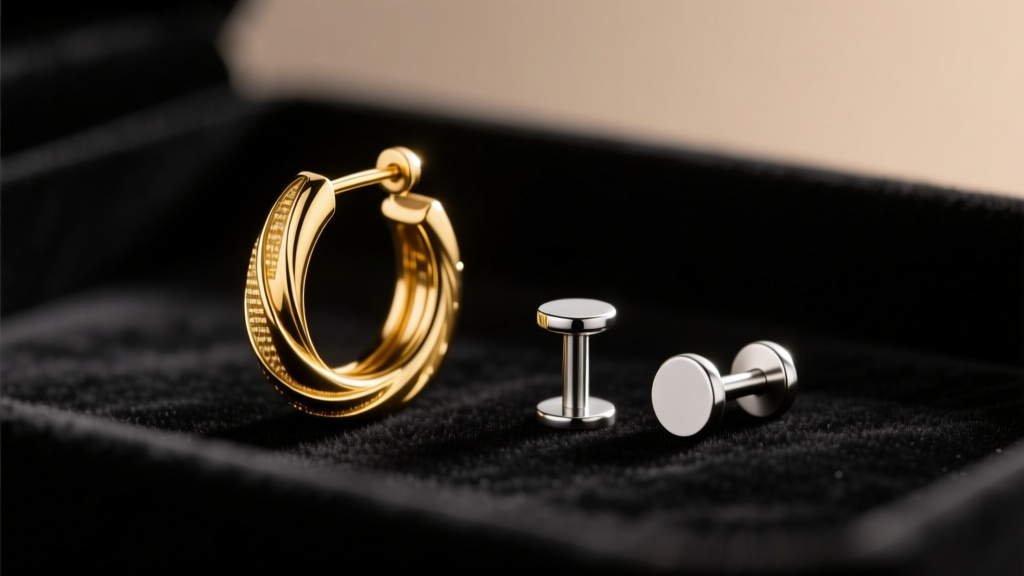
Navigating the jewelry market in 2026 can feel like walking through a minefield of deceptive marketing and inflated prices. When you are trying to build a curated ear stack without spending thousands, understanding the intersection of material science and pricing is critical. Many shoppers focus solely on the upfront price tag, only to end up with a drawer full of tarnished brass and green earlobes. In this comprehensive value assessment, we break down exactly how to choose the right earrings that offer the best return on investment, balancing upfront costs with longevity, biocompatibility, and cost-per-wear.
The Real Cost of Earrings: Decoding Metal Grades and Pricing
When learning how to choose the right earrings for your collection, understanding the base metal is your first line of defense against wasted money. The jewelry industry uses a variety of terms that sound luxurious but often mask poor construction. Furthermore, cheap base metals like brass and copper react with the natural pH and sweat of your skin, causing the dreaded 'green ear' effect and triggering contact dermatitis in those with nickel sensitivities. Here is the unvarnished truth about what you are actually paying for.
Gold Plated vs. Gold Vermeil vs. Gold-Filled
Gold Plated: This is the most common culprit behind budget jewelry regrets. A base metal (usually brass or copper) is flash-plated with a microscopic layer of gold (less than 0.5 microns). It is cheap to produce, but the gold layer will rub off within weeks of daily wear, exposing the reactive base metal to your skin.
Gold Vermeil: According to the Federal Trade Commission (FTC) Jewelry Guides, vermeil must have a sterling silver (925) base and a gold layer of at least 2.5 microns. While a massive step up from standard plating, sterling silver is a soft metal that can tarnish and warp over time if the gold layer eventually wears thin.
Gold-Filled: This is the ultimate budget hacker's secret. Gold-filled jewelry features a brass core that is mechanically bonded with a thick layer of solid gold. By law, the gold must constitute at least 5% of the total weight of the item (equivalent to 10-20 microns of gold). It offers the exact look and hypoallergenic properties of solid 14k gold at a fraction of the cost, lasting for years without flaking.
2026 Material Value Comparison Chart
| Material | Base Metal | Gold Thickness | Avg. Price (Hoops) | Lifespan | Best Use Case |
|---|---|---|---|---|---|
| Gold Plated | Brass/Copper | <0.5 microns | $15 - $30 | 3-6 months | Occasional statement pieces |
| Gold Vermeil | Sterling Silver | 2.5+ microns | $45 - $85 | 1-3 years | Everyday dangles and drops |
| Gold-Filled | Brass | 5% total weight | $55 - $110 | 5-10+ years | Everyday studs and huggies |
| Solid 14k Gold | Gold Alloy | Solid | $150 - $400+ | Lifetime | Heirloom pieces, sleepers |
How to Choose the Right Earrings for Your Piercing Type
Anatomy dictates budget. The physical location of your piercing completely changes the structural and material requirements of the jewelry, which directly impacts the price you should be willing to pay.
Standard Lobe Piercings (20G - 18G)
Standard lobe piercings are typically done at 20-gauge (0.81mm) or 18-gauge (1.0mm). Because the lobe is fleshy, well-healed, and less prone to severe rejection, you have the flexibility to wear high-quality gold-filled or vermeil earrings. This is where you can safely stretch your budget, opting for intricate gold-filled huggies or vermeil drop earrings without risking your health.
Cartilage Piercings (16G - 18G)
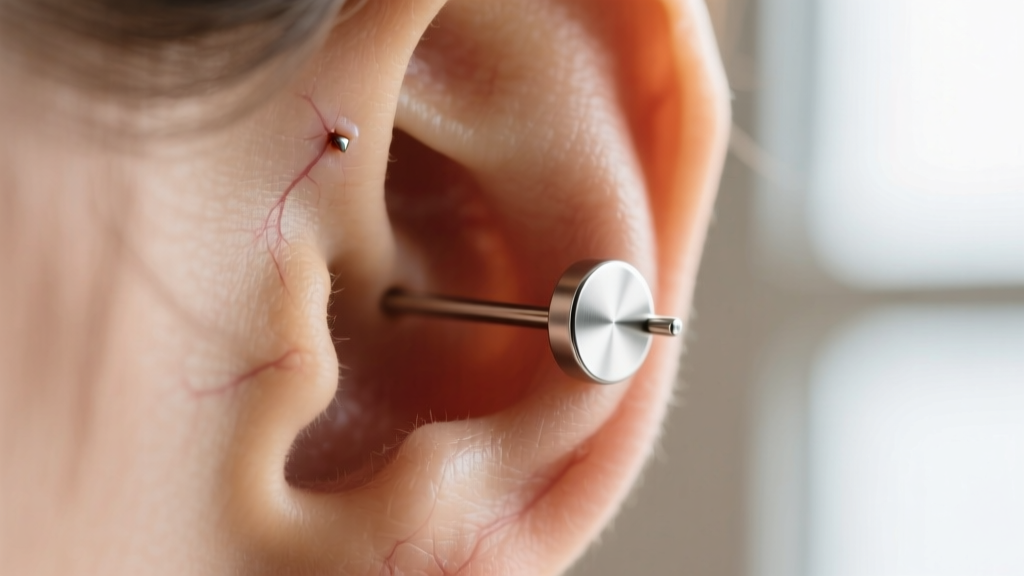
Cartilage piercings (helix, conch, tragus, flat) are a completely different beast. They are typically pierced at 16-gauge (1.2mm) or 18-gauge (1.0mm). Cartilage is avascular (lacks direct blood supply), meaning it heals slowly and is highly susceptible to irritation bumps and infection. If you are wondering how to choose the right earrings for a fresh or sensitive cartilage piercing, the answer is always implant-grade titanium.
'The true cost of cheap jewelry isn't just the price tag; it's the medical cost and downtime of treating an infected, migrating cartilage piercing.'
The Association of Professional Piercers (APP) strictly recommends ASTM F136 implant-grade titanium for fresh and problematic piercings. It is completely nickel-free and polished to a mirror finish, preventing bacteria from harboring in microscopic scratches. While a high-quality titanium flat-back labret might cost $40-$70 upfront, it is a non-negotiable investment for cartilage health. Buying a $12 mystery-metal hoop for your helix is a false economy that will almost certainly result in an irritation bump.
Smart Shopping Framework: Maximizing Cost-Per-Wear (CPW)
To truly assess value, you must abandon the 'upfront price' mentality and adopt the Cost-Per-Wear (CPW) framework. The formula is simple: Total Cost ÷ Number of Wears = CPW.
- The Fast-Fashion Trap: You buy a pair of $18 gold-plated hoop earrings from a mall kiosk. They tarnish and turn your ears green after 4 wears. Your CPW is $4.50 per wear.
- The Gold-Filled Sweet Spot: You invest $65 in a pair of 14k gold-filled seamless hoops. You wear them 4 days a week for two years (approx. 400 wears). Your CPW is $0.16 per wear.
- The Solid Gold Investment: You spend $250 on solid 14k gold sleeper hoops. You wear them every single night and day for five years (1,800+ wears). Your CPW drops to $0.13 per wear.
As the data shows, spending more upfront on durable materials like gold-filled or solid gold actually results in a drastically lower long-term cost. Beyond personal finance, this framework also highlights the environmental impact of disposable jewelry. The fast-fashion jewelry model relies on planned obsolescence, contributing heavily to landfill waste. Investing in durable metals is a more sustainable choice for the eco-conscious consumer. When evaluating your budget, always project how often you intend to wear the piece.
Where to Allocate Your Budget: Studs vs. Statement Pieces
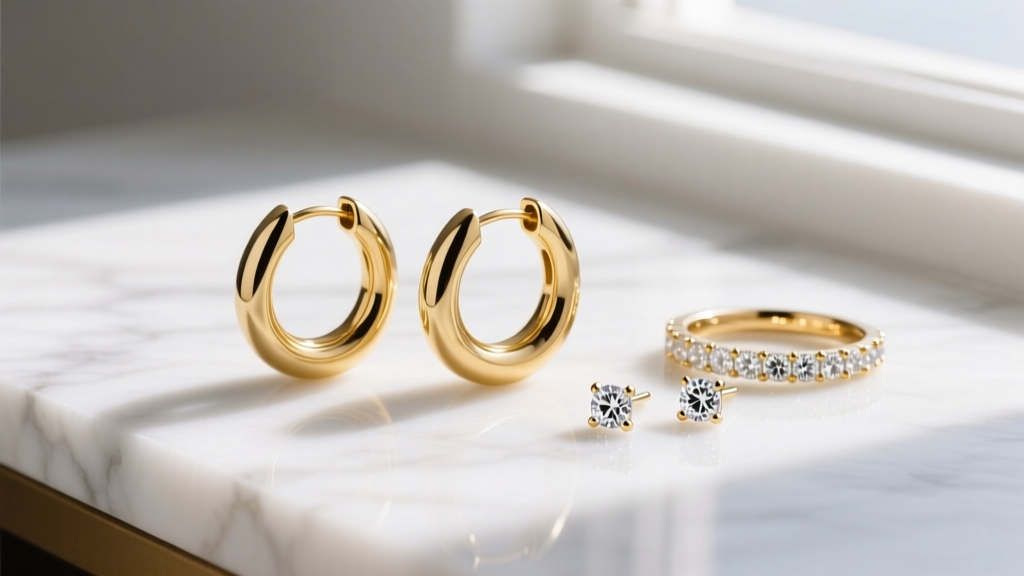
A smart ear curation strategy involves strategically allocating your budget based on the jewelry's function and wear frequency. Not every piece in your collection needs to be solid gold, but your foundational pieces absolutely do.
Splurge: Everyday Studs, Huggies, and Sleepers
Items that you never take off—like your baseline lobe studs, small huggie hoops, and cartilage flat-backs—endure the most abuse. They are exposed to shower water, shampoo, friction from pillows, and constant handling. Allocate 70% of your jewelry budget to these foundational pieces, opting for solid 14k gold or premium gold-filled metals. Pay attention to the mechanics, too. A gold-filled 'clicker' hoop with a secure hinge and clasp will cost more upfront than a seamless hoop that you have to bend open and closed, but the clicker mechanism prevents loss and stretching of the piercing hole over time.
Save: Statement Dangles, Ear Cuffs, and Seasonal Drops
Statement pieces, oversized dangles, and intricate ear cuffs are typically worn for a few hours at a time for specific events or outfits. Because they are not slept in and are removed before showering, the metal is subjected to significantly less wear and tear. This is where you can safely allocate the remaining 30% of your budget. High-quality gold vermeil or even thick gold-plated brass is perfectly acceptable here, allowing you to experiment with bold 2026 trends without making a massive financial commitment.
Final Verdict: Building a Budget-Friendly Ear Curation
Mastering how to choose the right earrings on a budget is not about finding the absolute cheapest option; it is about becoming an educated consumer who understands material science and cost-per-wear. By prioritizing implant-grade titanium for cartilage, leveraging gold-filled metals for everyday lobe wear, and reserving cheaper vermeil for occasional statement pieces, you can build a luxurious, biocompatible ear stack that lasts for years. Stop funding the fast-fashion jewelry cycle and start investing in pieces that actually respect your piercings and your wallet.


