How to Choose Simple Dangle Earrings: A Step-by-Step Guide
Learn how to choose and style simple dangle earrings. This step-by-step guide covers face shapes, gauge sizes, clasp types, and lobe health.

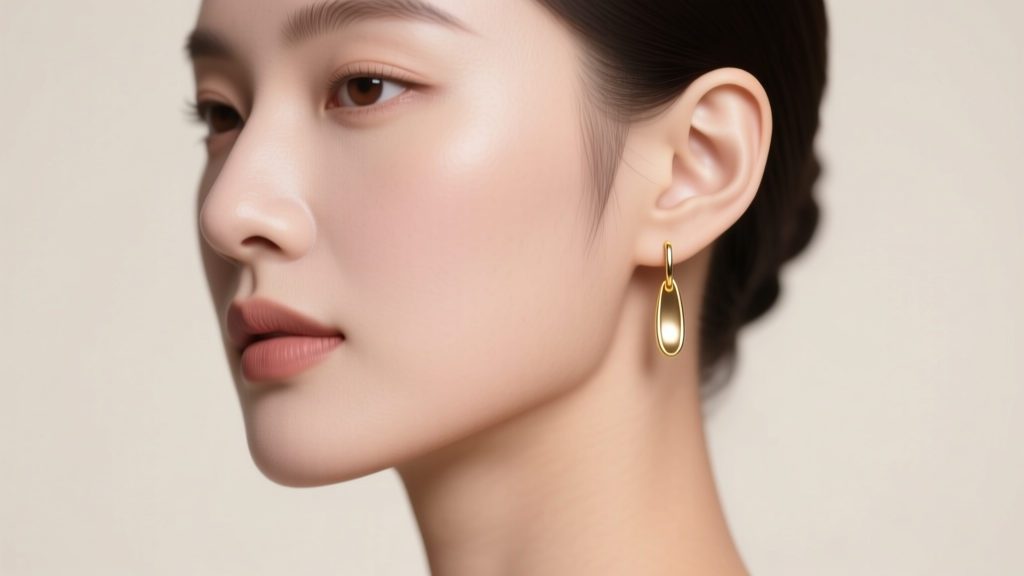
The Anatomy of the Perfect Drop
Simple dangle earrings occupy a unique space in jewelry design: they offer the kinetic movement and elegance of drop earrings without the overwhelming weight or ornate complexity of chandelier styles. By definition, a simple dangle hangs below the earlobe, typically featuring a single focal point or a streamlined geometric silhouette. However, choosing the right pair requires more than just picking a design you like. The physics of how the earring interacts with your earlobe, the metallurgy of the wire, and the proportion relative to your facial structure all dictate whether the earring will elevate your look or cause physical discomfort.
This step-by-step guide breaks down the exact specifications, measurements, and styling frameworks you need to select simple dangle earrings that are both aesthetically flattering and anatomically safe for long-term wear.
Step 1: Match the Drop Length to Your Face Shape
The primary visual function of a dangle earring is to manipulate the perceived proportions of the lower half of your face. Because simple dangles lack the horizontal volume of hoops or clusters, they act as vertical lines that draw the eye downward. To use this to your advantage, you must map the drop length to your specific jawline and cheekbone structure.
| Face Shape | Ideal Drop Length | Recommended Silhouette | Styles to Avoid |
|---|---|---|---|
| Round | 2.0 to 3.0 inches | Linear bars, narrow teardrops | Short, wide geometric shapes |
| Square | 1.5 to 2.5 inches | Curved wires, soft oval drops | Sharp, angular squares or rectangles |
| Heart | 1.0 to 1.5 inches | Bottom-heavy teardrops, small hoops with dangles | Inverted triangles or top-heavy designs |
| Oval | 1.0 to 2.0 inches | Almost any minimalist silhouette | Extreme lengths that disrupt natural balance |
Step 2: Select the Right Wire and Clasp Mechanism
The connection point between the earring and your piercing is the most critical failure point in dangle earrings. The constant pendulum motion of a dangle puts unique shear stress on both the jewelry wire and the earlobe fistula (the piercing hole).
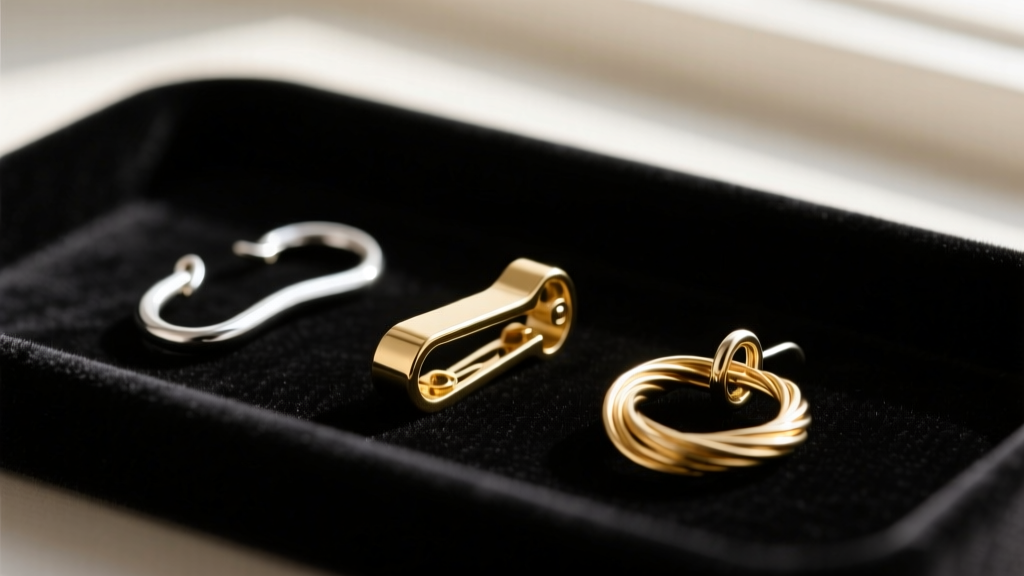
Fishhook (Shepherd's Hook)
The most common mechanism for simple dangles. The wire loops through the ear and rests in place via gravity. While elegant, fishhooks are notorious for slipping out, especially when removing winter scarves or styling hair. Pro Tip: Always pair 20-gauge (0.81mm) fishhook wires with clear silicone earring stoppers to prevent loss without adding visual bulk.
Leverback
Leverbacks feature a hinged clasp that clicks shut, offering superior security. However, the hinge mechanism adds a small amount of weight and thickness. Ensure the wire passing through the ear is no thicker than 18-gauge (1.02mm); anything thicker (like 16-gauge) can cause the leverback to pinch the back of the earlobe when closed, leading to localized pressure necrosis over long wear periods.
French Wire with Clutch
A straight post with a decorative hook at the top, requiring a standard butterfly clutch. This is the most secure option for heavy simple dangles, but the post must be perfectly smooth. Look for laser-welded posts rather than soldered ones, as excess solder can create micro-abrasions inside the piercing channel.
Step 3: Calculate Weight and Gauge for Lobe Health
One of the most overlooked aspects of buying dangle earrings is the "cheese-cutter effect." When a thin wire supports a heavy dangle, the localized pressure can slowly slice through the earlobe tissue, causing irreversible stretching or tearing.
"Jewelry that is too heavy or too thin in gauge will migrate through the tissue. For standard lobe piercings supporting dangling elements, maintaining an adequate wire thickness is just as critical as managing the overall gram weight of the piece." — The Association of Professional Piercers (APP)
The Golden Rules of Dangle Weight and Gauge
- Maximum Weight: For all-day wear, simple dangle earrings should not exceed 4.5 grams per earring. Anything heavier requires a specialized support chain or ear jacket to distribute the load.
- Minimum Gauge: The wire passing through the ear should never be thinner than 22-gauge (0.64mm). The ideal standard for supporting a 3-gram dangle is 20-gauge (0.81mm) or 18-gauge (1.02mm).
- Wire Hardness: Look for "half-hard" or "dead-soft" wire specifications in artisan pieces. Dead-soft wire will bend under the weight of the dangle, altering the drop angle, whereas half-hard wire maintains the structural integrity of the simple dangle silhouette.
Step 4: Metal Grades and Hypoallergenic Checks
Because dangle earrings are in constant motion, the wire creates continuous micro-friction against the inside of your piercing. If you wear gold-plated brass or copper, this friction will rapidly wear away the microscopic layer of gold, exposing the base metal to your bloodstream.
According to dermatological research on contact dermatitis, nickel exposure from degraded plating is a leading cause of acquired metal allergies. To avoid this, restrict your simple dangle purchases to the following solid metals:
- 14k or 18k Solid Gold: Ensure it is nickel-free (yellow or rose gold is typically safer than some white gold alloys, which often use nickel for whitening).
- ASTM F136 Implant-Grade Titanium: The absolute gold standard for sensitive ears. It is completely nickel-free, lightweight, and immune to friction degradation.
- 316L Surgical Steel: A budget-friendly alternative, though it contains trace amounts of nickel that are usually trapped in the chromium oxide layer. Safe for healed piercings, but avoid if you have a known, severe nickel allergy.
Step 5: Styling Routine from Day to Night
Simple dangle earrings are the ultimate transitional jewelry. Here is a step-by-step framework for maximizing their versatility across different environments.

- The Morning Baseline (Office/Professional): Pair 1-inch to 1.5-inch linear metal dangles with a structured collar or a crewneck blouse. The simplicity of the dangle prevents it from catching on high collars, while the vertical line complements the sharp tailoring of professional wear.
- The Hair Transition: If you wear your hair down during the day, the dangles will peek through, offering subtle movement. For the evening transition, sweep the hair into a low chignon or a sleek French twist. This exposes the full drop length and highlights the jawline without the visual competition of loose strands.
- The Neckline Shift (Evening/Dinner): Swap a high-neck blouse for a V-neck or off-the-shoulder top. The empty space of a V-neck acts as a negative-space frame for simple dangle earrings. If the dangles feature a single gemstone (like a solitary pearl or diamond), the evening lighting will catch the faceting as the earring moves.
- The Makeup Anchor: When wearing prominent dangles, keep the rest of the face balanced. A bold, matte lip draws the eye to the mouth, which perfectly intersects the visual terminus of a 2-inch dangle earring.
Maintenance: Keeping the Wire Clean
Because the wire of a dangle earring moves back and forth through the fistula, it can easily pick up environmental debris, hair products, and dead skin cells, pushing them back into the piercing channel. To prevent irritation bumps or localized infections, adopt a simple maintenance habit: before inserting your dangles, wipe the ear wire with a 70% isopropyl alcohol pad. This takes three seconds, ensures a sterile insertion, and prolongs the life of the metal finish by removing acidic skin oils that can degrade lower-karat gold alloys over time.


