How to Choose and Style Guitar Earrings for Musicians
Learn how to choose, customize, and comfortably wear guitar earrings. Our step-by-step guide covers gauge sizes, materials, and styling for musicians.


The Intersection of Music and Jewelry: A 2026 Perspective
As stage fashion in 2026 leans heavily into nostalgic rock, hyper-personalized indie aesthetics, and Y2K pop-punk revivals, guitar earrings have transcended their novelty roots to become a staple for performing musicians and fans alike. However, wearing instrument-shaped jewelry on stage or during long rehearsal sessions presents unique challenges. The dynamic movement of performing—headbanging, sweating, and constant friction—demands a strategic approach to materials, gauge sizing, and weight distribution. This comprehensive, step-by-step guide will teach you how to select, customize, and safely wear guitar earrings without sacrificing comfort or compromising your piercings.
Step 1: Selecting the Right Material and Gauge for Stage Wear
The biggest mistake musicians make with thematic jewelry is ignoring the metallurgical realities of stage sweat. Human sweat is highly acidic and contains salts that rapidly corrode cheap base metals, leading to contact dermatitis and ruined finishes. According to the Association of Professional Piercers (APP), implant-grade metals are the only safe bet for prolonged skin contact in high-friction environments.
Material Breakdown for Guitar Earrings
| Material | Hypoallergenic Rating | Stage Sweat Resistance | Best Application |
|---|---|---|---|
| ASTM F136 Titanium | Excellent | High | Heavy dangles, sensitive skin, daily wear |
| 316L Surgical Steel | Good | Moderate | Budget-friendly studs, short sets |
| 925 Sterling Silver | Fair | Low (Tarnishes quickly) | Occasional wear, acoustic studio sessions |
| Delrin / Acetal (DIY Picks) | Excellent | High | Custom pick earrings, lightweight drops |
Gauge Sizing and the "Cheese-Cutter" Effect
Standard fashion earrings typically use 22-gauge or 20-gauge wires. However, a solid brass or steel electric guitar pendant can easily weigh between 8 and 14 grams. When you add the centrifugal force of headbanging, a thin 22-gauge wire will act like a cheese cutter, slowly slicing through your earlobe tissue. For any guitar dangle earring exceeding 5 grams, you must upgrade to an 18-gauge (1.0mm) or 16-gauge (1.2mm) ear wire or French hook. If your earlobes are already stretched, opt for custom adapters with silicone O-rings to distribute the weight evenly across the fistula.
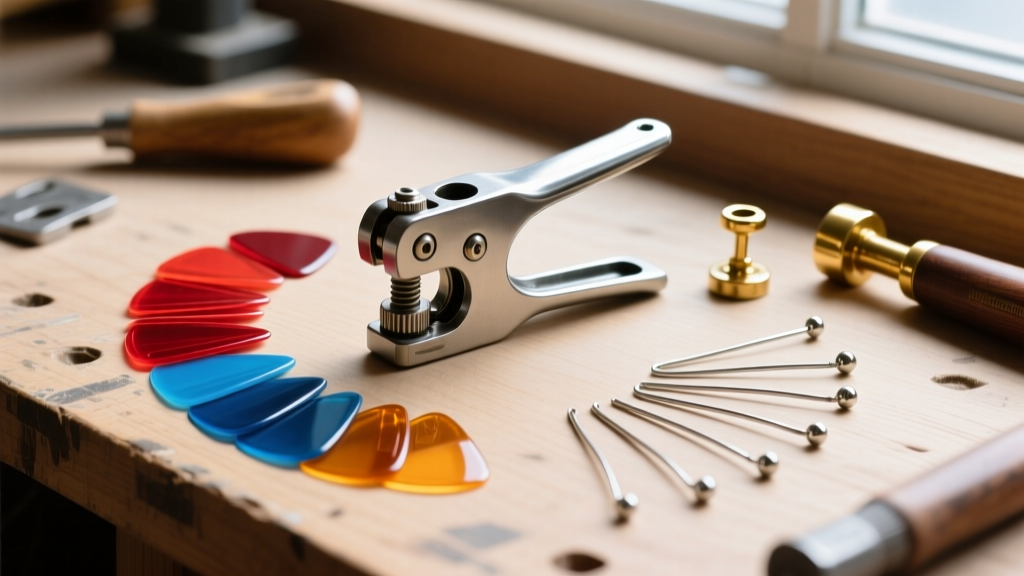
Step 2: DIY Guitar Pick Earrings (A Step-by-Step Guide)
While you can buy mass-produced guitar earrings, crafting your own from actual picks offers unparalleled authenticity and lightweight comfort. Here is how to professionally assemble custom guitar pick earrings that will survive a sweaty gig.
- Select the Right Pick: Avoid thin, flimsy picks. Choose a medium-to-heavy gauge pick (0.88mm to 1.14mm) made of Delrin, Ultex, or high-quality celluloid. Delrin is highly recommended as it does not degrade when exposed to skin oils.
- Punch the Hole: Do not use a standard paper hole punch, which will crack the pick. Invest in a dedicated heavy-duty guitar pick punch tool. Punch the hole at the top center, exactly 3mm down from the edge.
- Seal the Edge (Optional but Recommended): If using celluloid, apply a microscopic layer of clear jewelry resin or UV topcoat around the punched hole. This prevents the metal jump ring from slowly wearing through the plastic during vigorous movement.
- Attach the Hardware: Open a 4mm or 5mm stainless steel jump ring using two pairs of flat-nose pliers (twist, never pull apart). Thread the jump ring through the pick, then attach it to an 18-gauge niobium or titanium French hook.
- Secure the Jump Ring: Twist the jump ring completely shut. For extra security on stage, apply a tiny drop of jeweler's cyanoacrylate (superglue) to the seam of the jump ring to prevent it from vibrating open.
Step 3: Managing Weight and Comfort on Stage
Even with the correct gauge wire, heavy acoustic or bass guitar-shaped drop earrings can cause earlobe fatigue, leading to soreness and eventual stretching over time. To combat this, touring musicians rely on a few industry-secret support mechanisms:
- Invisible Earring Patches: These are small, medical-grade silicone or hydrocolloid stickers that adhere to the back of the earlobe. They provide a rigid backing that distributes the weight of a heavy guitar charm across a wider surface area of the ear.
- French Hook Stabilizers: If your guitar earrings use fishhook wires, they can easily fly out of your ear during a performance. Use silicone friction backs, but push them all the way to the base of the earlobe rather than the end of the wire to reduce the lever-action effect that pulls on the piercing hole.
- Hollow-Back Construction: When shopping for premium metal guitar earrings, look for "hollow-back" or "stamped" designs. These offer the exact same visual profile as a solid cast pendant but reduce the weight by up to 60%, making them ideal for 3-hour festival sets.
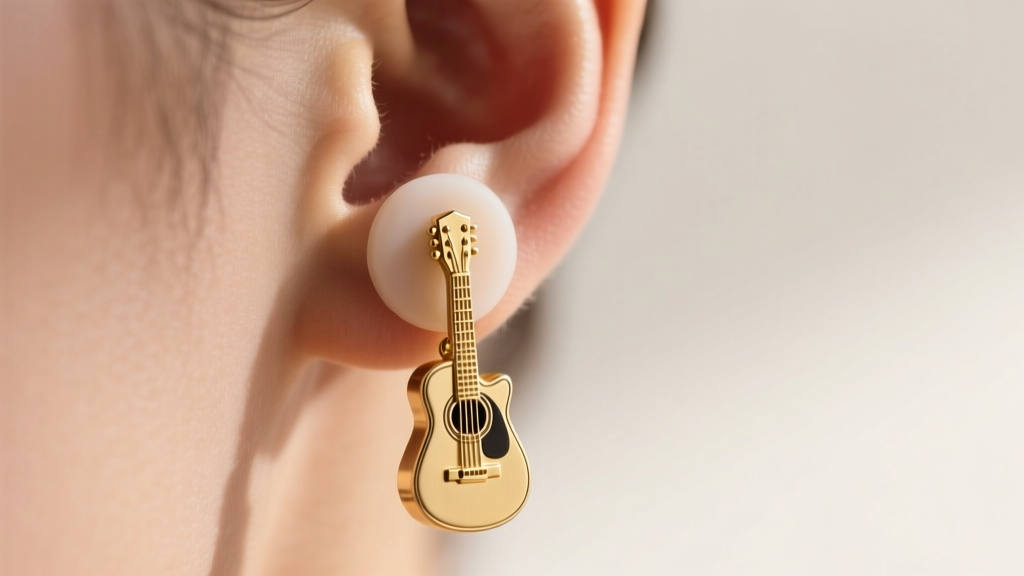
Step 4: Styling Guitar Earrings for Your Face Shape
Guitar earrings are inherently statement pieces. Because they draw immediate attention to the side of the face and jawline, choosing the right silhouette for your face shape is crucial for a balanced, photogenic stage presence.
Electric Guitars (Asymmetrical and Angular)
Electric guitar shapes (like the Stratocaster or Flying V) feature sharp cutaways and aggressive angles. These are highly flattering for round and oval face shapes. The sharp lines of the guitar body provide a striking geometric contrast to soft jawlines, adding structure and an edgy focal point to the profile.
Acoustic Guitars (Curvy and Figure-8)
The classic figure-8 shape of an acoustic or classical guitar features soft, continuous curves. These work beautifully on square and heart-shaped faces. The rounded lower bout of the acoustic guitar helps soften a strong, angular jawline, while the narrower upper bout complements a wider forehead.
Bass Guitars (Elongated and Elongated)
Bass guitars often feature longer scale lengths and extended body shapes. These vertical dangles are perfect for musicians with shorter faces or wider necks, as the elongated drop creates an optical illusion that lengthens the neck and draws the eye downward, balancing the overall proportions of the head and shoulders.
Step 5: Maintenance and Post-Gig Care
Stage environments are brutal on jewelry. Hairspray, makeup, sweat, and fog machine residue will quickly build up in the intricate grooves of a guitar-shaped earring, dulling the metal and harboring bacteria. Never use harsh chemical dips or ultrasonic cleaners on guitar earrings that feature painted enamel, epoxy resin, or glued-in rhinestones, as the vibrations and chemicals will shatter the finish.
Instead, follow the Gemological Institute of America (GIA) guidelines for delicate metal care: create a solution of warm water and a few drops of mild, phosphate-free dish soap. Use an extra-soft baby toothbrush to gently agitate the grooves of the guitar body, bridge, and tuning pegs. Rinse with distilled water (to prevent hard water spots) and pat completely dry with a microfiber cloth before storing them in an anti-tarnish ziplock bag.
"Your earrings are an extension of your instrument. If you wouldn't let rust and grime build up on your guitar strings, don't let it build up on the jewelry resting against your skin. Proper gauge and material selection isn't just about aesthetics; it's about respecting your body while you perform."


