Buying Earrings for Her: The Ultimate 2026 Guide
Discover how to choose the perfect earrings for her with our 2026 buying guide. Learn about metal grades, piercing types, and face-shape styling.

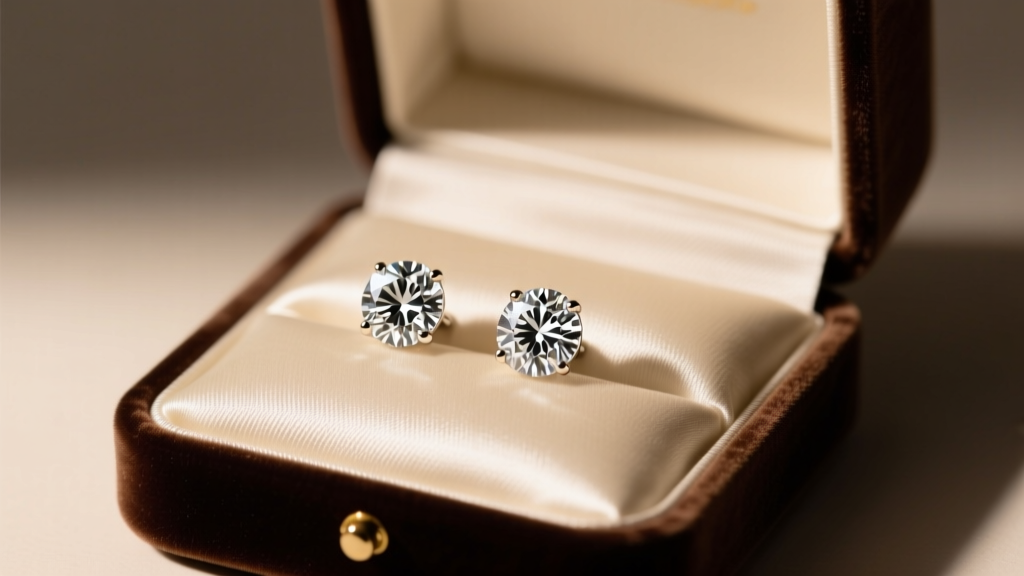
The Anatomy of a Perfect Gift: Beyond the Jewelry Box
Gifting jewelry is an intimate gesture, but buying earrings for her requires far more than simply picking a pretty design. In 2026, the landscape of ear styling has evolved dramatically. The modern "curated ear" means she might have multiple piercings across her lobes, helix, and conch, each requiring specific jewelry dimensions and metal grades. A mismatch in gauge size, post length, or alloy composition can turn a thoughtful gift into an unwearable drawer piece—or worse, trigger an allergic reaction.
This comprehensive buying guide strips away the marketing fluff. We will dissect the exact metallurgy, piercing specifications, and structural mechanics you need to understand before adding a pair of earrings to your cart. Whether she prefers minimalist studs, statement hoops, or intricate cartilage cuffs, this framework will ensure your gift is both technically flawless and aesthetically perfect.
Metallurgy & Material Grades: The Hypoallergenic Imperative
The most common failure mode in gifted earrings is contact dermatitis caused by cheap alloys. According to the Association of Professional Piercers (APP), nickel allergies affect a significant portion of the population, making the base metal of your gift a critical decision point.
Decoding Gold Alloys
- 14k Yellow/Rose Gold (58.3% Pure Gold): The sweet spot for everyday durability and rich color. Rose gold gets its hue from copper, which is generally well-tolerated but can cause issues for those with specific copper sensitivities.
- 18k Yellow Gold (75% Pure Gold): Softer, richer, and more expensive. Ideal for special occasion studs but less suited for heavy hoops that might warp under their own weight.
- The White Gold Trap: Standard white gold is alloyed with nickel to achieve a silver color, then plated with rhodium. When the plating wears off (usually within 6-12 months), the nickel is exposed, causing severe itching and flaking. If she loves silver-toned metals, skip standard white gold.
The Platinum & Titanium Alternatives
If she prefers white metals, opt for Platinum 950 (95% pure platinum, naturally white, and hypoallergenic) or ASTM F136 Implant-Grade Titanium. Titanium is lightweight, entirely nickel-free, and the gold standard for sensitive ears. Avoid "sterling silver" for primary piercings; its copper content oxidizes rapidly, leading to tarnish and the dreaded "green ear" effect.
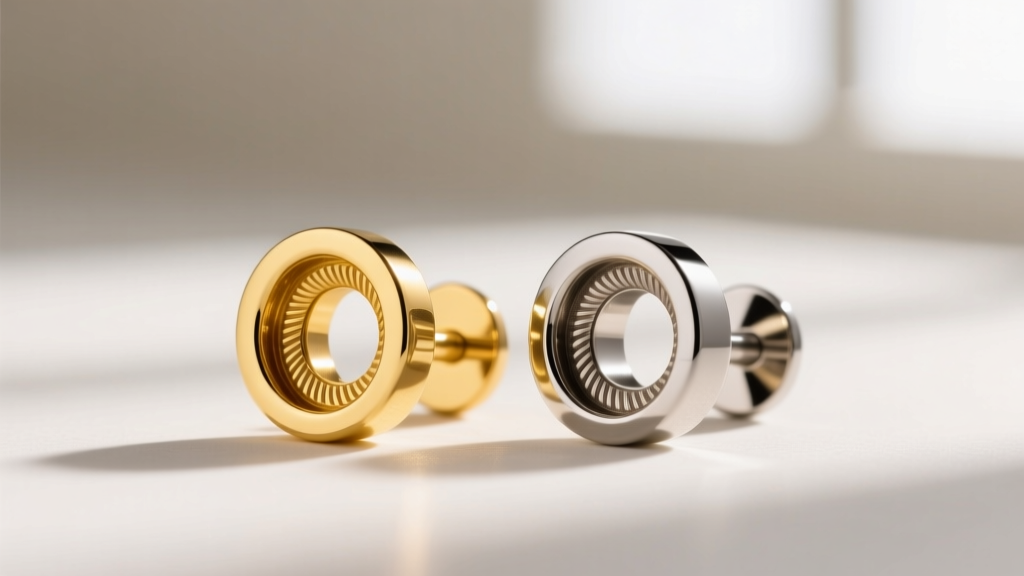
Decoding Her Piercing Profile: Gauges and Mechanics
You cannot buy cartilage jewelry using lobe specifications. Piercing holes (fistulas) heal to specific diameters, and forcing the wrong gauge can cause micro-tears, irritation bumps, and rejection. Furthermore, the backing mechanism dictates whether the earring is comfortable enough for 24/7 wear.
Standard Lobe vs. Cartilage Specifications
Standard earlobe piercings are typically done at 20-gauge (0.8mm) or 18-gauge (1.0mm), and they accommodate traditional friction backs (butterfly clutches) or screw-backs. However, if she has a helix, conch, or tragus piercing, she requires flat-back labrets. Friction backs are impossible to insert into cartilage angles and will dig into the side of her head while sleeping.
| Piercing Location | Standard Gauge | Ideal Post Length | Required Backing Type |
|---|---|---|---|
| Standard Earlobe | 20G (0.8mm) or 18G (1.0mm) | 6mm - 8mm | Friction, Screw-back, or Flat-back |
| Helix / Outer Cartilage | 16G (1.2mm) | 6mm - 8mm | Flat-back (Threadless or Internally Threaded) |
| Conch | 16G (1.2mm) or 14G (1.6mm) | 8mm - 10mm | Flat-back (Threadless preferred) |
| Tragus | 16G (1.2mm) | 5mm - 6mm | Flat-back (Threadless) |
The Threading Rule: Never Buy Externally Threaded
Examine the post of the earring. If the screw threads are on the outside of the post (externally threaded), do not buy it. Pushing external threads through a piercing tears the delicate tissue lining. High-end brands use internally threaded (the screw is on the decorative end) or threadless (press-fit) mechanisms, where a slightly bent pin creates tension inside a hollow post. Threadless jewelry, popularized by brands like NeoMetal, is currently the industry standard for secure, snag-free cartilage wear.
Lifestyle & Proportion: The Hidden Decision Matrix
A beautiful earring is useless if it clashes with her daily routine or facial proportions. Before selecting a style, run it through this practical framework.
The Lifestyle Audit
- The Active Professional / Gym-Goer: Avoid large hoops, dangling chains, or prong-set stones that can catch on athletic wear. Opt for bezel-set diamond or gemstone studs, or seamless huggie hoops that hug the lobe tightly.
- The "Never Takes Them Out" Wearer: If she sleeps in her jewelry, avoid butterfly backs and large front-facing gemstones. A 3mm or 4mm bezel-set stone on a flat-back titanium post is the ultimate "sleeper" earring.
- The Statement Stylist: If she treats jewelry as an extension of her wardrobe, look for modular threadless ends or convertible drop earrings that allow her to swap the decorative top without changing the base post.
Face Shape & Proportion Guidelines
According to styling principles endorsed by the Gemological Institute of America (GIA) and contemporary jewelry designers, proportion is just as critical as carat weight.
Expert Tip: The goal of earring styling is to create visual balance. Avoid echoing her natural face shape; instead, use the earring to introduce contrasting geometry that elongates or softens her natural features.
- Round Faces: Benefit from angular, elongated designs. Look for geometric drops, rectangular bar studs, or long linear chains. Avoid perfectly round hoops or large circular studs, which emphasize facial width.
- Square Faces: Characterized by strong jawlines. Soften these angles with curved silhouettes: medium-sized hoops, teardrop dangles, or oval cabochon gems.
- Oval Faces: The most versatile canvas. Almost any style works, from bold ear cuffs to delicate huggies. Focus on her personal aesthetic rather than corrective proportion.
- Heart-Shaped Faces: Wider at the forehead, narrow at the chin. Teardrops, chandeliers, and bottom-heavy dangles help add visual weight to the lower half of the face.

Budgeting & Brand Tier Guide: What Your Money Actually Buys
Pricing in the fine jewelry sector has shifted in 2026 due to fluctuations in precious metal markets and lab-grown diamond availability. Here is a realistic breakdown of what to expect at various price points when buying earrings for her.
Tier 1: The Thoughtful Entry ($50 - $150)
At this level, avoid "gold-plated" brass or copper, which will degrade quickly. Instead, seek out Gold Vermeil (a thick layer of 14k gold over sterling silver) from reputable brands, or solid ASTM F136 Titanium with high-quality CZ or synthetic opal inlays. Brands like BVLA (for titanium ends) or Maria Tash offer entry-level pieces in this range that maintain luxury finishing.
Tier 2: The Everyday Solid Gold ($200 - $600)
This is the sweet spot for solid 14k gold hoops, huggies, and small gemstone studs. You can comfortably afford 3mm to 4mm lab-grown diamond studs (total weight ~0.20ct to 0.50ct) set in solid gold. Ensure the brand provides a hallmark stamp (e.g., "14K" or "585") on the post or backing.
Tier 3: The Heirloom Investment ($800 - $2,500+)
Here, you are purchasing significant carat weight, premium natural or high-grade lab diamonds (VVS clarity, D-F color), or intricate designer craftsmanship. Expect 5mm+ diamond studs, heavy 18k gold statement hoops, or platinum settings. At this tier, always demand a grading report from a recognized lab like GIA or IGI for any central gemstones.
Final Pre-Purchase Checklist
Before you finalize your order, verify these five critical data points to ensure the earrings you are buying for her are technically sound and ready to wear:
- Metal Verification: Is it solid 14k/18k gold, platinum, or implant-grade titanium? (Avoid nickel-heavy white gold and plated brass).
- Gauge Match: Does the post thickness match her specific piercing (18G/20G for lobes, 16G for cartilage)?
- Backing Mechanics: If it is for cartilage, is it a flat-back labret? Is it threadless or internally threaded?
- Snag Test: Are the prongs flush, or will they catch on her hair and sweaters? (Bezel settings are safer for active lifestyles).
- Return Policy: Does the retailer offer a hygienic return or exchange policy in case the post length is slightly off for her specific anatomy?
By prioritizing anatomical precision and material integrity over fleeting trends, you guarantee that the earrings you choose will become a permanent, cherished fixture in her daily rotation.


