How to Choose and Style Penguin Earrings for Everyday Wear
Learn how to choose, style, and care for penguin earrings. Discover the best metals, enamel types, and gauge sizes for comfortable, hypoallergenic wear.

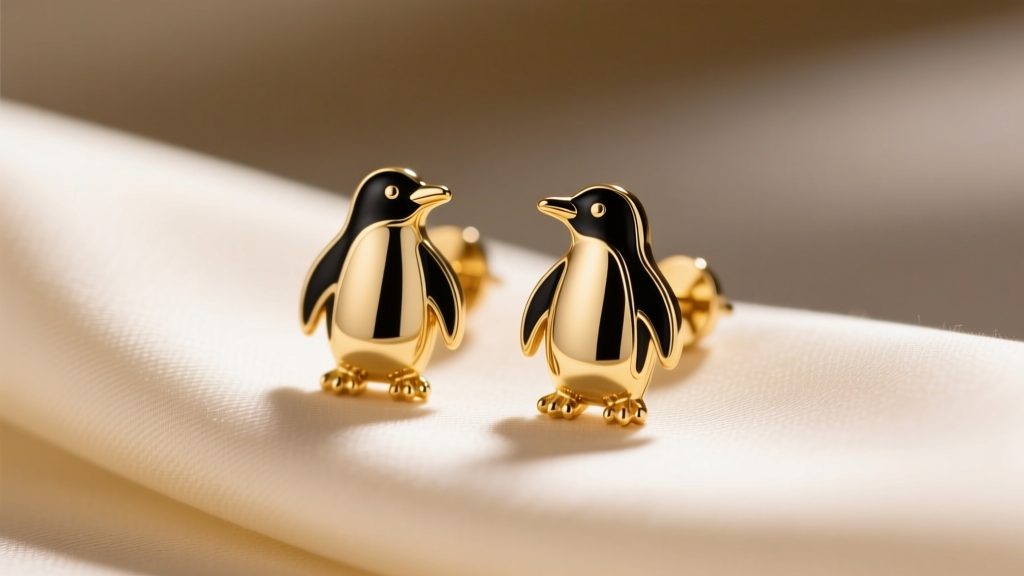
Novelty jewelry often gets dismissed as childish or cheap, but penguin earrings occupy a unique sweet spot in the accessory world. They bridge the gap between playful self-expression and sophisticated design. Whether you are drawn to minimalist silhouettes or intricate enameled motifs, mastering the selection, styling, and maintenance of these specific pieces requires a solid understanding of jewelry anatomy. In this comprehensive guide, we break down exactly how to elevate penguin earrings from novelty trinkets to staple wardrobe pieces, focusing on material grades, precise gauge sizing, and face-shape proportionality.
The Anatomy of High-Quality Penguin Earrings
The most common failure mode with animal-themed jewelry is the use of low-grade base metals masked by thick paint or cheap plating. To ensure your penguin earrings are safe for sensitive skin and built to last, you must scrutinize both the base metal and the coloring technique.
Decoding Metal Grades and Enamel Types
According to the Association of Professional Piercers, implant-grade titanium (ASTM F-136) and 316L surgical steel are the gold standards for hypoallergenic jewelry. When shopping for penguin studs or dangles, avoid nickel-plated brass or mystery 'alloy' blends, which frequently cause contact dermatitis. Furthermore, the black and white detailing on penguin earrings is typically achieved through enameling. Understanding the difference between vitreous and cold enamel is crucial for assessing longevity.
| Material / Technique | Durability & Wear | Hypoallergenic Profile | Average Price Range |
|---|---|---|---|
| ASTM F-136 Titanium | Extremely high; resists corrosion and bending | 100% Nickel-free; ideal for fresh piercings | $45 - $120 |
| 316L Surgical Steel | High; may tarnish over decades | Contains trace nickel; safe for most healed lobes | $25 - $75 |
| Vitreous Enamel | Fired glass; highly scratch-resistant, can shatter if dropped | Inert and completely safe | $60 - $150+ |
| Cold Enamel (Epoxy) | Resin-based; prone to yellowing and chipping over time | Safe once fully cured | $15 - $40 |
Step-by-Step: Matching Penguin Earrings to Your Face Shape
Styling novelty motifs requires a careful balance of proportion. The goal is to let the penguin design shine without overwhelming your natural features. Here is a step-by-step framework for matching specific earring dimensions to your face shape.
Proportions and Drop Lengths
- Round Faces: Avoid wide, circular penguin hoops that mimic the face's natural curvature. Instead, opt for vertical drop earrings featuring a sliding penguin motif. Look for drop lengths between 35mm and 50mm to visually elongate the jawline.
- Oval Faces: You have the most versatility. Proportionate penguin studs measuring 12mm to 18mm sit perfectly on the lobe without dragging the ear down. Huggie hoops with a small 8mm penguin charm dangling just below the lobe are also highly flattering.
- Square Faces: Soften a strong jawline with curved lines. Medium-sized penguin dangles (25mm - 30mm) with rounded bellies or teardrop-shaped penguin silhouettes help balance angular features.
- Heart-Shaped Faces: Draw attention downward to balance a wider forehead. Choose bottom-heavy penguin designs, such as a penguin holding a gemstone or pearl, measuring around 20mm to 25mm in total length.
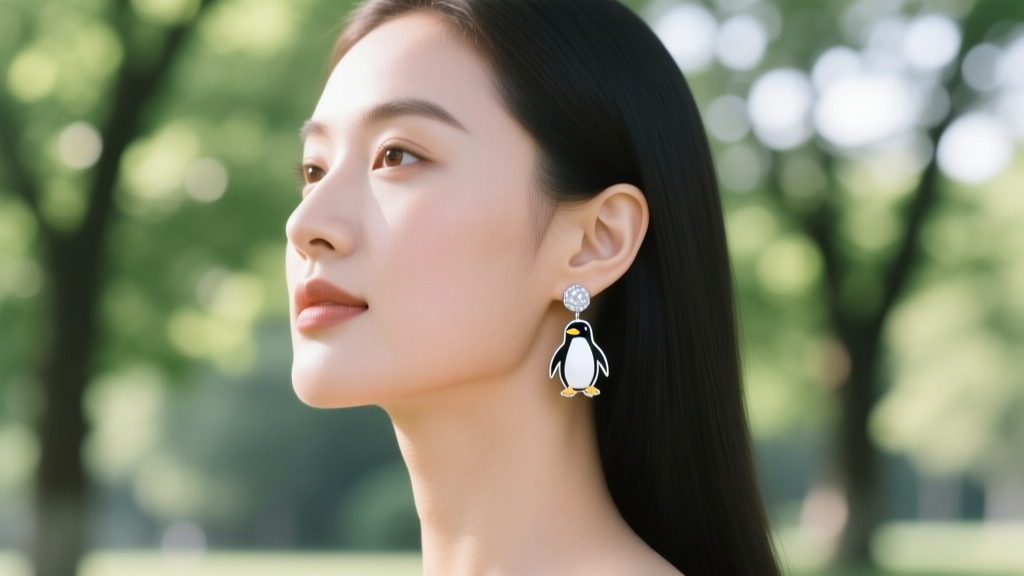
Lobe vs. Cartilage Placement for Penguin Motifs
While standard lobe piercings easily accommodate most penguin designs, cartilage placements like the helix or tragus require specific hardware. If you are commissioning or buying a penguin stud for a cartilage piercing, you must look for flat-back labret posts rather than standard butterfly-back posts. For a standard helix, a 16-gauge (1.2mm) or 18-gauge (1.0mm) post with a length of 6mm to 8mm is typically required to accommodate the thickness of the upper ear cartilage without causing pressure necrosis.
How to Clean and Maintain Enameled Penguin Studs
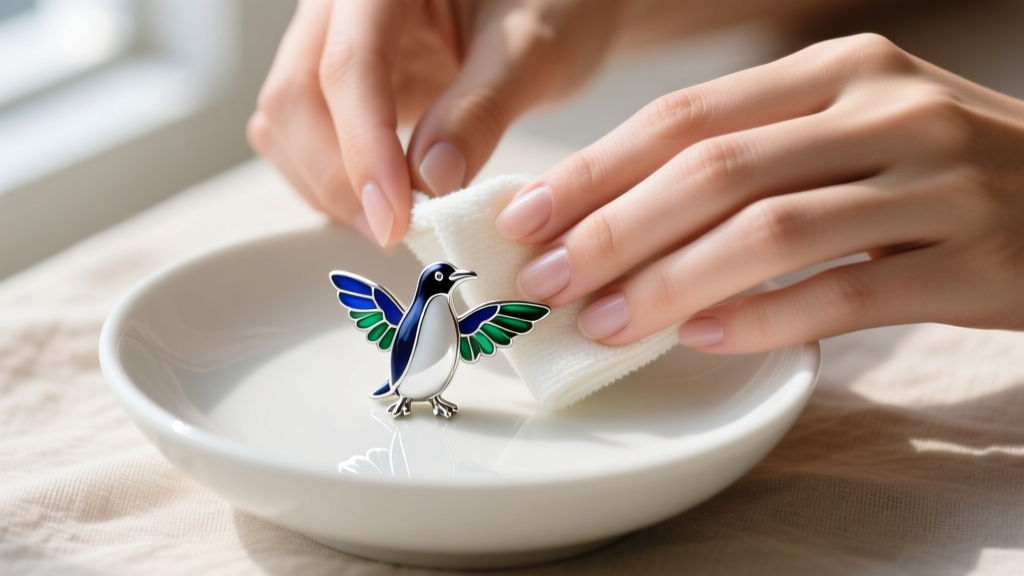
Enamel detailing is what gives penguin earrings their distinct contrast, but it is also the most vulnerable component. Improper cleaning can lead to micro-scratches in cold enamel or chemical degradation of the resin. Follow this exact protocol to maintain your pieces.
Step 1: Isolate the Hardware. Remove the earring backs and silicone o-rings. Dirt and sebum accumulate heavily in the friction grooves of the post, which can transfer back to the enamel if washed together.
Step 2: Prepare a Neutral Bath. Mix a few drops of pH-neutral dish soap into a bowl of lukewarm water. Never use hot water, as extreme temperature shifts can cause vitreous enamel to craze (develop microscopic cracks) or separate from the metal base.
Step 3: Gentle Agitation. Submerge the earrings for exactly three minutes. Use a baby-hair brush or a dedicated, ultra-soft makeup brush to gently sweep away debris from the crevices where the black and white enamel meet the metal borders. Avoid stiff toothbrushes, which will leave permanent swirl marks on epoxy resins.
Step 4: Pat Dry and Polish. The Victoria and Albert Museum advises against air-drying enameled jewelry, as hard water spots can etch into the surface over time. Use a lint-free microfiber cloth to gently pat the piece dry, followed by a quick buff of the exposed metal edges.
Troubleshooting Common Fit and Comfort Issues
Even the most beautifully crafted penguin earrings can become unwearable if the hardware mechanics are flawed. Here is how to troubleshoot the most common issues encountered with novelty jewelry.
The Post is Too Thin and Bends Easily
Many mass-produced novelty earrings utilize 22-gauge (0.6mm) wire to save on metal costs. This gauge is far too thin for daily wear and will bend when inserting it into the lobe. The Fix: Take the earrings to a local bench jeweler and ask them to solder on new 20-gauge (0.8mm) or 18-gauge (1.0mm) sterling silver or gold posts. This is a routine repair that usually costs between $20 and $40 and will permanently stabilize the earring.
The Earring Droops Forward on the Lobe
Penguin motifs, especially those with a prominent belly or beak, can be front-heavy. If the earring constantly tilts forward, the issue is a lack of counterweight or an inadequate backing. The Fix: Ditch standard metal butterfly backs. Switch to flat, wide silicone disc backs or specialized plastic 'jumbo' friction backs. These provide a wider surface area against the back of the earlobe, acting as a stabilizing anchor that keeps the penguin facing strictly forward.
The Earring Backs Keep Sliding Off
If your penguin studs frequently fall off, the post may be too smooth or slightly under-gauged for your specific piercing fistula. The Fix: Upgrade to silicone o-ring push-backs or screw-on backs. If the post is threaded, ensure you are using matching thread sizes (usually 1.2mm for standard 18G/16G jewelry). For unthreaded posts, a tiny drop of clear, jewelry-safe nail polish on the very tip of the post can create a custom friction ridge once dried, preventing the backing from sliding off during the day.
By treating penguin earrings with the same material scrutiny and anatomical consideration as fine jewelry, you can confidently integrate these charming motifs into your daily rotation without sacrificing comfort, safety, or style.


