Ultimate Care and Cleaning Guide for Cicada Earrings
Discover expert cleaning and maintenance tips for intricate cicada earrings. Learn how to protect enamel, gemstones, and delicate filigree wings.

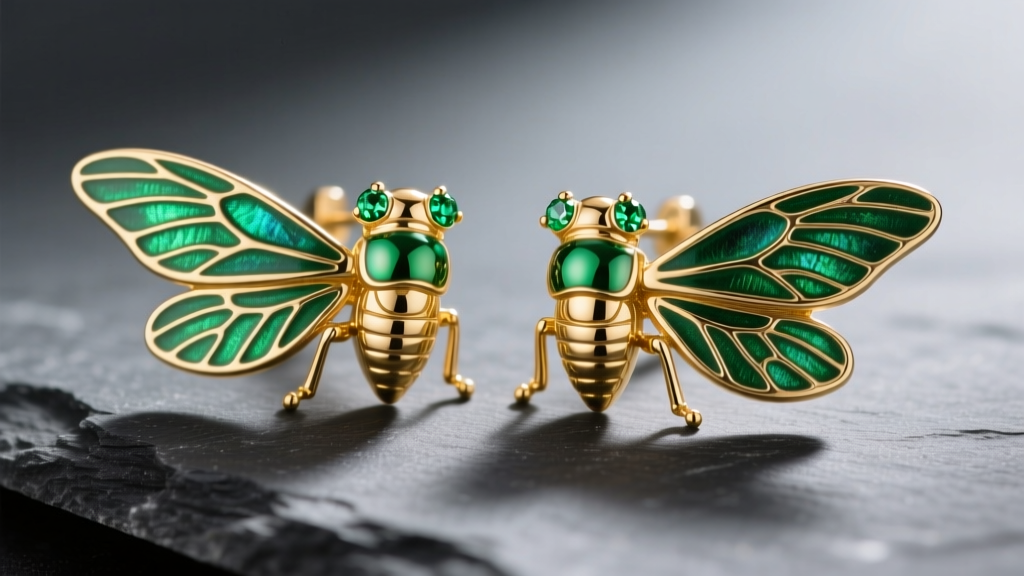
As we move through 2026, the trend of hyper-realistic entomological jewelry continues to dominate the luxury and artisan markets. Cicada earrings, celebrated for their intricate wing veining, textured thoraxes, and delicate antennae, are a standout staple in nature-inspired collections. However, the very details that make these earrings captivating also make them highly susceptible to damage, tarnish, and cosmetic buildup. Standard jewelry cleaning methods can easily destroy the fragile components of insect-motif pieces. This comprehensive guide provides expert-level maintenance protocols to ensure your cicada earrings remain pristine, structurally sound, and visually striking for decades.
The Unique Anatomy of Cicada Earrings and Vulnerability Points
To properly care for cicada earrings, you must first understand their structural vulnerabilities. Unlike simple geometric studs or smooth hoops, entomological jewelry features extreme topographical variations. The wings are often crafted using plique-à-jour (a translucent enameling technique with no metal backing) or feature microscopic pavé settings. The antennae and legs are typically drawn from 20-gauge or 22-gauge half-hard wire, making them highly prone to bending. Furthermore, the textured bodies designed to mimic the insect's exoskeleton create hundreds of microscopic crevices where sebum, dead skin cells, and environmental pollutants accumulate. Understanding these specific failure modes is the first step in effective preservation.
The Daily Maintenance Protocol
Preventative care is always superior to reactive deep cleaning. Because cicada earrings feature deep grooves and delicate stone settings, minimizing daily buildup is crucial.
- The Post-Wear Wipe: Always wipe your earrings with a clean, lint-free microfiber cloth immediately after removing them. This removes acidic skin oils and residual cosmetics before they can degrade gold vermeil or dull gemstones.
- The 'Last On, First Off' Rule: Cicada earrings should be the last items you put on after applying hairspray, perfume, and lotions, and the first items you take off when returning home. Aerosolized chemicals can create a stubborn, cloudy film over enamel and porous gemstones.
- Friction Checks: Gently run your finger over the pavé wings once a week. If you feel any rough spots or 'snags,' a prong may be lifting, requiring immediate professional attention to prevent stone loss.
Deep Cleaning: A Step-by-Step Masterclass
When daily wiping is no longer sufficient, a controlled deep cleaning is necessary. Avoid commercial jewelry dips, which are often too harsh for mixed-media insect jewelry.
Step 1: The Distilled Water Soak
Fill a small glass bowl with lukewarm distilled water. Tap water contains chlorine and heavy minerals that can leave microscopic deposits on gemstones and accelerate the tarnishing of sterling silver bases. Add a single drop of phosphate-free, mild dish soap. Submerge the earrings for exactly three to five minutes to loosen sebum trapped in the thorax crevices.
Step 2: Targeted Agitation
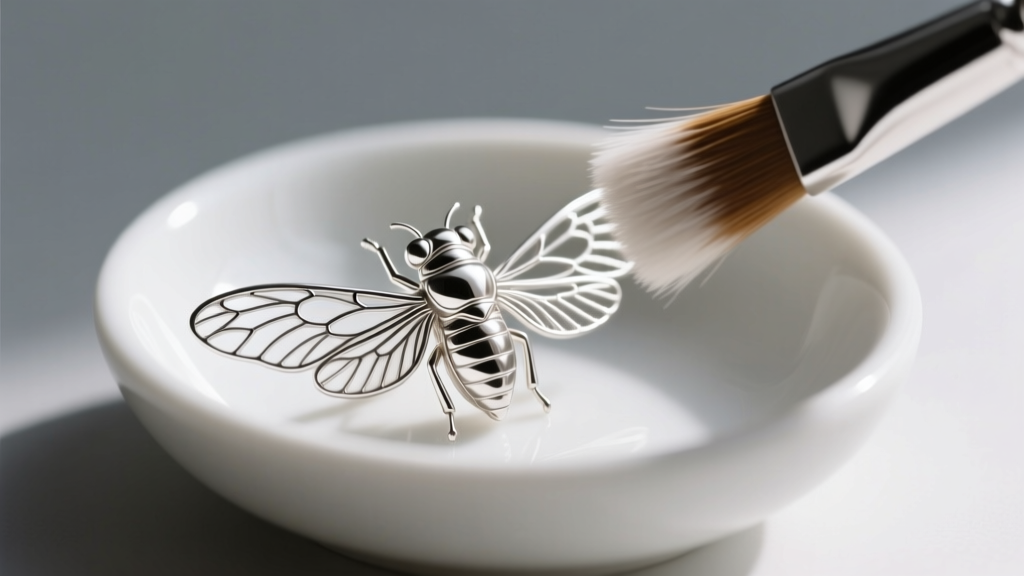
Remove the earrings from the soak. Using an extra-soft baby toothbrush or a specialized jewelry cleaning brush with ultra-fine bristles, gently agitate the textured body and the veins of the wings. Brush in the direction of the metalwork grain to avoid scratching high-polish areas.
Step 3: The Precision Rinse and Dry
Rinse the earrings under a gentle stream of lukewarm distilled water. To dry, do not rub the pavé wings with a towel, as the loops of the fabric can catch on microscopic prongs. Instead, use a can of compressed air (held at least six inches away) to blow water out of the intricate settings, followed by air-drying on a clean paper towel.
Material-Specific Care Matrix
Cicada earrings frequently combine multiple materials in a single piece. Refer to this matrix to understand how to treat specific components without damaging adjacent materials.
| Material Component | Primary Vulnerability | Approved Cleaning Method | Strict Prohibitions |
|---|---|---|---|
| Oxidized Sterling Silver | Loss of intentional dark patina in grooves | Mild soap, distilled water, cotton swabs | Silver polishing cloths, chemical dips |
| Plique-à-jour Enamel | Thermal shock, micro-fractures, chipping | Dry microfiber dusting, gentle damp wipe | Ultrasonic cleaners, steam, hot water |
| Pavé Tsavorite / Peridot | Loosening of adhesive or micro-prongs | Soft brush with mild soapy water | Ultrasonic cavitation, harsh acids |
| 18k Gold Vermeil (2.5μm) | Wearing through the gold layer to base metal | Microfiber cloth, gentle soap soak | Abrasive pastes, baking soda, toothpaste |
The Ultrasonic and Chemical Traps
One of the most common mistakes jewelry owners make is placing intricate nature-inspired pieces into ultrasonic cleaners. According to the Gemological Institute of America (GIA), ultrasonic cleaners use high-frequency sound waves to create microscopic bubbles that implode, generating intense localized heat and shockwaves. While excellent for cleaning solid diamond solitaires, this cavitation process will shatter plique-à-jour enamel wings and violently shake loose the delicate micro-prongs holding pavé gemstones in place. Similarly, chemical silver dips contain thiourea, which strips away the oxidized patina that gives the cicada's body its realistic, three-dimensional depth, leaving the piece looking flat and artificially bright.
Preserving Intentional Patina on Oxidized Silver
Many artisan cicada earrings utilize oxidized sterling silver to highlight the segmented anatomy of the insect's abdomen. This oxidation is a controlled application of silver sulfide. When cleaning these pieces, never use a treated silver polishing cloth across the entire surface. Instead, use a dry cotton swab to gently lift dirt from the recessed, darkened areas, and reserve a soft, untreated microfiber cloth exclusively for the raised, high-polish edges of the wings. This dual-action approach maintains the dramatic contrast that defines the design.
Structural Storage and Travel Protection
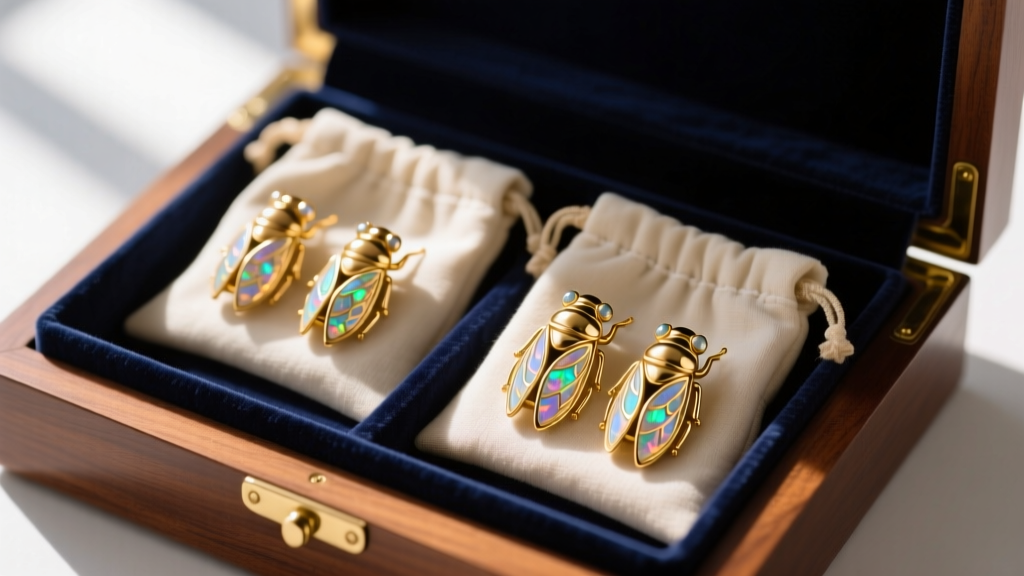
The protruding antennae and jointed legs of cicada earrings are structural liabilities during storage. Tossing them into a communal jewelry box guarantees that the 20-gauge wire appendages will bend, or worse, snap at the solder joints. Furthermore, the delicate wing tips can easily snag on chain links or other jewelry.
Expert Storage Tip: Always store cicada earrings in individual, hard-shell compartments or dedicated anti-tarnish microfiber pouches. If the earrings feature porous gemstones like opals (often used to mimic the iridescence of real cicada wings), place a slightly damp cotton ball in the storage compartment during dry winter months to prevent the opal from crazing or cracking due to dehydration.
For travel, utilize a hard-sided jewelry roll with segmented, snap-down straps. Ensure the straps hold the earring posts securely without pressing down on the three-dimensional wings or antennae.
When to Seek Professional Bench Jeweler Intervention
While diligent home maintenance is essential, certain issues require the expertise of a professional bench jeweler. The Jewelers of America recommends professional servicing for fine jewelry at least once a year. You should book an appointment immediately if you notice:
- Bent Antennae or Legs: Do not attempt to bend 20-gauge or 22-gauge wire back into shape yourself. Repeated bending causes metal fatigue, leading to a clean break. A jeweler has the proper mandrels and annealing torches to reshape the wire safely.
- Enamel Chipping: If a wing's enamel is chipped, a specialist in vitreous or cold enamel repair can restore the color match and seal the exposed metal to prevent further degradation.
- Vermeil Wear: If the brass or sterling silver base metal begins to show through the gold vermeil on the high-friction areas (like the earring post or the top of the thorax), a jeweler can professionally re-plate the piece, ensuring the correct 2.5-micron thickness is restored for longevity.
By treating your cicada earrings not just as accessories, but as miniature, wearable sculptures, you ensure their intricate beauty survives the test of time. Respect the materials, avoid aggressive cleaning technologies, and prioritize structural protection in your storage habits.


