How to Style and Choose Circle Dangle Earrings: A Beginner Guide
Discover how to choose, style, and care for circle dangle earrings. Our beginner guide covers face shapes, metals, and weight distribution tips.


Circle dangle earrings are a staple in modern jewelry boxes, offering a perfect blend of geometric minimalism and kinetic movement. Unlike static studs or rigid hoops, circle dangles feature a distinct circular element suspended from the earlobe, allowing it to swing and catch the light. However, for beginners, navigating the nuances of weight distribution, metal allergies, and facial proportions can be daunting. This comprehensive guide breaks down the mechanics, styling rules, and material science behind choosing the perfect pair of circle dangle earrings for everyday wear.
The Anatomy of a Circle Dangle Earring
Before purchasing your first pair, it is crucial to understand the structural components that dictate how a dangle earring behaves. A standard circle dangle consists of three primary elements:
- The Ear Wire or Post: The component that passes through the piercing.
- The Connector (Jump Ring or Link): The small loop connecting the ear wire to the focal piece.
- The Focal Circle: The main geometric body, which can be a solid disc, a hollow tube, or an open wire ring.
Jeweler's Insight: The most common failure point in dangle earrings is the connector jump ring. Because dangles act as pendulums, they exert continuous rotational friction on the jump ring. Always look for soldered jump rings on high-quality circle dangles to prevent the ring from twisting open and dropping the focal circle.
The Weight Factor: Avoiding Lobe Fatigue
The most frequent mistake beginners make is ignoring the gram weight of dangle earrings. While a solid brass or stainless steel circle might look elegantly substantial on a display card, wearing a 25-gram earring will quickly lead to lobe fatigue, stretching, and discomfort.
Understanding Weight Thresholds
For daily wear, the human earlobe comfortably supports between 7 to 15 grams per earring. Anything exceeding 15 grams should be reserved for short-term, special-event wear. If you love the look of large, oversized circle dangles (e.g., 50mm+ in diameter), you must prioritize specific manufacturing techniques to keep the weight down:
- Hollow Tubing: Instead of solid wire, jewelers use hollow metal tubing to create large circles that are remarkably light.
- Stamped Sheet Metal: Thin, flat discs cut from lightweight aluminum or titanium sheet metal.
- Open Wirework: Circles formed by thin, filigree wire patterns rather than solid borders.
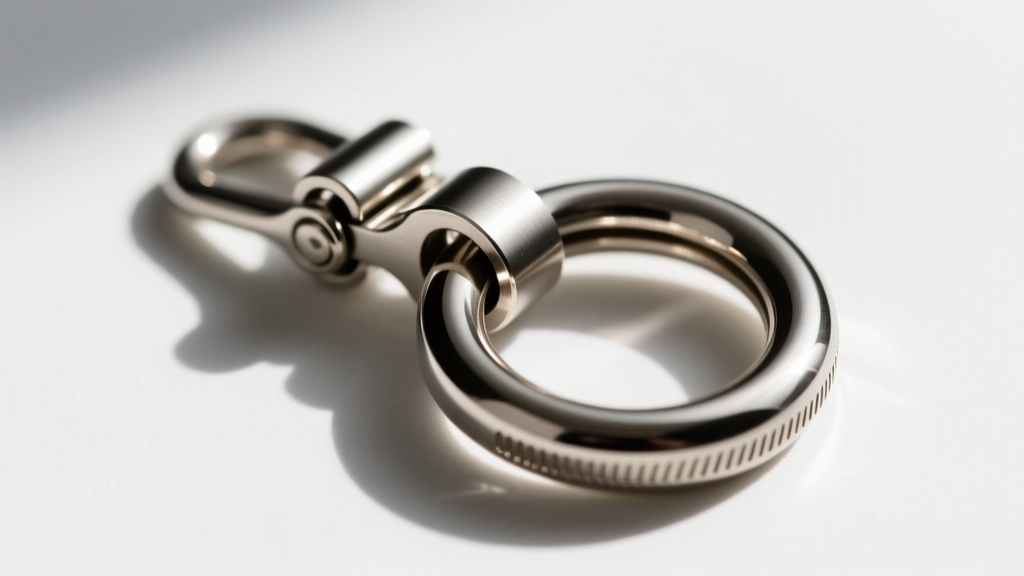
Matching Circle Dangles to Your Face Shape
Because circle dangles draw the eye downward along the jawline, they play a significant role in balancing facial proportions. The diameter and drop length of the circle can either soften angular features or add necessary structure to softer faces.
| Face Shape | Ideal Circle Dangle Style | Styles to Avoid |
|---|---|---|
| Round | Elongated oval dangles or circles suspended on a long, vertical chain drop to create the illusion of length. | Large, wide perfect circles that sit exactly at the cheekbone, which emphasize width. |
| Square | Medium-sized, thin-wire perfect circles or hoop-style dangles that soften a strong, angular jawline. | Chunky, heavy geometric squares or harsh, rigid triangular drops. |
| Heart | Bottom-heavy dangles, such as a small stud dropping into a wider, solid circle, to balance a narrower chin. | Inverted shapes or top-heavy dangles that draw too much attention to the wider forehead. |
| Oval | Highly versatile; almost any size from delicate 10mm minimalist circles to bold 60mm statement discs. | Extremely long, narrow drops that may over-elongate an already balanced face. |

Material Matters: Hypoallergenic Metals for Dangles
Dangle earrings are uniquely problematic for sensitive ears. Unlike a static stud, a dangle earring swings, causing the ear wire to constantly glide back and forth through the fistula (the piercing hole). This micro-friction can easily trigger contact dermatitis if the metal contains nickel or other reactive alloys.
Top Tier: Implant-Grade Titanium
According to the Association of Professional Piercers, ASTM F136 implant-grade titanium is the gold standard for sensitive piercings. It is entirely nickel-free, highly polished to reduce friction, and exceptionally lightweight, making it the ultimate base metal for heavy circle dangles.
Mid Tier: 14k or 18k Solid Gold
Solid yellow or rose gold (14k and above) is generally well-tolerated. However, be cautious with white gold, which is often alloyed with nickel to achieve its silver color. If you prefer a silver tone, opt for platinum or palladium instead.
Low Tier: Brass, Copper, and Plated Metals
While budget-friendly, brass and copper oxidize rapidly when exposed to the pH of your skin and the friction of a swinging dangle. Gold-plated or silver-plated circle dangles will eventually wear down at the friction point on the ear wire, exposing the reactive base metal underneath.
Gauge Size and Clasp Security
The thickness of the wire passing through your ear (the gauge) and the type of clasp used are critical for both comfort and security.
Wire Gauge Sizing
Standard earlobe piercings are typically done at 20-gauge (0.81mm) or 18-gauge (1.0mm). Beginners often buy 22-gauge (0.64mm) dangles because they look delicate, but ultra-thin wires act like a cheese wire against the earlobe, especially if the circle dangle catches on a sweater or hair. For any circle dangle exceeding 15mm in diameter, insist on an 18-gauge or 16-gauge ear wire to distribute the weight safely.
Clasp Mechanisms
- French Hook: The most common and affordable, but highly insecure for dangles. If the circle swings forward, the hook can easily slip out.
- Leverback: Features a hinged closure that snaps shut. This is the superior choice for circle dangles, ensuring the earring remains locked in place despite constant movement.
- Flat Back / Labret Post: For maximum comfort and security, some modern dangles are built onto flat-back titanium posts, eliminating the curved wire friction entirely.
Care and Maintenance for Moving Parts
Because circle dangles feature moving joints and connectors, they require specific maintenance routines to prevent seizing and tarnish. The Gemological Institute of America (GIA) recommends regular, gentle cleaning for all articulated jewelry.
- Weekly Wipe-Down: Use a microfiber cloth to wipe the ear wire and the jump ring connector. Skin oils and hair products accumulate heavily in the crevices of the jump ring, leading to oxidation.
- Monthly Deep Clean: Soak the earrings in a solution of warm water and a few drops of mild, phosphate-free dish soap for 5 minutes. Use a soft-bristled baby toothbrush to gently scrub the connector loops. Never use harsh chemical dips on plated or oxidized circle dangles.
- Storage: Store dangles hanging or laid completely flat. Tossing them into a jewelry box causes the delicate connector wires to bend and warp, altering the way the circle hangs.
By prioritizing lightweight construction, secure leverback clasps, and biocompatible metals like titanium, beginners can confidently build a collection of circle dangle earrings that are as comfortable as they are visually striking. Understanding the mechanics behind the jewelry transforms a simple accessory into a masterclass in wearable engineering.


