The Ultimate Guide to Buying Crystal Dangle Earrings
Discover what to look for when buying crystal dangle earrings. Learn about crystal grades, metal settings, weight distribution, and secure clasps.

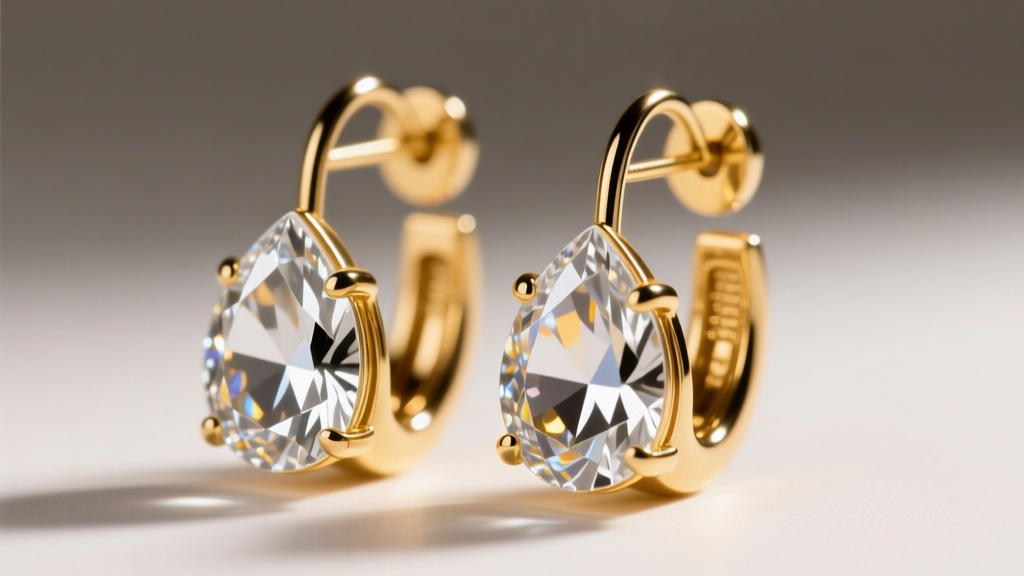
When selecting crystal dangle earrings, the difference between a stunning, heirloom-quality piece and a tarnished, uncomfortable disappointment lies in the microscopic details. Dangle earrings act as pendulums, meaning they endure constant kinetic friction against the earlobe and hair. This movement tests the integrity of the metal, the security of the clasp, and the durability of the crystal setting. Whether you are shopping for everyday wear or a statement piece for an evening event, understanding the material science and structural mechanics of these earrings is essential.
Understanding Crystal Quality and Optical Performance
Not all crystals are created equal. The brilliance of a crystal is dictated by its refractive index and the precision of its faceting. When evaluating crystal dangle earrings, you will typically encounter three main categories:
- Lead-Free Advanced Crystal (e.g., Swarovski, Preciosa): Since 2012, top-tier manufacturers have shifted to lead-free formulas using barium oxide and zinc oxide to achieve a high refractive index. These crystals offer exceptional light return and precise, machine-cut faceting that prevents the 'dead spots' seen in cheaper alternatives.
- Cubic Zirconia (CZ): While technically a synthetic gemstone rather than a glass-based crystal, high-grade CZ (AAAAA quality) offers incredible brilliance and a hardness of 8.5 on the Mohs scale, making it highly resistant to the micro-scratches that can cloud softer crystals over time.
- Foil-Backed Glass or Acrylic: Often found in fast-fashion jewelry, these rely on a metallic foil glued to the back of the stone to simulate sparkle. Failure Mode: Moisture and sweat inevitably degrade the adhesive, causing the foil to oxidize, turn black, and completely kill the stone's brilliance within months.
According to the Gemological Institute of America (GIA), the precision of the cut is just as critical as the material. Look for crystals with sharp, distinct facet junctions. If the edges look rounded or the surface appears 'melted,' the crystal was likely stamped or molded rather than cut, resulting in poor light performance.
Metal Settings and Hypoallergenic Requirements
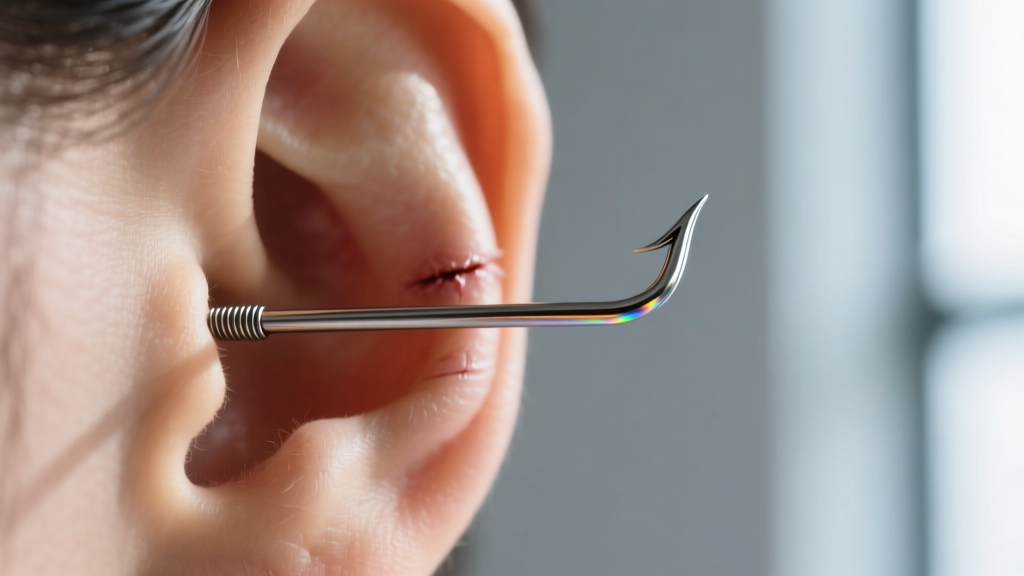
Because dangle earrings swing and rotate, the ear wire and setting are in constant motion against the skin. This friction makes hypoallergenic metals non-negotiable for sensitive ears. The Mayo Clinic notes that nickel allergy is one of the most common causes of contact dermatitis, and many cheap 'gold-plated' earrings use nickel-containing brass as a base metal.
The Plating Thickness Trap
If you are buying gold-toned crystal dangle earrings, you must verify the plating thickness. Standard 'flash plating' is less than 0.5 microns thick and will wear through to the base metal within weeks of daily wear. Instead, look for Gold Vermeil, which legally requires a base of sterling silver (925) plated with at least 2.5 microns of 10k, 14k, or 18k gold. For the ultimate biocompatibility, seek out settings made from ASTM F136 implant-grade titanium or solid 14k/18k gold, which will never flake or cause green skin discoloration.
Weight Distribution and Gauge Considerations
A common mistake when buying statement dangles is ignoring the weight-to-gauge ratio. Heavy crystals (like large natural quartz drops or dense multi-tiered chandeliers) can cause 'earlobe droop' or stretch the piercing channel over time.
- Standard Gauge: Most dangle earrings use a 20-gauge (0.81mm) or 18-gauge (1.02mm) wire. A 20g wire is ideal for standard lobe piercings, offering a smooth insertion without micro-tearing the tissue.
- Weight Mitigation: High-end designers mitigate heavy drops by using hollowed-back bezel settings or pairing heavy natural stones with lightweight acrylic-core accents. If an earring feels front-heavy when resting on your finger, it will pull uncomfortably on your lobe.
Setting Mechanics: Prong vs. Bezel vs. Glue
How the crystal is held in place determines the lifespan of the earring.
- Prong Settings: Metal claws grip the crystal. This allows maximum light entry from all angles, creating the most sparkle. However, prongs can snag on hair or knit sweaters, which may bend the metal and release the stone if the setting is not regularly checked.
- Bezel Settings: A continuous metal rim wraps around the crystal's girdle. While it blocks some peripheral light, it offers superior protection against impacts and snagging, making it the best choice for active wearers.
- Glue/Epoxy Settings: Often used for flat-back crystals in cluster designs. Avoid earrings where the adhesive is visibly seeping out from under the stone. High-quality manufacturers use UV-cured optical resins, while cheap alternatives use cyanoacrylate (super glue), which turns white and brittle when exposed to body heat and humidity.
Clasp Security: Preventing the Inevitable Drop
The kinetic nature of dangle earrings means they are highly prone to falling off if the clasp mechanism is inadequate. Here is a breakdown of what to look for based on your lifestyle:
| Clasp Type | Security Level | Best For | Potential Failure Mode |
|---|---|---|---|
| French Hook (Fishhook) | Low | Occasional wear, lightweight drops | Slips out when removing sweaters or masks; requires silicone stoppers. |
| Leverback | High | Daily wear, medium to heavy dangles | Hinge tension weakens over years, causing the latch to fail to click shut. |
| Latch-Back (Click-Top) | Medium-High | Huggies with dangles, secure everyday wear | The post can bend if forced, misaligning the latch groove. |
| Screw-Back | Maximum | High-value crystal drops, active lifestyles | Threads can strip if cross-threaded or overtightened. |
Styling for Face Shapes
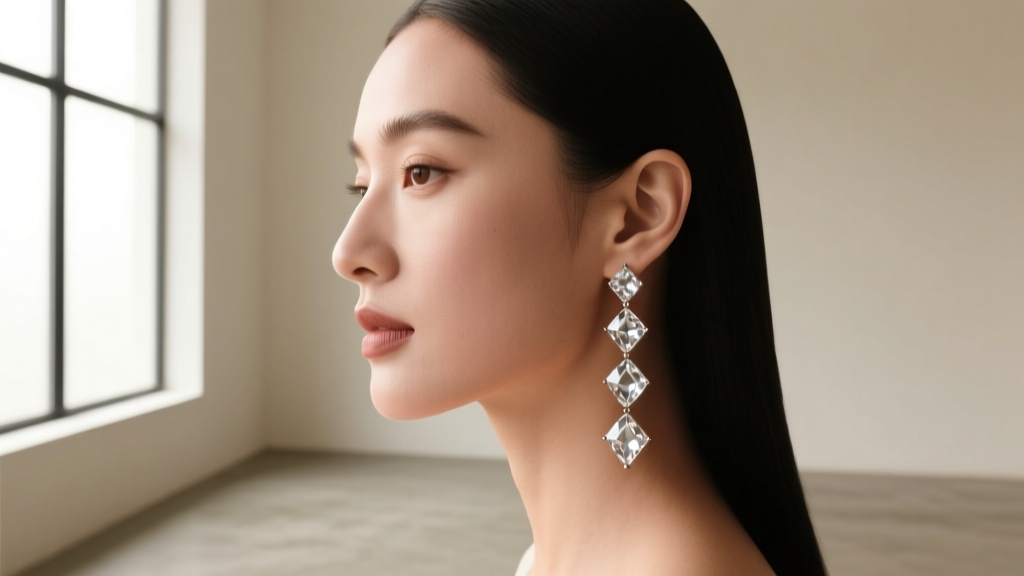
Crystal dangle earrings are powerful tools for facial balancing. The movement of the crystals draws the eye downward, which can be used to soften or elongate features.
- Round Faces: Opt for long, linear crystal drops or narrow chandeliers. The vertical lines and downward movement of the crystals create an elongating illusion, sharpening the jawline.
- Square Faces: Choose curved, teardrop-shaped crystals or oval hoops with small crystal dangles. The soft, rounded geometry of the stones contrasts beautifully with strong, angular jawlines.
- Heart-Shaped Faces: Look for dangles that are wider at the bottom than the top (like a triangle or pear-shaped cluster). This adds visual weight to the lower half of the face, balancing a narrower chin.
Care and Maintenance to Prevent Clouding
Crystals are magnets for skin oils, hairspray, and lotions, which create a microscopic film that drastically reduces light refraction. To maintain the brilliance of your crystal dangle earrings, clean them bi-weekly using a solution of warm water and a single drop of mild, phosphate-free dish soap. Use a soft baby toothbrush to gently agitate the pavilion (the underside) of the crystal where dirt accumulates. Never use ultrasonic cleaners on crystal earrings; the high-frequency vibrations can shatter tension-set stones, loosen prongs, and instantly strip away the foil backing on lower-grade crystals.
By prioritizing precise faceting, biocompatible metals of adequate thickness, and secure mechanical clasps over flashy but fragile glued designs, you can invest in crystal dangle earrings that remain brilliant, comfortable, and secure for years to come.


