The Ultimate Circular Earring Material Guide: Metals Compared
Discover the best metals for your circular earring. We compare titanium, gold, and surgical steel for durability, weight, and hypoallergenic properties.

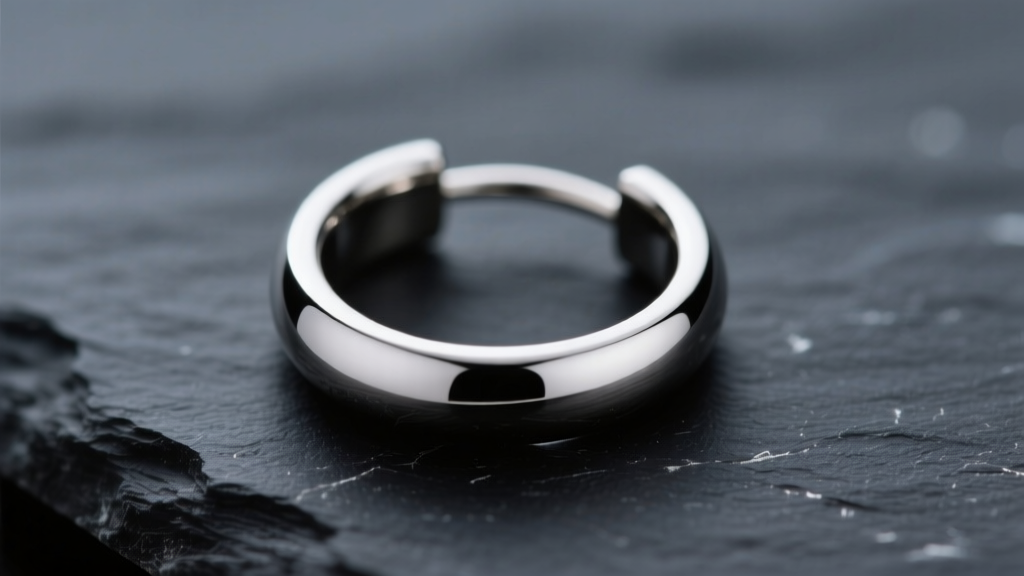
Why Material Dictates the Lifespan of Your Circular Earring
When building a curated ear stack or selecting a single statement piece, the geometry of your jewelry is just as critical as its aesthetic. A circular earring—whether it takes the form of a classic hoop, a tight huggie, a captive bead ring (CBR), or a seamless clicker—subjects metal to unique physical stresses. Unlike straight barbells or flat-back studs, circular designs endure constant torsion, tension, and rotational friction within the piercing fistula.
Choosing the wrong material for a circular earring doesn't just result in premature tarnishing; it can lead to catastrophic structural failure (like a snapped hinge or warped ring) or severe biological reactions, particularly in sensitive cartilage piercings. In this comprehensive metallurgical guide, we break down the exact material properties, alloy grades, and failure modes of the most common metals used in circular earrings, giving you the data needed to make an informed, safe purchase.
The Physics of the Circle: Tension and Torsion
Before diving into specific alloys, it is vital to understand why circular earrings demand higher material standards than other shapes. When you insert a seamless circular earring, you must twist the metal out of its planar alignment to open the gap. This action introduces work hardening—a metallurgical phenomenon where the metal becomes harder but more brittle through plastic deformation. Repeatedly opening and closing a low-quality circular earring will eventually cause metal fatigue, resulting in a clean snap at the stress point. Furthermore, the continuous curve of a hoop means that any microscopic porosity or plating flaw is constantly dragged through the healing tissue of the piercing, acting like a microscopic file against your skin.
The Big Four: Implant-Grade Titanium, Gold, Steel, and Niobium
Implant-Grade Titanium (ASTM F136)
For any unhealed piercing, or for individuals with known metal sensitivities, Implant-Grade Titanium is the undisputed gold standard. Specifically, you want titanium that meets the ASTM F136 or ASTM F67 standards (Ti-6Al-4V ELI). This aerospace and medical-grade alloy contains virtually zero nickel (less than 0.05%).
- Density & Weight: At 4.43 g/cm³, titanium is roughly 45% lighter than stainless steel. This makes large-diameter circular earrings (like 30mm+ hoops) significantly more comfortable for stretched lobes, as they won't drag the tissue downward.
- Hardness: With a Vickers hardness of roughly 350 HV, it resists scratching and maintains its structural integrity even in thinner gauges like 16g or 14g.
- Pricing: High-quality, internally threaded or clicker titanium circular earrings typically range from $25 to $65, making it an accessible investment for long-term wear.
14k and 18k Solid Gold
Gold is a premier choice for circular earrings, but only if the alloy is meticulously formulated. Pure 24k gold is far too soft (Vickers hardness of ~25 HV) and will warp out of its circular shape if you sleep on it. Therefore, 14k and 18k gold are used, alloyed with metals like silver, copper, or palladium to increase durability.
Critical Warning: If you are buying white gold circular earrings, ensure they are alloyed with palladium, not nickel. Many overseas manufacturers use nickel to bleach the gold white, which can trigger severe contact dermatitis. Furthermore, never buy gold-plated or gold-filled circular earrings. The rotational friction of a hoop sliding through a piercing will strip the microscopic gold layer within weeks, exposing the reactive brass or steel core beneath. Expect to pay $90 to $350+ for genuine solid gold hoops.
Surgical Stainless Steel (316L and 316LVM)
Often marketed as "hypoallergenic," 316L surgical steel actually contains between 8% and 12% nickel. It is deemed safe for jewelry because the chromium in the alloy creates a passive, invisible layer of chromium oxide that traps the nickel inside. However, this passivation layer can be compromised. If a steel circular earring is dropped, scratched, or subjected to the acidic pH of a healing piercing's lymph fluid, the nickel can leach out. According to the National Center for Biotechnology Information (NCBI), nickel remains the most common cause of allergic contact dermatitis worldwide. Steel is perfectly fine for fully healed, robust earlobes, but it is a liability for fresh or sensitive cartilage. Prices are highly affordable, usually ranging from $8 to $25.
Niobium
Niobium is an elemental metal, meaning it is not an alloy and contains absolutely no nickel. It is highly biocompatible and can be anodized using electricity to create vibrant, permanent colors without the use of paints or dyes. However, niobium is quite malleable. A thin 18-gauge niobium circular earring will easily bend out of shape if snagged on a towel. If you choose niobium for hoops or rings, opt for thicker gauges (14g or 12g) to maintain the structural circle. Prices generally sit between $20 and $50.
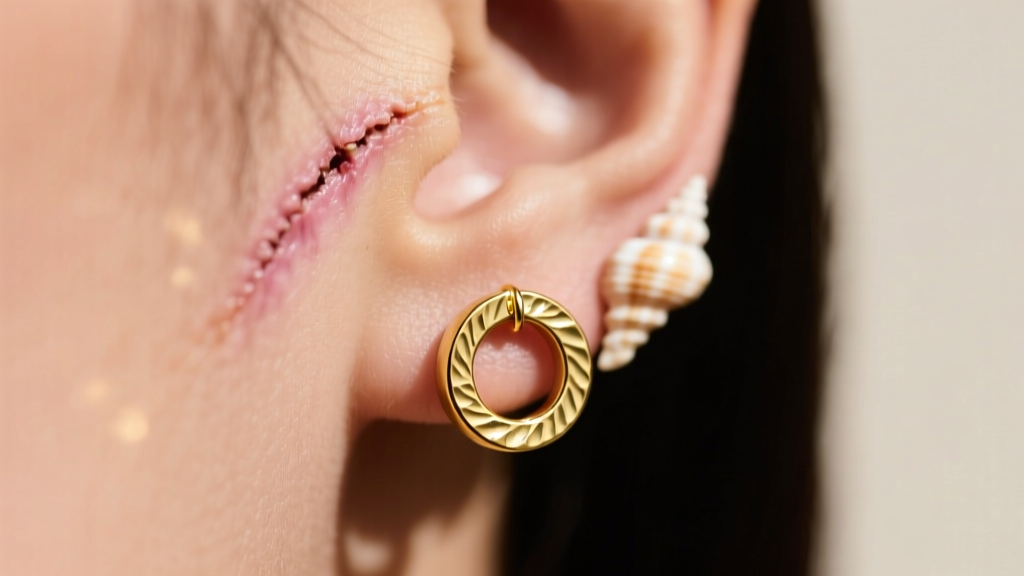
Material Properties Comparison Chart
Use this data table to quickly compare the metallurgical properties of the most common circular earring materials.
| Material | Standard / Grade | Nickel Content | Vickers Hardness (Approx) | Best Application | Avg. Price Range |
|---|---|---|---|---|---|
| Titanium | ASTM F136 (ELI) | < 0.05% | 350 HV | Fresh piercings, heavy/large hoops | $25 - $65 |
| Solid Gold | 14k / 18k (Palladium alloy) | 0% (if palladium) | 130 - 150 HV | Healed lobes, premium cartilage | $90 - $350+ |
| Surgical Steel | 316L / 316LVM | 8% - 12% (Trapped) | 150 - 190 HV | Fully healed, non-sensitive lobes | $8 - $25 |
| Niobium | Elemental (99.9%) | 0% | 60 - 80 HV | Color-anodized, thick-gauge rings | $20 - $50 |
Lobe vs. Cartilage: Matching Metal to Anatomy
The anatomical placement of your piercing heavily dictates which circular earring material you should select. The Association of Professional Piercers (APP) provides strict guidelines regarding initial jewelry and long-term wear based on tissue vascularity.
The Earlobe Advantage
Earlobes are highly vascular, meaning they have a robust blood supply that promotes rapid healing and efficiently clears away minor irritants. Because the tissue is soft and forgiving, fully healed lobes can comfortably tolerate 316L surgical steel circular earrings. The lobe's flexibility also means it absorbs the impact of snags, protecting softer metals like niobium from severe warping.
The Cartilage Crucible
Cartilage (helix, conch, daith, rook) is avascular—it lacks direct blood supply and relies on surrounding tissue for nutrient exchange. This makes cartilage notoriously slow to heal and highly prone to hypertrophic scarring and irritation bumps. If a nickel-leaching steel circular earring is worn in a daith or conch piercing, the resulting contact dermatitis can cause the cartilage to swell, reject the jewelry, or form permanent keloids. For any cartilage piercing, especially those that require circular geometry like the daith or tragus, you must strictly use ASTM F136 Titanium or high-quality, nickel-free 14k/18k Solid Gold.
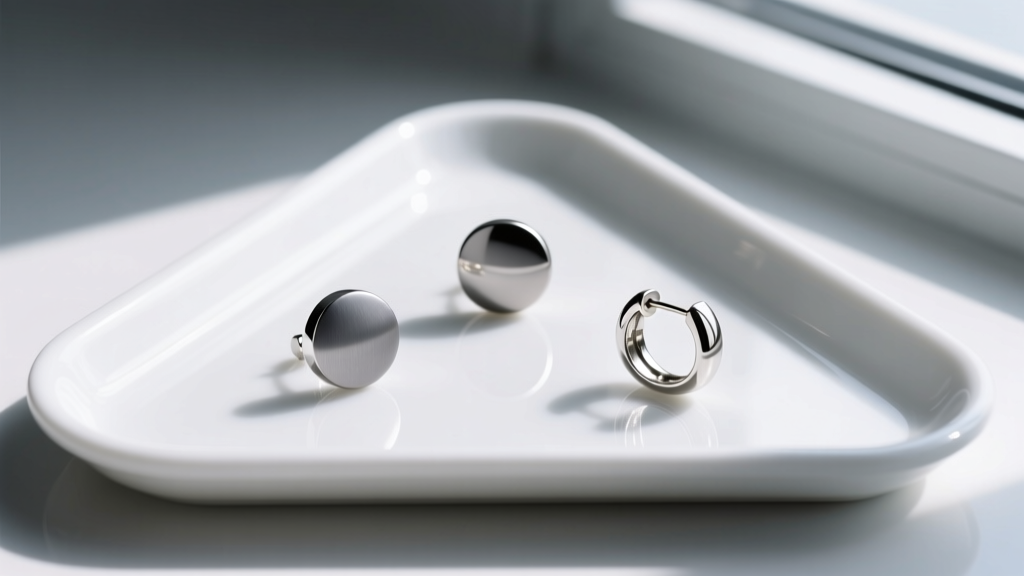
Common Failure Modes and How to Avoid Them
Even the best materials will fail if the engineering of the circular earring is flawed. Here are the most common structural failure modes specific to hoops and rings, and how to spot them before buying.
1. Hinge Fatigue in Clicker Rings
Clicker circular earrings feature a hinged segment that snaps into a hollow receiver. If the manufacturer uses a brittle, low-grade steel alloy, the microscopic pin holding the hinge will eventually shear off due to the repetitive stress of opening and closing. Solution: Only buy clickers from reputable brands that use CNC-machined titanium or solid gold, ensuring the hinge pin is integrated and reinforced.
2. Tension Loss in Seamless Rings
Seamless rings rely on the natural tension of the metal to keep the two ends flush against each other. Over time, bending the ring open to remove it stretches the metal, causing the gap to widen until the ring no longer stays closed. Solution: Invest in titanium or spring-tempered steel, which possess higher yield strengths and resist permanent deformation far better than standard brass or silver alloys.
3. Thread Stripping in Captive Bead Rings (CBRs)
While traditional CBRs don't use threads, many modern "threadless" or internally threaded circular barbells do. If the threads are cut into soft, low-karat gold or poorly machined steel, they will strip, making it impossible to secure the bead or end piece. Solution: Always look for internally threaded jewelry where the male thread is on the removable end, not the delicate post or ring itself, preserving the structural integrity of the main circular body.
Final Verdict: Choosing the Right Circular Earring
Selecting the perfect circular earring requires looking past the surface polish and evaluating the metallurgical reality of the piece. For unmatched biocompatibility, lightweight comfort in larger diameters, and structural resilience, Implant-Grade Titanium (ASTM F136) is the ultimate workhorse. If you desire the prestige and warmth of precious metals, 14k or 18k Solid Gold (alloyed without nickel) offers a luxurious, lifelong wear experience, provided you avoid plated imitations. Reserve Surgical Steel strictly for fully healed, non-sensitive earlobes, and embrace Niobium when you want vibrant, anodized colors in a thicker, more forgiving gauge. By matching the material properties to your specific anatomy and lifestyle, your circular earrings will remain perfectly round, structurally sound, and biologically harmonious for years to come.


