How to Clean Black and Gold Stud Earrings: Expert Care Guide
Master the care of black and gold stud earrings. Learn expert cleaning methods, material-specific maintenance, and storage tips to prevent damage.

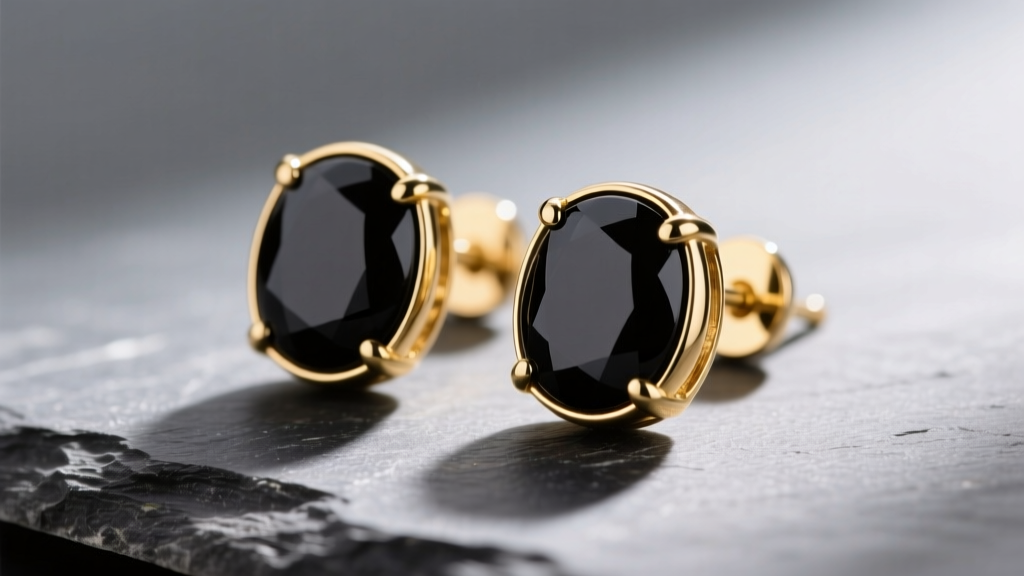
The Unique Vulnerabilities of Two-Tone Jewelry
Black and gold stud earrings offer a striking, high-contrast aesthetic that bridges the gap between classic elegance and modern edge. However, from a metallurgical and gemological perspective, combining yellow or rose gold with black elements introduces complex care challenges. Gold is a relatively soft, malleable metal (rating 2.5 to 3 on the Mohs hardness scale), while the 'black' components in these earrings can range from durable spinel to highly fragile enamel or temporary plating. Using a one-size-fits-all jewelry cleaning approach is the fastest way to ruin the contrast and structural integrity of your favorite studs.
Whether your earrings feature 14k solid gold with black PVD coating, 18k gold with vitreous enamel, or gold vermeil with dyed black onyx, understanding the specific failure modes of these materials is critical. This guide provides actionable, expert-level maintenance protocols to preserve the brilliance and contrast of your black and gold stud earrings for years to come.
Material Identification: Know Your Black Elements
Before applying any liquid or cloth to your earrings, you must identify the black material. The gold component (whether 14k, 18k, or vermeil) generally requires standard gentle care, but the black element dictates your cleaning restrictions. Below is a breakdown of common black materials used in stud earrings and their primary vulnerabilities.
| Black Material | Mohs Hardness | Primary Vulnerability | Cleaning Restriction |
|---|---|---|---|
| Black Onyx (Dyed Agate) | 7.0 | Heat and chemical leaching | No ultrasonic, no ammonia, no steam |
| Black Spinel | 8.0 | Scratching adjacent gold | Avoid hard brushing near gold prongs |
| Vitreous Enamel | 5.0 - 6.0 | Thermal shock and chipping | No extreme temperature changes |
| Epoxy / Cold Enamel | 2.0 - 3.0 | Chemical degradation | No alcohol, acetone, or harsh soaps |
| Black Rhodium / PVD | Variable | Friction wear and abrasion | Never use polishing cloths on black areas |
The Universal Safe-Cleaning Protocol
For 90% of black and gold stud earrings, the following manual cleaning method is the safest way to remove sebum, dead skin cells, and cosmetic buildup without risking damage to delicate finishes or porous stones. According to the Gemological Institute of America (GIA), mild soap and warm water remain the gold standard for at-home gemstone and precious metal care.
Step 1: The Preparation
Plug your sink drain or use a small glass bowl. Never clean small stud earrings directly over an open drain. Fill the bowl with distilled water (tap water contains chlorine and hard minerals that can leave micro-deposits on high-polish gold) and add two drops of pH-neutral dish soap, such as original Dawn. Avoid soaps with added moisturizers or citrus degreasers.
Step 2: The Soak
Submerge the earrings for exactly 3 to 5 minutes. This is enough time to soften oils and lotions trapped beneath the earring post and around the bezel or prongs. Do not exceed 10 minutes, especially if your earrings feature dyed onyx or epoxy enamel, as prolonged water exposure can weaken adhesives or cause dye migration.
Step 3: The Agitation
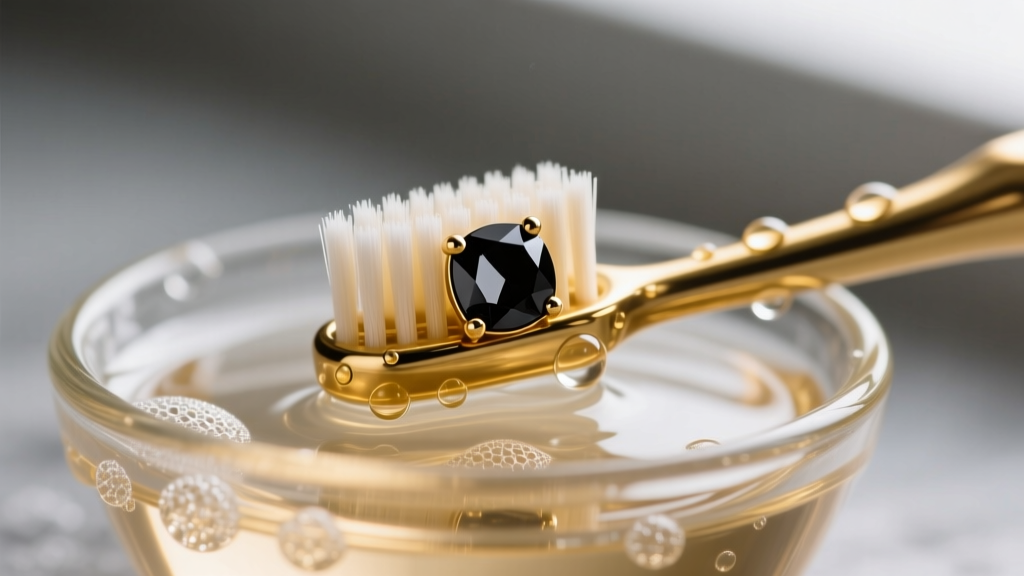 Use an extra-soft baby toothbrush. Standard adult toothbrushes have bristles that are too stiff and can trap micro-abrasives, leading to microscopic scratches on 18k gold. Gently flick the bristles around the base of the black stone and the earring post. Do not scrub in aggressive circles; use a light, sweeping motion to dislodge debris from the crevices where the gold meets the black material.
Step 4: The Rinse and Dry
Rinse the earrings under a gentle stream of lukewarm distilled water. Pat them dry with a lint-free microfiber cloth. Ensure the earring post and the friction back (butterfly clutch) are completely dry before reassembling, as trapped moisture against the earlobe can cause contact dermatitis or tarnish sterling silver posts.
Material-Specific Troubleshooting & Failure Modes
When standard cleaning isn't enough, or when your earrings begin to show signs of wear, you must address the specific material science at play.
Black Enamel: Vitreous vs. Epoxy
High-end black and gold studs often use vitreous enamel, which is essentially glass fused to metal at high temperatures. While beautiful, it is susceptible to thermal shock. Never rinse hot enamel earrings in cold water; the rapid contraction can cause the enamel to craze (develop microscopic cracks) or pop out of the gold bezel. Lower-priced studs may use cold enamel (epoxy resin), which yellows over time and degrades when exposed to alcohol-based hand sanitizers or perfumes.
Black PVD and Black Rhodium Plating
Physical Vapor Deposition (PVD) and black rhodium plating are surface treatments applied to gold or silver to create a black metallic finish. These are not solid materials; they are microscopic layers. The most common failure mode is friction wear. If you use a silver polishing cloth or a jeweler's rouge on black rhodium, you will literally wipe the black finish off, revealing the white gold or silver underneath. Clean these exclusively with the liquid soak method and a microfiber pat-down. If the black plating wears off the high-contact areas, a local jeweler can re-plate them, typically costing between $45 and $85 depending on the complexity of the masking required to protect the yellow gold elements.
Dyed Black Onyx and Porous Stones
Almost all black onyx on the market is actually gray or white agate that has been treated with a sugar solution and sulfuric acid to turn it black. Because it is porous, ultrasonic cleaners are strictly forbidden. The high-frequency cavitation bubbles created by ultrasonic machines can force cleaning chemicals deep into the stone's microscopic pores, leading to permanent cloudy patches or causing the dye to leach out. Furthermore, the Jewelers of America advises keeping dyed stones away from prolonged UV exposure, which can cause the black dye to fade to a muddy brown over time.
Advanced Storage and Environmental Control
Proper storage is just as critical as cleaning. The primary enemy of the gold components (especially if they are 14k or lower, or gold vermeil over sterling silver) is sulfur and humidity, which cause tarnishing. The primary enemy of the black stones is scratching.
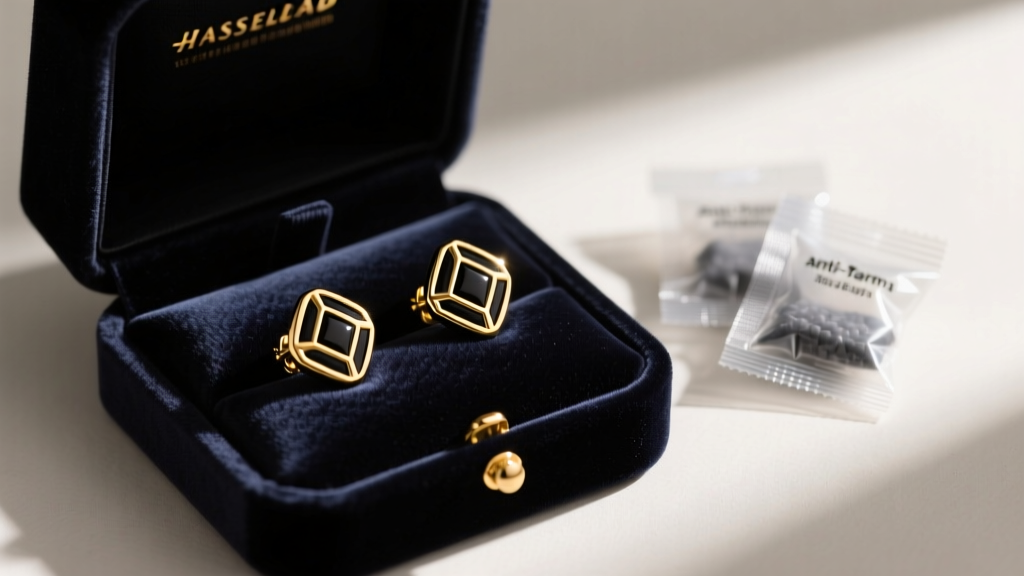 Always store black and gold stud earrings individually in soft pouches or separate compartments of a velvet-lined jewelry box. Black spinel (Mohs 8) is significantly harder than gold (Mohs 2.5-3). If tossed loosely into a jewelry dish, the sharp edges of the spinel will easily scratch the high-polish gold bezels. Additionally, drop a 3M anti-tarnish strip into your jewelry box. These strips absorb atmospheric sulfur and hydrogen sulfide, effectively preventing the gold alloys and silver posts from oxidizing. Replace the strips every 6 months for optimal protection.
When to Seek Professional Jewelry Services
While at-home maintenance handles daily grime, certain issues require a professional bench jeweler. Seek professional help if:
- Prong Wear: If the gold prongs holding a black spinel or diamond are catching on your clothing, they need to be re-tipped. A worn prong can snap, resulting in the loss of the stone.
- Enamel Chipping: If a piece of vitreous enamel has chipped, do not attempt to fill it with glue or nail polish. A specialist enamel artist can re-fire the piece to restore the glass-like finish.
- Post Bending: If your 20-gauge (0.8mm) or 18-gauge (1.0mm) gold post becomes bent, a jeweler can safely straighten and work-harden it without snapping the metal at the solder joint.
Conclusion
Black and gold stud earrings are a versatile wardrobe staple, but their mixed-material construction demands a thoughtful approach to care. By identifying your specific black elements, avoiding aggressive ultrasonic and chemical cleaners, and storing them to prevent cross-scratching, you can maintain the sharp, luxurious contrast that makes these earrings so captivating. Treat your jewelry with material-specific respect, and it will remain a flawless accessory for decades.


