How to Clean and Care for Your Favorite Bunny Earring Styles
Discover expert cleaning and maintenance tips for your bunny earring collection. Learn how to safely clean enamel, vermeil, and pearl rabbit jewelry.

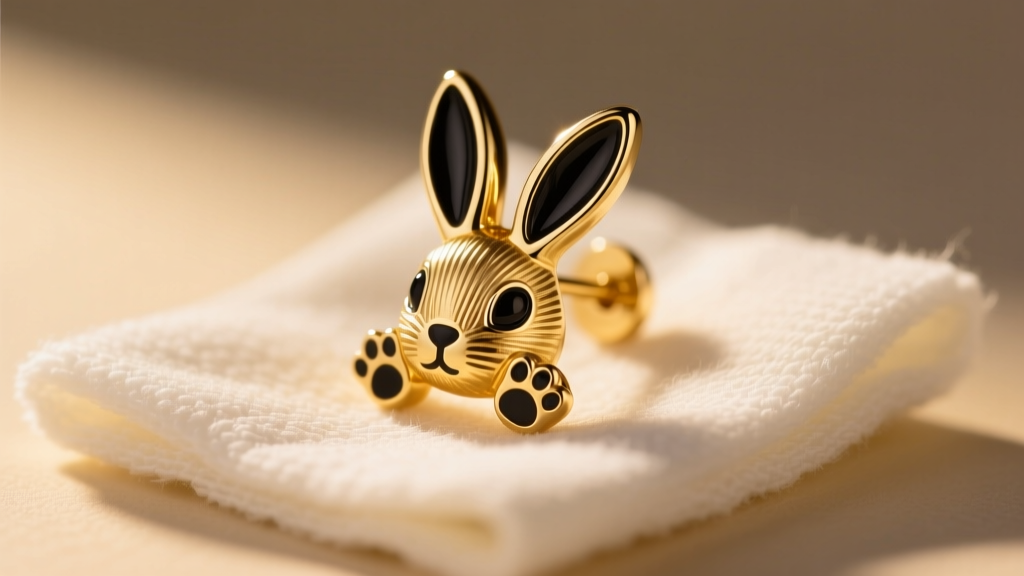
The Unique Anatomy of a Bunny Earring (and Why It Needs Special Care)
Bunny earrings have evolved far beyond simple childhood novelties. Today, they range from playful enamel studs to sophisticated 3D gold vermeil huggies and intricate cartilage cuffs. However, the very features that make a bunny earring so charming—long protruding ears, textured fur details, and mixed-material accents like pearl tails—make them notorious dirt traps. The deep crevices around the rabbit's ears and paws easily accumulate sebum, dead skin cells, and cosmetic residues.
Furthermore, the structural integrity of these designs requires careful handling. The elongated ears on dangle or stud styles act as tiny levers; if caught on a sweater or towel, they can bend the post or snap the solder joint at the base. Whether you own a delicate 18-gauge bunny ear cuff designed to hug your helix, or a pair of heavy sterling silver 3D rabbit studs, understanding the specific material science behind your jewelry is the first step in preserving its lifespan.
Material-Specific Cleaning Protocols
Not all bunny earrings are created equal. The cleaning method you use must be tailored to the specific materials and manufacturing techniques used in your piece.
Enamel and Resin Bunny Studs
Many modern bunny earrings utilize cold enamel (an epoxy-based resin) to achieve vibrant, opaque colors. Unlike traditional vitreous enamel (which is fused glass), cold enamel is highly sensitive to harsh chemicals and heat. Alcohol-based cleaners, ammonia, and ultrasonic waves will cause cold enamel to cloud, crack, or peel away from the metal backing. For enamel bunny studs, stick to a pH-neutral dish soap and lukewarm distilled water.
14k Gold Vermeil and Sterling Silver 3D Bunnies
Gold vermeil consists of a thick layer of gold (at least 2.5 microns) electroplated over a 925 sterling silver base. Because the intricate fur textures of a 3D bunny earring require aggressive polishing to shine, many owners mistakenly use abrasive silver polishing cloths. This is a critical error. Polishing cloths treated with jeweler's rouge will strip the gold layer right off the vermeil, exposing the raw silver underneath. According to GIA's silver care guidelines, mild soap and a soft brush are always preferred for plated or textured silver items to preserve the microscopic details.
Pearl-Accented Bunny Designs
Designers frequently use small freshwater pearls to represent a bunny's tail or eyes. Pearls are organic gems with a Mohs hardness of just 2.5 to 3.0, making them incredibly porous. The Gemological Institute of America (GIA) strictly advises against soaking pearls or exposing them to ultrasonic cleaners, as the vibrations can shatter the nacre and water can degrade the silk or adhesive holding them in place.
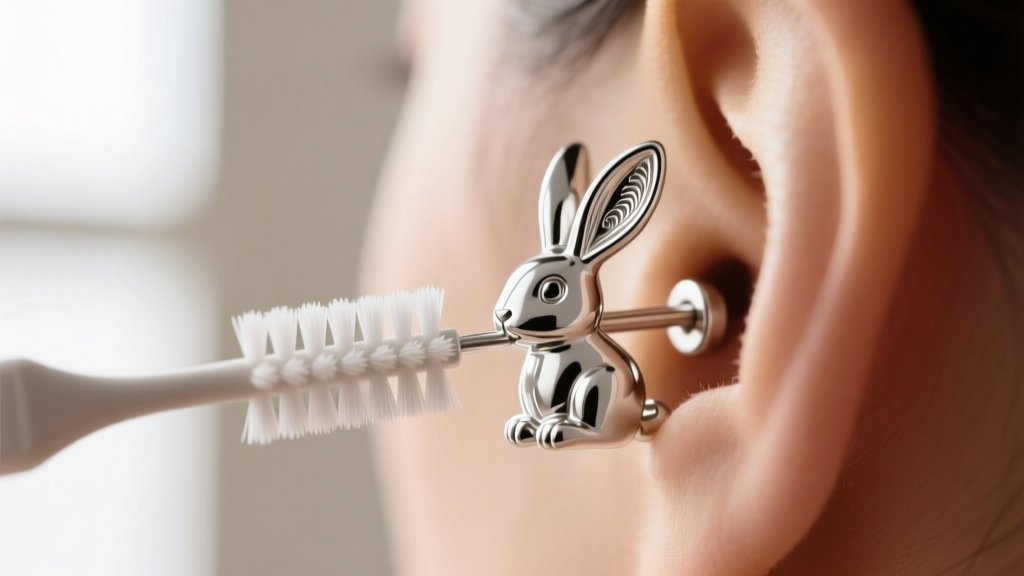
Step-by-Step Deep Cleaning Guide for Intricate Bunny Shapes
To safely remove buildup from the hard-to-reach areas of your bunny earrings without damaging the finish, follow this professional jeweler's protocol:
- Step 1: Prepare the Solution. Mix three drops of pH-neutral, lotion-free dish soap (like original Dawn) into a bowl of lukewarm distilled water. Avoid tap water, as trace minerals can leave water spots on high-polish metal.
- Step 2: Targeted Soaking. Submerge only the metal and enamel portions of the earring for exactly 3 minutes. If your bunny earring features pearls or glued-in gemstones, do not submerge it; instead, dip your brush directly into the solution.
- Step 3: Micro-Agitation. Use a soft-bristled baby toothbrush or a silicone interdental brush to gently sweep the crevices around the bunny's ears, nose, and paws. Brush in one direction to lift debris out of the textured grooves.
- Step 4: Precision Rinsing. Rinse under a gentle stream of lukewarm distilled water. Ensure the drain is securely plugged or use a mesh strainer to prevent losing small pieces.
- Step 5: Drying. Pat dry with a lint-free microfiber cloth. Use a hairdryer on the 'cool' setting to blow moisture out of the deep ear crevices, preventing hidden water spots or premature tarnishing.
The Danger Zone: Ultrasonic and Steam Cleaners
In 2026, at-home ultrasonic jewelry cleaners are more accessible than ever, but they are the natural enemy of the bunny earring. Ultrasonic cleaners operate by generating high-frequency sound waves (typically 40kHz) that create microscopic cavitation bubbles in the liquid. When these bubbles collapse, they generate intense localized shockwaves. While excellent for plain diamond solitaires, these shockwaves will easily fracture the delicate solder joints holding a bunny's long ears to its body. Furthermore, steam cleaners operating at 100°C will instantly melt resin-based accents and permanently cloud cold enamel finishes.
Troubleshooting Common Bunny Earring Issues
Even with meticulous care, the unique geometry of rabbit-shaped jewelry presents specific maintenance challenges. Use this diagnostic table to address common problems:
| Issue | Primary Cause | Actionable Solution |
|---|---|---|
| Enamel Clouding | Exposure to lotions, perfumes, or chemical dips | Wipe gently with a damp microfiber cloth; never use silver dip solutions. |
| Vermeil Fading | Friction from clothing and use of abrasive polishing cloths | Use only pH-neutral soap; store separately to prevent micro-scratches. |
| Bent Ear Appendage | Snagging on hair, towels, or clothing | Gently reshape using nylon-jaw jewelry pliers; never use steel pliers which will mar the metal. |
| Loose Pearl Accent | Degraded jeweler's epoxy from prolonged soaking or heat | Stop wearing immediately and take to a professional for UV-resin re-setting. |
| Cartilage Cuff Slipping | Metal fatigue causing the 18-gauge wire to lose tension | Gently squeeze the cuff closed with your fingers to restore the gripping tension. |
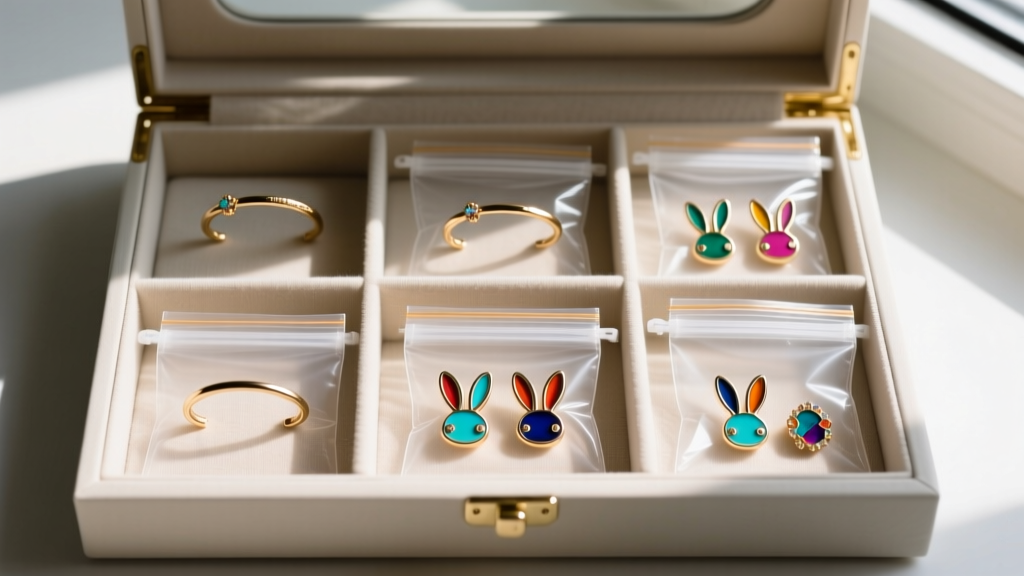
Maintenance and Storage: Preventing Tarnish and Snags
Proper storage is just as critical as cleaning. The protruding ears and 3D elements of bunny earrings make them highly susceptible to tangling and scratching when tossed into a communal jewelry box. Sterling silver 925, the base metal for most vermeil and high-quality fashion jewelry, reacts with sulfur in the air to form silver sulfide (tarnish).
To combat this, store each bunny earring in an individual, airtight ziplock bag equipped with a 3M anti-tarnish strip. For bunny ear cuffs (which typically utilize 18-gauge or 16-gauge wire to maintain cartilage tension), store them in a rigid compartment so they are not crushed by heavier pieces, which could warp the precise curve required for a secure fit on the helix or tragus.
When to See a Professional Jeweler
While routine cleaning and minor reshaping can be done at home, certain structural failures require professional intervention. If the post of your bunny stud snaps at the solder joint, or if the friction clutch (butterfly back) becomes permanently stuck due to severe tarnish buildup in the post's groove, do not force it. A bench jeweler can laser-weld a new post onto intricate 3D shapes without exposing the surrounding enamel or pearl accents to the high heat of a traditional butane torch, ensuring your favorite bunny earrings remain a staple in your collection for years to come.


