How to Clean and Care for Vintage Jean Paul Gaultier Earrings
Learn expert techniques to clean, maintain, and restore vintage Jean Paul Gaultier earrings without damaging delicate crystals, enamel, or plating.

The Anatomy of Archive JPG Earrings: Why Special Care is Needed
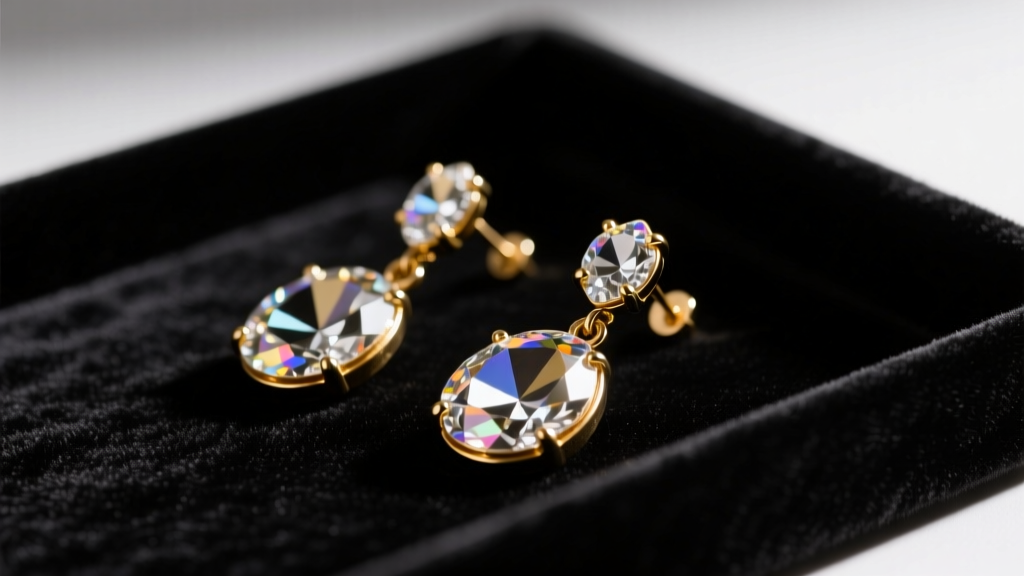
Jean Paul Gaultier’s costume jewelry—particularly his iconic runway pieces from the late 1980s, 1990s, and early 2000s—represents a highly collectible segment of the archive fashion market. Whether you own a pair of heavy gold-tone corset motif drops, safety pin dangles, or the classic logo plaque studs, understanding their material composition is the first step in proper maintenance. Unlike fine jewelry crafted from solid 18k gold or platinum, vintage Jean Paul Gaultier earrings are typically constructed from brass or white-metal alloy bases, finished with micron-thick electroplating, and set with glass or Swarovski rhinestones.
The primary vulnerability of these pieces lies in their foiled rhinestones and epoxy-set enamel. Foiled stones feature a delicate metallic backing applied to the reverse of the glass to amplify light refraction. If water or harsh chemicals seep beneath the setting, this foil oxidizes, turning black or cloudy—a condition that is virtually impossible to reverse without professional stone replacement. Furthermore, the gold and silver electroplating used in the 1990s is prone to 'brassing' (wearing down to the base metal) if subjected to abrasive polishing. According to the Gemological Institute of America (GIA), costume jewelry requires vastly different conservation protocols than fine gemstones, demanding a gentle, non-invasive approach to preserve both the plating and the structural adhesives.
Step-by-Step Cleaning Guide for JPG Rhinestone and Crystal Drops
To safely remove decades of accumulated skin oils, perfume residue, and environmental dust from your Jean Paul Gaultier earrings, you must avoid ultrasonic cleaners and liquid submersion at all costs. Ultrasonic vibrations will shatter vintage glass and dislodge epoxy-set stones, while submersion guarantees foil oxidation.
Tools You Will Need
- pH-neutral liquid dish soap (e.g., original blue Dawn)
- Distilled water (tap water contains minerals that leave hard water spots on foil)
- Ultra-soft baby toothbrush
- Cotton swabs and wooden toothpicks
- Lint-free microfiber cloths
- Hairdryer with a 'cool' air setting
The Cleaning Process
- Dry Dusting: Use a clean, dry baby toothbrush to gently sweep away loose dust from the crevices of the metalwork and around the stone settings.
- Spot Cleaning: Mix one drop of pH-neutral soap into a small bowl of distilled water. Dip a cotton swab into the solution and squeeze out the excess moisture until it is merely damp, not wet.
- Targeted Application: Gently roll the damp swab over the metal surfaces and the crowns (tops) of the rhinestones. Never press hard; let the mild surfactant lift the oils.
- Rinsing: Use a fresh swab dampened only with pure distilled water to wipe away any soap residue.
- Immediate Drying: Pat the earrings dry with a microfiber cloth, then use a hairdryer on the cool setting to blow air into the settings. This ensures no moisture remains trapped behind the stones.
Tackling Verdigris and Plating Loss on Vintage Hardware
If you acquire vintage Jean Paul Gaultier earrings from estate sales or secondary markets, you may encounter verdigris—a toxic, crusty green or blue-green corrosion that forms on copper, brass, and bronze alloys when exposed to moisture and chlorides (like sweat). Not only is verdigris unsightly, but it can also cause contact dermatitis and actively degrade the surrounding metal.
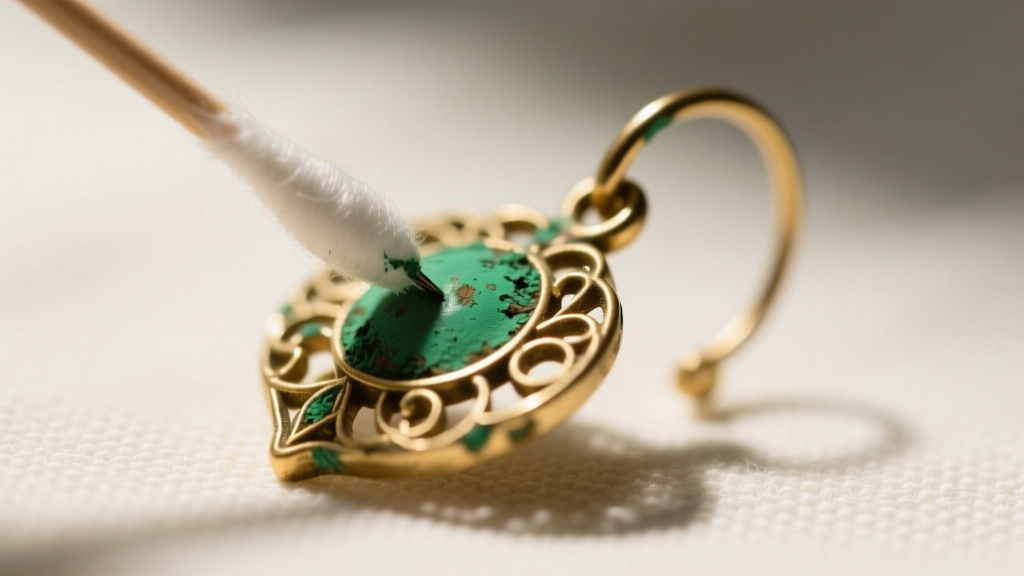
Do not use commercial jewelry dips or ammonia-based cleaners, as these will strip the remaining gold plating instantly. Instead, employ a targeted mechanical and mild chemical approach:
- Mechanical Removal: Use a wooden toothpick to gently scrape away the bulk of the crusty verdigris. Wood is softer than brass and will not scratch the underlying metal or plating.
- Chemical Neutralization: Dip a micro-swab in distilled white vinegar and apply it only to the affected bare metal areas, avoiding all stones and enamel. The mild acetic acid dissolves the copper acetates.
- Neutralize the Acid: Immediately follow up with a swab dipped in a baking soda and water paste to neutralize the vinegar, preventing further acid etching.
- Seal the Metal: Once completely dry, apply a microscopic layer of Renaissance Wax to the bare brass areas to create a moisture barrier against future oxidation.
For areas where the plating has completely worn away (brassing), professional re-plating is the only way to restore the original finish, though many collectors prefer to leave the patina as evidence of the piece's runway history.
Maintenance and Storage: Preserving the Archive Value
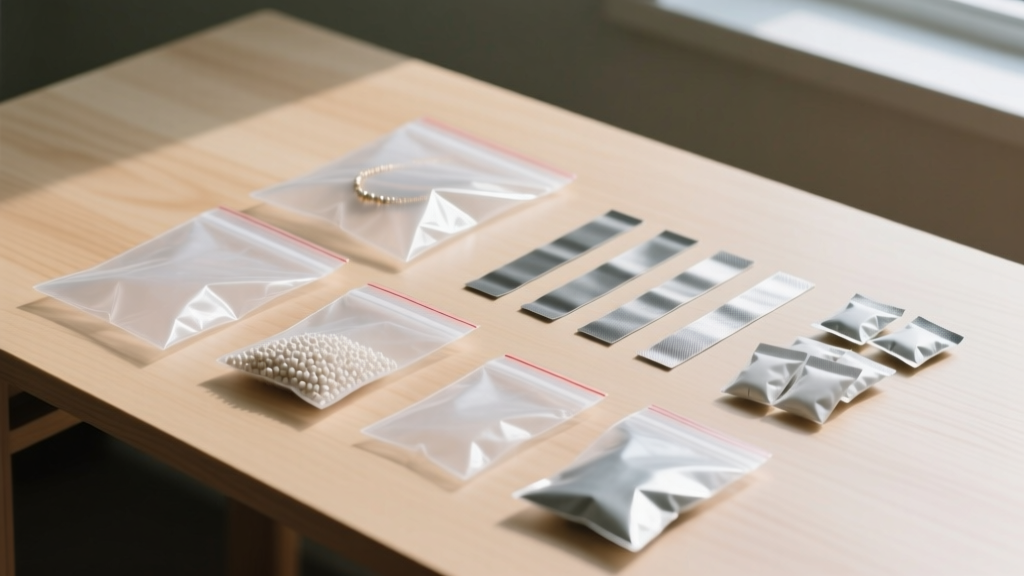
Proper storage is arguably more critical than cleaning when it comes to preserving the value of archive Jean Paul Gaultier earrings. The environment in which these pieces are kept dictates their longevity. A major mistake made by novice collectors is storing costume jewelry in PVC (polyvinyl chloride) plastic bags. As PVC degrades, it off-gasses hydrogen chloride, which causes silver and gold plating to tarnish rapidly and pit. Always use PE (polyethylene) or PP (polypropylene) archival bags.
Storage Do's and Don'ts
| Practice | Impact on JPG Earrings |
|---|---|
| Use Anti-Tarnish Strips | DO: Absorbs ambient sulfur gases that cause base metals and plating to darken. |
| Store in PVC Plastics | DON'T: Off-gasses chemicals that permanently pit and ruin electroplating. |
| Include Silica Gel Packets | DO: Controls humidity, preventing verdigris and epoxy adhesive breakdown. |
| Use Commercial Polishing Cloths | DON'T: Contains mild abrasives that will strip micron-thick vintage gold plating. |
| Hang Dangle Earrings | DO: Prevents chain tangling and stress on the solder rings of heavy drops. |
Restoring Clip-On and Post Mechanisms
Many vintage Jean Paul Gaultier earrings from the 1980s and 90s were designed as clip-ons or featured early omega-back mechanisms. Over time, the tension screws on these hinges can loosen, causing the earrings to slip off the lobe, or the spring mechanisms can become stiff with oxidized oils.
To service a stiff clip-on hinge, apply a microscopic drop of synthetic watch oil (like Moebius 8217) to the hinge pin using a fine needle. Work the clip back and forth gently to distribute the lubricant, then wipe away any excess with a dry cotton swab. If the tension is too loose, a jeweler can carefully adjust the curvature of the omega wire or tighten the tension screw. For post earrings that have lost their friction, avoid using cheap butterfly backs; instead, source heavy-duty silicone or 18k gold friction backs that provide a secure grip without bending the vintage earring post, which is often softer than modern stainless steel posts.
Final Thoughts on Archival Jewelry Care
Caring for vintage Jean Paul Gaultier earrings is an exercise in restraint. The goal is never to make a 30-year-old archive piece look 'brand new,' but rather to stabilize its condition, halt active corrosion, and preserve the designer's original aesthetic intent. By avoiding harsh chemicals, understanding the vulnerabilities of foiled rhinestones, and utilizing archival-grade storage materials, you ensure that these wearable sculptures remain intact for future generations of fashion historians and collectors. For more in-depth guidelines on preserving estate and costume pieces, the Christie's Jewelry Care Guide offers excellent foundational advice on handling historical adornments with museum-level respect.


