The Anatomy of Polki Earrings: A Technical Buyer's Guide
Master the technical nuances of polki earrings. Learn about uncut diamond grading, 22k gold kundan settings, foil backing, and authentication.

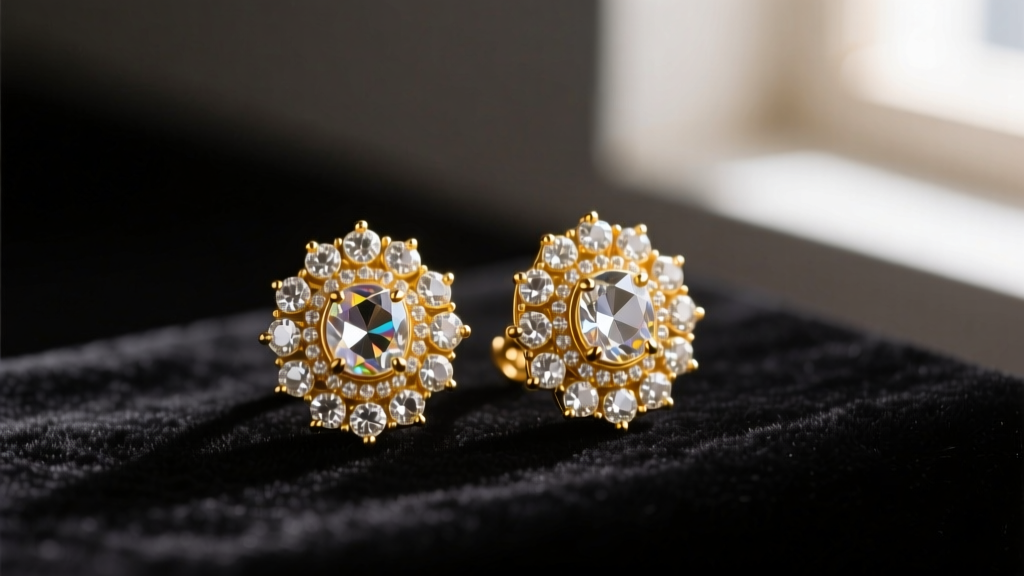
When navigating the high-end heritage jewelry market, few categories are as frequently misunderstood as polki earrings. Often conflated with 'Kundan' or broadly labeled as 'raw diamond jewelry,' authentic Polki represents a highly specific intersection of gemological morphology and traditional Indian metallurgy. For the serious collector or technical buyer, understanding polki earrings requires moving beyond aesthetic appreciation and diving into the structural engineering of Jadau settings, the optical physics of foil backing, and the precise grading metrics of unfaceted carbon crystals. This guide deconstructs the anatomy of polki earrings, providing a rigorous framework for evaluation, authentication, and long-term preservation.
The Morphological Reality of 'Uncut' Diamonds
The term 'uncut' is a commercial misnomer that leads to significant buyer confusion. Polki diamonds are not entirely raw, unshaped stones pulled directly from the earth. Instead, they are cleaved and polished along their natural crystallographic planes—typically octahedral or dodecahedral habits—to create flat, smooth surfaces without the introduction of geometric facets. This process, known as traditional cleaving, retains the diamond's natural carat weight and internal inclusions while providing a flat table for the setter. Because they lack the precisely calculated pavilion angles of modern brilliant cuts, polki diamonds do not exhibit total internal reflection or 'fire.' Instead, they offer a soft, glassy luster and deep, moody brilliance that relies entirely on the setting's architecture to achieve visual impact. According to the Gemological Institute of America (GIA), evaluating unfaceted diamonds requires a complete departure from the standard 4Cs, placing premium value on translucency, crystal flatness, and color uniformity.
Architectural Breakdown of the Jadau Setting
The structural integrity of polki earrings relies on the ancient Jadau technique, a complex assembly process that uses no prongs, bezels, or solder. The architecture is divided into three critical components:
1. The Base Framework (Ghaat)
The foundational structure of the earring is typically cast or fabricated from 18k or 22k gold alloy, chosen for its durability. The artisan carves precise grooves, known as the ghaat, which dictate the exact placement of every individual polki stone. The depth and angle of these grooves are critical; a miscalculation of even a fraction of a millimeter will result in uneven light distribution across the earring's surface.
2. The Lac Resin Filling
Once the framework is prepared, the hollow cavities behind the stones are filled with lac (shellac), a natural tree resin. The lac serves a dual purpose: it acts as an adhesive to secure the diamond from beneath, and it provides a dark, contrasting background that enhances the perceived depth and color of the translucent polki stones. In premium heritage pieces, only natural, purified lac is used. Mass-market manufacturers often substitute this with synthetic epoxy resins, which prevents traditional restoration and severely depreciates the earring's antique value.
3. The Kundan (Gold Foil) Burnishing
This is where the terminology correction is vital: Kundan is not the earring itself; it is the setting material. Kundan refers to highly refined, 24k pure gold strips. Because 24k gold is exceptionally malleable, the artisan uses a specialized stylus to cold-weld and burnish the gold strips into the gaps between the polki diamonds and the metal framework. No heat or solder is applied. The friction and pressure of the burnishing tool fuse the pure gold strips together, creating a seamless, watertight seal that locks the diamonds in place. Sotheby's Institute notes that the quality of the Kundan burnishing is a primary indicator of a master craftsman's work, with premium pieces showing zero visible seams or overlapping gold ridges.
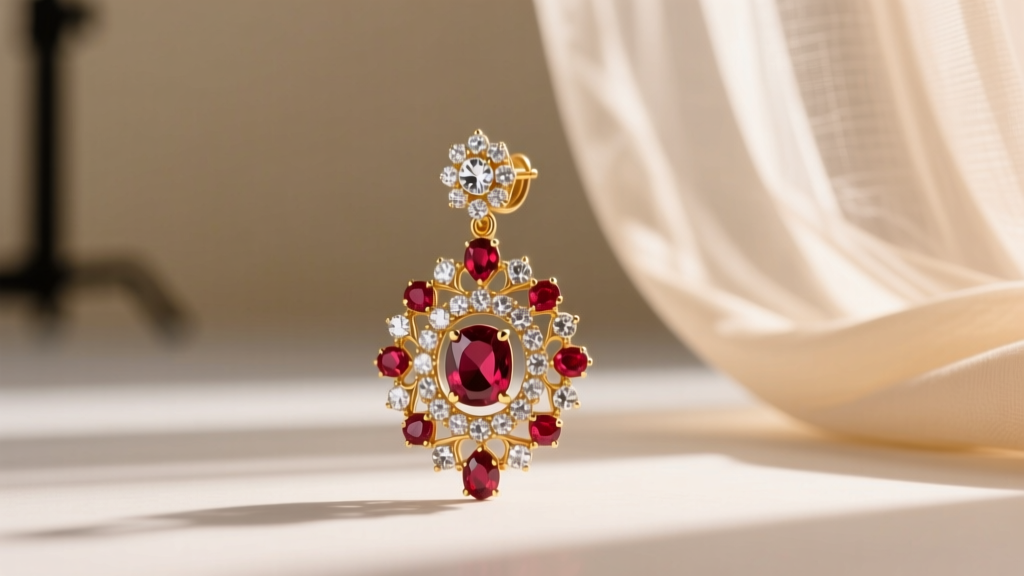
Polki Diamond Classification Matrix
Unlike faceted diamonds graded via the Rapaport list, polki diamonds are classified by their physical morphology and suitability for specific zones within an earring's design. Buyers should request the following grading classifications when evaluating high-ticket polki jhumkas or chandbalis:
| Grade Name | Morphology | Clarity / Translucency | Primary Application in Earrings |
|---|---|---|---|
| Tikdi (Flat) | Cleaved into uniform, flat plates | High (VVS-VS equivalent) | Center stones, large dome apexes, primary drops |
| Kil (Seed) | Small, irregular, semi-flat chunks | Medium (SI-I1 equivalent) | Border accents, floral petal motifs, halos |
| Bakkal | Thick, uneven, heavily included | Low (I2-I3 equivalent, opaque) | Hidden structural fills, reverse-side accents |
Expert Note: Authentic premium polki earrings should exclusively feature Tikdi and high-grade Kil diamonds on the visible obverse side. The presence of Bakkal stones on the front face is an immediate indicator of commercial-grade manufacturing.
The Science of Chitai (Foil Backing)
Because polki diamonds lack a pavilion to reflect light back to the observer's eye, they require optical assistance to achieve brilliance. This is achieved through Chitai, the application of ultra-thin silver or gold foil directly behind the diamond, resting on top of the lac resin. The foil acts as a mirror, catching ambient light and bouncing it back through the translucent diamond. In some heritage pieces, artisans use tinted foils (rose or yellow) to color-correct lower-grade polki stones, giving them a warm, champagne hue. However, buyers must be aware that foil-backed diamonds are highly susceptible to environmental degradation. The GIA frequently documents cases where moisture infiltration causes the silver foil to oxidize and turn black, effectively 'killing' the diamond's brilliance from the inside out.
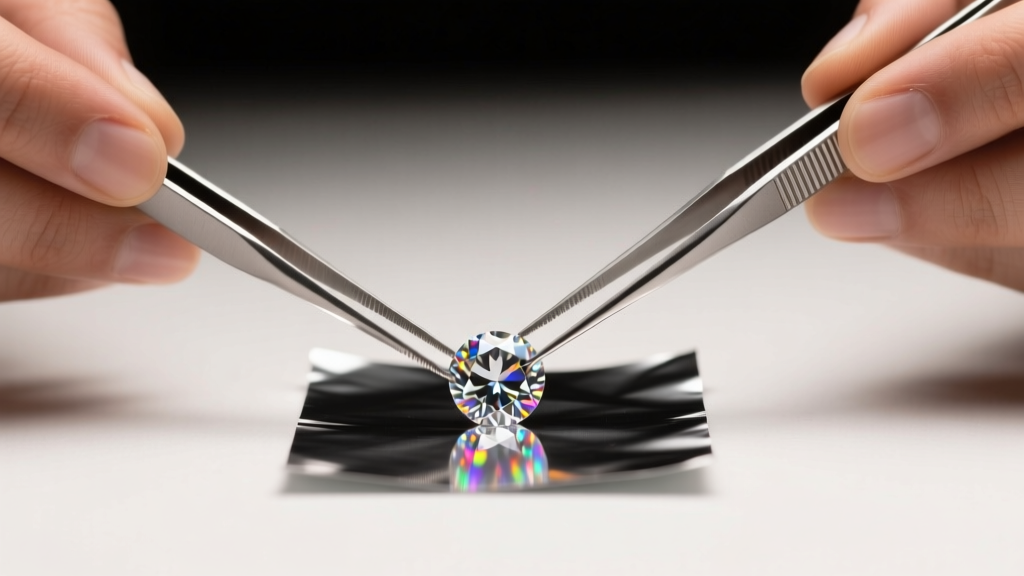
Structural Vulnerabilities and Maintenance Protocols
The very materials that give polki earrings their historical authenticity are also their greatest vulnerabilities. The natural lac resin is highly hygroscopic, meaning it absorbs moisture from the air and direct contact. When water penetrates the Kundan seal, it reacts with the lac, causing it to turn opaque white—a phenomenon known in the trade as 'milking.' Simultaneously, the trapped moisture oxidizes the Chitai foil, turning it black. Therefore, the maintenance protocol for polki earrings is strictly prohibitive:
- Never use ultrasonic cleaners: The high-frequency vibrations will shatter the cleaved diamonds and crack the lac backing.
- Avoid all liquid solvents: Water, alcohol, and commercial jewelry dips will permanently ruin the foil and resin.
- Dry-brushing only: Use a completely dry, ultra-soft sable brush to remove skin oils and cosmetics from the gold framework.
- Climate-controlled storage: Store in airtight containers with silica gel desiccants to prevent ambient humidity from degrading the lac.
Valuation Metrics: Weight vs. Artistry
When appraising polki earrings, discard the 'price per carat' mentality used for modern solitaires. Polki jewelry is valued as a composite art object. The pricing model is heavily weighted toward the Tola weight (1 Tola = 11.66 grams) of the finished gold piece and the Karigari (artisan labor) required to execute the Jadau setting. A pair of 50-gram polki chandbalis with exceptional Kundan work and Tikdi-grade diamonds will command a massive premium over a heavier, clumsily set piece with opaque Bakkal stones. Always demand a detailed breakdown of the gold purity (verifying the 22k/18k base vs. the 24k Kundan strips) and request a loupe inspection of the reverse side to ensure the lac sealing is flush and free of micro-fissures.


