How to Clean Coach Hoop Earrings: Expert Care Guide
Learn how to safely clean and maintain Coach hoop earrings. Expert tips on removing tarnish, protecting plating, and storing your jewelry.

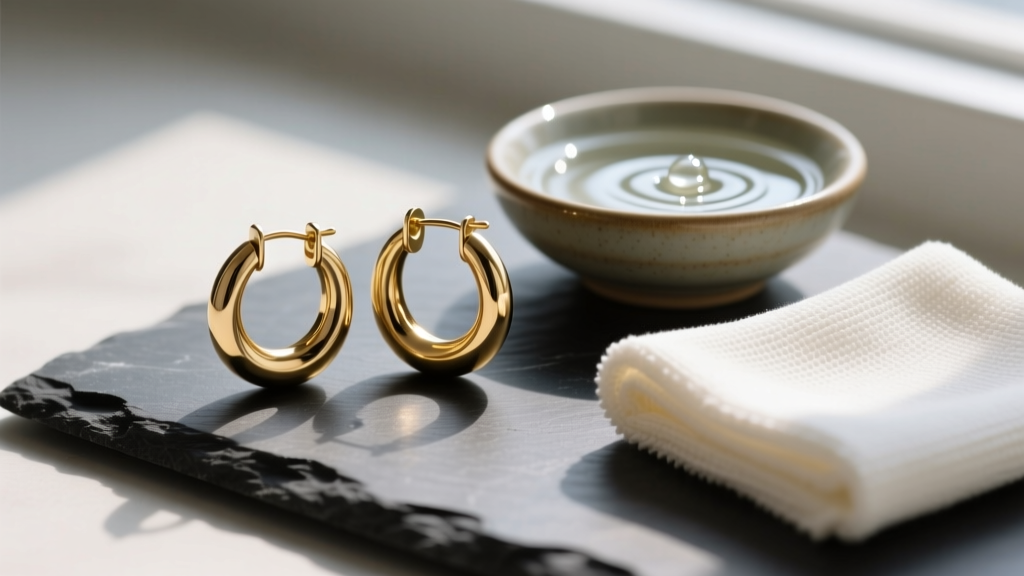
The Anatomy of Coach Hoop Earrings: Why Specific Care Matters
Coach hoop earrings are a staple in modern accessorizing, blending classic silhouettes with recognizable hardware. However, maintaining their brilliant finish requires an understanding of their material composition. Unlike solid gold or platinum fine jewelry, most fashion-forward hoops from designer houses like Coach are crafted from a brass base metal and finished with a layer of gold or silver plating. This plating is typically between 0.5 and 2.5 microns thick.
While this construction allows for accessible luxury and intricate designs—such as the signature 'C' hardware or enamel inlays—it also makes the earrings highly susceptible to chemical degradation. The brass underneath contains copper, which reacts with sulfur, oxygen, and the natural acids in your skin to create tarnish. When the microscopic plating layer wears thin, the brass is exposed, leading to the dreaded 'green skin' effect. According to the Gemological Institute of America (GIA), plated jewelry requires vastly different cleaning protocols than solid metals to prevent stripping the delicate outer layer.
The 5-Minute Cleaning Routine for Plated Hoops
To safely remove sebum, dead skin cells, and cosmetic buildup without damaging the gold flash plating or enamel accents, you must avoid abrasive cleaners. Never use baking soda pastes, toothpaste, or commercial silver dips, as these will permanently cloud the finish.
What You Will Need
- Distilled water (tap water contains chlorine and minerals that can spot plating)
- Mild, phosphate-free dish soap (like original blue Dawn)
- A soft-bristled baby toothbrush
- Wooden toothpicks
- A lint-free microfiber cloth
Step-by-Step Wash Method
- Prepare the Solution: Mix two cups of lukewarm distilled water with a single drop of mild dish soap in a glass bowl. Avoid hot water, which can weaken the adhesives used in pavé crystal settings.
- Brief Soak: Submerge your Coach hoop earrings for exactly 2 to 3 minutes. This loosens oils and makeup without allowing water to seep deeply into the hinge mechanisms.
- Gentle Agitation: Using the baby toothbrush, lightly sweep the bristles over the surface of the hoops. Focus on the interior curve where the earring rests against the earlobe, as this area collects the most sweat and perfume residue.
- Rinse: Dip the earrings into a separate bowl of clean, distilled water to remove any soap film.
- Dry Thoroughly: Pat the hoops dry with a microfiber cloth. Allow them to air-dry completely on a paper towel for 15 minutes before storing.
Tackling the Hoop Clasp and Hinge Mechanisms
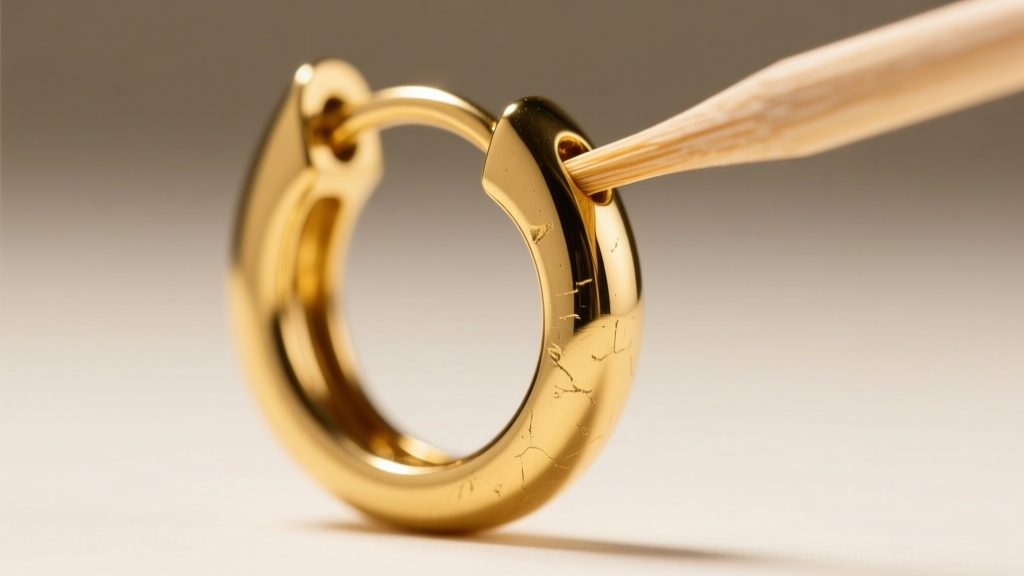
The most common failure point in hoop earrings is the clasp. Whether your Coach hoops feature a post-and-click closure, a hinged snap, or a continuous wire loop, the joints are prime real estate for gunk accumulation. When dead skin and lotion pack into the hinge, the clasp becomes stiff, making it difficult to open and close, which can eventually bend the delicate wire.
Expert Troubleshooting for Stiff Hinges: Do not use WD-40 or household lubricants, as these contain solvents that will strip gold plating and leave a toxic residue near your piercing. Instead, dip the tip of a wooden toothpick into a tiny drop of food-grade mineral oil. Trace the seam of the hinge, allowing capillary action to pull the oil into the joint. Click the clasp open and closed a few times to distribute the oil, then wipe away any excess with a microfiber cloth.
The Ultimate Do's and Don'ts Table
To ensure your earrings retain their luster and structural integrity, refer to this quick decision matrix before attempting any maintenance.
| Maintenance Action | Verdict | Reasoning |
|---|---|---|
| Ultrasonic Cleaning | DON'T | High-frequency vibrations will shatter enamel and shake pavé crystals out of their prongs. |
| Polishing Cloths | DO | Use only untreated, soft microfiber. Avoid treated silver polishing cloths, as their mild abrasives will strip gold plating. |
| Wearing in the Shower | DON'T | Hard water minerals and harsh sulfates in shampoos accelerate brass oxidation and cloud crystals. |
| Applying Perfume First | DO | Always apply fragrance and hairspray 5 minutes before putting on your hoops to prevent alcohol-based chemical burns on the metal. |
| Using Baking Soda | DON'T | Baking soda is highly abrasive on the Mohs scale and will leave microscopic scratches in the plating and enamel. |
Proper Storage to Prevent Tarnish and Scratching
How you store your Coach hoop earrings when they are not on your ears is just as critical as how you clean them. The Jewelers of America emphasizes that environmental factors are the primary catalyst for tarnish in plated brass jewelry.
Environmental Factors to Control
Humidity and airborne sulfur are the enemies of plated brass. Never store your earrings in the bathroom, where steam from showers creates a high-humidity environment that accelerates oxidation. Instead, keep them in a bedroom drawer or closet.
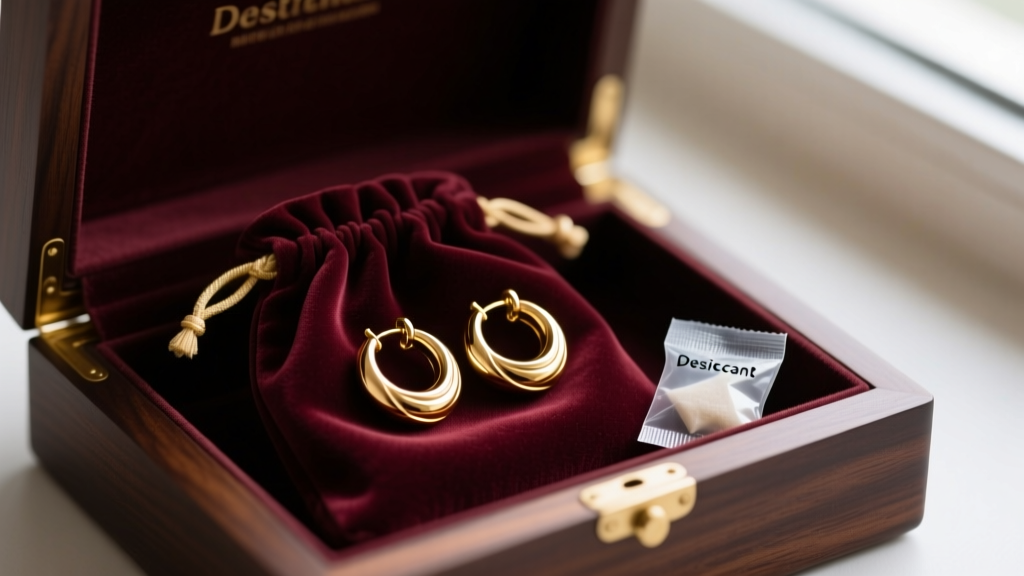
For optimal preservation, place each pair of hoops in an individual anti-tarnish flannel pouch. These pouches are treated with silver sulfide-binding agents that neutralize airborne pollutants. Toss a small silica gel packet into your main jewelry box to absorb ambient moisture. Furthermore, always store hoops separately from harder gemstones like diamonds or sapphires, which can easily scratch the relatively soft gold plating and enamel surfaces.
When to Seek Professional Replating
No matter how meticulously you care for them, fashion jewelry plating has a finite lifespan. Friction from the earlobe, combined with the natural pH of your skin, will eventually wear through the 1-micron gold layer. You will know it is time for intervention when you notice a brassy, yellowish-brown hue showing through the high-wear areas, or if the earring posts begin to irritate your piercings.
When this happens, do not attempt to cover the brass with clear nail polish—a common internet hack that ultimately yellows, chips, and traps moisture against the metal, causing worse corrosion. Instead, take your Coach hoops to a local bench jeweler for electroplating. A professional can polish out minor scratches and apply a fresh layer of 14k or 18k gold, or even a durable rhodium flash, for a typical cost ranging between $35 and $65. This process essentially restores the earrings to factory-new condition, extending their life for another decade of wear.
Pro Tip: If you have highly acidic skin (often indicated by a low skin pH that turns cheap jewelry green quickly), wipe the earring posts with a dry microfiber cloth immediately after every single wear. Removing the acidic sweat before it has time to dry on the metal is the single most effective way to double the lifespan of your plating.


