How to Clean Earring Hooks Michaels Sells for DIY Jewelry
Learn how to clean, sanitize, and maintain earring hooks Michaels sells for DIY jewelry. Expert care tips for plated and sterling findings.

The Anatomy of Craft Store Findings
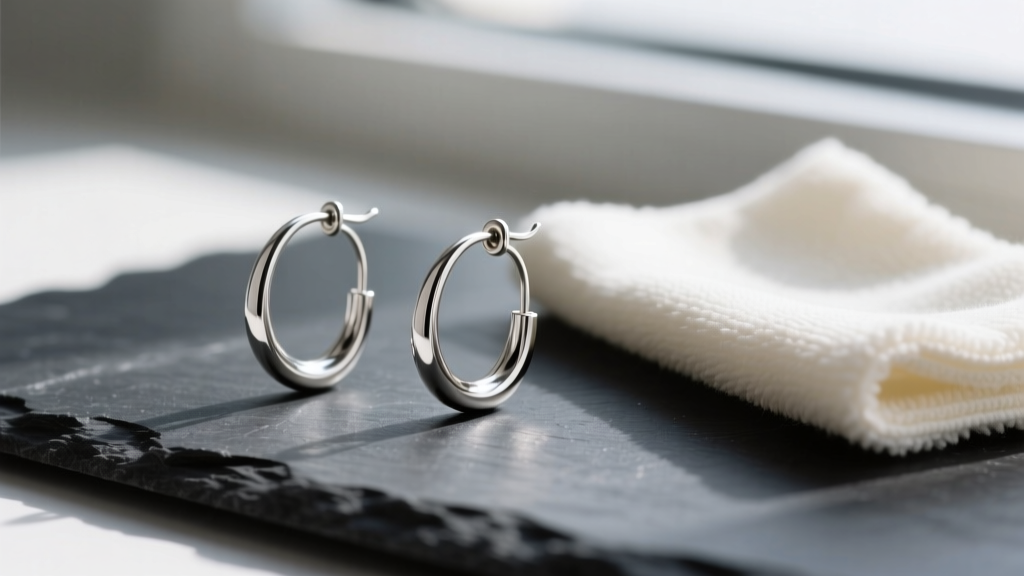
For DIY jewelry makers, Michaels is a go-to destination for sourcing affordable findings. However, the earring hooks Michaels carries—typically ranging from 20-gauge (0.81mm) to 22-gauge (0.64mm) French wires—require specific maintenance protocols to ensure longevity and wearer safety. Unlike fine jewelry findings that feature heavy micron plating or solid precious metals, craft store hooks often utilize flash plating over base metals like brass, cupronickel, or low-grade stainless steel. Understanding the exact material composition of your hooks is the critical first step in establishing a proper cleaning and care regimen.
The most common failure mode for craft store earring hooks is friction wear. The section of the wire that passes through the earlobe experiences constant micro-abrasion against the skin. On flash-plated hooks (which typically have a precious metal coating of less than 0.5 microns), this friction quickly wears away the silver or gold layer, exposing the reactive base metal underneath. This not only leads to rapid tarnishing but can also trigger contact dermatitis in wearers with metal sensitivities.
The Chemistry of Tarnish and Wear
Tarnish on silver-plated or sterling silver earring hooks is not a sign of poor quality; it is a natural chemical reaction. When silver is exposed to sulfur compounds in the air (hydrogen sulfide) or on the skin, it forms silver sulfide, which manifests as a dull, yellowish, or black film. According to the Gemological Institute of America (GIA), environmental factors such as high humidity, wool storage materials, and even certain cosmetics can exponentially accelerate this oxidation process.
For gold-plated hooks, the primary enemy is not tarnish, but chemical degradation from acidic skin pH and lotions. The oils and acids secreted by the earlobe can break down the microscopic gold layer, leading to a patchy, discolored appearance that cannot be polished back to its original state without re-plating.
Step-by-Step Cleaning Protocols by Material
Because Michaels sells a variety of hook finishes, applying a universal cleaning method will ruin your inventory. Below are the material-specific protocols you must follow to safely restore your findings.
Method 1: The Gentle Surfactant Bath (For Plated Metals)
This method is strictly for gold-plated, silver-plated, and rose-gold-plated hooks. It removes sebum, dead skin cells, and cosmetic residue without stripping the delicate flash plating.
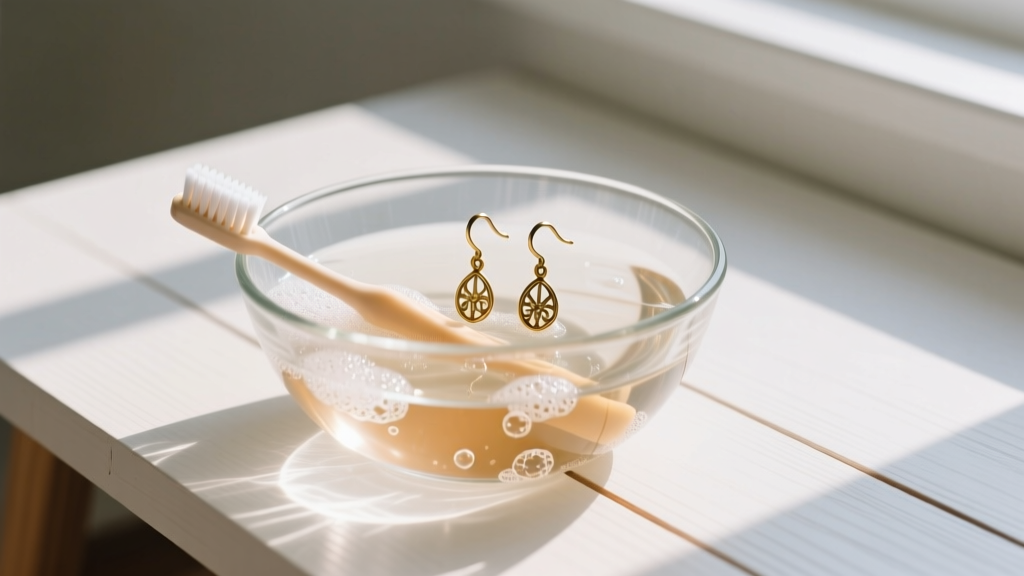
- Solution: Mix 1 cup of distilled water (tap water contains chlorine and minerals that cause spotting) with two drops of pH-neutral dish soap, such as Dawn.
- Agitation: Submerge the hooks for no more than 3 minutes. Use a soft-bristled baby toothbrush to gently sweep the crevices of the coil and the loop.
- Drying: Rinse with distilled water and immediately pat dry with a lint-free microfiber cloth. Do not air dry, as water spots will permanently etch into the soft plating.
Method 2: Electrochemical Ion Exchange (For Solid Sterling Silver 925)
If you have invested in Michaels' sterling silver findings, you can reverse silver sulfide tarnish without removing any metal through an electrochemical reaction.
- Setup: Line a glass bowl with aluminum foil (shiny side up). Place the sterling silver hooks so they physically touch the foil.
- Reaction: Sprinkle 1 tablespoon of baking soda over the hooks, then pour boiling water into the bowl. The heat and alkaline solution facilitate an ion exchange where the aluminum pulls the sulfur away from the silver.
- Finish: Remove the hooks after 2 minutes using wooden tongs. Rinse in distilled water and buff with a polishing cloth.
Method 3: Isopropyl Sanitization (For Surgical Steel)
Michaels' 'surgical steel' hooks are generally 316L stainless steel. While highly resistant to tarnish, they must be properly sanitized before being sold or worn, especially if previously handled or tried on.
- Process: Submerge the steel hooks in 70% isopropyl alcohol for 5 minutes. Avoid 91% or 99% alcohol, as the higher water content in 70% alcohol actually makes it more effective at penetrating bacterial cell walls.
- Drying: Remove and allow to air dry on a clean paper towel. The alcohol will evaporate completely without leaving residue.
Material Care and Maintenance Matrix
| Hook Material | Base Metal Core | Recommended Cleaning Agent | Strictly Avoid |
|---|---|---|---|
| Silver-Plated | Brass or Copper | Distilled water + mild dish soap | Baking soda, toothpaste, silver dip |
| Sterling Silver (925) | Solid Silver Alloy | Aluminum foil + baking soda bath | Bleach, harsh abrasives |
| Gold-Plated | Brass or Nickel Silver | Mild soap + microfiber buff | Ultrasonic cleaners, alcohol |
| Surgical Steel (316L) | Iron/Chromium Alloy | 70% Isopropyl alcohol | Chlorine bleach (causes pitting) |
The Nickel Allergy Factor: Testing and Prevention
One of the most significant risks associated with budget craft findings is hidden nickel. Many base metals used in silver-plated hooks, such as 'nickel silver' (which contains no actual silver, but rather copper, zinc, and nickel), can leach nickel salts when exposed to the slightly acidic environment of the human ear. The Mayo Clinic notes that nickel allergy is one of the most common causes of allergic contact dermatitis, resulting in redness, itching, and blistering of the earlobe.
Pro-Tip for DIY Sellers: If you are selling jewelry made with Michaels findings, purchase a Dimethylglyoxime (DMG) spot test kit. Swabbing the wire of the hook with a DMG solution will turn pink within seconds if leachable nickel is present. If your hooks test positive, you must coat the wire in a jewelry shield, a hypoallergenic barrier like ProtectaClear, or upgrade your inventory to prevent customer reactions.
Preventative Storage Environments
Proper storage is vastly more effective than reactive cleaning. To preserve the flash plating and prevent oxidation on your Michaels earring hooks before they are even assembled into earrings, you must control the micro-climate of your storage area.
- Anti-Tarnish Strips: Place 3M Anti-Tarnish strips inside your storage bins. These strips contain copper-based polymers that chemically bind to hydrogen sulfide and sulfur dioxide in the air, neutralizing them before they can react with your silver or copper-based hooks.
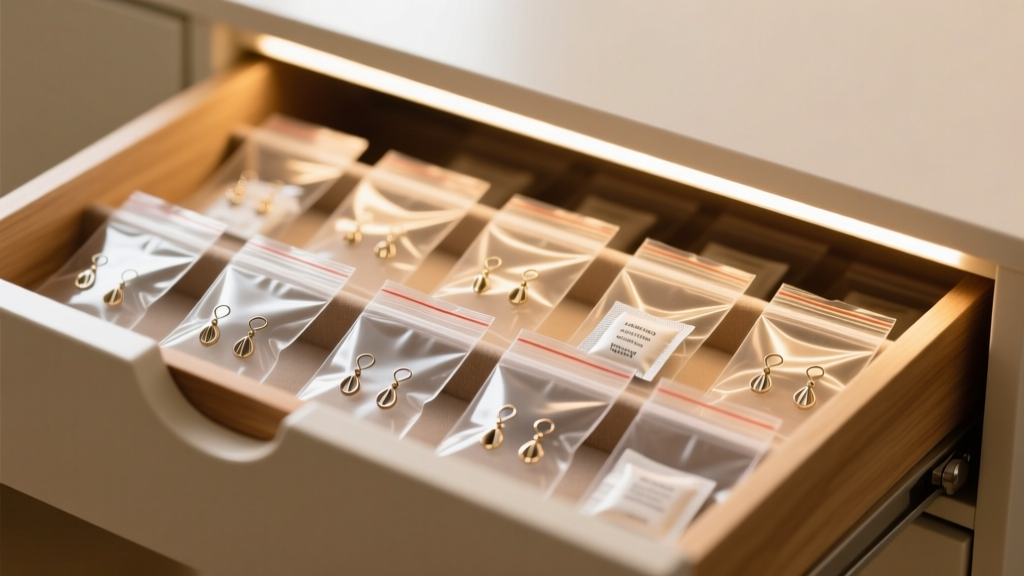
- Moisture Control: Include indicating silica gel packets in your hook storage containers. Keeping the relative humidity below 40% drastically slows down the galvanic corrosion that affects plated brass.
- Isolation: Never store earring hooks loose in a communal jar. The friction of metal rubbing against metal during transit or drawer pulling will cause micro-scratches in the plating. Store them in individual 2x3 inch ziplock bags or compartmentalized plastic tackle boxes lined with felt.
When to Retire or Upgrade Your Findings
Maintenance can only go so far. If your silver-plated hooks show a distinct yellowish or pinkish hue near the curve of the wire, the plating has entirely worn through to the brass or copper core. At this stage, no amount of polishing will restore the silver finish; in fact, polishing will only accelerate the degradation. These hooks should be retired from sale and repurposed for practice or non-wearable art pieces.
If you find that the maintenance required for craft store plated hooks is too labor-intensive, or if your customer base has sensitive ears, it is time to upgrade your supply chain. Consider transitioning to 20-gauge Niobium hooks, which are naturally hypoallergenic and can be anodized in vibrant colors, or ASTM F136 Implant-Grade Titanium French wires. While the upfront cost per hook is higher than Michaels' bulk packs, the elimination of tarnish complaints and allergic reactions will significantly elevate the perceived value and professionalism of your DIY jewelry brand.


