How to Clean Gold Earrings at Home: A Troubleshooting Guide
Learn how to clean gold earrings at home safely. Expert troubleshooting for 14k, 18k, and gold-plated studs, hoops, and gemstone settings.

The Chemistry of Gold Tarnish and Buildup
Before diving into the mechanics of cleaning, it is vital to understand why your gold earrings lose their luster. Pure 24k gold is completely inert and will never tarnish. However, pure gold is far too soft for daily wear jewelry. To create durable earrings, jewelers alloy gold with metals like copper, silver, and zinc. A standard 14k gold earring contains only 58.3% gold, while 18k contains 75%. It is these alloyed metals that react with sulfur, oxygen, and the acids in your sweat to create tarnish.
Furthermore, the primary culprit behind dull gold earrings is not the metal itself, but environmental buildup. A combination of sebum (skin oils), dead epidermal cells, hairspray, and lotions creates a microscopic, sticky film over the gold and gemstone settings. This film not only blocks light from entering diamonds and gemstones—making them look cloudy—but also accelerates the oxidation of the alloy metals.
Step-by-Step: How to Clean Gold Earrings at Home
For solid 14k, 18k, or 22k gold earrings without porous gemstones, a gentle soak and agitation is the most effective method to restore brilliance without causing micro-abrasions.
The Dish Soap Soak Method
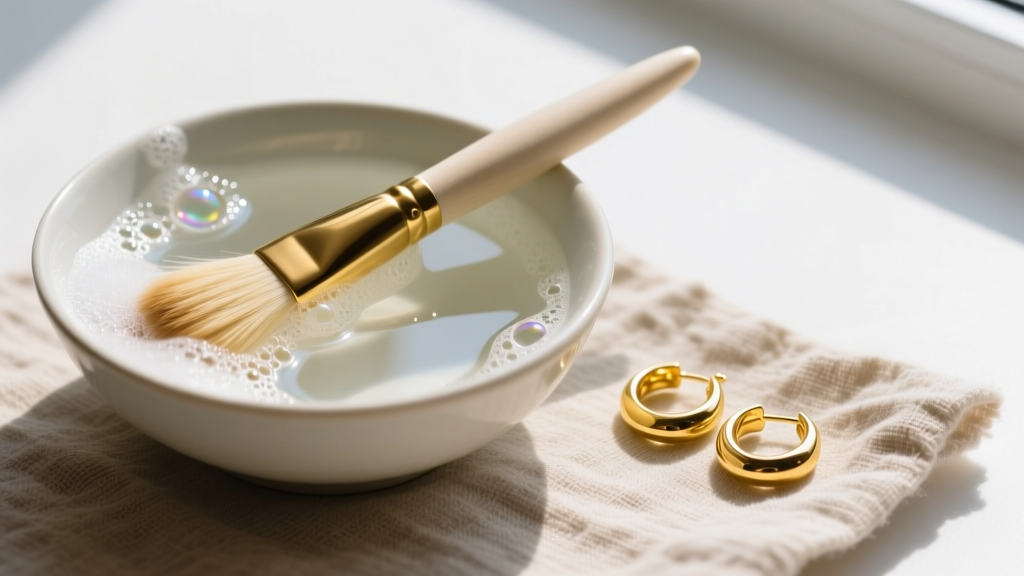
- Prepare the Solution: Fill a small ceramic or glass bowl with warm (not hot) water. Add three drops of a pH-neutral, non-detergent liquid dish soap. Avoid harsh degreasers or soaps with added moisturizers, which leave a residual film.
- Soak: Submerge your solid gold studs, hoops, or dangles for 15 to 20 minutes. This allows the surfactants in the soap to break down the lipid bonds of trapped sebum and lotion.
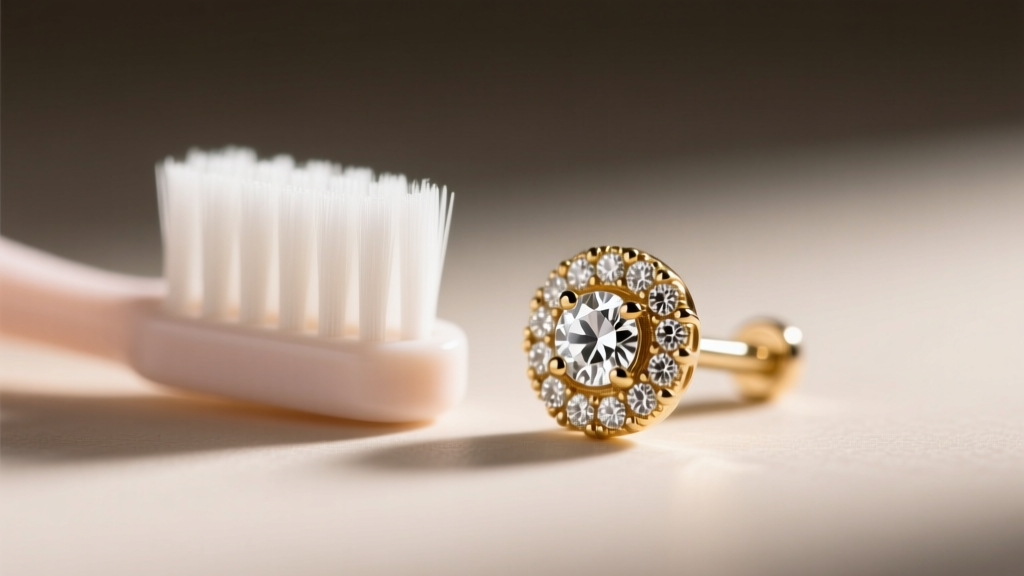
- Agitate: Using an extra-soft baby toothbrush, gently brush the jewelry. Pay special attention to the earring post, the friction backing, and the underside (pavilion) of any gemstone settings where skin cells accumulate.
- Rinse: Rinse thoroughly under lukewarm running water. If you live in an area with hard water, use distilled water for the final rinse to prevent calcium deposits from spotting the gold.
- Dry: Pat dry with a clean, lint-free microfiber cloth. Never use paper towels or tissues. Paper products contain wood pulp fibers that are hard enough to leave micro-scratches on 18k and 22k gold.
Critical Warning: Cleaning Gold-Plated and Gold Vermeil Earrings
The cleaning protocol changes drastically if your earrings are not solid gold. Gold-plated earrings typically feature a microscopic layer of gold (often less than 0.5 microns) over a base metal like brass. Gold vermeil is higher quality, featuring a minimum of 2.5 microns of gold over sterling silver, but it is still a surface treatment.
Do not soak plated or vermeil earrings. Prolonged exposure to water can seep through microscopic pores in the plating, causing the base metal to oxidize and blister the gold layer. Instead, dampen a cotton swab with a mild soap solution, gently wipe the surface, and immediately dry it. Avoid brushing plated earrings entirely, as the mechanical friction will accelerate the wearing off of the gold layer.
Gemstone and Pearl Settings: What to Avoid
When figuring out how to clean gold earrings at home, the gemstone setting is often the limiting factor. While diamonds, sapphires, and rubies (corundum) are highly durable and safe for soapy soaks, many popular gemstones are highly reactive or fragile.
| Material / Gemstone | Safe Cleaning Method | What to Avoid |
|---|---|---|
| Solid Gold (14k/18k) | Dish soap soak, soft brush | Bleach, chlorine, abrasive pastes |
| Gold Plated / Vermeil | Damp cloth wipe, immediate dry | Soaking, toothbrushes, ultrasonic cleaners |
| Diamonds / Sapphires | Dish soap soak, soft brush | Heavy impact (can chip girdle) |
| Opals / Pearls | Dry microfiber wipe only | ALL water, soaps, ultrasonic (destroys nacre/hydration) |
| Emeralds | Dry or barely damp cloth wipe | Soaps (strips cedar oil fracture fillings) |
Troubleshooting Common Gold Earring Disasters
Even with careful maintenance, gold earrings can suffer from chemical reactions and environmental damage. Here is how to troubleshoot specific issues identified by the Gemological Institute of America (GIA) and industry professionals.
Earring Turned White or Chalky (Chlorine Damage)
If your 14k or 18k gold earrings have developed a chalky, white, or brittle appearance, they have likely been exposed to chlorine in a swimming pool or harsh household cleaners. Chlorine aggressively attacks the zinc and copper alloys in gold, causing a phenomenon known as stress corrosion cracking. This damage is permanent and cannot be cleaned away at home. The earrings must be taken to a professional jeweler for polishing, and in severe cases, the earring posts may need to be re-tipped or replaced to prevent the jewelry from snapping.
White Gold Earrings Looking Yellow
If your white gold earrings are turning yellowish, they are not dirty. White gold is naturally a pale yellow alloy; it is plated with a microscopic layer of rhodium (a platinum group metal) to give it a bright, silvery-white finish. Over time, friction from hair and skin wears this plating away. Cleaning will not fix this. You must take the earrings to a jeweler to be re-rhodium plated, a service that typically costs between $35 and $60.
Gemstones Remain Cloudy After Cleaning
If a diamond or sapphire stud still looks cloudy after a soap soak, the issue is usually trapped residue underneath the stone. Lotions and oils get packed into the pavilion (the V-shaped underside of the cut stone) and harden. Take a wooden toothpick—never metal, which can scratch the gold prongs—and gently scrape the underside of the gemstone to dislodge the compacted sebum. Rinse again with warm water.
Preventative Maintenance for Cartilage and Lobe Studs
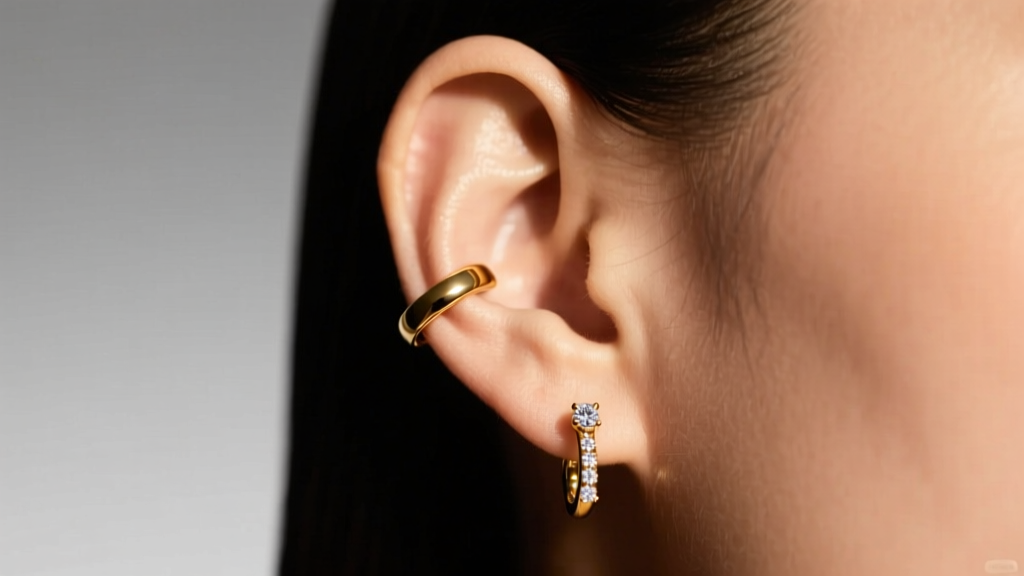
Preventing buildup is easier than deep cleaning. Cartilage piercings, such as helixes or tragus placements, are particularly prone to trapping dried sebum and hair product residue in the tight spaces between a huggie hoop and the ear. According to guidelines from Jewelers of America, consistent preventative care extends the life of both the metal and the gemstones.
Expert Troubleshooting Tip: Always insert your gold earrings after applying makeup, hairspray, and perfume. The aerosolized chemicals in cosmetics contain volatile organic compounds that can instantly leave a dull, cloudy film on gold and severely damage porous stones like pearls and turquoise.
When you take your earrings off at night, wipe them quickly with a dry microfiber cloth before placing them in a jewelry box. Storing gold earrings in individual anti-tarnish pouches with a small piece of activated charcoal or a commercial anti-tarnish strip will absorb ambient sulfur in the air, drastically reducing the frequency of deep cleanings required to keep your collection sparkling.


