How to Clean and Maintain Gold Heart Earrings Hoops
Discover expert cleaning and maintenance tips for gold heart earrings hoops. Learn how to protect solid, plated, and vermeil finishes.

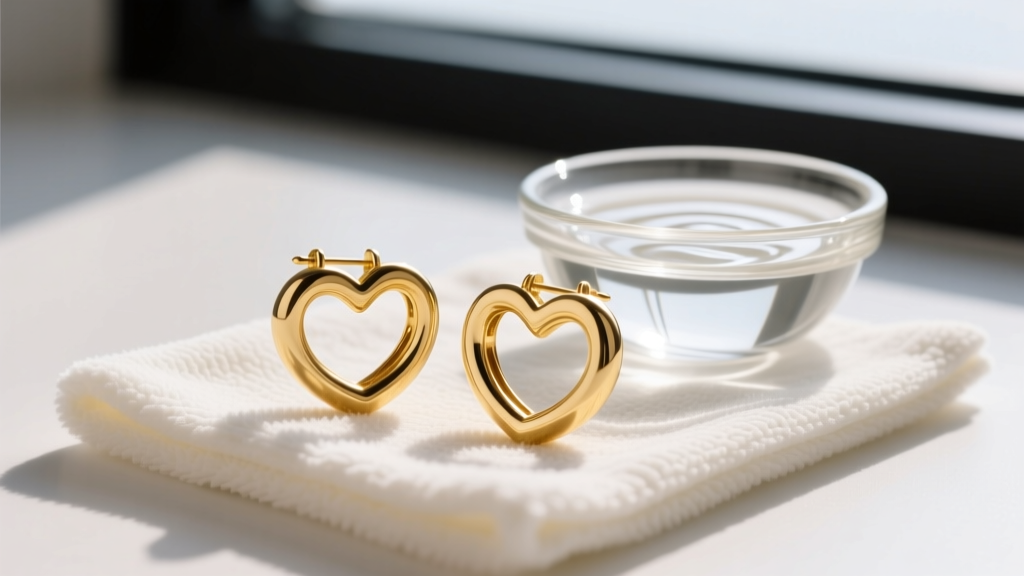
Gold heart earrings hoops blend the timeless romance of the heart motif with the continuous, face-framing geometry of a classic hoop. However, this specific design intersection creates unique maintenance challenges. The intricate cleft of the heart charm acts as a natural catchment for cosmetic residue, while the mechanical hinge of the hoop accumulates sebum and dead skin cells over time. Whether you own solid 14k gold, gold vermeil, or gold-plated brass, understanding the metallurgical realities of your jewelry is the first step toward preserving its luster and structural integrity.
Identifying Your Gold Finish: Solid, Vermeil, or Plated?
Before applying any cleaning solution, you must identify the exact composition of your gold heart earrings hoops. The cleaning protocol for solid gold will easily strip the finish off a gold-plated pair if you are not careful.
- Solid Gold (10k, 14k, 18k): Pure 24k gold is too soft for hoop mechanics, so it is alloyed with metals like copper, silver, and zinc. 14k gold (58.5% pure gold) offers the best balance of durability and rich color for hoops that endure daily friction.
- Gold Vermeil: Vermeil features a sterling silver base plated with a thick layer of gold. According to the Federal Trade Commission (FTC), jewelry must have a minimum gold thickness of 2.5 microns over sterling silver to be legally marketed as vermeil in the United States.
- Gold Plated: Typically utilizes a brass or copper base with a microscopic gold layer (usually under 0.5 microns). These require the gentlest care, as aggressive polishing will expose the base metal.
The Step-by-Step Cleaning Protocol
For routine maintenance of both solid gold and vermeil heart hoops, a mild surfactant approach is the safest and most effective method.
1. Preparation and Soaking
Fill a small glass bowl with lukewarm water and add three drops of mild, phosphate-free dish soap (such as Dawn). Avoid hot water, which can expand microscopic fissures in gemstone settings if your heart charms feature pave diamonds. Let the earrings soak for exactly 3 to 5 minutes to loosen surface oils.
2. Agitation and Brushing
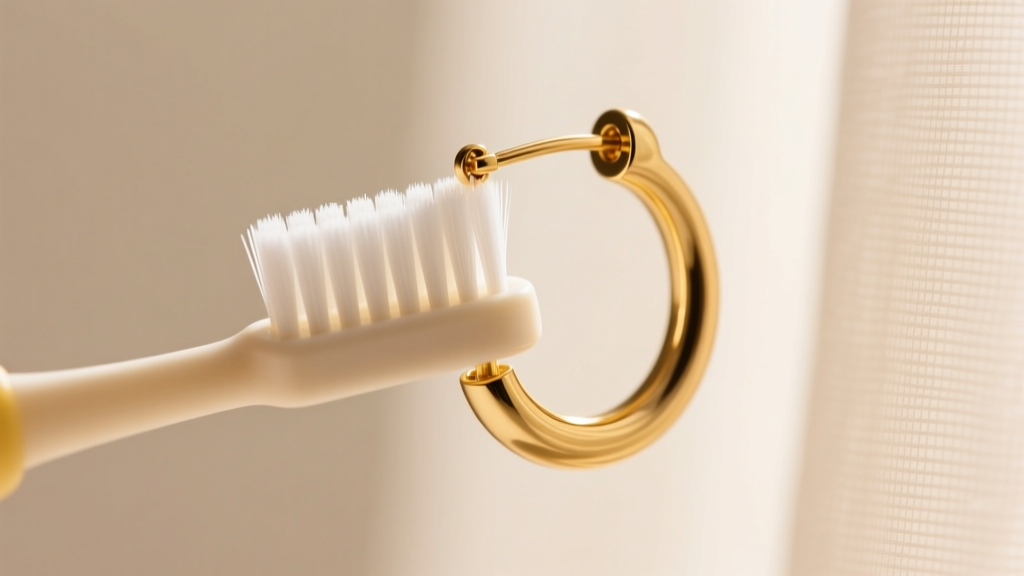
Remove the hoops from the solution. Using a brand-new, extra-soft baby toothbrush, gently brush the surface of the gold. Pay special attention to the back of the heart charm and the interior curve of the hoop where hair products accumulate.
3. Rinsing and Drying
Rinse the earrings under a gentle stream of lukewarm water. To prevent hard water spots from forming on the flat face of the heart charm, do not air dry. Instead, pat them dry with a lint-free microfiber cloth, and use a hairdryer on the cool setting to blast moisture out of the hoop hinge.
Targeted Maintenance: Heart Crevices and Hoop Hinges
The defining features of gold heart earrings hoops—the charm shape and the closure mechanism—require specialized attention that standard jewelry wipes cannot provide.
Clearing the Heart Cleft
The inner V-shape (cleft) and the bottom point of the heart charm trap thick lotions and foundation. If a soft toothbrush fails to dislodge this buildup, use a wooden toothpick. Gently scrape the crevice; wood is softer than gold and will not leave micro-scratches on the metal surface.
Lubricating the Hoop Hinge
If your hoop develops a stiff click or fails to close flush, it is likely due to compacted sebum inside the barrel clasp or clicker mechanism. After cleaning, apply a microscopic drop of synthetic watch oil to the hinge pin using a needle-tip oiler. Open and close the hoop several times to distribute the lubricant, then wipe away any excess with a cotton swab.
Chemical Agents: Safe vs. Destructive
Many DIY jewelry cleaning hacks found online can cause irreversible damage to gold alloys and plated finishes. The Gemological Institute of America (GIA) warns against using harsh household chemicals, as they can alter the color of gold alloys or strip plating entirely.
| Chemical Agent | Effect on Solid Gold (14k/18k) | Effect on Vermeil / Plated |
|---|---|---|
| Mild Dish Soap | Safe; effectively removes oils | Safe; gentle enough for plating |
| Baking Soda Paste | Risky; can cause micro-abrasions | Destructive; will strip the gold layer |
| Chlorine / Bleach | Highly Destructive; causes stress corrosion cracking | Destructive; causes immediate discoloration |
| Ammonia | Safe for plain solid gold only (damages pave settings) | Destructive; dissolves the gold bond |
| Isopropyl Alcohol | Safe for quick sanitization | Risky; can dry out and degrade the finish over time |
Troubleshooting Common Structural Issues
Beyond cleaning, gold heart earrings hoops are prone to specific mechanical wear patterns due to their moving parts and dangling elements.
- The Spinning Heart Charm: If the heart charm spins excessively or flips upside down on the hoop, the jump ring or drill hole has likely worn down. A jeweler can stabilize the charm by adding a microscopic silicone o-ring or a flush crimp bead to the hoop wire, creating friction without altering the gold.
- Gapping Clasps: If the hoop post no longer clicks securely into the catch, the wire has lost its tension. Using nylon-jaw jewelry pliers, gently bend the post away from the catch by a fraction of a millimeter. Never use bare metal pliers, as the steel teeth will permanently mar the gold finish.
- Vermeil Wear on the Post: The earring post experiences the most friction against the earlobe. If the gold wears off the post, exposing the sterling silver underneath, it is generally safe for sensitive ears. However, if the base metal is brass or nickel, you must have the post re-plated or replace the earrings to avoid contact dermatitis.
Proper Storage to Prevent Micro-Scratches
How you store your gold heart earrings hoops is just as critical as how you clean them. Gold is a relatively soft metal, and 14k or 18k gold can easily be scratched by harder gemstones or other jewelry pieces.
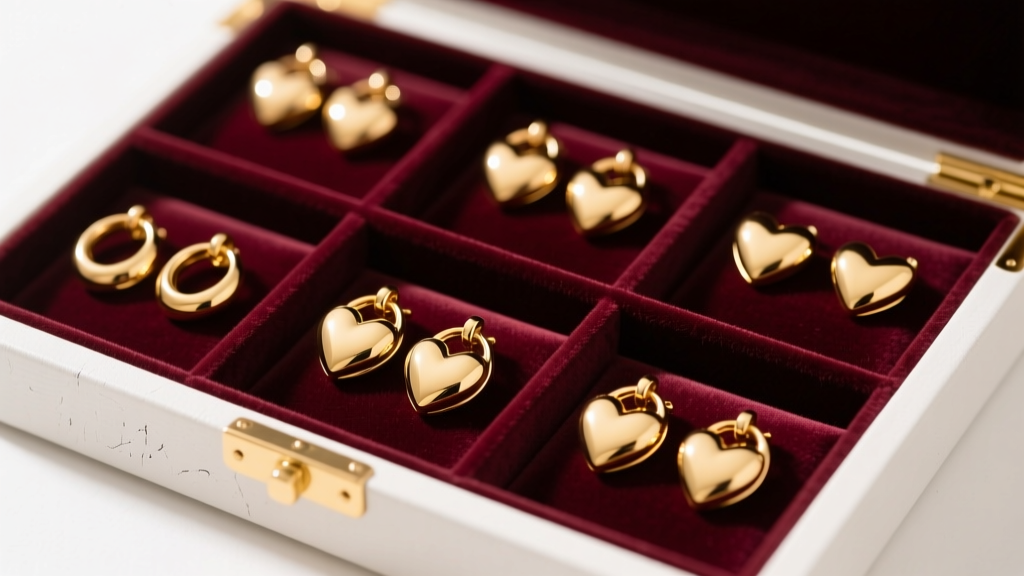
Always store your hoops in individual soft pouches or dedicated velvet compartments. If the heart charm features pave diamonds, ensure the diamonds do not rest against the plain gold surface of the hoop, as diamonds (a 10 on the Mohs scale) will effortlessly scratch the gold (a 2.5 to 3 on the Mohs scale). For long-term storage of vermeil or plated hoops, place an anti-tarnish strip inside the storage bag to absorb ambient sulfur and moisture, keeping the gold finish bright and reflective for years to come.


