How to Clean & Care for Gold Hummingbird Earrings
Learn expert cleaning and maintenance tips for gold hummingbird earrings. Protect enamel, secure micro-pave gems, and keep 14k or 18k pieces shining.

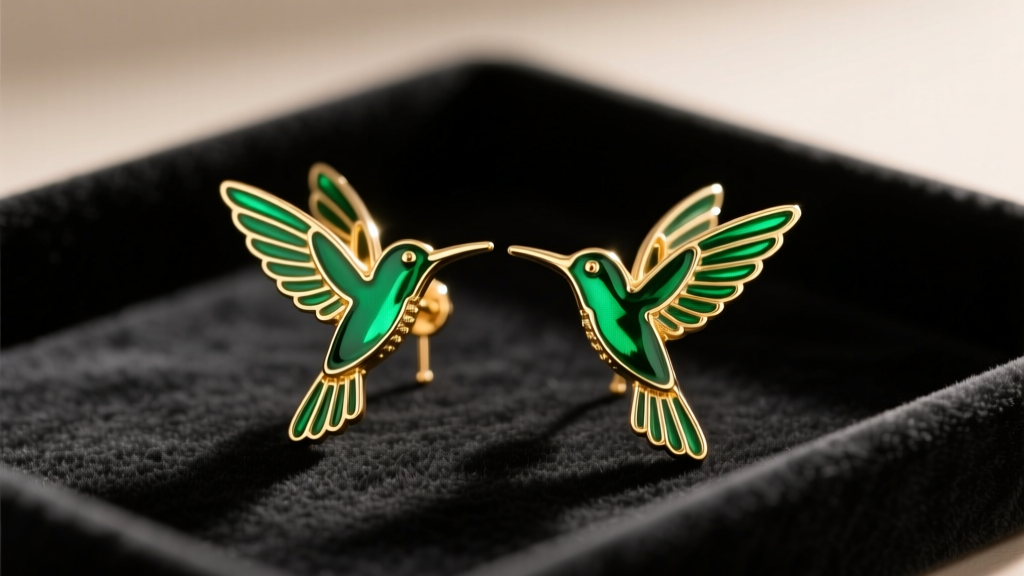
The Anatomy of Gold Hummingbird Earrings: What You Are Actually Cleaning
Nature-inspired jewelry requires a highly specialized approach to maintenance. When you invest in gold hummingbird earrings, you are not just caring for a simple metal loop or stud; you are maintaining a miniature sculpture. These pieces often feature intricate extremities—like delicate beaks and tapered wingtips—alongside complex material combinations such as vitreous enamel inlays, micro-pavé diamonds, and mixed-metal accents.
Before applying any cleaning solution, you must identify the gold purity and the secondary materials. According to the Gemological Institute of America (GIA), understanding your jewelry's specific material composition is the first line of defense against irreversible damage. Most high-quality hummingbird dangles and studs are crafted in 14k gold (58.5% pure gold). Jewelers prefer 14k for these specific motifs because the higher alloy content (usually copper and silver) provides the tensile strength needed to prevent the hummingbird's thin wings and beak from bending during daily wear. Conversely, 18k gold (75% pure) offers a richer yellow hue but is significantly softer, making it highly susceptible to warping if handled aggressively during cleaning.
Daily Wear and Preventative Maintenance
The most effective cleaning method is preventative care. Hummingbird earrings often feature textured gold work (like milgrain or feather-engraving) that acts as a magnet for skin oils, lotions, and environmental dust. Furthermore, many designs incorporate cold enamel or guilloché enamel to mimic the iridescent plumage of the bird.
- The 'Last On, First Off' Rule: Always put your earrings on after applying hairspray, perfume, and cosmetics. Aerosolized chemicals can create a cloudy film over both the gold and any gemstone accents, dulling the piece's brilliance.
- Sweat and Acidity: The copper alloys in 14k gold can react with the natural acids in your sweat, leading to localized tarnishing, especially in the crevices of the wing feathers. Wipe the earrings with a dry, lint-free microfiber cloth immediately after taking them off.
- Post Gauge Awareness: If your hummingbird earrings are dangles, they likely feature an 18-gauge or 20-gauge post to support the weight of the motif. Avoid pulling or tugging on the bird's body when inserting or removing the earring; always grip the sturdy post or the designated jump ring to avoid snapping the solder joints.
Step-by-Step Cleaning Guide: Solid Gold vs. Enamel Accents
Because hummingbird earrings frequently mix bare gold with colorful enamels, a one-size-fits-all cleaning approach will ruin the piece. You must tailor your method to the materials present.
Cleaning Solid Gold and Diamond Accents
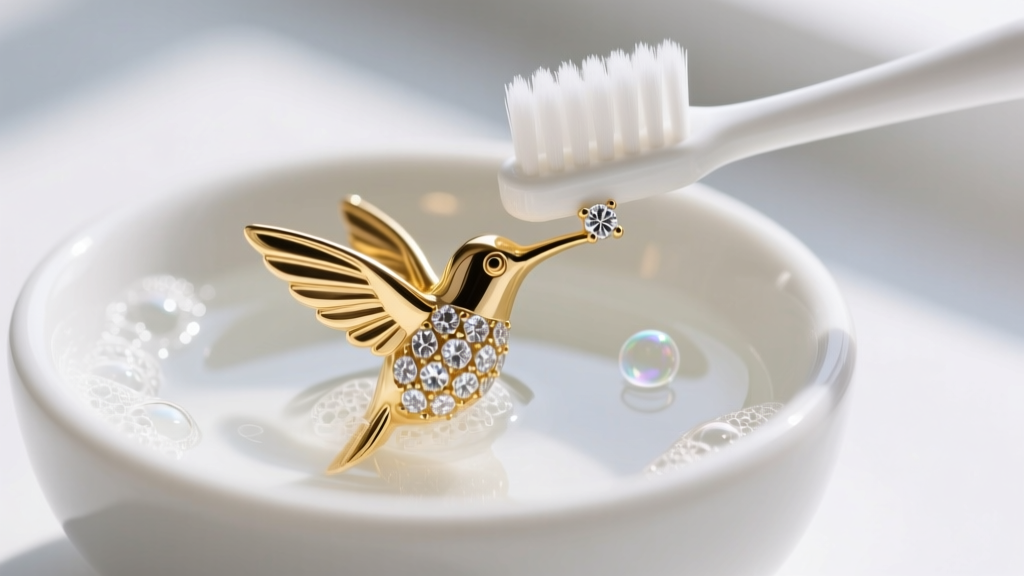
If your earrings are solid gold with diamond or sapphire accents (and no enamel), a gentle aqueous bath is highly effective. Mix a few drops of mild, phosphate-free dish soap (like Dawn) into a bowl of lukewarm water. Let the earrings soak for no more than 15 minutes. Use a soft-bristled baby toothbrush to gently agitate the dirt trapped beneath the hummingbird's wings and around the micro-pavé prongs. Rinse thoroughly under lukewarm running water and pat dry with a microfiber cloth.
The Delicate Enamel Protocol
If your hummingbird earrings feature enamel detailing (common in the tail feathers or chest), never submerge them in water. Prolonged exposure to moisture can seep into microscopic fissures between the gold bezel and the enamel, causing the colorful inlay to lift or crack over time. Furthermore, vitreous enamel is essentially glass; it is highly susceptible to thermal shock. Using hot water can cause the enamel to fracture instantly.
Expert Tip: To clean enamel-accented hummingbird earrings, lightly dampen a cotton swab with distilled water and gently roll it over the gold sections. Use a dry, soft makeup brush to dust the enamel surfaces. Avoid all chemical cleaners, as ammonia and chlorine will permanently strip the polish from cold enamel and cloud vitreous finishes.
Ultrasonic Cleaners: A Danger to Hummingbird Motifs?
Many jewelry owners rely on ultrasonic cleaners for convenience, but these devices are notoriously dangerous for intricate, nature-inspired motifs. Ultrasonic cleaners use high-frequency sound waves to create microscopic cavitation bubbles in a liquid solution. While excellent for removing grime from solid diamond solitaires, this violent vibration process poses severe risks to hummingbird earrings.
| Cleaning Method | Solid 14k/18k Gold | Micro-Pavé Diamonds | Enamel Inlays | Delicate Solder Joints |
|---|---|---|---|---|
| Mild Soap & Water Bath | Safe | Safe | Unsafe (Avoid Soaking) | Safe |
| Ultrasonic Cleaner | Safe | High Risk of Stone Loss | High Risk of Shattering | High Risk of Fracture |
| Steam Cleaner | Safe | Safe | Unsafe (Thermal Shock) | Safe |
| Commercial Dip Cleaners | Unsafe (Harsh Acids) | Unsafe | Unsafe | Unsafe |
The tiny prongs holding micro-pavé diamonds in a hummingbird's tail feathers are often less than 0.5mm thick. The vibrations from an ultrasonic machine can easily rattle these prongs loose, resulting in lost stones. Similarly, the high-frequency waves can shatter enamel wings and weaken the delicate solder joints connecting the bird's beak to the main body. As Jewelers of America advises, intricate and multi-material jewelry should always be cleaned by hand to preserve structural integrity.
Proper Storage to Protect Delicate Wings and Beaks
Improper storage is the leading cause of structural damage to animal-motif earrings. Tossing gold hummingbird earrings into a communal jewelry box guarantees that the delicate wingtips will become scratched, bent, or snagged on other chains and pieces.
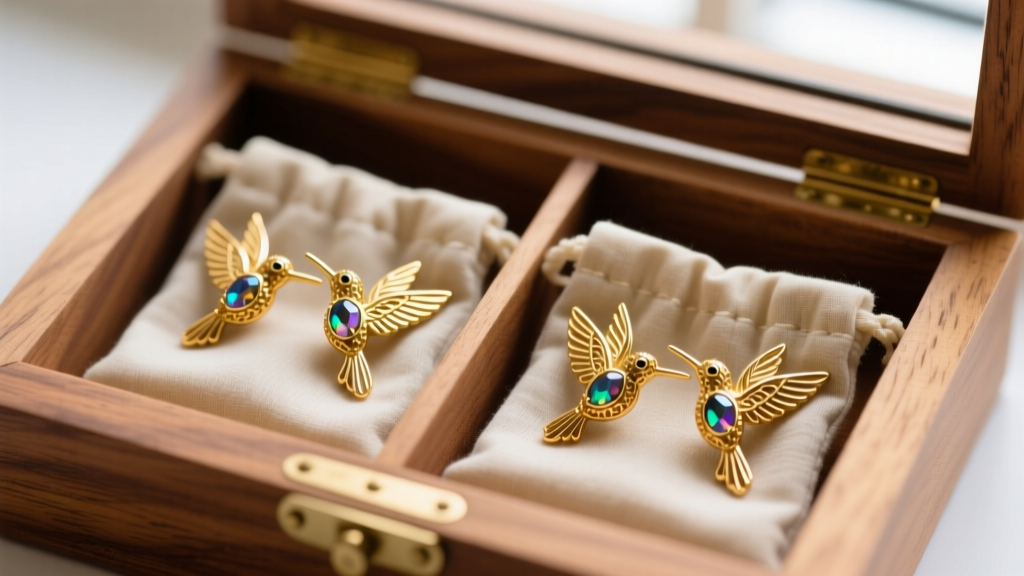
- Individual Pouches: Store each earring in its own anti-tarnish microfiber or flannel pouch. This prevents the gold from oxidizing and stops the earrings from scratching one another.
- Compartmentalized Boxes: If using a jewelry box, ensure the compartment is large enough that the hummingbird's wings do not press against the walls. For dangle styles, hang them from a dedicated jewelry stand to prevent the posts from bending under the weight of the motif.
- Travel Cases: When traveling, use a hard-shell jewelry case with dedicated, padded ring rolls or earring slots. Never wrap these earrings in standard tissue paper, as the thin paper can snag on micro-pavé prongs and pull them outward.
When to See a Professional Jeweler
While home maintenance is vital, certain aspects of care require professional intervention. You should take your gold hummingbird earrings to a certified bench jeweler once a year for a thorough inspection.
The jeweler will use a microscope to check the integrity of the micro-prongs holding any gemstone accents. They will also inspect the solder joints at the jump rings—the tiny loops connecting the hummingbird to the ear wire. Because dangle earrings experience constant kinetic movement, these jump rings can slowly wear down and open over time, leading to the tragic loss of the earring. Finally, if your hummingbird features white gold accents (such as a silver-toned beak or diamond halos), the rhodium plating will eventually wear off, requiring a professional re-plating to restore its bright, reflective finish.


