How to Clean Junk Earrings and Stop Them From Turning Green
Learn how to clean junk earrings, prevent green skin, and extend the life of cheap costume jewelry with expert maintenance and storage tips.

The Chemistry of 'Junk Earrings': Why They Tarnish and Irritate
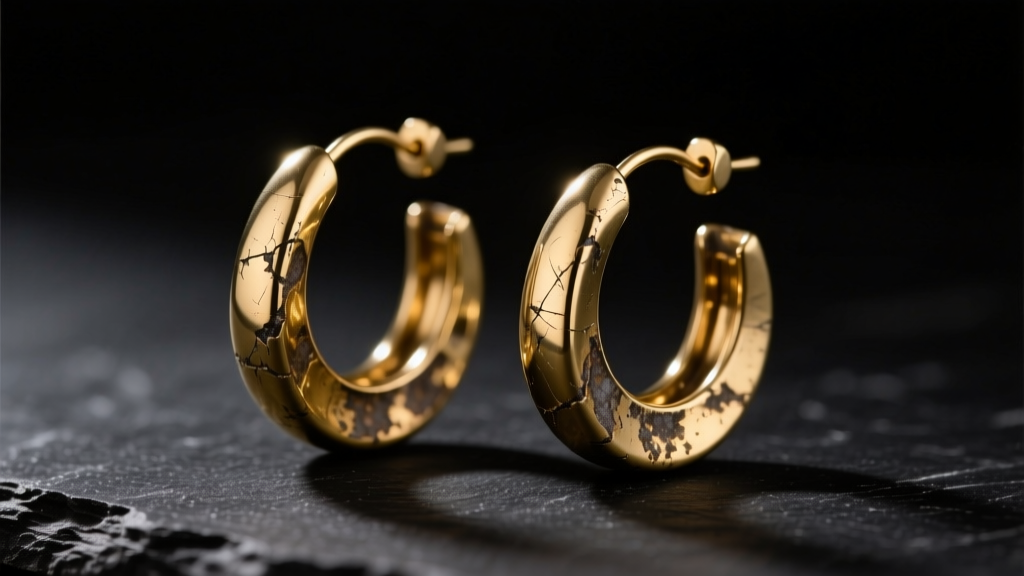
When we talk about 'junk earrings' in the jewelry industry, we are referring to mass-produced, fast-fashion accessories made from base metal alloys—typically brass, copper, zinc, or nickel—coated in a microscopic layer of gold, silver, or rhodium. This process, known as flash plating, deposits a layer of precious metal that is usually less than 0.1 microns thick. For context, high-quality gold vermeil requires a minimum of 2.5 microns.
The moment you wear these earrings, they interact with your body's chemistry. Human sweat has a pH ranging from 4.5 to 7.0 and contains urea, lactic acid, and salts. These compounds rapidly eat through the sub-micron flash plating, exposing the reactive base metals underneath. When copper or brass meets oxygen and the acids in your skin, it oxidizes to form copper chloride—the infamous green grime that stains your earlobes. Furthermore, if the core alloy contains nickel, the direct exposure to skin moisture triggers nickel ion release, leading to allergic contact dermatitis (ACD). According to the American Academy of Dermatology, nickel allergy is the most common cause of allergic contact dermatitis, affecting up to 18% of adults.
Step-by-Step Cleaning Guide for Base Metal Alloys
Cleaning junk earrings requires a delicate touch. Because the plating is incredibly thin, aggressive polishing or chemical dips will strip the finish entirely, leaving you with raw, reactive base metal. Here is the safest, most effective protocol to remove sweat buildup, oils, and early-stage tarnish without destroying the plating.
The Gentle Wash Method
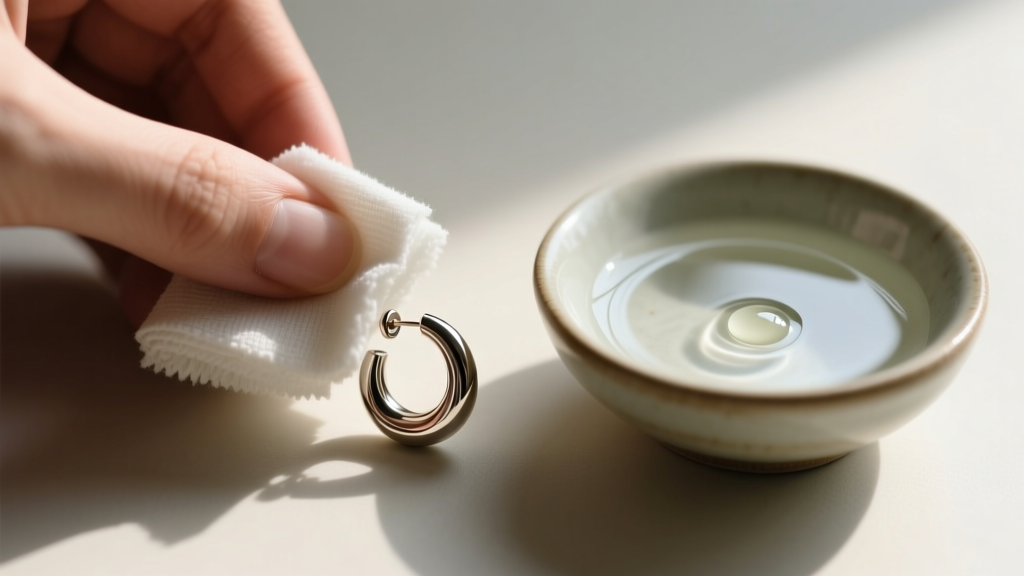
- Step 1: Mix one drop of pH-neutral dish soap (like original Dawn) into one cup of distilled water. Avoid tap water, as the chlorine and dissolved minerals can accelerate tarnishing.
- Step 2: Dip a soft, lint-free microfiber cloth or a baby hairbrush into the solution. Gently wipe the earrings, paying special attention to the earring posts and butterfly backs where dead skin cells and sebum accumulate.
- Step 3: Dampen a fresh cloth with plain distilled water and wipe away any soap residue.
- Step 4: Immediately pat the earrings completely dry with a clean microfiber towel. Do not air dry, as water spots will etch into the cheap plating.
What to Avoid (The Plating Killers)
Never use baking soda paste, toothpaste, or aluminum foil boiling methods on junk earrings. These are highly abrasive or rely on galvanic reactions that will instantly strip flash plating. Furthermore, never put costume jewelry in an ultrasonic cleaner; the high-frequency cavitation will shatter the microscopic bond between the base metal and the plated surface.
The 'Green Skin' Fix: Barrier Methods and Hacks
If your favorite fast-fashion earrings are giving you green earlobes or itchy skin, you don't necessarily have to throw them away. You can seal the base metal to prevent the galvanic reaction between the alloy and your skin's moisture. The Gemological Institute of America (GIA) notes that creating a physical barrier is one of the most effective ways to preserve costume jewelry and protect sensitive skin.
| Barrier Method | Longevity | Pros | Cons |
|---|---|---|---|
| Clear Nail Polish | 1-3 Weeks | Cheap, accessible, easy to apply. | Can yellow over time, chips easily, leaves sticky residue. |
| Polymer Jewelry Shield | 1-3 Months | Specifically formulated for skin protection, dries invisible. | More expensive, requires reapplication after heavy wear. |
| Renaissance Wax | 2-4 Weeks | Museum-grade protection, prevents tarnish, buffs to a shine. | Can feel slightly waxy on earring posts, needs frequent reapplication. |
Pro Tip: If using clear nail polish, opt for a high-quality, non-yellowing top coat rather than a cheap base coat. Apply a single, thin layer to the earring post and the back of the decorative element that touches your skin. Let it cure for a full 24 hours before wearing to ensure the solvents have fully evaporated.
Proper Storage to Halt Galvanic Corrosion
How you store your junk earrings when you aren't wearing them is just as critical as how you clean them. Base metals are highly susceptible to hydrogen sulfide in the air, which causes rapid blackening and pitting. Leaving costume earrings on an open vanity tray guarantees they will tarnish within weeks.
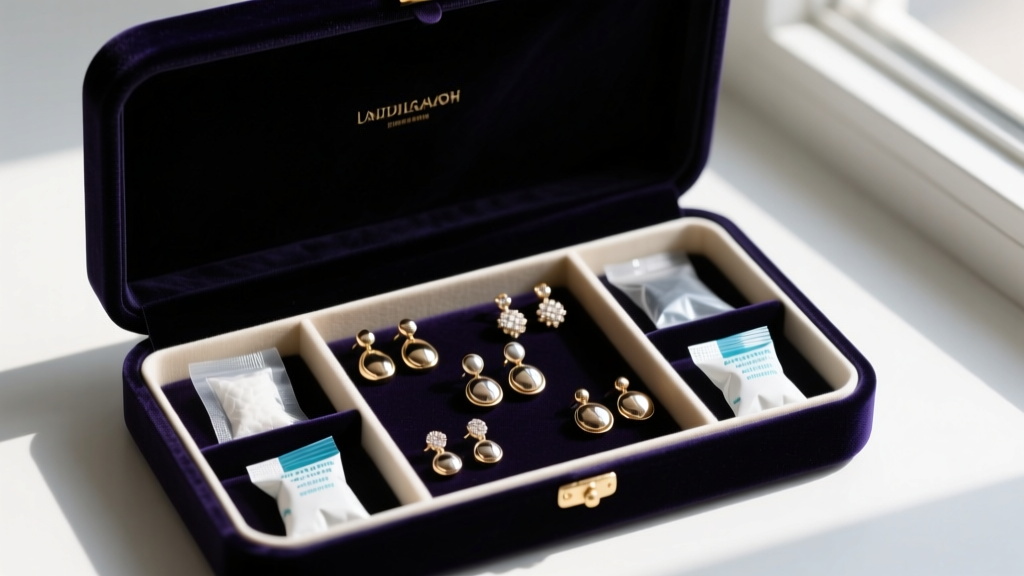
To maximize the lifespan of cheap alloys, adopt the 'Micro-Climate Storage' method:
- Wipe Before Storing: Always wipe the earrings with a dry microfiber cloth to remove the day's sweat and oils before putting them away.
- Use Anti-Tarnish Strips: Place a 3M anti-tarnish strip (or a generic equivalent containing activated carbon and silver nitrate) inside the storage container. These strips absorb airborne sulfur compounds before they can reach your jewelry.
- Control Humidity: Moisture acts as a catalyst for corrosion. Drop a small silica gel desiccant packet into your jewelry box or storage bags to keep the ambient humidity below 40%.
- Seal in Polyethylene: Store individual pairs in small, airtight polyethylene zip bags. Avoid polyvinyl chloride (PVC) plastics, which can off-gas chemicals that accelerate the degradation of cheap metal alloys.
When to Toss Them: Recognizing Irreversible Damage
While cleaning and sealing can extend the life of junk earrings, they are ultimately disposable by design. It is vital to recognize when a piece of jewelry has crossed the line from 'tarnished' to 'hazardous'.
You should immediately discard your earrings if you notice any of the following:
- Deep Pitting or Flaking: If the metal feels rough, porous, or is actively flaking off in shards, the structural integrity of the alloy is compromised. These micro-fissures harbor bacteria that cannot be cleaned with gentle soap.
- Persistent Skin Reactions: If you develop a rash, blistering, or hyperpigmentation on your earlobes, the nickel or cobalt core has been fully exposed. No amount of clear nail polish will reliably seal deep corrosion.
- Bent or Warped Posts: Cheap earring posts are often made from soft, low-grade brass. If the post bends easily, it can create microscopic tears in your piercing fistula, inviting infection.
By understanding the material science behind your accessories and implementing these targeted cleaning and storage protocols, you can safely enjoy your favorite fashion pieces without the dreaded green skin or allergic flare-ups. When the plating finally gives out, use it as a signal to invest in hypoallergenic alternatives like implant-grade titanium or solid 14k gold for your everyday wear.


