Don Lin Earrings: Material Properties & Alloy Comparison
Explore the metallurgy of Don Lin earrings. Compare niobium, titanium, and palladium white gold alloys for hypoallergenic wear and durability.

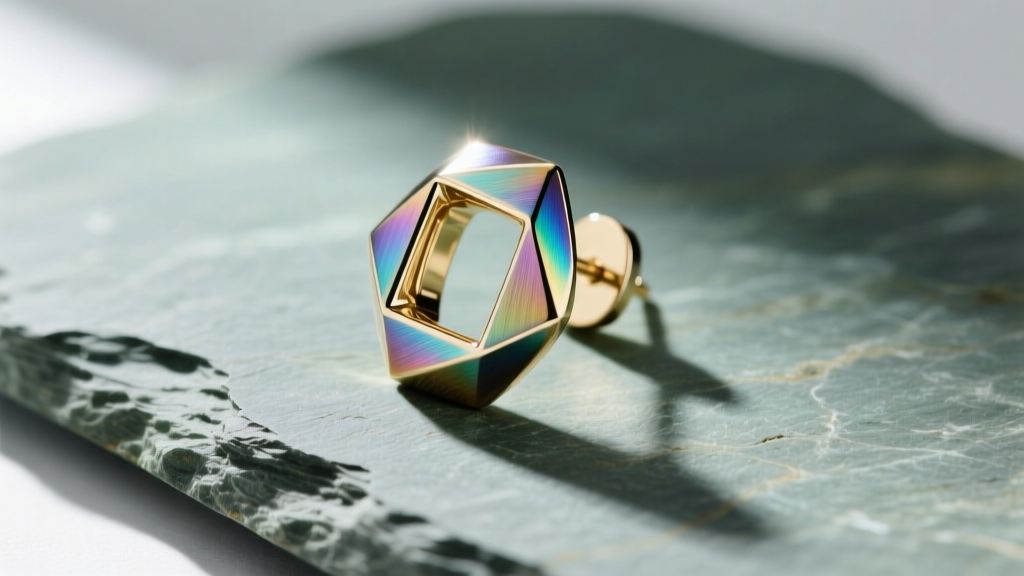
In the contemporary jewelry landscape of 2026, discerning collectors and sensitive wearers alike are looking past superficial aesthetics to scrutinize the very atomic structure of their adornments. When discussing avant-garde material blending and biocompatible design, Don Lin earrings have emerged as a benchmark for independent metallurgical innovation. Rather than relying on mass-produced brass bases or unpredictable nickel-laden white golds, this design approach prioritizes advanced alloys, reactive metals, and precise gauge engineering.
Whether you are navigating a fresh cartilage piercing, managing severe contact dermatitis, or simply seeking an heirloom piece that defies tarnish, understanding the material properties of these earrings is critical. This guide deconstructs the specific metals utilized in Don Lin's signature collections, comparing their Vickers hardness, nickel release rates, and long-term structural integrity against standard industry alternatives.
The Metallurgy Behind the Design
Traditional commercial earrings often utilize 925 sterling silver or standard 14k gold alloys. While beautiful, these metals possess inherent vulnerabilities. Sterling silver (92.5% silver, 7.5% copper) is prone to sulfur-induced tarnishing, while standard white gold is frequently alloyed with nickel to achieve a bright white hue—a major trigger for allergic contact dermatitis.
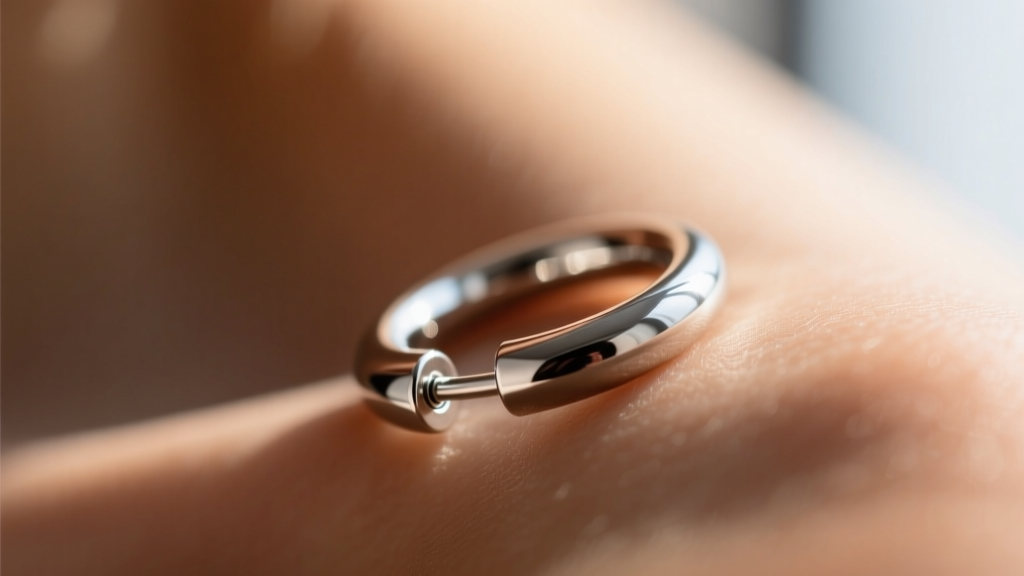
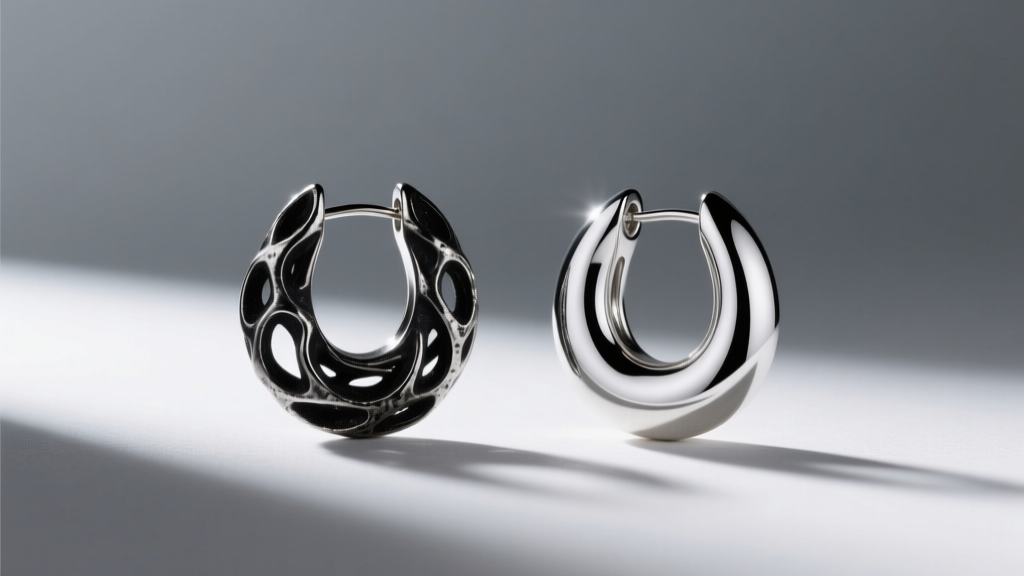
The material philosophy behind Don Lin earrings circumvents these issues by integrating aerospace-grade titanium, reactive niobium, and palladium-based gold alloys. By treating jewelry as a intersection of metallurgy and biomechanics, the resulting pieces offer superior corrosion resistance and structural memory, ensuring that delicate huggies and complex ear cuffs maintain their exact tension and shape over decades of daily wear.
Core Material Comparison: Signatures vs. Industry Standards
To understand the value proposition of advanced material selection, we must look at the empirical data. The table below contrasts the physical properties of the primary metals used in premium, hypoallergenic earring lines against standard commercial alternatives.
| Material / Alloy | Vickers Hardness (HV) | Nickel Release (µg/cm²/week) | Tarnish Resistance | Best Application |
|---|---|---|---|---|
| Anodized Niobium | 60 - 100 | 0.0 (Inert) | Excellent | Sensitive lobes, colorful cartilage studs |
| CP Titanium (ASTM F67) | 140 - 180 | 0.0 (Inert) | Excellent | Fresh piercings, lightweight hoops |
| 18k Palladium White Gold | 120 - 145 | 0.0 (Nickel-Free) | Very Good | Luxury everyday wear, diamond settings |
| Standard 925 Sterling | 60 - 75 | Variable (Trace) | Poor (Requires polishing) | Occasional wear, heavy statement pieces |
| Standard 14k White Gold | 110 - 130 | 0.2 - 0.5+ (High) | Good (Rhodium plated) | Budget fine jewelry (Not for sensitive ears) |
Hypoallergenic Properties & Nickel Release Rates
The most significant advantage of the material curation found in Don Lin earrings is the absolute elimination of nickel-induced contact dermatitis. According to dermatological research published by the National Center for Biotechnology Information (NCBI), nickel allergy affects up to 20% of the global population, manifesting as erythema, vesicles, and chronic itching at the piercing site.
ASTM Compliance and Biocompatibility
For cartilage piercings—such as the helix, tragus, or conch—the tissue is highly avascular and unforgiving of microscopic metal impurities. The titanium utilized in premium collections strictly adheres to ASTM International standards, specifically ASTM F67 for unalloyed (commercially pure) titanium and ASTM F136 for Ti-6Al-4V ELI (Extra Low Interstitial) alloy. These are the exact same material grades used in surgical orthopedic implants. Because titanium forms a passive oxide layer (TiO2) instantly upon exposure to oxygen, it becomes entirely biologically inert, preventing the body's immune system from recognizing the metal as a foreign invader.
The Niobium Advantage: Color Without Plating
While titanium offers strength, niobium offers unparalleled aesthetic versatility without the risks of electroplating. Niobium is a highly reactive metal that can be anodized using specific electrical voltages to alter the thickness of its surface oxide layer. For instance, applying 90 volts yields a vibrant sapphire blue, while 115 volts produces a deep emerald green. Because this color is a result of light refraction through the oxide layer rather than a surface dye or rhodium plating, it will never chip, peel, or wear off into the piercing fistula.
Tarnish, Patina, and Long-Term Failure Modes
Understanding how metals degrade over time is essential for curating a lasting collection. While Don Lin earrings are engineered for longevity, all metals interact with their environment. Here is a breakdown of specific failure modes and how advanced alloys mitigate them:
- Galvanic Corrosion: When two dissimilar metals (e.g., a sterling silver earring back and a titanium post) are exposed to an electrolyte (human sweat), a micro-galvanic cell is created, leading to rapid localized corrosion. Premium lines solve this by machining custom titanium or 18k gold friction backs and threadless ends, ensuring the entire assembly is galvanically compatible.
- Stress Corrosion Cracking (SCC): Thin wire hoops subjected to constant bending and exposure to chlorides (from swimming pools or cosmetics) can develop microscopic fractures. By utilizing 18k palladium white gold—which possesses superior ductility and a higher yield strength than nickel-white gold—designers prevent the catastrophic snapping of delicate continuous hoops.
- Rhodium Depletion: Standard white gold requires rhodium plating to look white, which wears away in 6 to 12 months, revealing a yellowish-grey base metal. 18k palladium white gold is naturally a warm, steely grey-white and requires zero plating, making it a vastly superior choice for low-maintenance luxury.
Gauge Sizing and Structural Integrity
Material properties mean little if the physical dimensions of the jewelry are incorrect for the anatomy. A common failure in commercial jewelry is the use of 20-gauge (0.81mm) or 22-gauge (0.64mm) wire for heavy hoop earrings.
The Cheese Cutter Effect: When a heavy hoop is suspended on a thin 20G wire, the localized pressure (PSI) on the bottom of the piercing fistula becomes immense. Over time, this constant tension causes the jewelry to slowly migrate downward through the tissue, permanently elongating the piercing hole.
To combat this, structurally sound earring designs adhere to strict gauge minimums based on placement:
- Standard Lobe (Healed): 18-gauge (1.02mm) is the ideal baseline for studs and lightweight drops, providing enough rigidity to prevent bending while remaining comfortable.
- Heavy Lobe / Dangles: 16-gauge (1.29mm) wire or specialized French hooks with reinforced shoulders are required to distribute the weight of gemstone-heavy drop earrings.
- Cartilage (Helix, Conch, Tragus): 16-gauge (1.29mm) or 14-gauge (1.63mm) is mandatory. Cartilage is dense and prone to irritation bumps; a thicker post minimizes movement and reduces the "cheese cutter" risk, promoting long-term fistula stability.
Final Verdict: Choosing Your Alloy
The material science behind Don Lin earrings represents a vital shift in the 2026 jewelry market, moving away from the aesthetic compromises of the past. If your priority is absolute biocompatibility and vibrant, maintenance-free color, anodized niobium and ASTM F136 titanium are unmatched. For those seeking the prestige and brilliance of fine jewelry without the dermatological risks of nickel or the upkeep of rhodium plating, 18k palladium white gold remains the pinnacle of luxury alloy engineering. By prioritizing metallurgical integrity and precise gauge sizing, you ensure that your earrings are not just beautiful, but biomechanically harmonious with your body.


