Earring in One Ear: A Budget and Value Assessment Guide
Discover the true cost of wearing an earring in one ear. We analyze single earring pricing, material value, and gauge sizing for asymmetrical stacks.

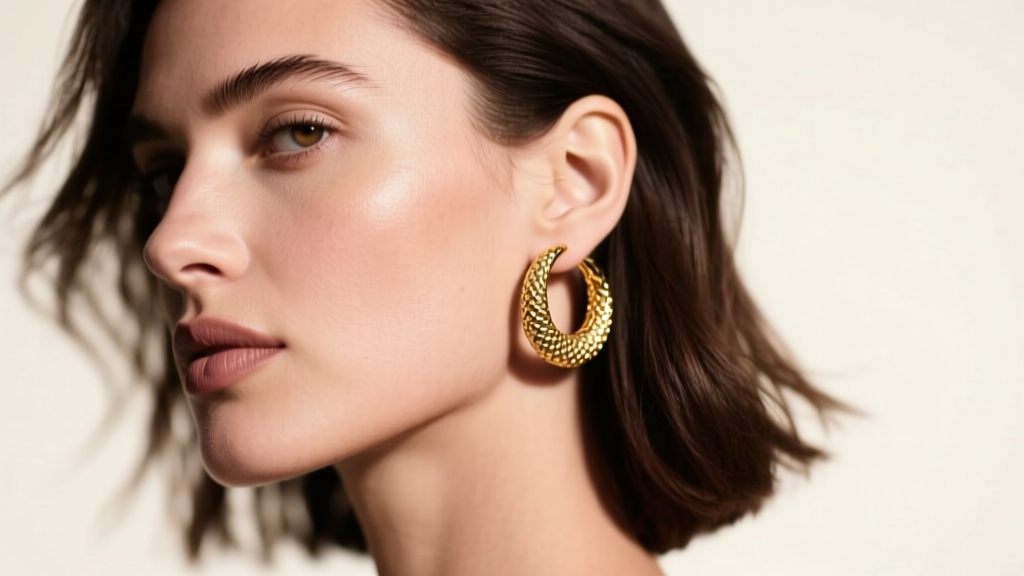
The decision to wear an earring in one ear has evolved from a fleeting editorial trend into a permanent, calculated styling strategy. Asymmetrical ear curation allows for maximum self-expression, but it fundamentally changes how you purchase jewelry. When you abandon the traditional matched-pair model, you enter the complex market of 'single' earrings. While this approach offers incredible stylistic freedom, it can also become a budget trap if you fail to account for the 'single tax,' material degradation, and gauge mismatches.
In this comprehensive value assessment, we break down the true economics of buying single earrings, evaluate material longevity, and provide a concrete framework to ensure your asymmetrical stacks deliver the highest possible cost-per-wear (CPW) in 2026.
The 'Single Tax': Pricing Pairs vs. Singles
Most mainstream jewelry brands price their single earrings at a premium compared to the per-unit cost of a pair. If a brand sells a pair of 14k gold huggie hoops for $120, the logical per-earring cost is $60. However, if you attempt to buy just one, the brand will often charge $75 to $85. This 25% to 40% markup—colloquially known in the industry as the 'single tax'—compensates for the brand's broken inventory sets and specialized packaging.
To beat this markup and maximize your budget, you must change where and how you shop:
- Direct-to-Consumer Artisans: Platforms like Etsy host independent metalsmiths who cast and sell individual pieces without the overhead of retail packaging. You can often find solid 14k gold single studs for $35–$50, compared to $80+ at mall retailers.
- Single-First Brands: Companies like Maria Tash and certain curated sections of Mejuri have built their business models around single earring sales. Because their inventory systems are designed for singles, you avoid the broken-pair markup.
- The 'Sacrificial Pair' Strategy: If you find a high-value pair on sale (e.g., a $90 pair of solid gold threadless ends), buy the pair. Wear one in your primary ear, and save the other as a backup for loss, or gift it to offset the cost.
Material Value Matrix for Asymmetrical Styling
When curating an asymmetrical look, your focal ear often carries a heavier, more intricate piece, while the secondary ear features a minimalist stud. Because the focal piece is more visible, material integrity is paramount. Here is how common materials stack up in terms of budget and long-term value.
| Material Grade | Avg. Single Price | Longevity & Tarnish Risk | Best Use Case |
|---|---|---|---|
| 925 Sterling Silver (Rhodium Plated) | $20 - $40 | High tarnish risk if plating wears off. Requires polishing. | Secondary ear, minimalist studs. |
| 18k Gold Vermeil (Min. 2.5 microns) | $35 - $65 | Moderate. Will eventually wear down to silver base after 1-2 years of daily wear. | Statement hoops, seasonal trends. |
| Solid 14k Gold (Yellow or White) | $60 - $150+ | Excellent. No plating to wear off. Can be polished indefinitely. | Focal ear pieces, heirloom investments. |
| Implant-Grade Titanium (ASTM F-136) | $25 - $55 | Flawless. Hypoallergenic, zero tarnish, highly durable. | Cartilage piercings, sensitive lobes. |
According to the Gemological Institute of America (GIA), understanding the karat weight of your gold is essential for value assessment. 14k gold (58.3% pure gold) offers the best balance of durability and value for daily-wear singles, whereas 18k gold is softer and more prone to scratching in intricate, asymmetrical ear cuffs.
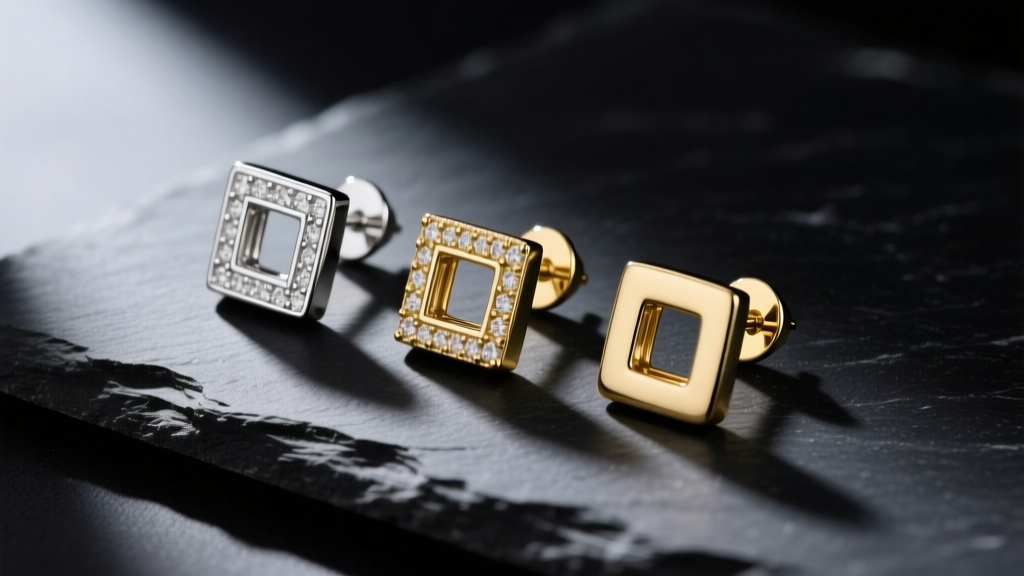
Gauge Sizing: The Hidden Cost of Mismatched Piercings
A common budget mistake when building an asymmetrical stack is ignoring gauge sizes. If you purchase a beautiful single cartilage hoop that is 18-gauge, but your piercing was done at 16-gauge, forcing the thinner wire into the thicker hole can cause the piercing to shrink, leading to irritation and potential rejection. Conversely, forcing a thick post into a delicate lobe piercing causes micro-tears.
The Association of Professional Piercers (APP) strictly outlines standard jewelry thicknesses. Always verify these measurements before purchasing a single earring:
- 20-Gauge (0.81mm): Standard for delicate lobe studs and lightweight drop earrings.
- 18-Gauge (1.02mm): Common for standard lobe hoops and some lower cartilage (flat) piercings.
- 16-Gauge (1.29mm): The gold standard for helix, tragus, and conch cartilage piercings. Provides structural stability to prevent the 'cheese-cutter effect' (where thin wire slices through tissue).
- 14-Gauge (1.60mm): Typically reserved for industrial bars or stretched lobes.
Pro Tip: When buying a single earring for a fresh or healing cartilage piercing, always opt for threadless or internally threaded flat-back labrets made of implant-grade titanium. Avoid butterfly backs at all costs, as they trap bacteria and apply uneven pressure to the fistula.
Building a Budget-Friendly Asymmetrical Stack
To achieve a high-end editorial look without the luxury price tag, apply the 'Anchor and Accent' framework. This method ensures you allocate your budget where it has the highest visual impact.
- The Anchor (60% of Budget): Invest in one high-quality, solid 14k gold or titanium piece for your focal ear. This could be a textured huggie hoop or a diamond-accented clicker. Because it is solid metal, it will never tarnish, ensuring a low cost-per-wear over decades.
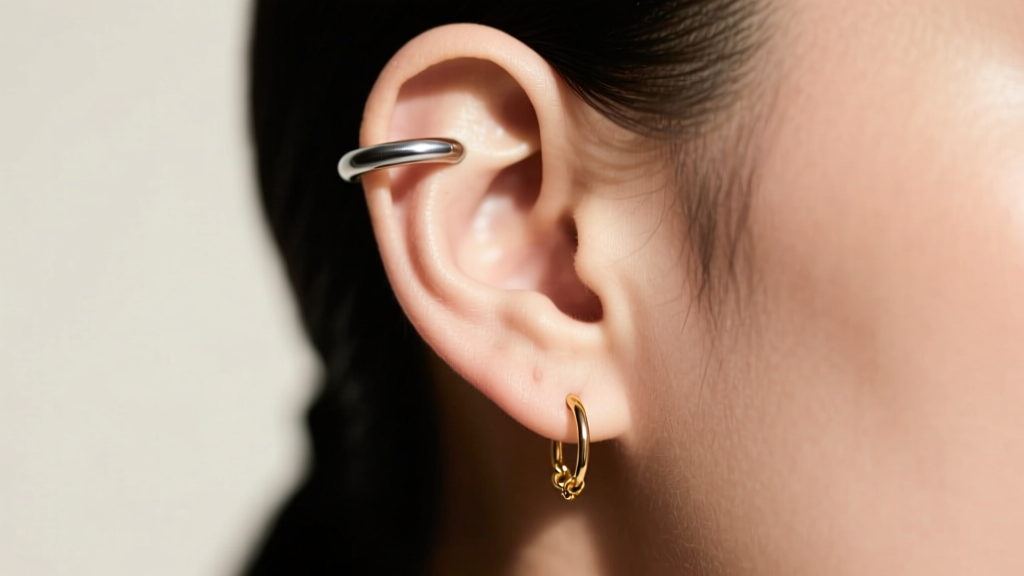
- The Accent (30% of Budget): Add a complementary piece to the same ear, such as a delicate 20g gold-filled chain or a small vermeil stud. Since this piece is secondary, you can compromise on material (like vermeil or gold-filled) to save money.
- The Balancer (10% of Budget): For the opposite ear, use a simple, ultra-minimalist piece you likely already own, or purchase a basic 925 sterling silver bead stud for under $15. The goal of the balancer is not to draw attention, but to provide subtle symmetry to the overall facial profile.
Red Flags When Shopping for Singles
When evaluating the value of a single earring, be highly critical of manufacturing shortcuts that brands use to maintain profit margins on individual sales:
- Hollow Tubing: Many brands sell lightweight gold hoops that are actually hollow tubes. While this reduces the gold weight (and price), hollow hoops dent easily and cannot be repaired by a jeweler. Always check the product description for 'solid wire' or 'stamped' construction.
- Flash Plating: If a 'gold' single earring costs under $20 and isn't explicitly labeled as solid gold or heavy vermeil, it is likely flash-plated brass (less than 0.1 microns of gold). This will oxidize and turn your skin green within weeks, rendering the purchase entirely worthless.
- Soldered Joints on Hoops: Inspect the closure of single hoops. High-value pieces feature seamless soldered joints or precision-machined clickers. Visible gaps or rough soldering at the hinge indicate poor quality control that will lead to snagging on hair and clothing.
Final Verdict: Is the Single Earring Worth the Investment?
Curating an earring in one ear is absolutely worth the investment, provided you approach it with a strict value-assessment mindset. By avoiding the single tax through artisan shopping, prioritizing solid metals for your anchor pieces, and strictly adhering to proper gauge sizing, you can build an asymmetrical stack that is both economically efficient and visually striking. The true value of a single earring lies not in its initial price tag, but in its versatility, material permanence, and its ability to transform your daily aesthetic without requiring a full wardrobe overhaul.


