How to Clean Kylie Jenner Earrings: Luxury Care Guide
Learn how to clean and maintain your Kylie Jenner earrings collection. Expert care tips for 18k gold, diamonds, and luxury cartilage cuffs.

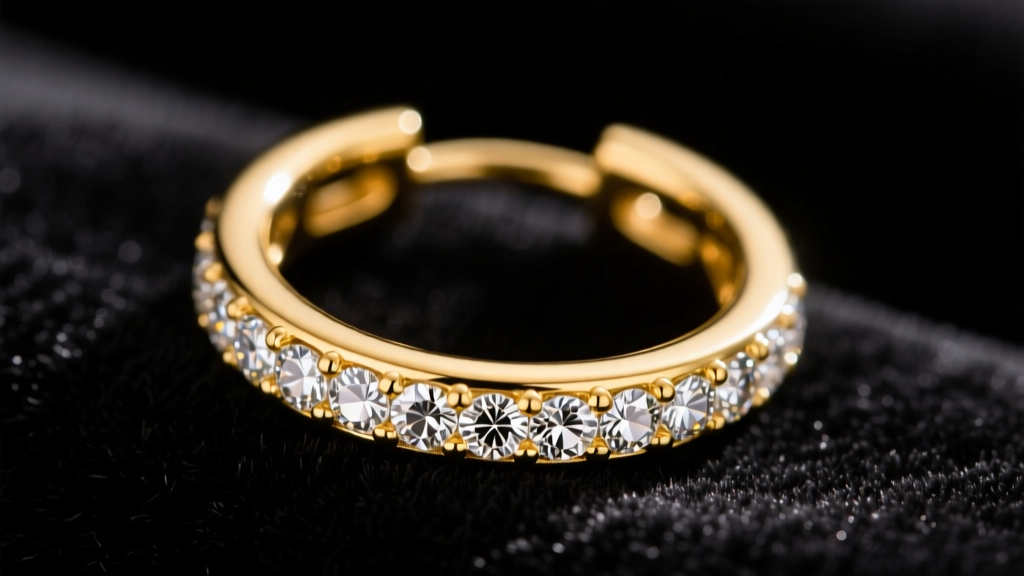
The "Kylie" Standard: Decoding High-End Earring Materials
When replicating the iconic, trend-setting looks of Kylie Jenner, earrings often take center stage. From custom Lorraine Schwartz diamond hoops to delicate Anita Ko safety-pin studs and vintage Tiffany & Co. drops, the most recognizable Kylie Jenner earrings are defined by their exceptional material quality. However, luxury materials require highly specific maintenance protocols to retain their brilliance and structural integrity. In 2026, the standard for high-end jewelry care has moved beyond generic polishing cloths, demanding a scientific understanding of metallurgy and gemology.
Before applying any cleaning solution, you must identify the exact metallurgical composition of your pieces. Most luxury earrings are crafted from 18k gold or platinum. 18k gold is 75% pure gold and 25% alloy (typically copper, silver, or zinc). While pure gold is virtually indestructible, the copper and zinc alloys are highly susceptible to stress corrosion cracking when exposed to chlorine or harsh ammonia-based cleaners. Platinum, conversely, is usually 95% pure and develops a natural satin patina over time rather than tarnishing, requiring mechanical polishing rather than chemical stripping.
The Science of Diamond Clouding
The primary reason high-carat diamond hoops and studs lose their fire is due to the lipophilic (oil-attracting) and hydrophobic (water-repelling) nature of carbon. Diamonds act like magnets for sebum, lotions, and hair products. A microscopic layer of oil on the pavilion (the bottom facet) of a VS1 or VVS diamond will drastically reduce its refractive index, causing the stone to look flat and cloudy. Understanding this chemical reality is the first step in restoring the blinding sparkle characteristic of celebrity-level ear curation.
Step-by-Step Cleaning Protocols for Luxury Earrings
To safely clean diamond and solid gold earrings without compromising the prongs or the metal finish, follow this professional-grade soaking method. This is the exact protocol recommended by master jewelers for maintaining pave and bezel settings.
- The Solution: Mix one cup of warm (not hot) distilled water with three drops of a mild, non-detergent dish soap (such as original Dawn). Avoid soaps with added moisturizers or citrus degreasers, which can leave a filmy residue or react with copper alloys.
- The Soak: Submerge your 18k gold or platinum diamond earrings for exactly 15 to 20 minutes. This allows the surfactants to break down the lipophilic bonds of the oils trapped beneath the diamond girdle.
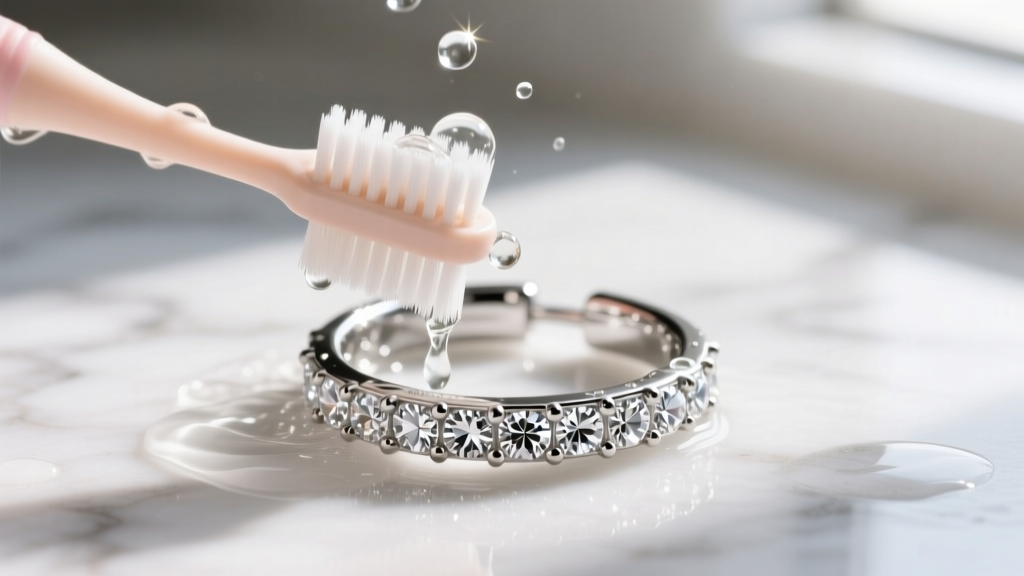
- The Agitation: Using an extra-soft baby toothbrush (never a medium or hard bristle, which can scratch high-polish 18k gold), gently sweep the bristles across the back of the diamonds and along the prongs. Brush in a circular motion to dislodge compacted debris from the setting gallery.
- The Rinse and Dry: Rinse thoroughly under lukewarm running water, ensuring the drain is securely plugged. Pat dry with a lint-free microfiber cloth. Do not use paper towels, as the wood pulp fibers can cause micro-scratches on polished platinum and catch on delicate pave prongs.
Material-Specific Care Matrix
Not all earrings in a luxury collection can be treated equally. While diamonds and platinum are resilient, colored gemstones often featured in high-end drops require vastly different approaches. According to the Gemological Institute of America (GIA), improper cleaning is the leading cause of preventable gemstone damage. Use the matrix below to determine the safest protocol for your specific pieces.
| Material / Gemstone | Safe Cleaning Methods | Methods to Strictly Avoid | Maintenance Frequency |
|---|---|---|---|
| Diamonds (VVS/VS) & Platinum | Warm soapy soak, soft brush, ultrasonic (with caution) | Chlorine bleach, direct steam on fracture-filled stones | Bi-weekly home clean; annual professional check |
| 18k Yellow / Rose Gold | Warm soapy soak, microfiber polishing cloth | Ultrasonic cleaners (can loosen pave), ammonia, chlorine | Weekly wipe-down; monthly deep soak |
| Emeralds & Opals | Damp microfiber cloth only, mild air dusting | ALL liquids, ultrasonic, steam, heat, harsh chemicals | As needed; professional re-oiling for emeralds yearly |
| Pearls (Akoya / South Sea) | Wipe with damp cloth after every wear | Submersion in water (destroys silk thread), acids, perfumes | After every single wear |
Cartilage Cuff & Multi-Piercing Maintenance
A defining element of the modern ear curation—frequently sported by Kylie—is the intricate stacking of cartilage piercings, including helix, flat, and conch placements adorned with flat-back labrets and ear cuffs. Maintaining these pieces involves both jewelry care and dermatological hygiene.
For fully healed cartilage piercings, 18k gold flat-backs are perfectly safe. However, if you are rotating pieces or dealing with minor irritation bumps (hypertrophic scarring), you must switch to ASTM F136 implant-grade titanium. Titanium is entirely nickel-free and biocompatible, preventing the contact dermatitis that often plagues multi-pierced ears. When cleaning cartilage cuffs, avoid harsh alcohols or hydrogen peroxide, which destroy the delicate cellular matrix of the piercing fistula. Instead, use a sterile 0.9% sodium chloride saline spray, followed by gently drying the area with a non-woven gauze to prevent lint from wrapping around the post.
A Note on Gauge Sizes: Luxury cartilage jewelry typically ranges from 18-gauge (1.0mm) to 14-gauge (1.6mm). Never force an 18k gold post into a piercing that feels tight, as bending the post will compromise the structural integrity of the metal and the security of the gemstone setting. If your piercing has shrunk, visit a professional piercer to safely taper the fistula back to the correct gauge.
The Dangers of Ultrasonic and Steam Cleaners
Many consumers purchase at-home ultrasonic cleaners, assuming they are safe for all fine jewelry. These machines operate at frequencies between 40,000 and 45,000 Hz, creating microscopic cavitation bubbles that implode and blast dirt from hard-to-reach pave galleries. While this is highly effective for solid diamond and platinum studs, it is catastrophic for certain materials.
Never place emeralds, opals, pearls, or turquoise into an ultrasonic cleaner. The high-frequency vibrations will shatter the natural inclusions within emeralds and strip the protective cedar oil treatments. Furthermore, if your diamond earrings have been "fracture-filled" with a glass-like resin to improve clarity, the heat and vibration of steam and ultrasonic cleaners will melt the filler, leaving the stone looking fractured and cloudy. When in doubt, refer to the Tiffany & Co. Jewelry Care guidelines, which strongly advise professional cleaning for complex or multi-gemstone settings.
Storage and Long-Term Preservation
How you store your earrings when they are not being worn is just as critical as how you clean them. Tossing 18k gold hoops and diamond studs into a communal jewelry box guarantees micro-scratches and tangled chains. Diamonds are a 10 on the Mohs hardness scale, meaning they will easily scratch the polished surface of gold or platinum, as well as any softer gemstones they come into contact with.
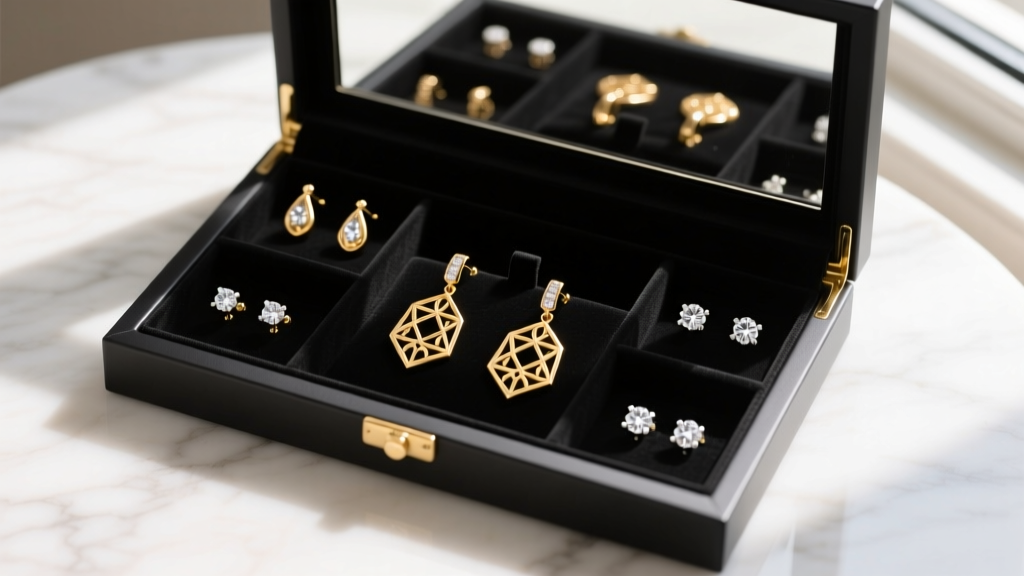
- Individual Compartments: Store every pair of earrings in its own soft flannel pouch or a dedicated, fabric-lined compartment.
- Anti-Tarnish Strips: While pure gold and platinum do not tarnish, the alloys in 14k and some 18k mixes can oxidize in high-humidity environments. Place 3M anti-tarnish strips in your storage drawers to absorb sulfur compounds from the air.
- Post Protection: For delicate drop earrings, secure the butterfly backs or screw-backs tightly to prevent the posts from bending. For flat-back cartilage labrets, store them upright in a pill organizer or specialized acrylic grid to prevent the delicate threading from cross-threading or collecting dust.
By treating your collection with this level of scientific precision, you ensure that your luxury pieces remain as flawless and camera-ready as the high-end celebrity collections that inspired them.


