The Ultimate Material Guide for Earrings Whole Ear Curations
Discover the best metals for your earrings whole ear curation. Compare titanium, gold, and niobium properties for safe, stunning multi-piercing setups.

The Anatomy of an Earrings Whole Ear Project
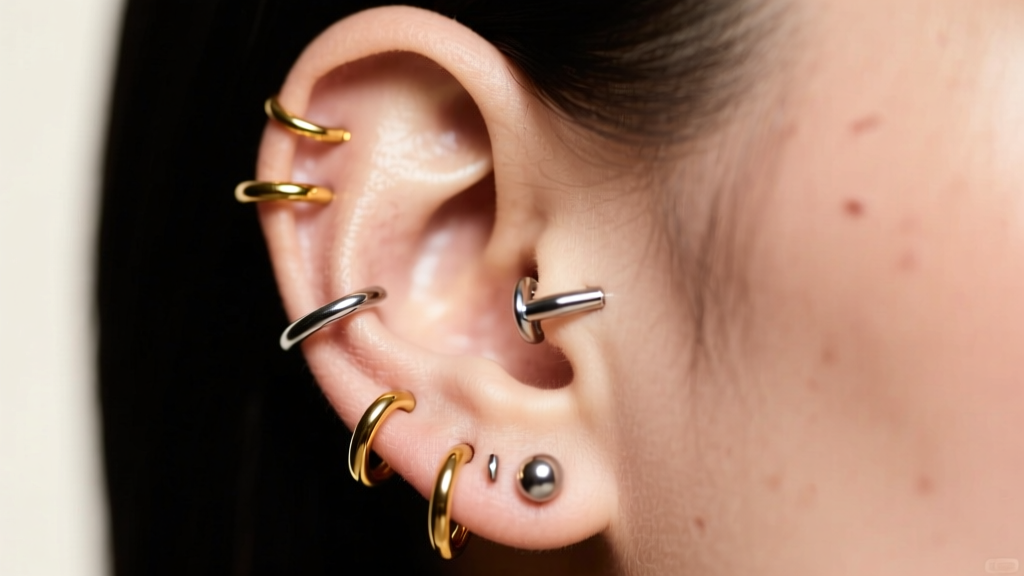
The concept of the curated ear has evolved from a niche subculture into a mainstream aesthetic milestone. When planning your earrings whole ear layout, you are no longer just picking out a single pair of studs; you are orchestrating a complex ecosystem of 5 to 12 distinct piercings across varying tissue densities. This multi-piercing environment drastically amplifies the importance of material science. A metal that causes mild irritation in a single lobe piercing can trigger widespread contact dermatitis or hypertrophic scarring when deployed across the helix, conch, and tragus simultaneously.
According to the Association of Professional Piercers (APP), the biocompatibility of your jewelry is the single most critical factor in healing cartilage. In a whole-ear project, you are often healing multiple cartilage zones at once, meaning your immune system is already under localized stress. Introducing reactive alloys into this environment is a recipe for prolonged healing times, migration, and rejection. This guide dissects the metallurgical properties of the most common body jewelry materials, providing a data-driven framework for your next curation.
Implant-Grade Titanium: The Gold Standard for Fresh Piercings
Not all titanium is created equal. For any fresh cartilage piercing in your whole ear setup, you must specifically seek out ASTM F136 Ti-6Al-4V ELI (Extra Low Interstitial) implant-grade titanium. This specific alloy is the same material used in orthopedic joint replacements and pacemaker casings. It is entirely nickel-free, highly resistant to corrosion from bodily fluids, and boasts a mirror-polish capability that minimizes bacterial adhesion.
The Art and Science of Anodizing
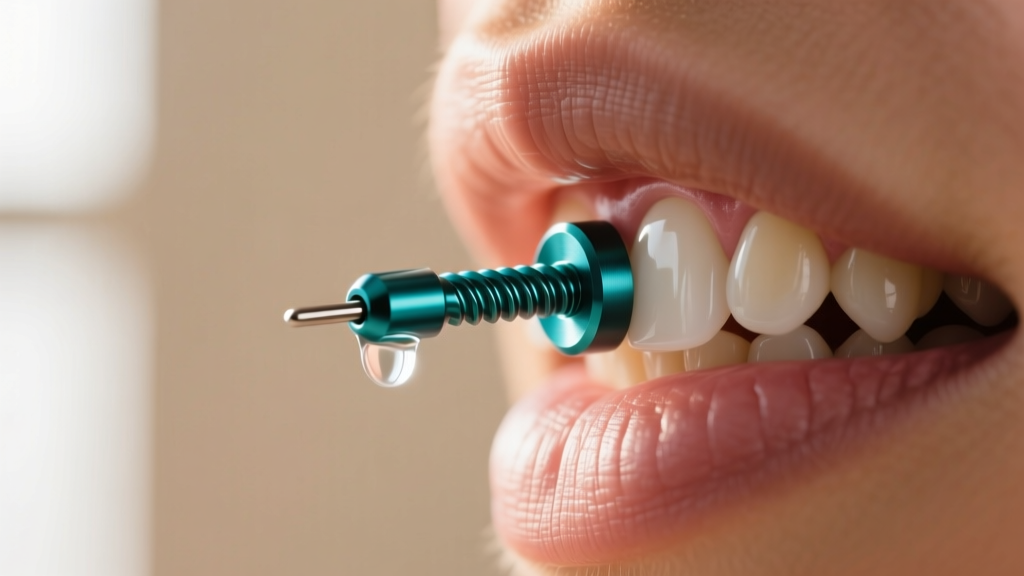
One of the most significant advantages of titanium for a curated ear is its ability to be anodized. By running an electrical current through the metal in an electrolytic bath, piercers can alter the oxide layer on the surface, creating vibrant, permanent colors without using dyes or platings. For a cohesive whole ear look, you can match your titanium conch stud, tragus flat-back, and helix hoop to the exact same voltage-derived hue—such as a deep teal (achieved at roughly 90 volts) or a rich gold (14 volts). Because anodizing only alters the surface oxide layer, it does not compromise the hypoallergenic core of the metal.
Solid Gold (14k vs 18k): The Healed Ear Luxury
While titanium rules the healing phase, solid gold remains the undisputed king of aesthetic luxury for fully healed piercings. However, pure 24k gold is far too malleable for body jewelry; it will easily warp, scratch, and harbor bacteria. Therefore, gold must be alloyed with other metals to increase its hardness. This is where the danger lies for sensitive ears.
Decoding the Alloys
- 14k Gold (58.5% Gold): Harder and more durable, making it ideal for intricate clickers, huggies, and threadless ends that require structural integrity. High-quality 14k gold is alloyed with silver, copper, and sometimes palladium.
- 18k Gold (75% Gold): Softer, richer in color, and generally more biocompatible due to the higher gold content, but more prone to scratching. Best reserved for low-impact areas like the earlobe or a fully healed flat helix.
Critical Warning: Never wear gold that is alloyed with nickel. Many commercial jewelers use nickel to create white gold, which is a primary culprit for allergic contact dermatitis. The National Center for Biotechnology Information (NCBI) notes that nickel hypersensitivity affects up to 20% of the general population, and repeated exposure in a confined piercing channel can lead to permanent sensitization. Always verify that your gold jewelry is nickel-free and cadmium-free.
Niobium: The Malleable Hypoallergenic Alternative
Niobium (ASTM B392) is a pure elemental metal that shares titanium’s hypoallergenic, nickel-free properties but differs significantly in its physical handling. Niobium is heavier and vastly more malleable than titanium. This makes it the premier choice for continuous captive bead rings (CBRs) and seamless hoops in the helix and daith, where a slight bend is required to open and close the ring without warping it permanently.
Like titanium, niobium can be anodized. However, because it is softer, it is not recommended for threadless ends or intricate prong-set gemstone pieces, as the prongs can bend and drop stones over time. For a whole ear project, niobium is best utilized as the structural backbone for your hoop placements, while titanium and gold handle the stud and clicker placements.
Materials to Avoid in a Multi-Piercing Setup
When curating an entire ear, the cumulative effect of reactive metals can cause widespread inflammation. Ban the following materials from your jewelry box:
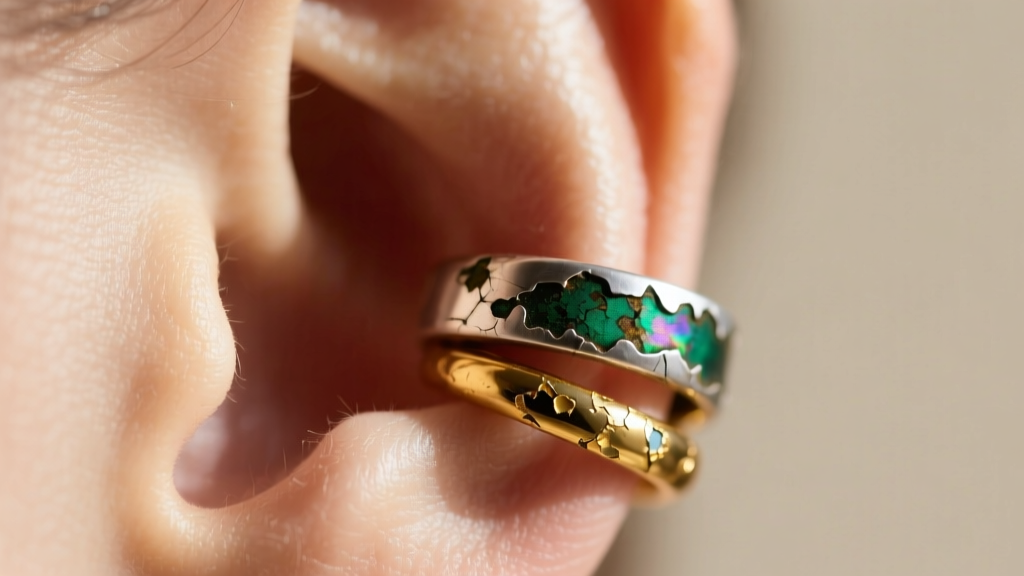
- Sterling Silver (925): Silver contains 7.5% copper and is highly reactive to oxygen and sulfur. Tarnish inside a piercing channel can lead to a permanent condition called localized argyria, where the skin turns a permanent blue-gray hue.
- 316L Surgical Steel: Despite the medical-sounding name, 316L steel contains 8% to 10.5% nickel. While acceptable for some fully healed lobes, it is entirely inappropriate for fresh cartilage or sensitive ears.
- Gold-Plated or Gold-Filled: Plating is a microscopically thin layer of gold over a base metal (often brass or steel). The friction of a piercing channel will wear this layer away in weeks, exposing your tissue to highly reactive, unknown alloys underneath.
Material Comparison Matrix for Curated Ears
Use this data table to make informed purchasing decisions for your specific piercing zones.
| Material | Standard / Grade | Nickel Content | Ideal Placement | Avg. Price (16g Stud) |
|---|---|---|---|---|
| Ti-6Al-4V ELI | ASTM F136 | 0.00% | Fresh & Healed Cartilage/Lobes | $40 - $85 |
| 14k Solid Gold | APP Compliant | < 0.05% (if alloyed correctly) | Healed Lobes, Helix, Clickers | $120 - $250 |
| 18k Solid Gold | APP Compliant | < 0.05% | Healed Lobes & Low-Impact Flats | $180 - $400 |
| Niobium | 99.9% Pure | 0.00% | Fresh & Healed Hoops/Rings | $30 - $60 |
| 316L Surgical Steel | ASTM F138 | 8.00% - 10.5% | Avoid (Healed Lobes Only) | $10 - $25 |
Strategic Placement: Matching Metal to Ear Zone
A successful earrings whole ear curation requires matching the physical properties of the metal to the anatomical realities of the piercing zone.
The Lobe: Weight and Gauge
Earlobes are dense, vascular, and forgiving. They can easily support the heavier weight of 14k or 18k solid gold dangles and large hoops. Standard lobe piercings are typically done at 18g or 20g, but stretching them to 14g or 12g to accommodate heavier gold pieces will prevent the "cheese-cutter effect," where thin wires slowly slice through the tissue over time.
The Helix and Conch: Snag Risks and Swelling
Cartilage zones like the helix, flat, and conch are prone to swelling and are highly susceptible to snagging on hair and clothing. For these areas, prioritize threadless (push-pin) or internally threaded flat-back labret studs made of lightweight titanium. Externally threaded jewelry features microscopic ridges on the post that can tear the delicate fistula (piercing channel) upon insertion, introducing bacteria and delaying healing. Furthermore, avoid large gemstone clusters in the conch until the piercing is at least a year old, as the bulk can trap moisture and dead skin cells, leading to localized infections.
The Daith and Rook: Ring Geometry
Inner-ear folds require jewelry that respects the natural curvature of the cartilage. Niobium or titanium captive bead rings (CBRs) with a diameter of 8mm to 10mm (usually in 16g) are standard here. Ensure the inner diameter is measured precisely; a ring that is too tight will cause pressure necrosis, while one that is too large will migrate and catch on masks or headphones.
Final Thoughts on Your Curation
Building a breathtaking whole ear layout is an investment in both artistry and biology. By anchoring your fresh piercings in ASTM F136 titanium and transitioning to high-quality, nickel-free solid gold and niobium once fully healed, you ensure that your curated ear remains a source of joy rather than a chronic dermatological burden. Always consult with an APP-certified piercer to verify the mill certificates of your jewelry before making the final commitment to your multi-piercing masterpiece.


