Nose Earrings & Ear Studs: The Ultimate Material Guide
Compare ASTM F136 titanium, niobium, and 14k gold for nose earrings and ear studs. Discover gauge sizes, healing properties, and pricing.

The "Nose Earrings" Crossover: Bridging Nostril and Ear Jewelry
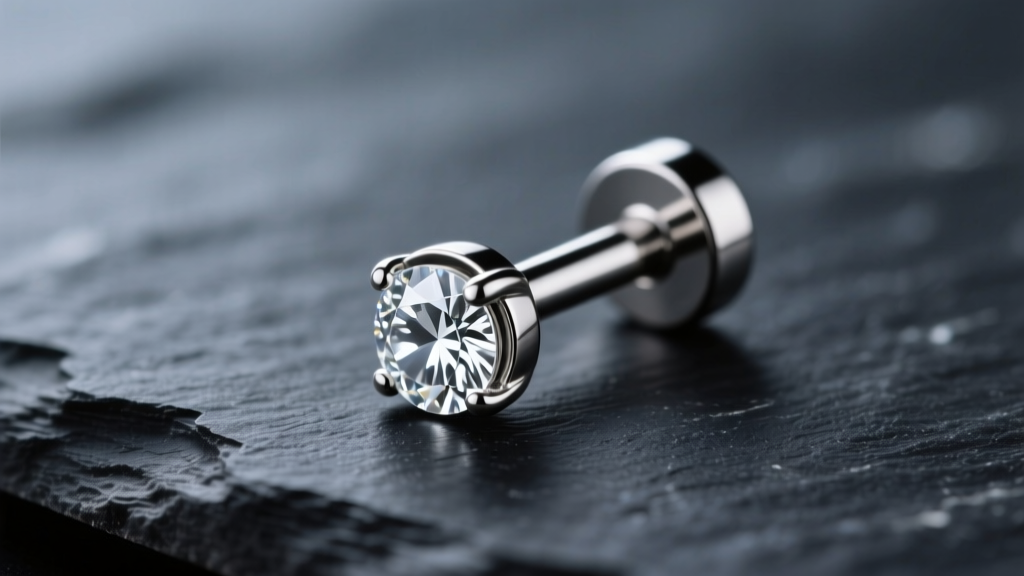
When consumers search for "nose earrings," they are typically referring to nostril studs, L-shaped pins, and seamless hoops designed for the nasal cartilage. However, from a metallurgical and anatomical perspective, the boundary between high-quality ear cartilage jewelry and premium nose jewelry is virtually non-existent. In 2026, the most advanced piercing studios treat the nostril as a specialized cartilage piercing, relying on the exact same implant-grade materials and threadless mechanics used for flat-back ear studs and tragus piercings.
Understanding the material properties of facial and ear jewelry is critical. The fistula (the healed skin tube inside the piercing) is highly reactive to microscopic corrosion, nickel leaching, and surface friction. Whether you are outfitting a fresh nostril piercing or upgrading a healed conch, the metal resting against your tissue dictates your healing trajectory and long-term comfort. Below, we break down the exact material grades, gauge standards, and failure modes you need to know before purchasing your next piece of jewelry.
Material Breakdown: What Actually Works for Facial and Cartilage Piercings
ASTM F136 Implant-Grade Titanium (Ti-6Al-4V ELI)
Implant-grade titanium is the undisputed gold standard for initial piercings and sensitive healed lobes. The specific designation you must look for is ASTM F136. This alloy contains aluminum and vanadium but is entirely nickel-free. Its surface naturally forms a passive oxide layer that prevents bodily fluids from causing galvanic corrosion. Unlike commercial "titanium," which may be unverified or mixed with cheaper alloys, F136 is the exact same metal used in orthopedic hip replacements. Pricing for a high-quality F136 titanium nose stud or flat-back ear labret typically ranges from $15 to $45, making it the most cost-effective hypoallergenic option on the market.
Niobium: The Anodizable Alternative
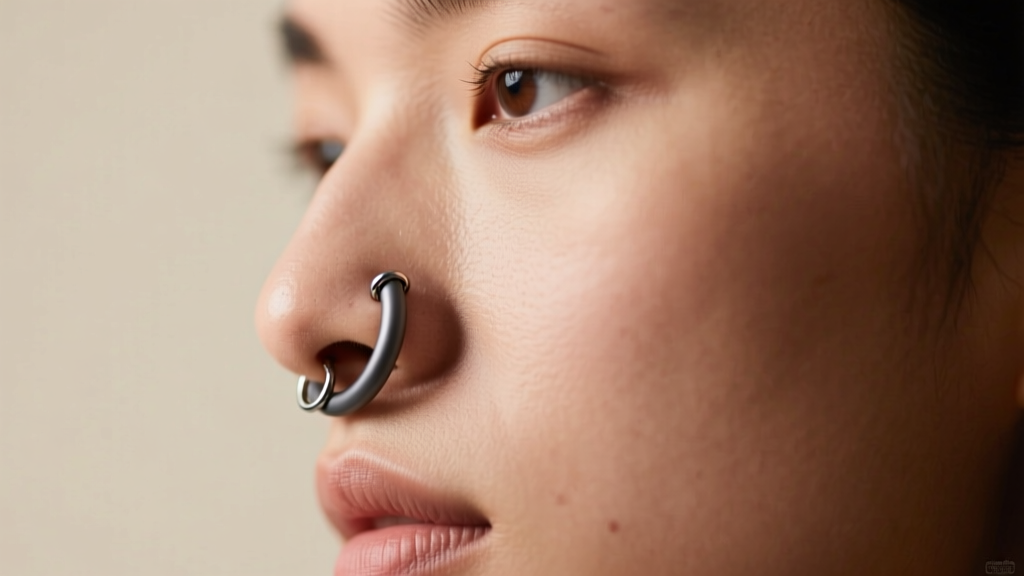
Niobium is a highly biocompatible, un-alloyed elemental metal. Because it is not an alloy, it contains zero nickel and cannot leach harmful metals into the skin. Its unique advantage in the realm of nose earrings and ear hoops is its anodizability. By applying a specific voltage, piercers can change the color of niobium to deep blues, purples, or golds without using toxic surface paints or platings. While slightly heavier than titanium, niobium is exceptionally flexible, making it the premier choice for seamless clicker hoops in the nostril or helix. Expect to pay between $25 and $60 for authentic niobium body jewelry.
Solid 14k and 18k Gold: The Luxury Standard
Gold is a classic choice, but its metallurgical composition requires strict scrutiny. Pure 24k gold is far too soft for body jewelry; it will easily deform, trap bacteria in microscopic scratches, and lose its tension fit. Therefore, body jewelry is alloyed. 14k and 18k solid gold offer the perfect balance of durability and biocompatibility, provided they are specifically alloyed for body jewelry (often using palladium or silver instead of nickel). Beware of "gold plated" or "gold filled" nose earrings. Plating wears off rapidly against the acidic environment of a healing fistula, exposing the reactive brass or steel core underneath. Authentic, nickel-free 14k gold threadless pins start around $80 and can exceed $300 for diamond-set ends.
Surgical Steel (The 316L Trap)
The term "surgical steel" is largely a marketing gimmick in the body jewelry industry. The most common variant, 316L stainless steel, contains between 8% and 10% nickel. While the nickel is theoretically bound within the alloy, the friction of daily wear and the saline environment of a piercing can cause microscopic leaching. According to the APP guidelines on allergic contact dermatitis, prolonged exposure to 316L is a leading cause of localized contact dermatitis and hypertrophic scarring in cartilage piercings. We strongly advise avoiding steel for any fresh piercing or for individuals with known metal sensitivities.
Gauge and Threading Standards for Nose and Ear Crossovers
Material is only half the equation; the physical dimensions and mechanics of the jewelry dictate how it interacts with your anatomy. The standard gauge for a traditional nostril piercing is 20G (0.81mm) or 18G (1.02mm). However, many modern piercers are moving toward 16G (1.29mm) for nostrils to reduce the "cheese-cutter effect," where thin wire slowly migrates through the tissue under tension.
For flat-back labrets used in both the ear (tragus, conch, helix) and the nose, the threading mechanism is crucial. Externally threaded jewelry (where the screw is on the post) forces sharp, jagged threads through the delicate fistula, causing micro-tears and scar tissue buildup. The industry standard is now internally threaded or threadless (push-pin) jewelry. Threadless systems, pioneered by brands like Neometal, use a slight bend in the pin to create tension against the inside of the shaft. This provides a secure, seamless fit that will not unscrew in your sleep, making it the superior choice for both nose studs and ear cartilage.
| Material | Industry Standard | Nickel Content | Avg. Price (Stud/Pin) | Best Application |
|---|---|---|---|---|
| Titanium | ASTM F136 | 0% (Nickel-Free) | $15 - $45 | Fresh piercings, sensitive ears |
| Niobium | Un-alloyed Elemental | 0% (Nickel-Free) | $25 - $60 | Seamless hoops, anodized colors |
| 14k/18k Gold | Nickel-Free Alloy | 0% (if Palladium alloyed) | $80 - $300+ | Healed piercings, luxury ends |
| Surgical Steel | 316L / 316LVM | 8% - 10% | $5 - $15 | Temporary wear (Not recommended) |
Real-World Troubleshooting: Allergic Reactions and Rejection
Even with perfect aftercare, the wrong material will trigger an immune response. If you experience persistent redness, itching, or a clear, sticky discharge around your nose earring or ear stud, you are likely dealing with allergic contact dermatitis or a moisture trap caused by poor jewelry design.
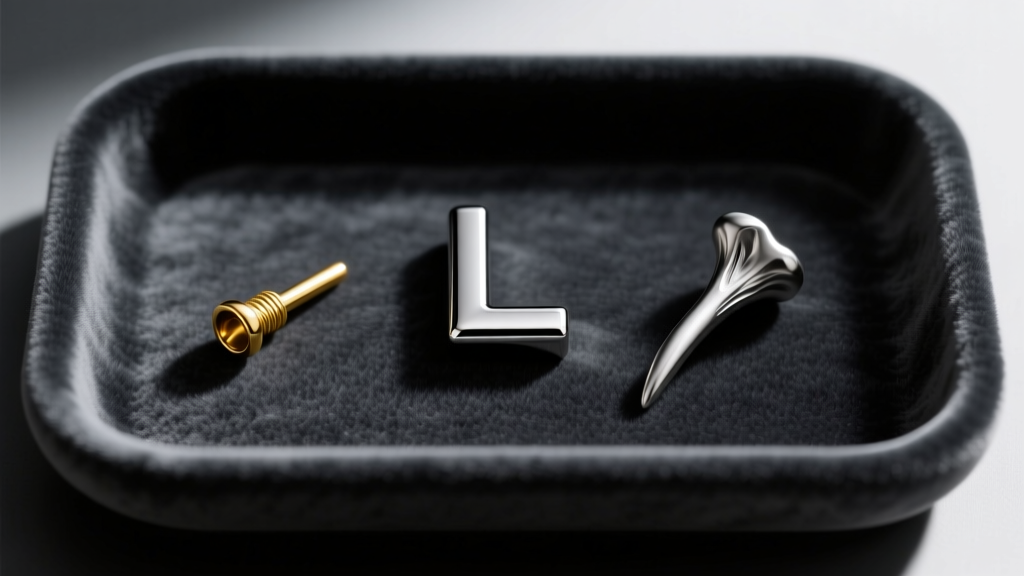
The Moisture Trap: Traditional "bone" studs or corkscrew L-shapes often leave a gap between the jewelry head and the skin. In the nostril, this gap traps sebum, dead skin cells, and facial moisturizers, leading to localized infections that mimic allergic reactions. Switching to a custom-fitted flat-back labret eliminates this gap entirely, allowing the tissue to breathe and heal flush against the metal.
Galvanic Corrosion: Mixing metals in the same piercing (e.g., a steel post with a gold end) can create a micro-galvanic cell when exposed to saline sweat, accelerating the breakdown of the lesser metal. Always ensure your post and your decorative end are made of compatible, high-grade materials. For a comprehensive overview of safe metals, consult the Association of Professional Piercers (APP) jewelry guidelines.
Where to Buy: Trusted Brands for 2026
To guarantee the metallurgical claims on the packaging, purchase from reputable body jewelry manufacturers rather than generic fashion accessory sites. For implant-grade titanium and threadless mechanisms, brands like Neometal, Junipurr Jewelry, and BVLA set the global standard. These companies provide mill certificates verifying their ASTM F136 and nickel-free gold alloys. When shopping for nose earrings that double as high-end ear cartilage studs, investing in a quality threadless post and a interchangeable gemstone end ensures you have a versatile, hypoallergenic wardrobe that will last a lifetime.


