How to Clean and Maintain High Quality CZ Earrings
Discover expert cleaning and maintenance tips for high quality CZ earrings. Learn how to protect prongs, restore sparkle, and avoid common damage.

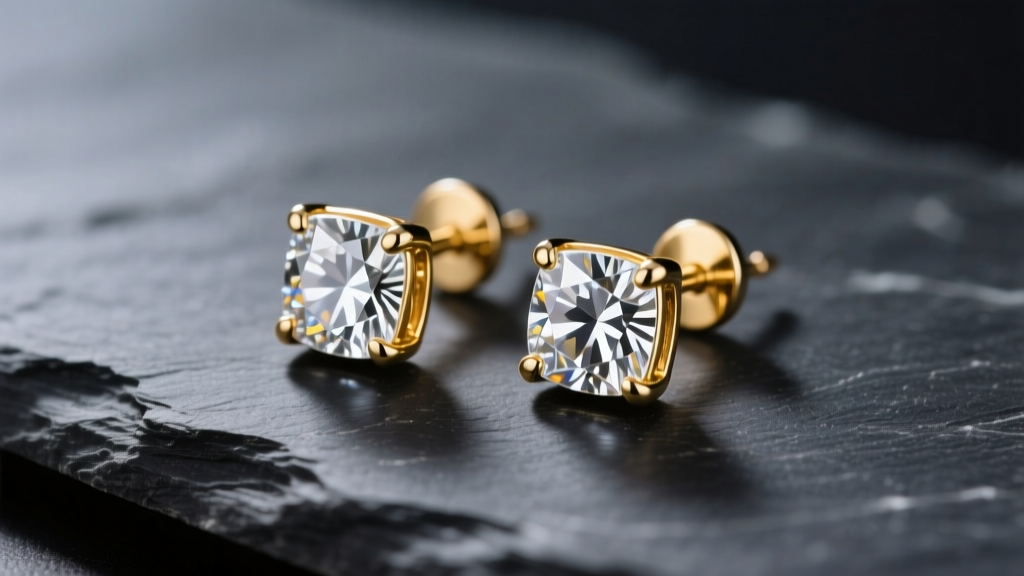
The Science of Cubic Zirconia and Metal Settings
To properly care for your jewelry, you must first understand the material science behind it. Cubic zirconia (CZ) is a synthetic crystalline oxide of zirconium. While it boasts an impressive 8.5 on the Mohs scale of mineral hardness, it is fundamentally different from a diamond. According to the Gemological Institute of America (GIA), CZ is denser than diamond and possesses a higher dispersion rate, which gives it that signature rainbow 'fire.' However, CZ is also highly oleophilic, meaning it attracts and holds onto oils, lotions, and sebum far more aggressively than natural diamonds. This is why high quality CZ earrings can appear cloudy or dull after just a few days of continuous wear if not properly maintained.
The metal setting is equally critical. In 2026, the industry standard for premium CZ jewelry has shifted heavily toward 14k solid gold, platinum, and ASTM F136 implant-grade titanium. If you are wearing CZ in cartilage piercings like the helix or tragus, always ensure the post is at least 16-gauge (1.2mm) or 14-gauge (1.6mm) titanium to prevent irritation and ensure structural integrity. Sterling silver, while common in budget pieces, is too porous and soft for daily-wear prong settings, increasing the risk of stone loss.
Daily Wear and Environmental Hazards
Environmental factors are the silent killers of jewelry brilliance. Understanding what to avoid is just as important as knowing how to clean your pieces.
Chlorine and Hard Water
Never wear your earrings in swimming pools or hot tubs. Chlorine reacts with the alloy metals in 14k and 18k gold (like copper and zinc), causing microscopic pitting and weakening the prongs holding your CZ stones. Furthermore, hard water leaves behind calcium and magnesium deposits that bond to the pavilion (the bottom facet) of the CZ, creating a stubborn, cloudy film that is difficult to remove with standard washing.
Cosmetics and Lotions
The oleophilic nature of CZ means that everyday cosmetics—sunscreen, foundation, and hair products—will quickly coat the stone. Because light must enter through the crown and reflect off the pavilion to create brilliance, a layer of lotion effectively blocks light refraction, rendering even the most perfectly cut CZ completely lifeless.
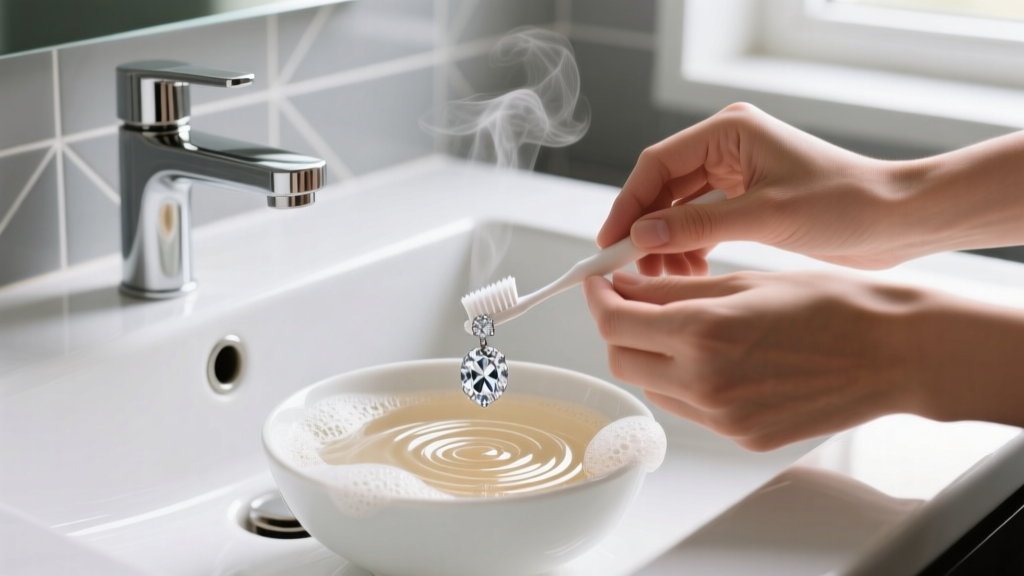
Step-by-Step Cleaning Protocol for High Quality CZ Earrings
Forget harsh chemicals, toothpaste, or baking soda. Toothpaste contains abrasive silica particles that can scratch the metal setting and dull the polished surface of the CZ over time. Instead, follow this master jeweler-approved degreasing protocol.
- Prepare the Solution: Fill a small ceramic bowl with warm (not hot) water. Add three drops of a mild, pH-neutral liquid dish soap. Dish soap is specifically formulated to break down lipid bonds without damaging precious metals or rhodium plating.
- Soak: Submerge your high quality CZ earrings in the solution for 10 to 15 minutes. This allows the surfactants to loosen trapped sebum and cosmetic buildup from beneath the girdle of the stone.
- Agitate Gently: Using an extra-soft baby toothbrush, gently brush the stone. Pay special attention to the pavilion (the back of the stone) and the gallery (the metal basket holding the stone). Brush in small circular motions, never scrubbing aggressively against the prongs.
- Rinse Thoroughly: Rinse the earrings under a gentle stream of lukewarm distilled water. Using distilled water prevents hard water spots from forming as the jewelry dries.
- Dry Properly: Never use tissue paper or paper towels. Wood pulp fibers can leave microscopic scratches on gold and leave lint trapped in the culet of the stone. Instead, pat dry with a clean, lint-free microfiber cloth, and use a hair dryer on the 'cool' setting to blow out any remaining moisture from the setting.
'The most common mistake consumers make is using abrasive cleaners on CZ. Because CZ is softer than diamond, repeated exposure to harsh scrubbing agents will eventually round off the facet junctions, permanently reducing the stone's optical precision.' — Master Bench Jeweler
The Ultrasonic and Steam Cleaning Debate
Many jewelry owners assume that because ultrasonic cleaners work wonders on diamonds, they are safe for all simulants. This is a dangerous misconception when it comes to high quality CZ earrings, particularly those with micro-pave settings.
Ultrasonic cleaners work by generating high-frequency sound waves that create microscopic cavitation bubbles in the liquid. When these bubbles implode, they send localized shockwaves through the jewelry. While a solid bezel-set or 4-prong solitaire CZ might survive this process, micro-pave settings rely on tiny, shared prongs to hold 1mm to 2mm stones. The intense vibrations of an ultrasonic cleaner can easily rattle these tiny stones loose, causing them to fall out and be lost in the bottom of the tank.
Steam cleaners pose a different risk. While the heat won't damage the CZ itself (which has a melting point of over 2,700°C), sudden thermal shock can cause fractures if the stone has internal tension, and the high-pressure steam can bend delicate V-prongs often used on princess-cut or marquise-cut CZ stones.
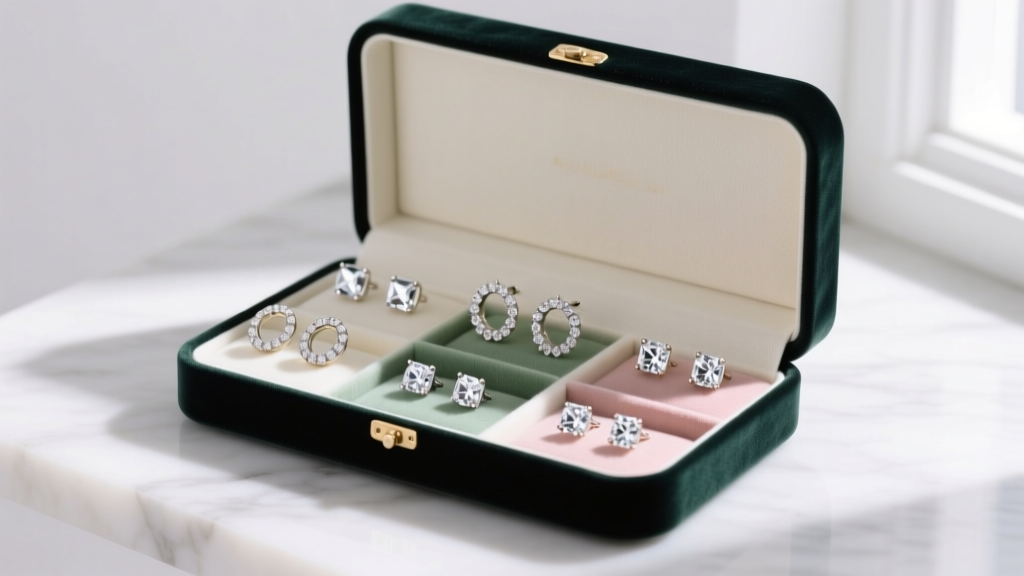
Storage Solutions to Prevent Micro-Scratches
Proper storage is the final pillar of jewelry maintenance. CZ is hard enough to scratch softer metals, and the metal settings can easily become tangled or bent if thrown haphazardly into a drawer. The American Gem Society (AGS) strongly recommends storing jewelry pieces individually to prevent friction damage.
| Storage Material | Pros | Cons | Best For |
|---|---|---|---|
| Anti-Tarnish Flannel | Treated with silver sulfide inhibitors; extremely soft. | Does not protect against heavy physical impacts. | White gold or sterling silver CZ settings. |
| Silica Gel Packets | Absorbs ambient moisture, preventing metal oxidation. | Must be replaced every 3-6 months to remain effective. | Humid climates and travel jewelry cases. |
| Individual Velvet Pouches | Prevents stones from scratching each other; blocks dust. | Can trap moisture if stored in a bathroom environment. | High quality CZ drop earrings and dangles. |
| Hardshell Travel Cases | Crush-proof; ideal for protecting delicate prongs. | Bulky; takes up significant luggage space. | Intricate micro-pave CZ hoop and cluster earrings. |
Professional Maintenance and Prong Tightening
Even with meticulous at-home care, the physical realities of daily wear will eventually take a toll on the metal settings of your high quality CZ earrings. Metals like 14k gold and platinum are subject to 'metal fatigue' and gradual wear from friction against clothing, hair, and pillows.
For everyday stud earrings, you should perform a visual and tactile inspection every three months. Gently run your fingernail over the prongs; if they feel snagged, lifted, or rough, the setting is compromised. Take the earrings to a professional jeweler for a prong tightening and a check of the earring back tension. If your CZ earrings are set in white gold, remember that the rhodium plating will naturally wear off over 12 to 18 months, revealing the slightly yellowish undertone of the white gold alloy. A professional jeweler can easily polish and replate the settings, restoring the bright, mirror-like finish that perfectly complements the icy brilliance of a high-quality cubic zirconia stone.


