Expert Care and Cleaning for Modern Diamond Earrings
Discover expert cleaning routines and maintenance tips to keep your modern diamond earrings brilliant. Learn about safe solutions and storage.

The Science of Brilliance and Lipid Attraction
Diamonds possess a remarkably high refractive index (2.42), which is the optical property responsible for their exceptional brilliance and fire. However, they are also highly oleophilic, meaning they naturally attract and hold onto oils, grease, and lipids. When you wear modern diamond earrings, they are constantly exposed to sebum from your skin, airborne aerosols from hairspray, and residue from skincare products. Even a microscopic film of oil can drastically reduce a diamond's light return, turning a fiery, brilliant stone into a dull, lifeless piece of glass. Understanding this chemical affinity is the first step in proper maintenance and ensuring your stones maintain their optical performance.
Vulnerabilities in Modern Settings
Modern diamond earrings often feature avant-garde settings that differ significantly from traditional four-prong solitaires. These contemporary designs require specialized care protocols to avoid structural damage.
Tension and Bezel Settings
Tension settings rely on the precise compression of the metal band to hold the diamond in place. While visually striking, the microscopic gaps where the metal meets the diamond's girdle are prime traps for lotion and dead skin cells. Furthermore, aggressive cleaning methods can compromise the metal's temper over time. Modern bezel settings, which encircle the stone in a metal rim, offer excellent protection but feature a tiny interior shelf that accumulates sebum, requiring targeted brushing.
Micro-Pavé and Flush Settings
Modern geometric drop earrings frequently utilize micro-pavé, where tiny melee diamonds are held by minuscule shared prongs. Flush settings, where the diamond is embedded directly into the metal, create a seamless look but trap debris around the stone's edge. According to the Gemological Institute of America (GIA), these intricate settings are highly susceptible to vibration damage and must never be subjected to ultrasonic frequencies.
The Ultimate Manual Cleaning Protocol
Skip the harsh commercial dips and follow this precise, gemologist-approved manual cleaning routine designed specifically for modern diamond earrings.
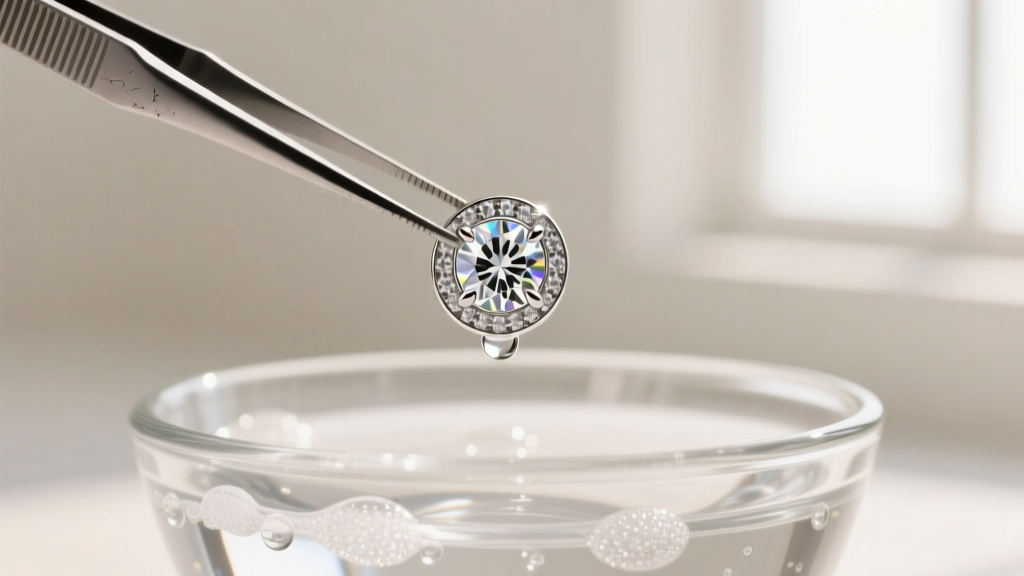
- The Solution: Mix one part mild, lotion-free dish soap with six parts warm distilled water. Avoid tap water, as dissolved minerals and chlorine can leave hard water spots on the metal and dull the diamond.
- The Soak: Submerge the earrings for 20 to 30 minutes. This allows the surfactants in the soap to break the surface tension of the oils clinging to the diamond's pavilion (the bottom half).
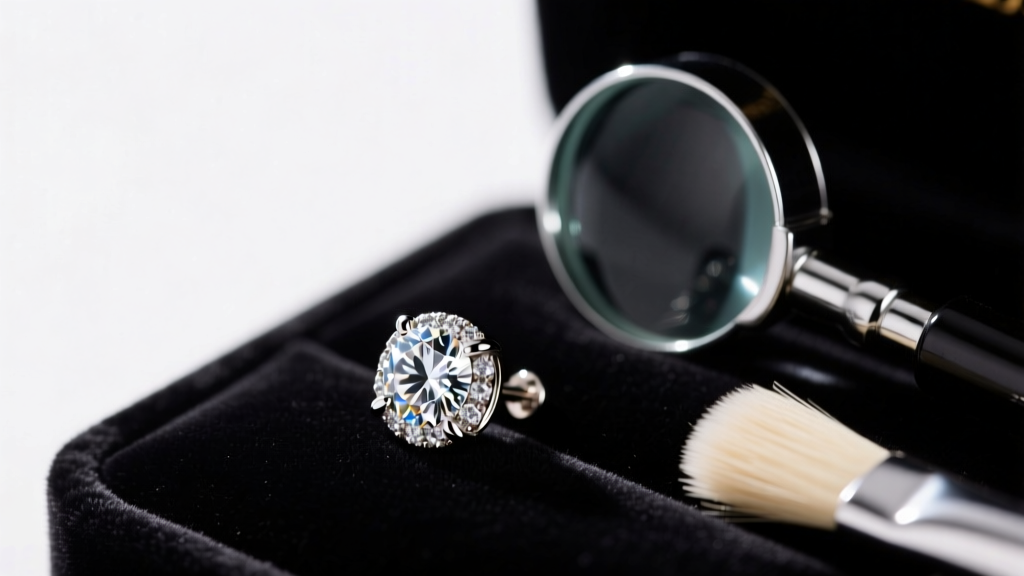
- The Agitation: Use an extra-soft baby toothbrush. Gently brush the underside of the diamond, where the pavilion facets meet the culet. This is where 90% of light-blocking grease accumulates. For screw-back posts, brush along the threading to dislodge impacted debris.
- The Rinse and Dry: Rinse thoroughly under a gentle stream of distilled water. Pat dry with a lint-free microfiber cloth, or use a hairdryer on the 'cool' setting to blow water droplets out of hard-to-reach micro-pavé crevices.
Comparison of Cleaning Methods
Not all cleaning methods are safe for every type of modern earring. Use this matrix to determine the safest approach for your specific jewelry.
| Method | Best For | Avoid If | Frequency |
|---|---|---|---|
| Manual Soak & Brush | All settings, especially pavé and tension | Never | Weekly |
| Ultrasonic (40kHz) | Solid cast pieces, simple solitaire studs | Micro-pavé, tension, fracture-filled stones | Bi-Annually |
| Steam Cleaning | Heavy grease removal on sturdy prong settings | Tension settings, heat-treated stones | Monthly |
| Commercial Wipes | Quick surface polish on the go | Intricate settings (leaves chemical residue) | As Needed |
Metallurgy and Post Care
The metal holding your modern diamond earrings requires its own care regimen. If your earrings are crafted from 14k or 18k white gold, they are likely plated with rhodium to achieve a bright, silvery-white finish. Harsh chemicals, including chlorine in tap water and ammonia in glass cleaners, will rapidly degrade this rhodium plating, exposing the slightly yellowish gold alloy beneath. The Federal Trade Commission (FTC) notes that consumers must be aware of plating wear when evaluating jewelry maintenance.
Platinum, on the other hand, is highly durable and does not require plating. However, platinum is prone to developing a 'patina'—a satin-like finish caused by microscopic scratches displacing the metal. While this doesn't compromise the security of the setting, it can reduce the reflective contrast that makes the diamond pop. A quick polish with a specialized jewelry cloth restores the high-shine finish without removing metal mass.
Professional Maintenance and the Snag Test
Even with meticulous home care, modern diamond earrings require professional oversight. The prongs securing your stones undergo constant micro-stress from daily activities like pulling hair or changing clothes. Perform the 'Snag Test' monthly: run the earring lightly over a piece of fine silk or knit fabric. If the prongs catch on the threads, they are either bent, lifted, or worn flat, requiring immediate attention from a jeweler.
For micro-pavé earrings, schedule a professional inspection every six months. Jewelers use high-magnification loupes to check for hairline fractures in the tiny shared prongs that are invisible to the naked eye. Furthermore, if your white gold posts are looking yellow or dull, a professional rhodium re-plating (which typically costs between $35 and $60) will restore their factory-fresh luster without harming the diamonds.
Storage and the Mohs Scale Reality
Diamonds rank as a 10 on the Mohs scale of mineral hardness, making them the hardest natural material on earth. This means your modern diamond earrings can and will scratch the precious metal settings of other jewelry, and they can even chip each other if the diamonds come into direct contact at certain cleavage planes.
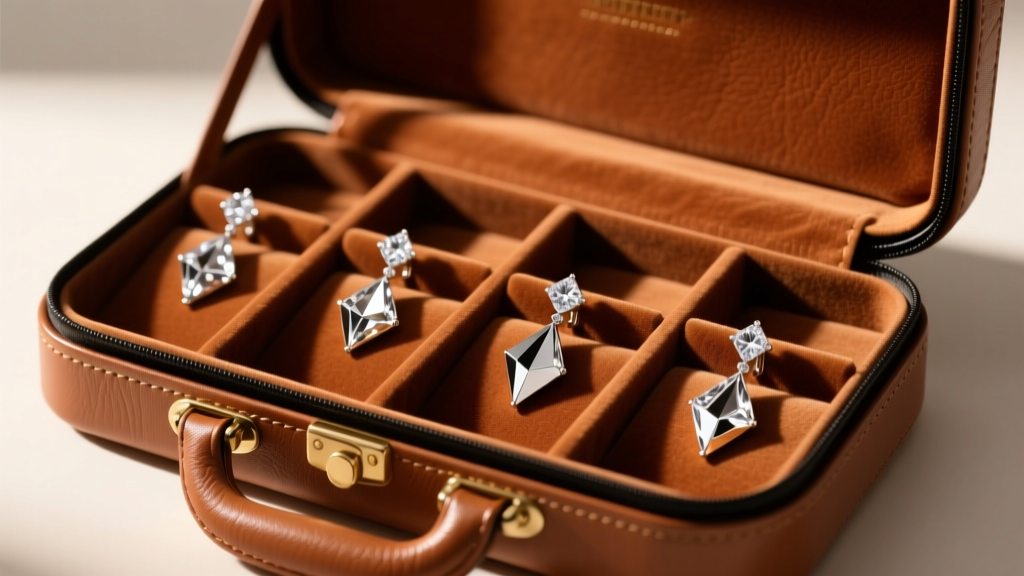
Never toss diamond earrings loosely into a jewelry box or travel pouch. Each pair must be stored in an individual, soft-lined compartment. When traveling, use a dedicated leather roll or hard-shell case with specific velvet slots that keep the earring posts secured and the stones separated. Additionally, always put your earrings on after applying makeup, perfume, and hairspray, and take them off before showering, swimming, or applying heavy lotions to preserve their structural integrity and optical brilliance.


