Moonstone Teardrop Earrings: Metal Pairings & Gem Care
Discover the best metal pairings for moonstone teardrop earrings. Compare gold, silver, and platinum settings, plus essential care tips.

The Gemological Profile of Moonstone
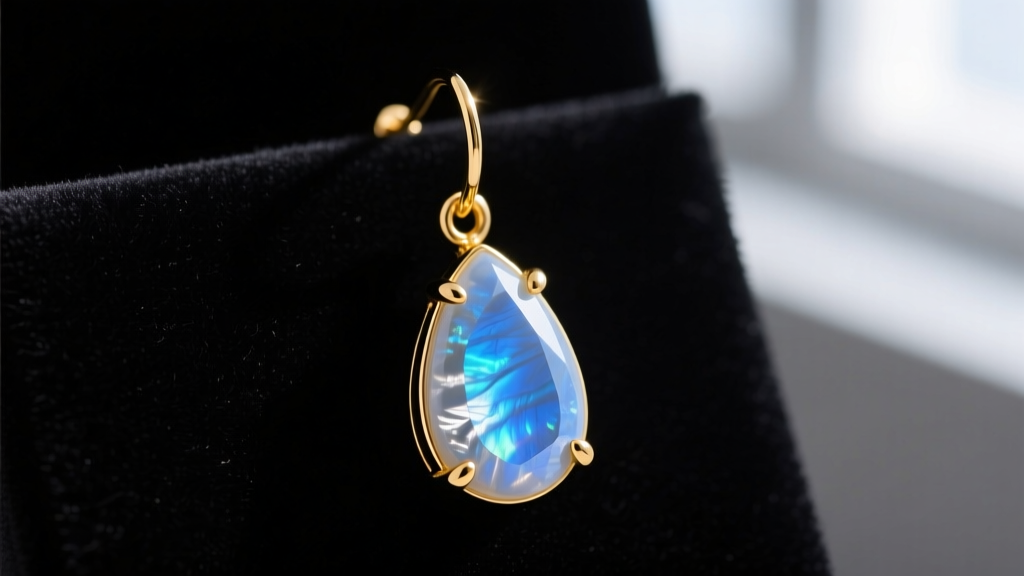
Moonstone is a captivating variety of the feldspar-group mineral orthoclase, renowned for its ethereal optical phenomenon known as adularescence. This billowy, floating light effect is caused by the scattering of light between alternating, microscopic layers of orthoclase and albite feldspar within the stone. According to the Gemological Institute of America (GIA), the thickness of these alternating layers dictates the color of the sheen: layers approximately 100 nanometers thick produce a highly prized blue sheen, while thicker layers yield a white or multicolored rainbow sheen.
When selecting moonstone teardrop earrings, understanding this internal structure is not just an academic exercise; it is a critical factor in determining the stone's durability, optimal setting style, and the best metal pairing to maximize its visual impact. As we navigate the 2026 jewelry market, where ethically sourced, gem-grade feldspar commands a premium, making informed material choices is essential for both jewelers and collectors.
The Teardrop Vulnerability: Cleavage Planes and Setting Mechanics
The teardrop cut, often fashioned as a briolette or a tapered cabochon, presents a unique structural challenge. Moonstone ranks between 6 and 6.5 on the Mohs hardness scale, making it relatively soft compared to sapphires or diamonds. More importantly, moonstone possesses perfect cleavage in two directions that intersect at roughly 90 degrees. The Mindat.org orthoclase database notes that this cleavage makes the stone highly susceptible to splitting or chipping if subjected to sharp impacts.
In a teardrop shape, the tapered terminus (the point) is the most vulnerable area. If this point aligns with one of the stone's internal cleavage planes, a minor drop or knock against a hard surface can sheer the tip off entirely. Therefore, standard four-prong settings that leave the point exposed are fundamentally flawed for daily wear. To properly secure moonstone teardrop earrings, jewelers must employ a V-prong at the terminus or utilize a partial bezel setting that encapsulates the point in metal, absorbing and distributing kinetic energy away from the fragile gemstone.
Metallurgy and Metal Pairings: A Material Comparison
The choice of metal dictates not only the aesthetic of the earring but also its structural longevity. Different alloys possess varying levels of Vickers Hardness (HV) and tensile strength, which directly influence how well they can grip and protect a fragile teardrop cabochon.
14k and 18k Yellow Gold
14k yellow gold (58.5% pure gold, alloyed with copper, silver, and zinc) offers a Vickers hardness of approximately 135 HV. This makes it an excellent, durable choice for intricate prong work and secure bezels. 18k yellow gold (75% pure gold) is softer, sitting around 115 HV. While 18k gold provides a richer, warmer hue that beautifully complements peach or rainbow moonstones, the prongs must be cast in thicker gauges (e.g., 1.2mm instead of 0.9mm) to prevent bending and subsequent stone loss.
Sterling Silver and Argentium
Traditional sterling silver (92.5% silver, 7.5% copper) is relatively soft, with a Vickers hardness of roughly 65 HV. For heavy moonstone teardrops, standard sterling silver prongs can easily catch on clothing and bend open. In 2026, many artisanal jewelers have shifted to Argentium silver, a proprietary alloy containing germanium that increases hardness and tarnish resistance, making it a vastly superior and safer choice for securing delicate gemstones in silver settings.
Platinum and Palladium
Platinum (typically alloyed with 5% ruthenium or iridium) sits around 135 HV but possesses superior tensile strength and malleability compared to gold. When a platinum prong is scratched or impacted, the metal displaces rather than wearing away, ensuring a lifelong grip on the moonstone. Palladium offers similar white-metal benefits at a lighter weight, which is crucial for large teardrop earrings that might otherwise drag down the earlobe.
| Metal Alloy | Composition | Vickers Hardness (HV) | Best Setting Type | 2026 Market Premium |
|---|---|---|---|---|
| 14k Yellow Gold | 58.5% Au, Cu, Ag, Zn | ~135 HV | V-Prong, Bezel | Base + 45% |
| 18k Yellow Gold | 75% Au, Cu, Ag | ~115 HV | Thick Bezel | Base + 80% |
| Argentium Silver | 93.5% Ag, Cu, Ge | ~85 HV | Bezel, Heavy Prong | Base (Standard) |
| Platinum 950 | 95% Pt, 5% Ru/Ir | ~135 HV | V-Prong, Micro-Pave | Base + 250% |
Visual Optics: How Metal Color Influences Adularescence
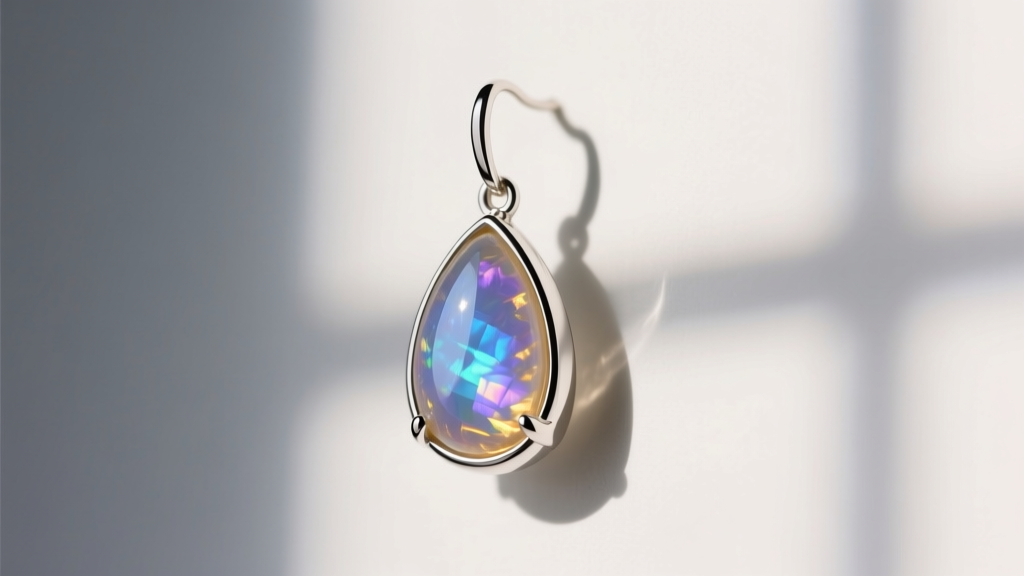
Beyond structural integrity, the color and reflectivity of the metal setting profoundly alter the visual perception of the moonstone's adularescence. White metals, such as platinum, palladium, and rhodium-plated silver, act as cool reflectors. They bounce crisp, white light back into the base of the cabochon, which amplifies and sharpens the blue sheen in high-grade orthoclase. If you are investing in a rare, glassy-body moonstone with a strong electric blue flash, a white metal bezel or halo is the optimal pairing to maximize contrast.
Conversely, yellow and rose gold alloys absorb cool wavelengths and reflect warm light into the stone. This optical warming effect can mute a subtle blue sheen but will dramatically enhance the fiery, multicolored flashes of a rainbow moonstone or the soft, peachy glow of a white moonstone. When commissioning custom teardrop earrings, always view the loose cabochon against different metal backings under both natural daylight and warm LED lighting to observe how the adularescence shifts.
Sourcing, Pricing, and Authenticity in 2026
The market for moonstone teardrop earrings has stratified significantly. Commercial-grade opaque moonstones, often featuring a chalky white body color with minimal sheen, are mass-produced and typically set in sterling silver, retailing between $30 and $75. However, gem-grade moonstones—characterized by a highly transparent, glassy body with a vivid, centered blue sheen that covers the entire face of the teardrop—have seen an 18% price increase over the last three years due to depleted mines in Sri Lanka and India.
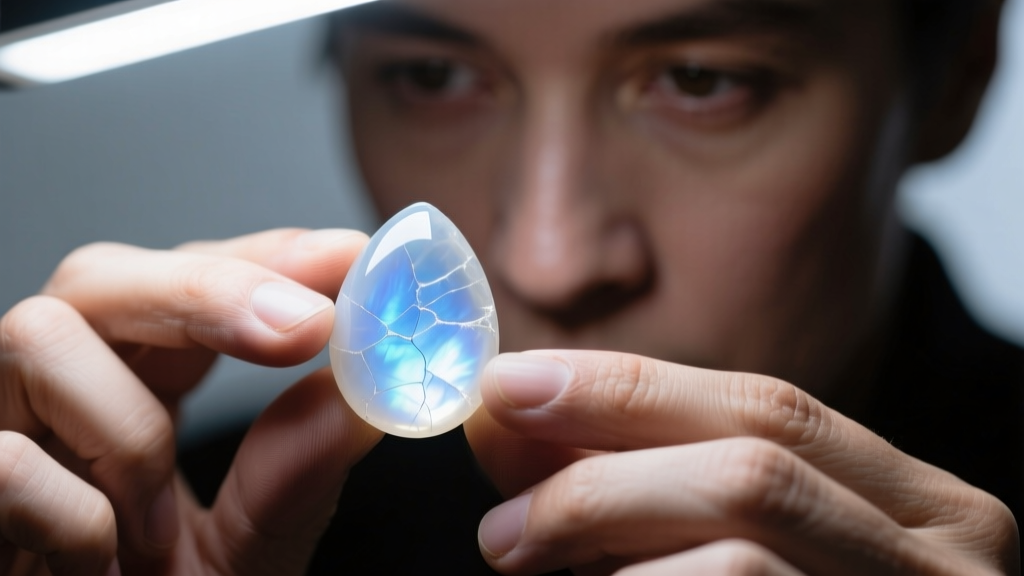
Expect to pay between $250 and $800+ for a pair of premium blue sheen teardrops set in 14k or 18k gold. Buyers must also be wary of synthetic spinel or glass imitations, which lack the internal tension cracks and characteristic 'centipede' inclusions found in natural feldspar. Always request a loupe inspection or a gemological certificate when purchasing high-value pieces.
Strict Maintenance and Care Protocols
Because of its perfect cleavage and moderate hardness, moonstone requires meticulous care. The most common cause of catastrophic failure in moonstone jewelry is improper cleaning. Follow these strict protocols to preserve your teardrop earrings:
- Never Use Ultrasonic Cleaners: The high-frequency acoustic cavitation bubbles generated by ultrasonic machines will aggressively exploit the stone's cleavage planes, causing internal fracturing or complete shattering.
- Avoid Steam Cleaning: Sudden thermal shock from high-temperature steam can induce tension cracks within the alternating feldspar layers.
- Manual Cleaning Only: Use a soft-bristled baby toothbrush, lukewarm water, and a drop of mild, phosphate-free dish soap. Gently brush the back of the teardrop where skin oils and lotions accumulate, which can dull the stone's transparency and mute the adularescence.
- Storage: Store moonstone teardrops in a separate, soft velvet pouch. Because moonstone is a 6.5 on the Mohs scale, it will easily be scratched by diamond, sapphire, or even quartz dust if tossed loosely into a jewelry box.
'The beauty of moonstone lies in its delicate internal architecture. Treating it with the same aggressive cleaning methods used for diamonds is a guaranteed path to destroying the gem.' — Master Lapidary Adage
Conclusion
Selecting the perfect pair of moonstone teardrop earrings requires looking beyond the ethereal flash of the gemstone and critically evaluating the materials that hold it. By prioritizing protective settings like V-prongs or bezels, choosing structurally appropriate metals like 14k gold or platinum, and adhering to strict, non-abrasive care protocols, you ensure that the captivating adularescence of your teardrops remains intact for generations.


