The Ultimate Care Guide for Your Pinterest Earring Stack
Learn how to clean, maintain, and troubleshoot your curated Pinterest earring stack with expert tips on metals, gauges, and hygiene.

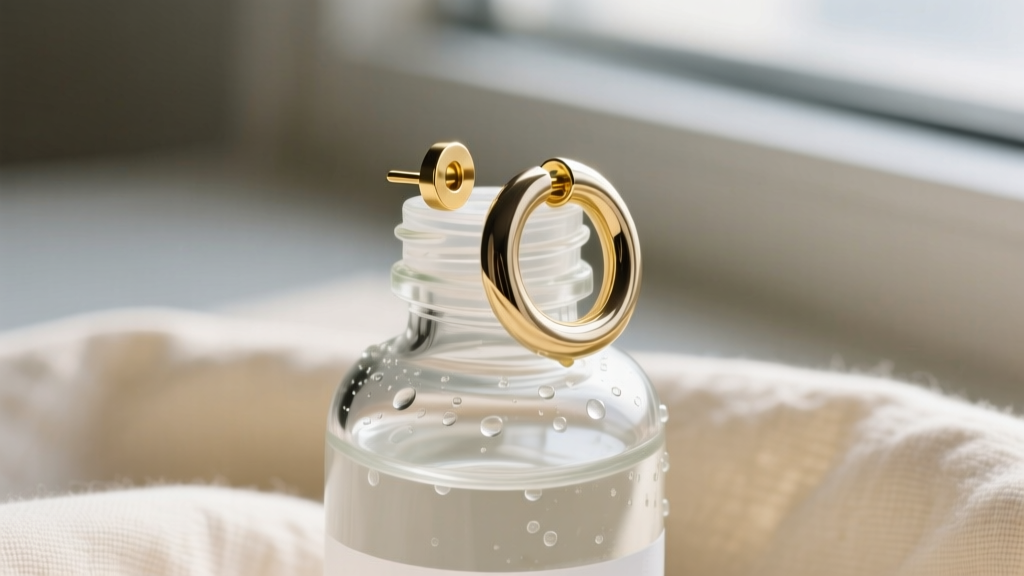
The Hidden Maintenance Reality of Curated Ear Stacks
Achieving the perfect pinterest earring stack is a milestone in personal style. Whether you are rocking a constellation of delicate threadless ends across your helix, a curated lobe setup with seamless hoops, or a bold conch chain, the visual impact is undeniable. However, what most style guides fail to mention is the biological and mechanical reality of managing four to eight piercings in close proximity. In 2026, the trend has shifted heavily toward mixed-metal stacks and intricate huggie clusters, which inadvertently create micro-environments where sebum, dead skin cells, and hair products accumulate rapidly.
Unlike a single pair of standard stud earrings, a full curated ear requires a systematic approach to hygiene and hardware maintenance. The proximity of cartilage piercings (typically 16-gauge or 1.2mm) to lobe piercings (usually 18-gauge or 20-gauge) means that an infection or irritation bump in one zone can easily compromise the entire stack. Proper care is not just about keeping the gold shiny; it is about preserving the integrity of your fistulas and preventing long-term tissue damage.
Material-Specific Cleaning Protocols
Before you begin any cleaning regimen, you must identify the exact metallurgy of your stack. The Association of Professional Piercers (APP) strictly recommends specific materials for long-term wear, especially in complex stacks where sweat and friction are constant factors. Using the wrong cleaning agent on the wrong metal can lead to irreversible pitting, discoloration, or severe contact dermatitis.
| Material Grade | Standard / Composition | Recommended Cleaning Agent | Ultrasonic Safe? |
|---|---|---|---|
| Implant-Grade Titanium | ASTM F-136 (Nickel-Free) | Sterile Saline (0.9% NaCl) or Mild Castile Soap | Yes (Excellent) |
| Solid Gold | 14k or 18k (Nickel-Free Alloy) | Warm Water & Dawn Dish Soap | Yes (Avoid if gem-set) |
| Sterling Silver | 925 Silver (Contains 7.5% Copper) | Silver Polishing Cloth Only (Keep Dry) | No (Causes Tarnish) |
| White Gold | Alloyed with Nickel/Palladium + Rhodium | Mild Soapy Water (Avoid Harsh Chemicals) | Yes (Short Cycles) |
Note: Never wear sterling silver in a healing piercing or in a stack that you sleep in. The copper content reacts with sweat and tissue fluids, leading to oxidation and localized skin staining.
Step-by-Step Deep Clean for Multi-Piercing Setups
Maintaining a pinterest earring stack requires moving beyond the quick wipe-down. You need a bi-weekly deep cleaning protocol that addresses the hidden mechanisms of modern body jewelry, such as threadless pins and huggie hinges.
Preparing the Solutions and Tools
Ditch the rubbing alcohol and hydrogen peroxide. These harsh astringents destroy the delicate epithelial lining of your fistula and dry out the skin, leading to micro-tears. Instead, gather the following:
- Sterile Wound Wash Saline: Must contain only 0.9% sodium chloride and purified water. No additives, aloe, or benzalkonium chloride.
- Unscented Liquid Castile Soap: Dr. Bronner’s Baby Unscented is the industry standard for breaking down sebum without irritating the skin.
- Nitrile Gloves: Essential for grip and hygiene when handling tiny 18-gauge threadless ends.
- Interdental Brushes: The soft, 0.4mm brushes used for braces are perfect for cleaning the hinges of clicker rings and huggies.
The Threadless End and Huggie Hinge Technique
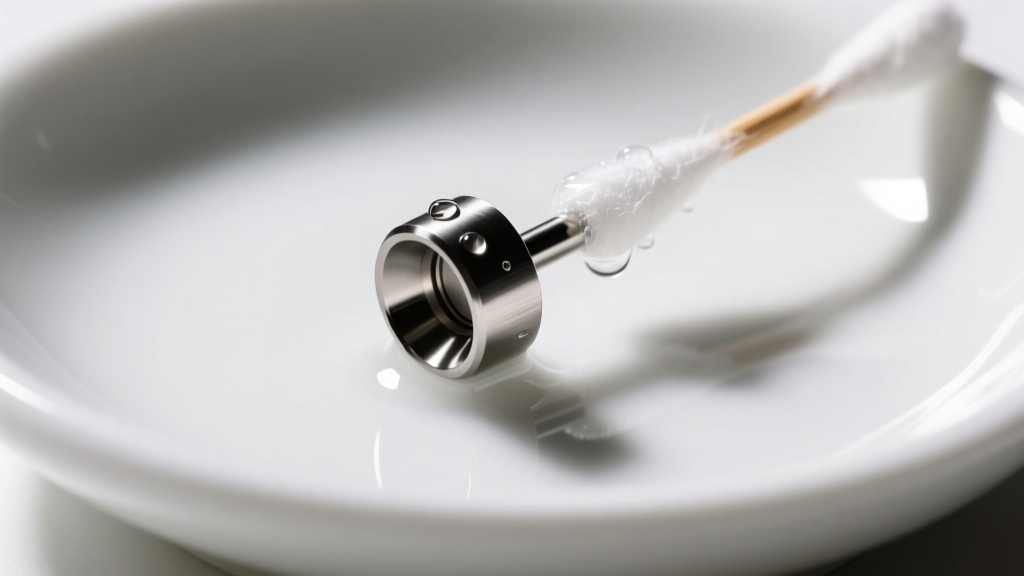
Threadless jewelry (where a bent pin pushes into a hollow post) is the backbone of most modern ear stacks. Over time, dead skin and soap scum pack into the hollow receiver, making the jewelry difficult to remove and prone to harboring bacteria. To clean these, remove the jewelry and soak the posts in a small ceramic dish of warm water and a drop of castile soap for 10 minutes. Use an interdental brush to gently scrub the inside of the receiver and the hinge mechanisms of any 14k gold huggies. Rinse thoroughly with distilled water to prevent hard water spots on gemstones.
Troubleshooting Common Stack Failures
Even with meticulous care, a complex ear curation will occasionally encounter mechanical or biological failures. Knowing how to troubleshoot these issues saves you from unnecessary trips to the doctor and preserves your jewelry.
1. Stuck Flat-Back Labrets
The most common mechanical failure in a lobe or conch stack is a threadless or internally threaded flat-back that refuses to budge. This is usually caused by dried sebum acting as a biological glue. Do not use pliers. Instead, put on a pair of tight nitrile gloves. The rubber provides immense friction. Grip the flat disc with your thumb and forefinger of one hand, and the gem end with the other. Push the pin slightly inward to relieve tension, then pull and bend slightly (for threadless) or twist counter-clockwise (for threaded).
2. Irritation Bumps vs. Keloids
If you notice a small, flesh-colored or red bump adjacent to your helix or tragus piercing, it is likely an irritation bump (hypertrophic scarring), not a keloid. According to dermatological guidelines from the Mayo Clinic, localized contact dermatitis and friction are primary culprits. In a stack, this is often caused by sleeping on the jewelry or using a post that is too long (e.g., a 3/8" post in a fully healed piercing that only requires a 1/4" post). The solution is to visit your piercer for a 'downsize' to a shorter titanium post, eliminating the movement that causes the bump.
3. 'Ear Cheese' and Odor
The infamous odor associated with older piercings is simply oxidized sebum and dead skin cells trapped between the flat-back and the earlobe. To combat this in a dense stack, incorporate a daily rinse in the shower. Let warm water run over your ears, and gently massage the skin behind the lobe to dislodge buildup. Dry the area completely with a clean paper towel or a dedicated microfiber cloth; moisture trapped behind a flat-back is a breeding ground for yeast.
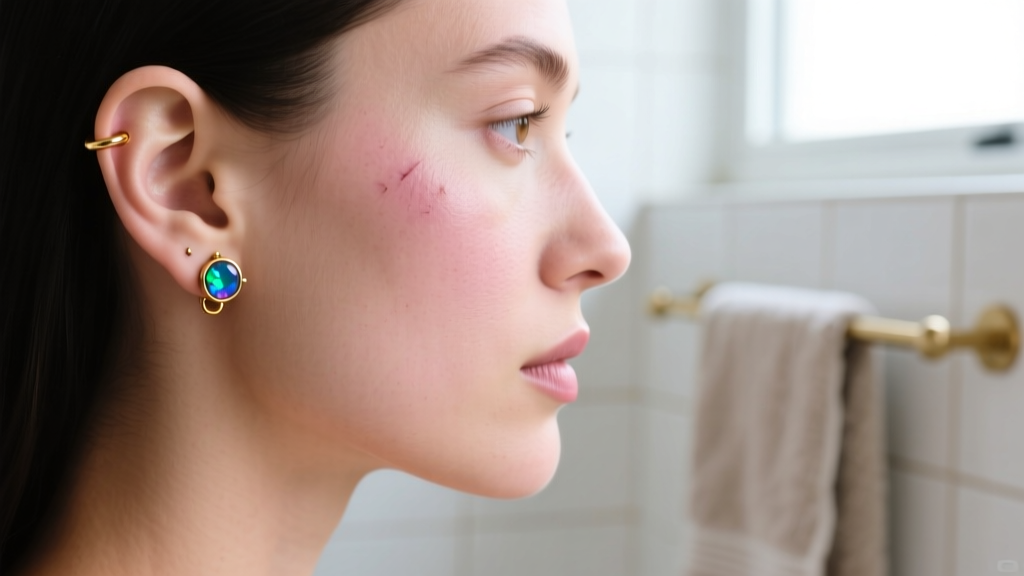
Daily Habits to Preserve Your Stack's Shine
Your daily routine dictates the longevity of your pinterest earring stack. Gemstones like opals, moonstones, and turquoise are highly porous and can be destroyed by everyday chemicals.
- The Travel Pillow Hack: If you are a side sleeper, you must invest in a U-shaped travel pillow. Sleep with your ear in the center hole. This prevents the crushing force of your head weight from bending 16-gauge posts and embedding gemstones into your cartilage.
- Hair Product Sequencing: Apply hairspray, dry shampoo, and leave-in conditioners before putting your earrings in, or shield your ears with a towel. Aerosolized polymers coat gemstones, dulling their refractive index and clogging prong settings.
- The Gym Rule: Sweat is highly acidic and corrosive to lower-karat gold alloys. If you wear your stack to the gym, wipe it down with a damp microfiber cloth immediately after your workout. Never let sweat dry on 14k gold.
Gemstone Care in Curated Ears
Many viral ear stacks feature delicate, bezel-set or prong-set gemstones. The Gemological Institute of America (GIA) warns against using ultrasonic cleaners on fractured or treated stones. If your stack features emeralds, opals, or pearls, stick strictly to warm soapy water and a soft baby toothbrush. Ultrasonic vibrations can shatter an opal or strip the protective oils from a pearl, ruining the focal point of your curation.
When to See a Professional Piercer
While maintenance is largely a DIY endeavor, certain situations require professional intervention. If you experience embedding (where the skin grows over the flat-back or gem), severe swelling that makes the post feel tight, or if you suspect a nickel allergy (characterized by intense itching, weeping, and redness spreading beyond the piercing site), remove the jewelry and consult a professional. A reputable piercer can assess the fistula, swap the jewelry to a longer, biocompatible titanium post, and recommend appropriate aftercare to save the piercing.
Expert Takeaway: A beautiful pinterest earring stack is a living ecosystem. Treat your piercings with the same biological respect you give your skincare routine, and invest in high-quality, implant-grade hardware. The initial cost of ASTM F-136 titanium and solid 14k gold is vastly outweighed by the years of healthy, irritation-free wear they provide.


