How to Clean and Restore Vintage Cat Earrings Safely
Learn expert techniques to clean, restore, and maintain vintage cat earrings. Discover safe methods for enamel, rhinestones, and fragile base metals.

Collecting and wearing vintage cat earrings offers a unique blend of mid-century whimsy, Art Deco geometry, and Victorian sentimentality. However, feline motifs in antique and vintage jewelry present highly specific conservation challenges. The intricate crevices of carved whiskers, the delicate glue holding rhinestone 'eyes,' and the fragile nature of cold enamel require a departure from standard jewelry cleaning routines. Whether you own 1950s Trifari kittens, 1930s pot metal feline silhouettes, or hand-carved Bakelite cats, improper cleaning can permanently destroy both the aesthetic and monetary value of the piece.
This comprehensive guide details the exact material science, chemical risks, and mechanical techniques required to safely clean, restore, and upgrade vintage cat earrings for modern wear.
Identifying the Anatomy of Vintage Feline Jewelry
Before applying any cleaning agent, you must accurately identify the materials used in your vintage cat earrings. The feline shape inherently traps dirt, skin oils, and cosmetic residue in deep recesses—particularly around the ears, whiskers, and tail curves. Furthermore, vintage pieces are rarely made from a single material. A single earring might combine a base metal casting, cold enamel fills, and glued-in glass rhinestones. Understanding the exact composition is the first step in preventing catastrophic damage during the restoration process.
The Dangers of Modern Cleaning on Antique Motifs
The most common mistake collectors make is treating vintage costume jewelry like modern fine jewelry. According to the Victoria and Albert Museum's conservation guidelines, the aggressive chemicals and vibrations used in modern cleaning are highly destructive to mid-century manufacturing techniques.
- Ultrasonic Cleaners: The high-frequency cavitation bubbles will instantly shatter the delicate silver-foil backing behind rhinestone eyes and vibrate glued-in components loose.
- Ammonia and Commercial Dips: Ammonia strips the silver nitrate coating off foil-backed stones, turning brilliant 'eyes' into dull, cloudy gray glass. It also causes irreversible micro-cracking in early plastics.
- Boiling Water: Heat softens the hide glue and early epoxies used to secure stones, causing them to fall out entirely.
Material-Specific Cleaning Protocols
Because vintage cat earrings often mix media, you must clean each component using its specific, safe protocol. Never submerge the entire piece in liquid.
Cold Enamel and Painted Features
Unlike vitreous glass enamel, which is fired at extreme temperatures, vintage costume jewelry primarily uses 'cold enamel'—a pigmented epoxy or resin. This material is highly susceptible to solvents like acetone or alcohol. To clean painted feline features or enameled bodies, use a barely damp cotton swab with distilled water and a drop of pH-neutral dish soap. Gently roll the swab over the enamel. Never scrub, as the friction can lift the pigment from the metal recesses.
Foil-Backed Rhinestone Eyes
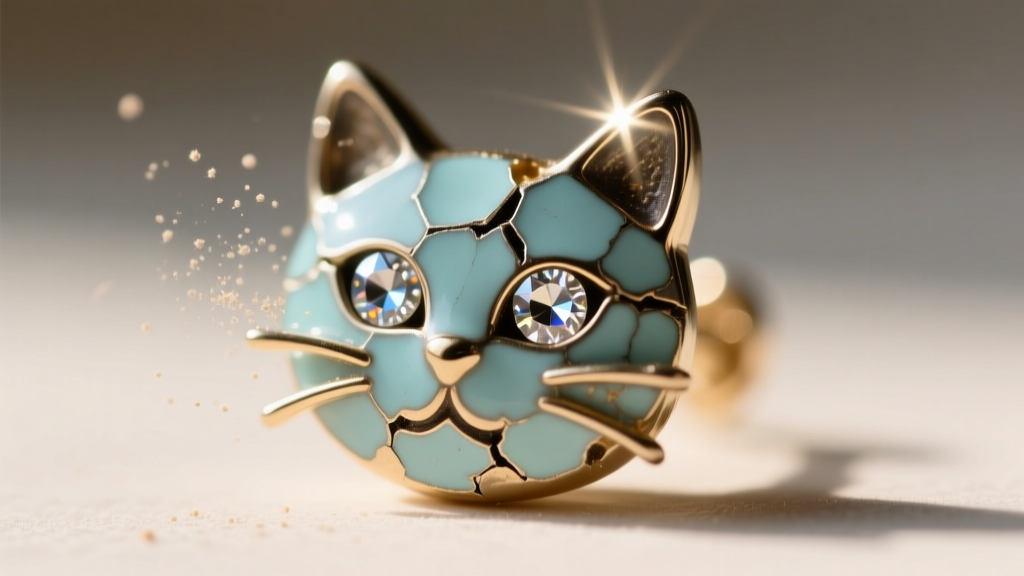
The 'eyes' of vintage cat earrings are typically foil-backed glass or acrylic rhinestones set in pronged metal claws. The Gemological Institute of America (GIA) warns that moisture trapped behind the foil causes black spotting and oxidation. To clean the surface of the rhinestone, use a dry, soft goat-hair detailing brush to sweep away dust from the prongs. If the stone requires polishing, breathe lightly on the glass to create condensation and wipe instantly with a dry, lint-free microfiber cloth. Never use liquid glass cleaners.
Early Plastics: Bakelite, Lucite, and Celluloid
Carved plastic cat earrings from the 1930s and 40s require distinct approaches. Bakelite (polyoxybenzylmethylenglycolanhydride) naturally oxidizes and darkens over time. You can safely restore its original color using a tiny amount of Simichrome metal polish on a Q-tip, carefully avoiding any glued-in metal fittings or painted details. Lucite (PMMA), however, is highly prone to scratching and clouding; it should only be cleaned with a damp microfiber cloth and mild soapy water. Celluloid is highly unstable and can off-gas acidic compounds; it must be kept completely dry and wiped only with a dry, soft cloth.
Eradicating Verdigris and Upgrading Ear Wires
One of the most pervasive issues with vintage cat earrings made from copper alloys, brass, or 'pot metal' is verdigris—a toxic, crusty green patina (copper acetate) that forms when the metal reacts with moisture and skin acids. Verdigris is corrosive and will eventually eat through the metal casting.
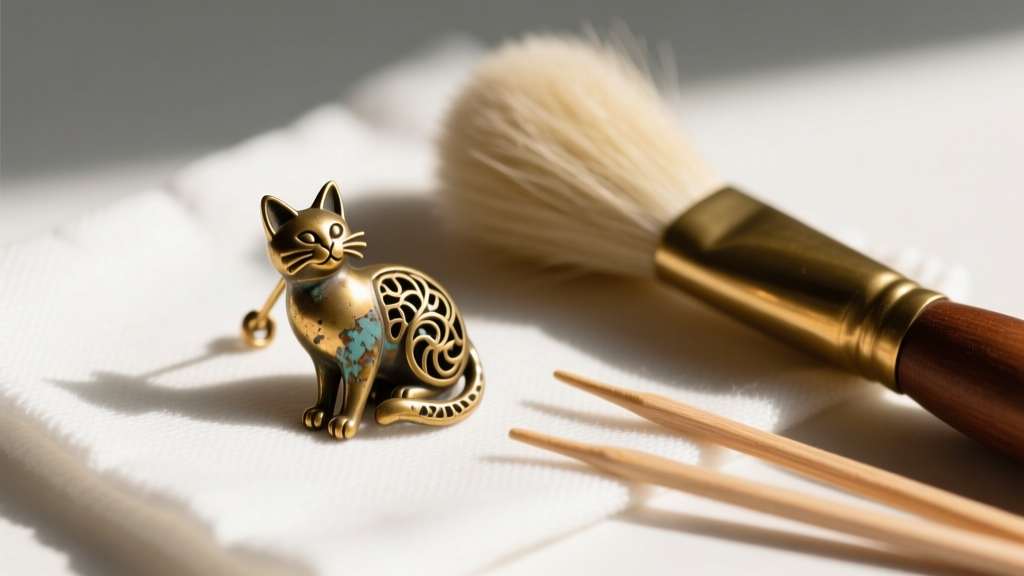
Removal Technique: Never use liquid or chemical dips to remove verdigris from intricate cat silhouettes, as the liquid will seep into the seams and cause internal rot. Instead, use a dry, sharpened wooden toothpick or a fiberglass scratch pen to mechanically pick the green crust out of the crevices. Once removed, seal the bare metal with a micro-thin layer of Renaissance Wax to prevent oxygen exposure.
Upgrading to Hypoallergenic Ear Wires
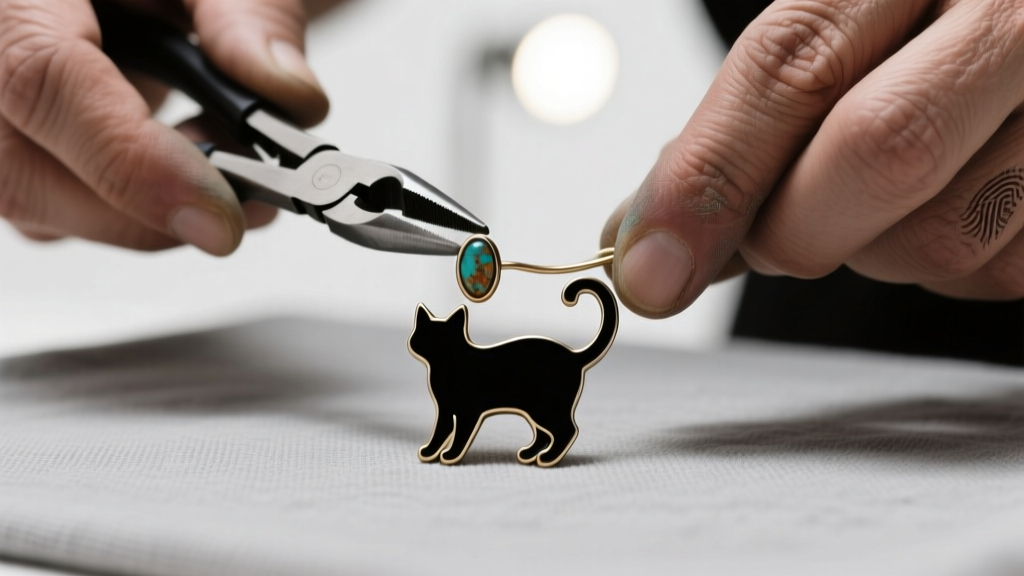
Original vintage ear wires—especially screw-backs and early kidney wires—are frequently made from base metals containing high levels of nickel or lead, causing severe contact dermatitis. For modern wearability, it is highly recommended to carefully snip the original wires and replace them with modern, biocompatible alternatives. Use 20-gauge or 22-gauge ASTM F136 implant-grade titanium or pure niobium wires. These materials are entirely nickel-free and provide the necessary structural integrity to hold heavier cast-metal cat pendants without bending.
Material Risk and Cleaning Matrix
Use the following decision matrix to ensure you are applying the correct conservation method to your specific vintage cat earrings.
| Material Component | Safe Cleaning Agent | Recommended Tool | Risk Factor |
|---|---|---|---|
| Cold Enamel / Paint | Distilled water + pH-neutral soap | Rolling cotton swab | High (Solvents strip paint) |
| Foil-Back Rhinestones | None (Dry cleaning only) | Goat-hair brush | Extreme (Moisture ruins foil) |
| Bakelite Carvings | Simichrome Polish | Microfiber cloth | Medium (Avoid metal fittings) |
| Pot Metal / Brass | Renaissance Wax (Post-clean) | Wooden toothpick | Medium (Mechanical damage) |
Archival Storage for Feline Silhouettes
Proper storage is the final pillar of vintage jewelry maintenance. Cat earrings with protruding elements (like wire whiskers or delicate chain tails) are prone to snagging and crushing. Store each pair individually in acid-free, unbuffered tissue paper inside a lined jewelry box. Avoid hanging vintage cat dangles, as the gravity stress on aged, brittle metal loops can cause them to snap. Finally, keep your collection away from direct UV light, which accelerates the yellowing of early plastics and fades hand-painted enamel details. By adhering to these meticulous conservation standards, your vintage feline collection will remain vibrant, wearable, and historically intact for decades to come.


