Restoring Vintage Gold Hoop Earrings: Expert Care Guide
Learn expert techniques to clean, polish, and maintain vintage gold hoop earrings without damaging delicate patinas or fragile antique clasps.

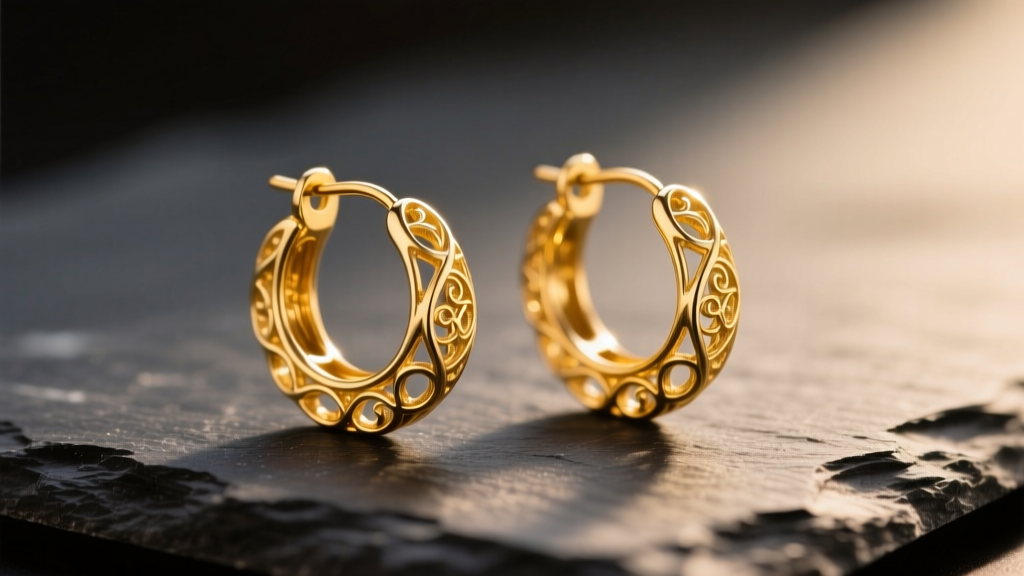
Owning a pair of vintage gold hoop earrings is akin to holding a piece of wearable history. Whether you have inherited a pair of heavy 1970s 14k yellow gold tube hoops or discovered delicate Victorian-era wire hoops at an estate sale, these pieces require a vastly different care regimen than modern, mass-produced jewelry. In 2026, the consensus among jewelry conservationists and master jewelers is clear: aggressive commercial cleaners and ultrasonic machines are the enemies of antique integrity. This comprehensive guide details the metallurgical realities of vintage gold and provides a meticulous, step-by-step protocol for cleaning, maintaining, and preserving your heirloom hoops without stripping their historical value.
The Anatomy of Antique Gold: Understanding Karats and Alloys
To properly care for vintage gold hoop earrings, you must first understand what they are actually made of. Pure gold (24k) is entirely resistant to tarnish and corrosion. However, pure gold is far too soft to hold the structural tension required for a hoop earring's hinge or clasp. Therefore, vintage pieces are almost exclusively crafted from 9k, 14k, or 18k gold alloys. According to the Gemological Institute of America (GIA), the alloy metals mixed with gold—typically copper, silver, zinc, and sometimes nickel—are what make the jewelry durable, but they are also the culprits behind tarnish.
When your vintage hoops develop a dark, dull film, you are not seeing tarnished gold; you are seeing copper sulfide or silver sulfide forming on the surface alloys. This oxidation is accelerated by decades of exposure to sulfur in the air, cosmetics, skin acids, and environmental pollutants. Understanding this chemical reaction is crucial because it dictates why harsh acids and abrasive polishes must be avoided, as they strip away microscopic layers of the alloy, permanently altering the karat weight and surface texture of the antique piece.
Step-by-Step Cleaning Protocol for Vintage Hoops
Forget the commercial 'dip' solutions sold at big-box stores. These chemical baths often contain thiourea and harsh acids that can strip intentional antique patinas and weaken the structural integrity of vintage solder joints. Instead, rely on this conservation-grade cleaning method.
1. The Mild Surfactant Soak
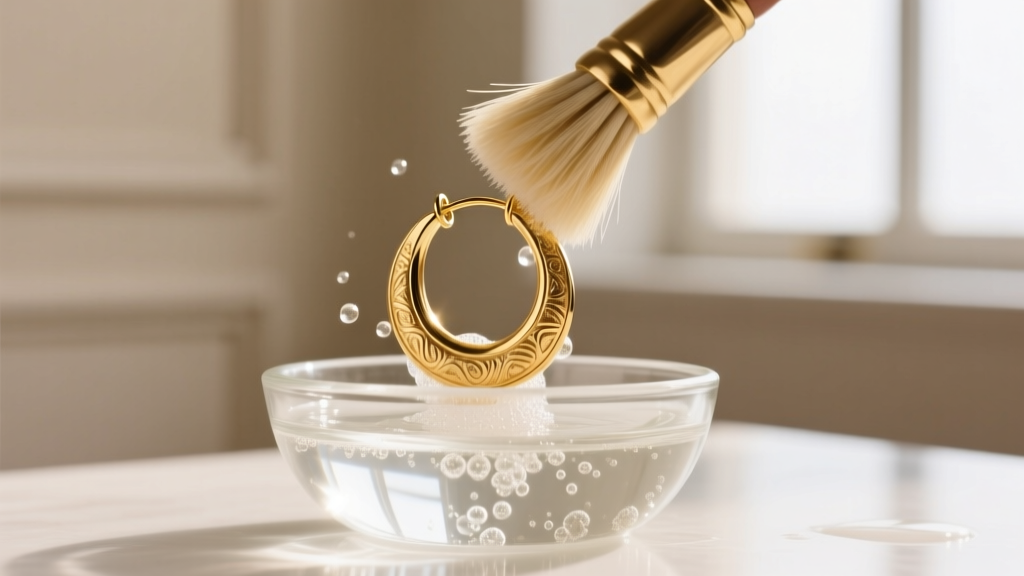
Fill a small glass bowl with lukewarm distilled water (ideally between 90°F and 100°F). Tap water contains chlorine and trace minerals that can leave microscopic deposits on porous antique gold. Add exactly three drops of a pH-neutral, lotion-free dish surfactant (such as original Dawn Ultra). Avoid any soaps containing moisturizers, citrus extracts, or antibacterial agents, as these leave a cloudy film. Submerge your vintage gold hoop earrings and let them soak for exactly 10 to 15 minutes. This allows the surfactant to break down decades of sebum and cosmetic buildup lodged in the hinges and filigree.
2. Gentle Agitation and Detailing
Remove the hoops from the bath. Using a pristine, ultra-soft horsehair jewelry brush (never use brass or stiff nylon bristles, as gold alloys sit at a mere 2.5 to 3 on the Mohs hardness scale and will scratch), gently sweep the bristles along the interior curve of the hoop, the hinge mechanism, and the clasp catch. For intricate engraved or filigree hoops, use a wooden peg-wood stick or a soft cotton swab to gently dislodge stubborn debris from the crevices without abrading the metal.
3. The Distilled Rinse and Dry
Rinse the earrings thoroughly under a gentle stream of lukewarm distilled water to remove all soap residue. Do not use high water pressure, which can bend delicate antique wires. Pat the hoops dry with a lint-free microfiber cloth. To ensure the interior of the hinge mechanism is completely dry—preventing future internal corrosion—use a can of compressed air to blow out any trapped moisture from the moving parts.
What to Avoid: Common Mistakes That Ruin Patina
Many well-meaning owners accidentally destroy the value of their vintage jewelry by employing modern cleaning techniques on antique pieces. Avoid these critical errors:
- Ultrasonic Cleaners: The high-frequency vibrations can easily shake loose antique gemstone settings. Vintage prongs were often hand-cut and lack the precision laser-welding of modern jewelry, making them highly susceptible to vibration fatigue.
- Toothpaste and Baking Soda: Both are highly abrasive. Baking soda has a Mohs hardness of 2.5, which is hard enough to leave micro-scratches across the polished surface of 14k and 18k gold, permanently dulling the finish.
- Silver Dip Solutions: Chemical dips designed for silver will aggressively strip the dark oxidation (antique patina) that jewelers intentionally apply to the recessed areas of vintage hoops to make the engraved details pop.
Clasp and Hinge Maintenance: Preventing Structural Failure
The most common point of failure on vintage gold hoop earrings is the clasp mechanism. Over decades, hinges wear down, tension clips lose their spring, and solder joints fracture. The Jewelers of America recommends having vintage clasps inspected by a professional annually, but you can perform basic maintenance at home to extend their lifespan.
| Clasp Type | Era Common | Primary Failure Mode | At-Home Maintenance Action |
|---|---|---|---|
| Omega Clip-Back | 1940s - 1980s | Tension pad wears out; clip loses grip on the earlobe. | Wipe the tension pad with rubbing alcohol to remove skin oils. Do not bend the clip backward to 'tighten' it; this snaps the internal spring. |
| French Wire (Shepherd Hook) | Victorian - Present | Wire thins and snaps at the curve; hook catches on hair. | Inspect the curve for thinning. Apply a tiny drop of clear, flexible jewelry coating to the tip to prevent it from catching and pulling. |
| Leverback | Art Deco - 1950s | Hinge pin backs out; lever fails to snap securely into the catch. | Use a wooden toothpick to gently clear debris from the catch notch. Never force the lever shut if it meets resistance. |
| Screw-Back | 1900s - 1930s | Threads strip due to cross-threading or overtightening. | Apply a microscopic amount of jeweler's wax to the threads to ensure smooth rotation. Never force the backing if it catches. |
Preserving the Patina vs. High Polishing
When dealing with vintage gold hoop earrings, you must decide whether to preserve the antique patina or restore a high-polish mirror finish. Patina—the soft, darkened accumulation of oxidation in the recessed areas of the metal—is highly prized by collectors and appraisers. It proves the age and authenticity of the piece.
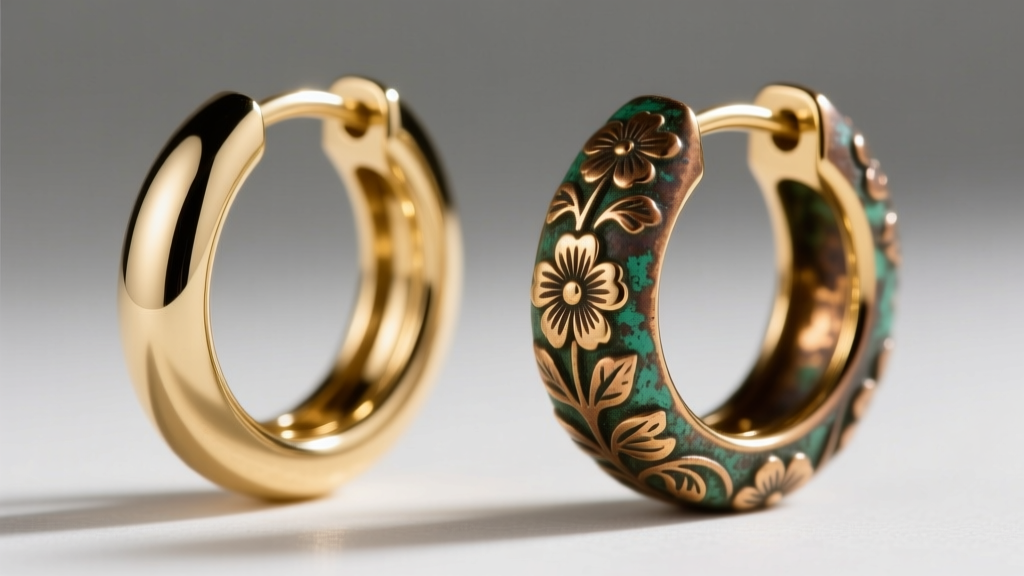
If your hoops feature intricate Etruscan granulation, repoussé work, or hand-engraving, do not polish the recessed areas. Use a jeweler's rouge cloth only on the high, raised surfaces of the gold. This technique, known as 'antiquing,' maintains the dark contrast in the crevices while allowing the raised edges to catch the light, giving the vintage hoops a three-dimensional depth that a flat, machine-polished finish completely destroys.
Storage and Long-Term Preservation
How you store your vintage hoops when they are not being worn is just as critical as how you clean them. Gold alloys are susceptible to micro-scratches when stored loosely in a communal jewelry box. Furthermore, the sulfur compounds present in cardboard and certain cheap plastics will accelerate the tarnishing of the copper alloys within the gold.
Store each pair of vintage gold hoop earrings individually in an anti-tarnish flannel pouch treated with silver sulfide inhibitors (such as 3M Anti-Tarnish Strips). Place the pouches in a climate-controlled environment. Avoid storing them in bathrooms or humid areas, as moisture acts as a catalyst for the oxidation process. For hoops with delicate hinges, store them unclasped and laid flat to prevent the weight of the hoop from putting continuous tension on the antique hinge pin.
When to Seek a Professional Jeweler
While routine cleaning and surface maintenance can be safely performed at home, certain issues require the intervention of a master jeweler who specializes in antique restoration. If your vintage gold hoop earrings exhibit a visible crack near the hinge, if the clasp no longer secures to the earlobe, or if the earring post is bent (a common issue with older, softer 18k and 22k gold posts), do not attempt to bend or solder the metal yourself. Antique solder requires specific karat-matching formulas and lower-temperature torch techniques to prevent melting the original historical craftsmanship. By combining gentle, informed at-home care with professional structural inspections, your vintage gold hoops will remain pristine, wearable heirlooms for generations to come.


