How to Clean and Maintain Rose Gold Amethyst Earrings
Learn how to safely clean, store, and maintain rose gold amethyst earrings. Expert tips on avoiding chemical damage and preserving gemstone brilliance.

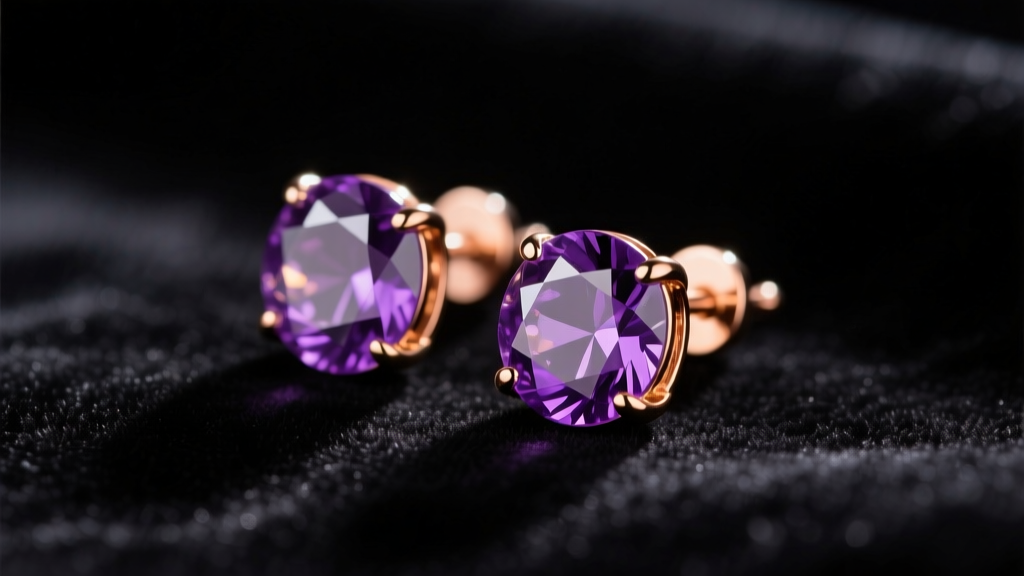
Rose gold amethyst earrings represent a perfect marriage of vintage-inspired warmth and regal gemstone elegance. However, maintaining their brilliance requires more than a quick wipe with a cloth. The unique metallurgical composition of rose gold, combined with the specific crystalline structure of amethyst, demands a specialized care regimen. Improper cleaning methods can lead to micro-scratches, thermal shock, or irreversible chemical reactions that dull both the metal and the stone. In this comprehensive guide, we break down the exact material science behind your earrings and provide a professional-grade maintenance protocol to keep them pristine.
The Material Science: Understanding Your Earrings
To properly care for your jewelry, you must first understand the materials. Rose gold is not a naturally occurring metal; it is an alloy. Typically, 14k rose gold consists of 58.3% pure gold, with the remainder being a mix of copper and sometimes silver or zinc. It is the high copper content (often up to 20-25%) that gives the metal its signature pinkish-red hue. While copper adds structural durability, it is highly reactive to sulfur, chlorine, and harsh acids. Exposure to these elements can cause the copper to oxidize, leading to a darkened, tarnished appearance that strips the metal of its warm luster.
Amethyst, the violet variety of quartz, ranks at a 7 on the Mohs Hardness Scale. While a 7 indicates good scratch resistance for daily wear, it also presents a hidden danger: household dust. Dust particles frequently contain microscopic bits of quartz and silica, which also sit at a 7 on the Mohs scale. According to the Gemological Institute of America (GIA), wiping a dusty gemstone with a dry cloth essentially rubs equally hard minerals across the surface, causing cumulative micro-scratches that cloud the stone's optical clarity over time.
The Dangers of Thermal Shock and Ultrasonic Cleaners
Many jewelry owners mistakenly believe that ultrasonic cleaners and steamers are safe for all fine jewelry. This is a critical error when dealing with amethyst. Natural amethysts often contain microscopic liquid inclusions or internal fractures. The high-frequency vibrations of an ultrasonic cleaner can expand these fractures, potentially shattering the stone from the inside out. Furthermore, many commercial amethysts on the market are fracture-filled with a glass-like resin to improve clarity. Ultrasonic waves and harsh chemical solvents will dissolve this filler, leaving the stone looking heavily included and cloudy.
Similarly, steam cleaners introduce the risk of thermal shock. Amethyst is sensitive to sudden, extreme temperature changes. Moving a stone from a hot steam bath to a cool water rinse can cause rapid expansion and contraction, leading to structural failure. Always stick to manual, temperature-controlled cleaning methods.
Step-by-Step Safe Cleaning Protocol
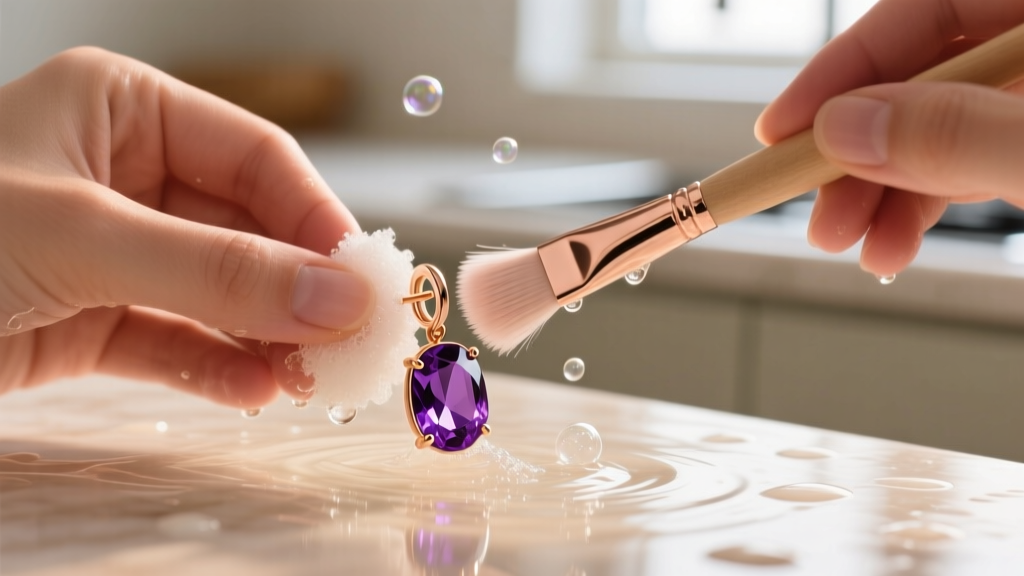
For routine maintenance, a gentle manual cleaning is the safest and most effective way to restore your rose gold amethyst earrings. Follow this exact protocol:
- Prepare the Solution: Fill a small glass bowl with lukewarm distilled water (approximately 85°F or 29°C). Avoid tap water, as the minerals and chlorine can leave hard water spots or react with the copper in the rose gold. Add three drops of phosphate-free, mild dish soap.
- Soak Briefly: Submerge the earrings for no more than 5 to 10 minutes. This loosens sebum, lotion, and environmental grime without compromising any potential fracture fillings.
- Gentle Agitation: Using a brand-new, extra-soft baby toothbrush, gently sweep the bristles over the rose gold settings. Pay special attention to the pavilion (the back, pointed facet of the amethyst). This area acts as a magnet for skin oils and hand lotions, which block light return and make the stone look dull.
- Rinse Carefully: Rinse the earrings under a gentle stream of lukewarm distilled water. Ensure the drain is securely plugged or use a mesh strainer to prevent accidental loss.
- Dry and Polish: Pat the earrings dry with a lint-free microfiber cloth. Avoid cotton swabs or tissues, as the fibers can snag on the prongs and pull them away from the gemstone girdle.
Safe vs. Unsafe Cleaning Agents
Choosing the wrong chemical can strip the polish from your rose gold or etch the surface of your amethyst. Refer to this quick-reference table before applying any product to your jewelry.
| Agent Type | Examples | Verdict | Reasoning |
|---|---|---|---|
| Mild Surfactants | Phosphate-free dish soap, baby shampoo | Safe | Gently lifts oils without reacting with copper alloys or quartz. |
| Harsh Solvents | Acetone, rubbing alcohol, bleach | Unsafe | Degrades fracture fillings; bleach causes rapid copper oxidation. |
| Abrasive Pastes | Baking soda, toothpaste, silver polish | Unsafe | Highly abrasive; will scratch both the 14k gold and the amethyst. |
| Commercial Dips | Instant jewelry dip liquids | Unsafe | Often contain thiourea or sulfuric acid, which ruins rose gold. |
Proper Storage to Prevent Micro-Scratches
How you store your rose gold amethyst earrings is just as important as how you clean them. Because amethyst is a 7 on the Mohs scale, it can easily be scratched by harder gemstones such as sapphires (Mohs 9), rubies (Mohs 9), or diamonds (Mohs 10). Tossing your earrings into a communal jewelry box will result in severe surface abrasions.
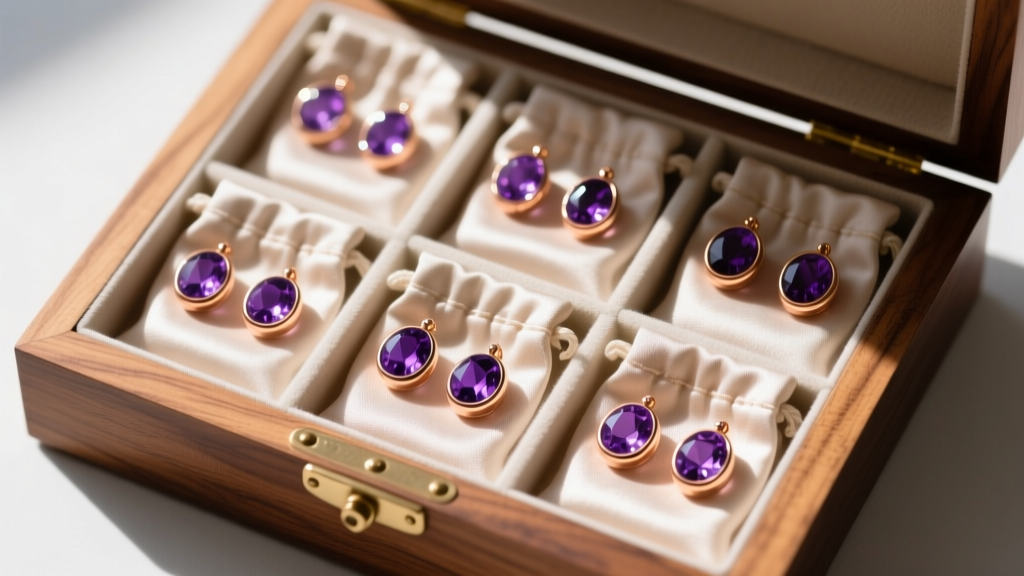
Always store your earrings individually in soft, anti-tarnish flannel pouches. The copper in rose gold is prone to reacting with sulfur in the air, which causes tarnishing. Anti-tarnish pouches are treated to absorb airborne sulfur compounds. Furthermore, keep your earrings away from prolonged exposure to direct sunlight or UV-rich environments. While modern heat-treated amethysts are relatively color-stable, prolonged UV exposure can still cause some natural, untreated specimens to fade over time. For more on general gemstone storage, the American Gem Society (AGS) highly recommends climate-controlled, individual compartment storage for all fine jewelry.
Troubleshooting Common Maintenance Issues
Even with meticulous care, you may encounter specific issues with your earrings. Here is how to troubleshoot them like a professional jeweler:
- Cloudy or Dull Gemstones: If your amethyst looks cloudy even after washing, the issue is likely a buildup of hard water scale or stubborn cosmetic resins (like hairspray). Soak the earrings in a 50/50 mix of distilled water and white vinegar for exactly 3 minutes, then brush gently. Do not exceed 3 minutes, as prolonged acid exposure can dull the gold alloy.
- Stuck Butterfly Backs: If the earring back is difficult to remove, do not pull with excessive force, as this can bend the post. The resistance is usually caused by a mixture of dead skin cells and lotion hardened around the post notch. Apply a single drop of mineral oil to the post, let it sit for five minutes, and gently twist the back off.
- Snagging Prongs: If your earring frequently catches on knit sweaters or silk blouses, one of the prongs has likely lifted. Stop wearing the earring immediately and take it to a jeweler for a prong re-tipping. Continuing to wear it risks losing the amethyst entirely.
Long-Term Maintenance Schedule
To ensure your rose gold amethyst earrings remain an heirloom-quality piece, adhere to this professional maintenance timeline:
- After Every Wear: Wipe the earrings with a clean, dry microfiber cloth to remove daily skin oils and acidic sweat before placing them in their storage pouch.
- Monthly: Perform the lukewarm distilled water and mild soap cleaning protocol outlined above to maintain optimal light return through the pavilion facets.
- Annually: Have a certified gemologist or bench jeweler inspect the prongs under 10x magnification. Rose gold is durable, but the microscopic wear on the prong tips requires professional burnishing or re-tipping to secure the gemstone.
By respecting the unique chemical and physical properties of both rose gold and amethyst, you can preserve the stunning contrast of warm metal and cool violet stone for decades to come.


