How to Clean, Seal, and Safely Wear Dollar Store Earrings
Learn to safely clean, seal, and wear dollar store earrings without infections. Expert tips on flash plating, gauge sizes, and nickel barriers.

The Metallurgy of Bargain Bins: What Are You Actually Wearing?
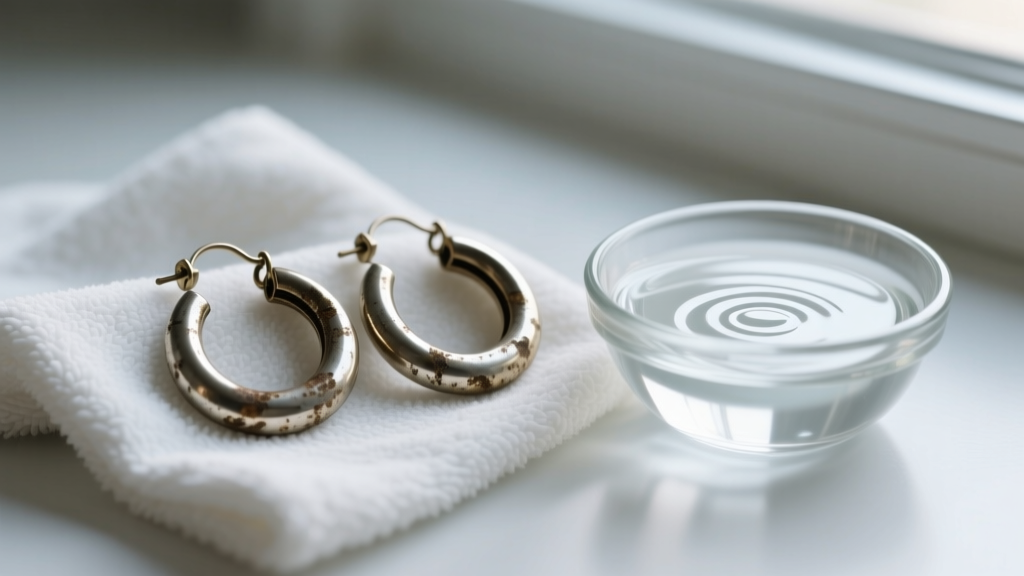
Before applying any cleaning solution to your ears, it is critical to understand the structural reality of discount fashion jewelry. Earrings sold at extreme price points are rarely made of solid brass or sterling silver. Instead, they rely on a manufacturing technique called flash plating. This process involves electroplating a microscopic layer of gold, silver, or rhodium—typically between 0.1 and 0.5 microns thick—over a base metal core. This core is often a zinc alloy, brass, or a nickel-heavy pot metal.
Because the plating is so thin, it is highly porous and riddled with micro-cracks. When exposed to the natural oils, sweat, and acidic pH of human skin, the base metal oxidizes rapidly. This is what causes the dreaded green or black smudges on your earlobes. Furthermore, according to the U.S. Consumer Product Safety Commission (CPSC), while strict limits exist for lead in children's jewelry, adult discount jewelry can sometimes skirt these regulations, making proper sealing and maintenance not just an aesthetic choice, but a health precaution.
The Golden Rules of Cleaning Flash-Plated Jewelry
The most common mistake consumers make is treating cheap earrings like fine jewelry. If you drop a solid 14k gold stud into an ultrasonic cleaner or a harsh chemical bath, it will emerge sparkling. If you do the same to a flash-plated zinc alloy earring, the cavitation and chemicals will strip the plating entirely, leaving you with a dull, grayish base metal.
To clean these earrings safely, you must use a gentle, non-abrasive approach that removes sebum and environmental dirt without attacking the metallic bond.
- The Solution: Mix three drops of mild, phosphate-free dish soap (like Dawn) into a cup of distilled water. Never use tap water; the chlorine and dissolved minerals can accelerate the oxidation of the base metal seeping through the micro-cracks.
- The Application: Dip a lint-free microfiber cloth or a cotton swab into the solution. Gently wipe the earring post, the backing, and the decorative face. Do not scrub.
- The Rinse: Dampen a fresh cloth with pure distilled water and wipe away any soap residue.
- The Dry: Immediately pat the earrings completely dry with a microfiber towel, then allow them to air dry on a paper towel for 15 minutes before storing or sealing.
Cleaning Agents and Their Effects on Flash Plating
Not all cleaning methods are created equal. Here is a breakdown of common household jewelry cleaners and how they interact with the ultra-thin plating of discount earrings.
| Cleaning Agent | Effect on Flash Plating | Verdict |
|---|---|---|
| Mild Dish Soap & Distilled Water | Removes surface oils without chemical reaction. | Highly Recommended |
| Rubbing Alcohol (Isopropyl) | Dries out the metal, accelerates micro-cracking, and strips protective factory waxes. | Avoid |
| Baking Soda & Aluminum Foil Bath | The electrochemical reaction will instantly strip the flash plating from the zinc core. | Never Use |
| Hydrogen Peroxide | Causes rapid oxidation of the underlying brass or copper alloys. | Avoid |
| Ultrasonic Cleaners | High-frequency cavitation physically tears the thin plating away from the base metal. | Never Use |
The Barrier Method: Hacking Cheap Posts for Sensitive Ears
The most significant risk associated with discount earrings is contact dermatitis. The National Library of Medicine notes that nickel allergy is one of the most common causes of allergic contact dermatitis, affecting roughly 10-20% of the population. Because the posts of cheap earrings are almost always made of nickel-plated brass or surgical steel that contains nickel, they will trigger painful, itchy, and weeping earlobes.
To safely wear these earrings, you must create a physical barrier between the metal and your fistula (the piercing hole).
Step 1: The Dimethylglyoxime (DMG) Test
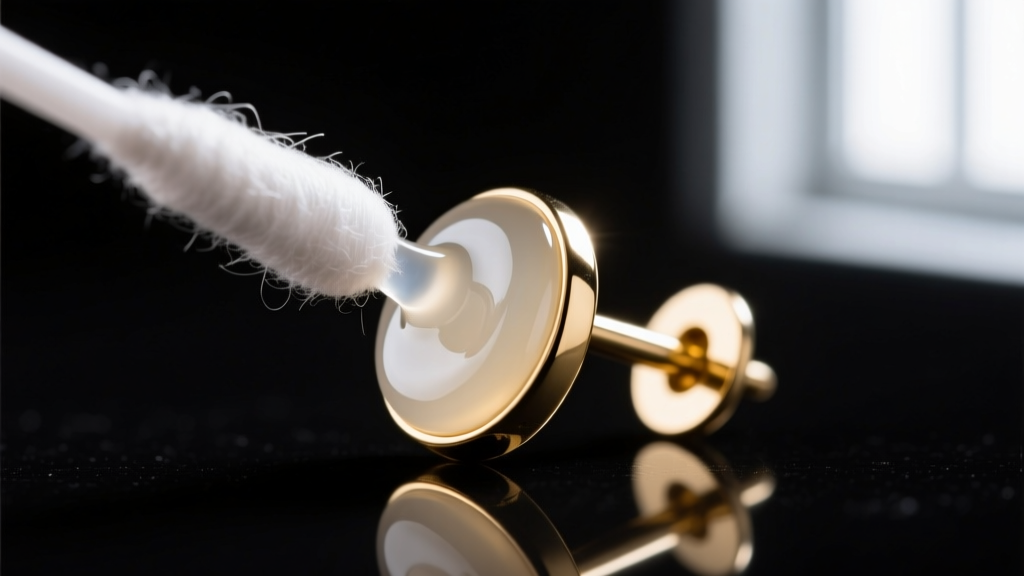
Before sealing, you can verify the presence of nickel using a DMG spot test kit. Apply a drop of the testing solution to a cotton swab and rub it against the earring post for 30 seconds. If the swab turns pink or red, the earring is leaching nickel. This confirms the need for a heavy-duty sealant.
Step 2: Applying a Polyurethane Coating
While many people suggest painting the post with clear nail polish, this is a temporary and flawed fix. Nail polish chips easily, degrades when exposed to skin oils, and can trap bacteria inside the piercing. Instead, use a specialized polyurethane-based jewelry sealant like ProtectaClear or Cote d'Or.
- Clean and thoroughly dry the earrings using the distilled water method outlined above.
- Using a fine-tipped brush or cotton swab, apply a single, thin coat of the polyurethane sealant directly to the earring post and the butterfly backing.
- Allow the earrings to cure in a dust-free environment for a full 24 hours. Do not rush this step; inserting a partially cured coated earring can cause the coating to peel off inside your piercing, leading to an infection.
Structural Weaknesses: Navigating Flimsy Gauge Wires
Care and maintenance also extend to the physical handling of the jewelry. Standard lobe piercings are typically done at 20-gauge (0.81mm) or 18-gauge (1.02mm). However, to cut costs, manufacturers of discount earrings frequently use 22-gauge (0.64mm) or even 24-gauge (0.51mm) wire for fishhook and French wire styles.
These ultra-thin wires are highly malleable and prone to bending. Forcing a bent 22-gauge wire through a standard 20-gauge fistula creates a microscopic scraping effect, causing micro-tears in the tissue that invite staphylococcus bacteria. Always inspect the wire of a cheap earring before insertion. If it is bent, use two pairs of nylon-jaw jewelry pliers to gently straighten it. Never use bare metal pliers, as the teeth will gouge the flash plating and expose the reactive base metal beneath.
When to Toss Them: Signs of Irreversible Degradation
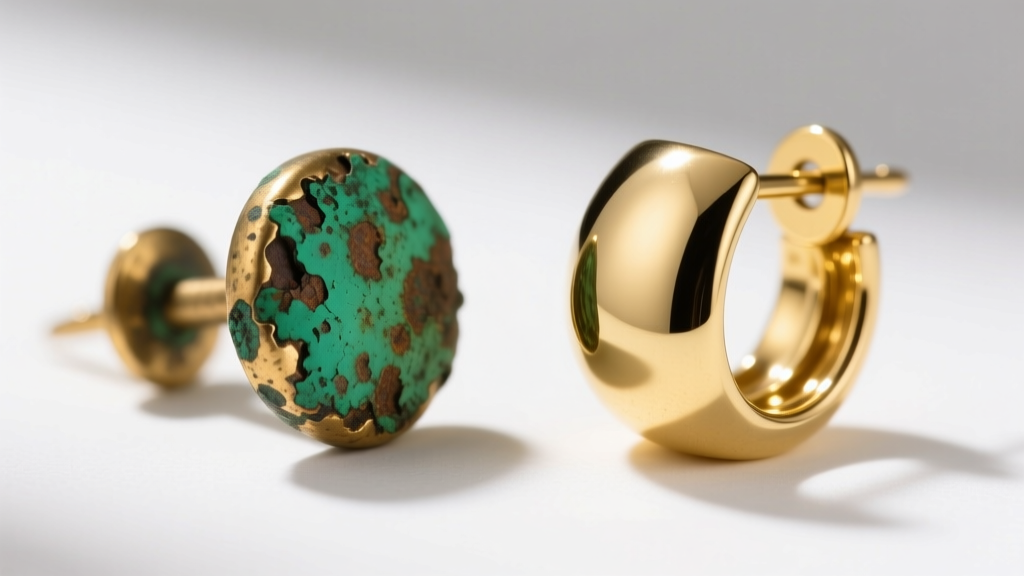
No amount of cleaning or sealing can save a structurally compromised earring. Because the base metals are highly reactive, they will eventually degrade beyond the point of safe wear. You must discard the earrings immediately if you observe any of the following failure modes:
- Verdigris Buildup: This is the crusty, pale green or blue-green substance that accumulates on earring posts and clasps. Chemically known as basic copper carbonate or copper chloride, verdigris is mildly toxic and highly irritating to open tissue. It cannot be safely cleaned off without stripping the remaining plating.
- Pitting and Flaking: If the decorative face of the earring shows raised blisters or flaking flakes of gold/silver, the underlying zinc alloy is actively oxidizing and expanding. The structural integrity is gone.
- Blackened Micro-Cracks: If the post features deep, dark lines that do not wipe away with soapy distilled water, the oxidation has penetrated the core. The sealant will not adhere properly to this surface, making it unsafe for wear.
By understanding the exact materials and structural limitations of bargain bin jewelry, you can extend the life of your favorite trendy pieces while keeping your piercings healthy, irritation-free, and safe from heavy metal exposure.


