How to Clean Silver Plated Earrings Without Ruining the Finish
Learn how to safely clean silver plated earrings without stripping the finish. Discover expert maintenance tips, storage hacks, and restoration advice.

The Microscopic Reality of Silver Plated Earrings
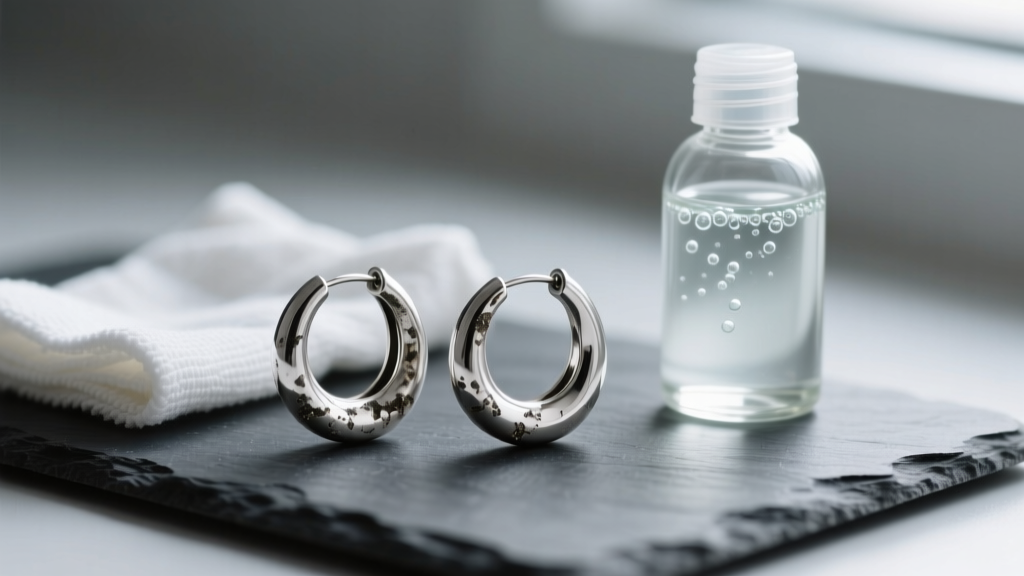
To properly care for silver plated earrings, you must first understand their physical anatomy. Unlike solid sterling silver, which is an alloy composed of 92.5% pure silver and 7.5% copper, silver-plated jewelry consists of a base metal—typically brass, copper, or nickel-silver—coated with a microscopic layer of pure silver via electroplating. The thickness of this silver layer dictates the lifespan and cleaning requirements of your earrings. "Flash plated" earrings may have a silver layer as thin as 0.15 microns, while high-quality, heavy-plated pieces can reach up to 2.5 or 3.0 microns. Because the silver layer is so fragile, the aggressive polishing techniques used for solid sterling silver will strip the plating right off, exposing the base metal beneath and ruining the piece permanently.
The Chemistry of Tarnish and Plating Vulnerability
Tarnish on silver is not a sign of poor quality; it is a natural chemical reaction. According to the Gemological Institute of America (GIA), silver reacts with hydrogen sulfide in the air to form silver sulfide, which manifests as a yellow, brown, or black film on the surface of your earrings. While solid silver can be aggressively polished to remove this layer, doing so on silver plated earrings removes the actual silver along with the tarnish. Furthermore, if the plating has micro-fissures, moisture and skin acids can reach the copper or brass base, creating a secondary type of corrosion that requires highly specific, isolated cleaning methods.
The Danger Zone: Cleaning Agents to Avoid
The internet is full of DIY jewelry cleaning hacks that are actively destructive to silver plating. Below is a breakdown of common cleaning agents and why they should be kept far away from your plated earrings.
| Cleaning Agent | Chemical / Mechanical Action | Verdict for Silver Plating |
|---|---|---|
| Baking Soda & Aluminum Foil | Creates an electrochemical ion exchange that converts silver sulfide back to silver, but generates heat and alkaline stress. | AVOID. Can cause pitting, blistering, and total stripping of thin plating. |
| Commercial Silver Dips | Contains thiourea and strong acids to instantly dissolve tarnish. | AVOID. Strips plating instantly and leaves a porous, chalky white surface. |
| Ultrasonic Cleaners | Uses high-frequency sound waves to create microscopic cavitation bubbles that blast dirt away. | AVOID. The cavitation impact will chip and flake silver plating at the molecular level. |
| Toothpaste & Baking Soda Paste | Relies on abrasive silica and calcium carbonate particles to physically scrub tarnish. | AVOID. Acts like sandpaper, leaving micro-scratches and wearing through the silver layer. |
| pH-Neutral Dish Soap | Uses mild surfactants to lift oils, sebum, and loose dirt without chemical reactions. | SAFE. The only recommended wet-cleaning method for routine maintenance. |
The Benchmark Safe Cleaning Protocol
When your silver plated earrings accumulate daily wear, sebum, and cosmetic residue, a gentle surfactant bath is the safest approach. This method cleans without altering the chemical structure of the silver sulfide tarnish. If heavy tarnish is present, it is better to leave a slight patina than to risk stripping the metal.
Step-by-Step Surfactant Bath
- Prepare the Solution: Fill a small glass bowl with lukewarm distilled water. Add exactly two drops of a mild, phosphate-free, pH-neutral dish soap (such as original Dawn). Avoid soaps with added moisturizers or citrus degreasers, as the acids and lotions can leave a film or react with base metals.
- Soak Briefly: Submerge the earrings for no more than 3 to 5 minutes. Prolonged water exposure can seep into microscopic cracks in the plating and cause the base metal to oxidize and expand, which leads to flaking.
- Agitate Gently: Use an extra-soft baby toothbrush (look for 0.15mm bristle diameter) to lightly sweep the crevices of the earrings. Never scrub the flat surfaces.
- Rinse and Dry: Rinse under a slow stream of cool distilled water. Immediately pat dry with a lint-free microfiber cloth. Use a hair dryer on the "cool" setting to blow moisture out of any intricate filigree or stone settings.
Troubleshooting Verdigris: The Copper Bleed
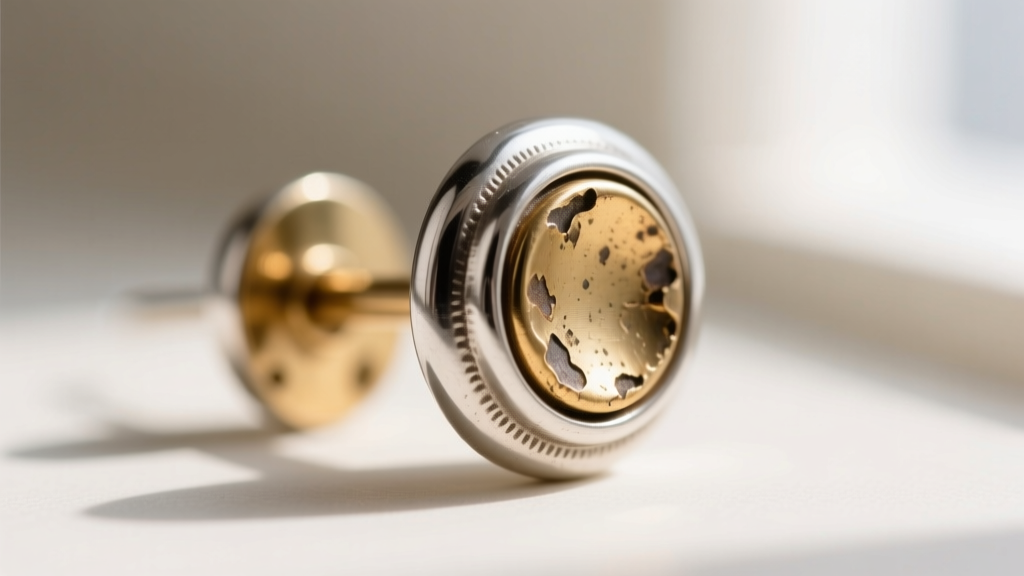
If you notice a powdery green or blue-green substance forming on the earring posts or in the crevices of the design, you are looking at verdigris. This is copper acetate or copper carbonate, which forms when the silver plating wears thin and the copper-rich brass base is exposed to moisture and skin acids. Verdigris can cause severe contact dermatitis and must be addressed carefully.
The Q-Tip Isolation Technique: Do not submerge the earring in vinegar, as acid will strip the remaining silver. Instead, dip a cotton swab in distilled white vinegar and dab it only onto the green spots. The mild acetic acid will dissolve the copper salts instantly. Immediately follow up with a second cotton swab dipped in distilled water to neutralize the acid, and dry thoroughly. If the green spot is on the earring post itself, it is a clear indicator that the plating has failed in a high-friction area.
Archival Storage and Anti-Tarnish Strategies
Because you cannot aggressively polish silver plated earrings to remove heavy tarnish, proactive prevention is your primary maintenance tool. The Victoria and Albert Museum conservation guidelines emphasize controlling the environment to slow the chemical reaction of silver sulfide formation.
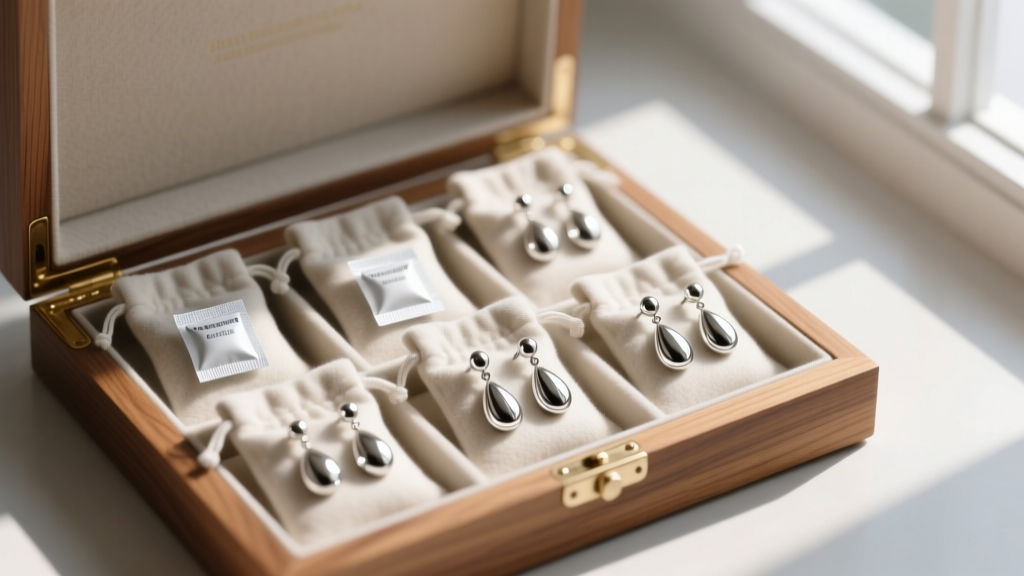
- Use 3M Anti-Tarnish Strips: These strips contain treated copper particles that act as a sacrificial anode, absorbing hydrogen sulfide from the air before it can reach your silver. Place one strip in your jewelry box and replace it every six months.
- Control Humidity with Silica Gel: Moisture accelerates tarnishing. Store your earrings in an airtight container with a rechargeable silica gel desiccant packet to keep the relative humidity below 40%.
- Avoid Polyethylene Plastics: Standard plastic baggies can emit trace amounts of sulfur as they degrade, and they trap ambient humidity. Instead, use specially treated anti-tarnish flannel pouches or zip-lock bags made from polyethylene terephthalate (PET).
- The Chalk Hack: In a pinch, a piece of standard blackboard chalk placed in your jewelry drawer will absorb excess ambient moisture, acting as a rudimentary desiccant.
Recognizing Terminal Wear and Replating Options
Despite your best care, silver plating has a finite lifespan due to the friction of daily wear, particularly on earring posts and the backs of hoops. When the yellowish hue of brass or the reddish tint of copper becomes visible across large surface areas, the plating has experienced terminal wear. At this stage, cleaning will not restore the silver color; in fact, rubbing the exposed base metal will only accelerate oxidation.
Fortunately, high-quality silver plated earrings can be salvaged through professional replating. A local bench jeweler can polish out scratches in the base metal and electroplate a fresh, heavy layer of .999 fine silver. Expect to pay between $35 and $75 per pair, depending on the complexity of the casting and the preparation required. For an additional $15 to $25, you can request a micro-thin "rhodium flash" or an electrophoretic e-coating over the new silver, which will render the earrings virtually tarnish-proof for years to come.
Final Thoughts on Plating Preservation
Maintaining silver plated earrings requires a shift in mindset from "restoration" to "preservation." By abandoning harsh chemical dips, utilizing gentle surfactant baths, and strictly controlling the storage environment, you can extend the brilliant luster of your plated jewelry for a decade or more. Treat the microscopic silver layer with the respect you would give to solid gold, and your earrings will remain a staple in your rotation for years to come.


