How to Clean and Care for Tahari Earrings: Expert Guide
Discover expert cleaning and care tips for Tahari earrings. Learn how to safely clean gold-plated brass, CZ, and enamel without causing damage.

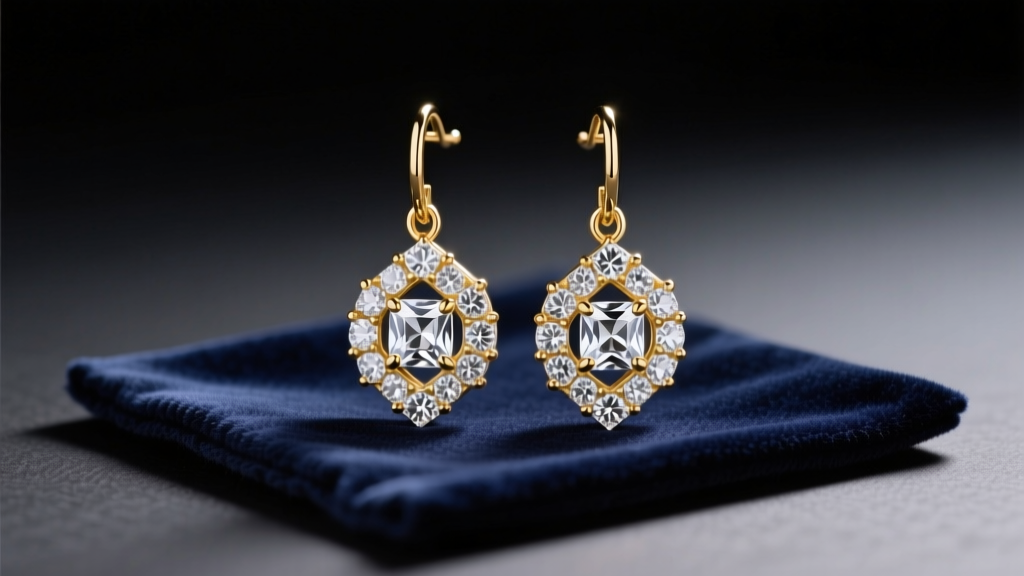
Tahari earrings are celebrated for their bold, architectural silhouettes and sophisticated blend of modern glamour with timeless elegance. Whether you own a pair of their signature gold-tone geometric hoops, intricate cubic zirconia (CZ) chandeliers, or enamel-accented studs, proper maintenance is critical. Unlike solid fine jewelry, fashion and bridge jewelry require highly specific care protocols to preserve their plating, adhesives, and simulated gemstones. In this comprehensive guide, we break down the exact material science behind Tahari earrings and provide a meticulous, step-by-step cleaning framework to ensure your pieces remain pristine for years to come.
Understanding the Anatomy and Materials of Tahari Earrings
To clean Tahari earrings effectively, you must first understand their material composition. According to the Federal Trade Commission (FTC) Jewelry Guides, fashion jewelry typically utilizes a base metal core with a surface plating. Tahari frequently employs brass or zinc alloy bases, which are then plated with 14k or 18k gold-tone or rhodium-tone finishes.
The Vulnerability of Plated Brass
Brass is an alloy of copper and zinc. When exposed to moisture, oxygen, and sulfur in the atmosphere, the copper content can oxidize, leading to tarnish. If the gold or rhodium plating on your Tahari earrings is compromised—even at a microscopic level—the underlying brass will react. This is why abrasive polishing is strictly forbidden; it will strip the micron-thin plating and expose the reactive base metal.
Adhesives and Simulated Stones
Many Tahari designs feature pavé-set cubic zirconia, glass crystals, or faux pearls. These are typically secured using industrial jewelry epoxies rather than traditional metal prongs. The Gemological Institute of America (GIA) notes that while CZ itself is highly durable (8.5 on the Mohs scale), the adhesives securing them are highly sensitive to heat and harsh solvents. Submerging these earrings in hot water or alcohol-based solutions will degrade the epoxy, leading to catastrophic stone loss.
The Step-by-Step Cleaning Protocol
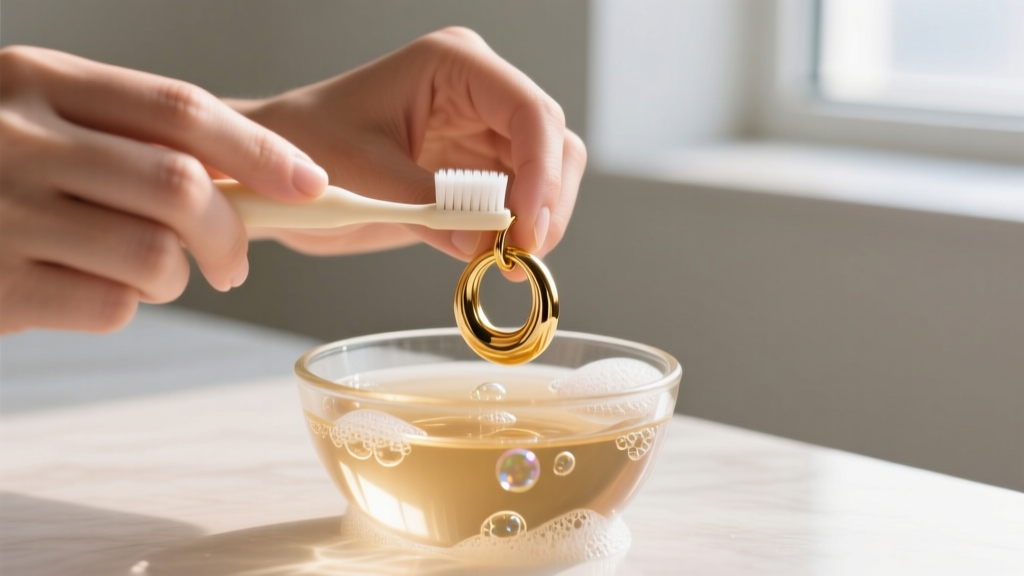
Ditch the commercial jewelry dips. For Tahari's plated and multi-material constructions, a gentle, pH-neutral approach is mandatory. Follow this exact protocol for routine maintenance.
Step 1: Prepare a Distilled Water Solution
Never use tap water. Municipal tap water contains chlorine and dissolved minerals that can leave micro-scratches on soft gold plating and cause water spots on glass crystals. Mix one cup of lukewarm distilled water (room temperature, never hot) with three drops of mild, phosphate-free dish soap (such as original Dawn).
Step 2: The Targeted Surface Wipe
Do not submerge the earrings. Instead, dip a lint-free microfiber cloth or a cotton swab into the solution, wring it out until it is merely damp, and gently wipe the surface of the metal. For intricate filigree or pavé settings, use a brand-new, extra-soft baby toothbrush. Brush in gentle, circular motions to dislodge sebum, dead skin cells, and cosmetic residue trapped in the crevices.
Step 3: The Rinse and Dry
Dampen a separate cloth with pure distilled water and wipe away any soap residue. Immediately dry the earrings using a fresh microfiber cloth. For hard-to-reach areas behind the stones or inside hollow hoop tubes, use a can of compressed air (held at least six inches away) to blow out trapped moisture. Leaving moisture in these crevices is the primary cause of localized tarnishing.
Critical Mistakes That Ruin Fashion Jewelry
Well-intentioned cleaning efforts often destroy fashion jewelry. Avoid these common pitfalls at all costs:
- Ultrasonic Cleaners: The high-frequency sound waves create microscopic cavitation bubbles that implode against the jewelry. This process will shatter glass crystals, fracture resin components, and literally shake the epoxy adhesives loose, causing your CZ stones to fall out.
- Alcohol and Hand Sanitizers: Isopropyl alcohol and ethanol are solvents. They will dissolve the protective lacquer coatings often applied over enamel and will cloud acrylic or resin elements.
- Silver Polish and Baking Soda: Baking soda is highly abrasive (Mohs hardness of 2.5). Rubbing it on gold-plated brass will create micro-scratches, instantly dulling the mirror finish and accelerating future tarnish by increasing the surface area exposed to air.
- Ammonia-Based Cleaners: Ammonia reacts violently with copper alloys. If the ammonia penetrates a micro-crack in the plating, it will cause rapid, irreversible green corrosion on the brass core.
Material-Specific Troubleshooting Chart
When your Tahari earrings exhibit specific signs of wear, refer to this diagnostic table to determine the safest intervention.
| Issue Identified | Root Cause | Safe Intervention Protocol |
|---|---|---|
| Cloudy or Dull CZ Stones | Buildup of lotions, hairspray, and natural skin oils blocking light refraction. | Clean with the distilled water/dish soap protocol using a soft baby toothbrush to reach the pavilion (underside) of the stones. |
| Green Discoloration on Skin | Sweat reacting with exposed copper in the brass base metal through worn plating. | Apply a micro-thin layer of clear, flexible jewelry guard coating to the earring posts and backing. Wipe earrings clean after every wear. |
| Tarnished Metal (Darkening) | Oxidation of the base metal or degradation of the protective topcoat. | Gently buff with a specialized, non-abrasive gold polishing cloth impregnated with anti-tarnish agents. Never use liquid dips. |
| Sticky or Tacky Enamel | Chemical degradation of the resin/enamel topcoat due to solvent exposure. | Stop cleaning immediately. Store in a cool, dark place. Professional re-enameling is the only permanent fix. |
Strategic Storage to Prevent Oxidation
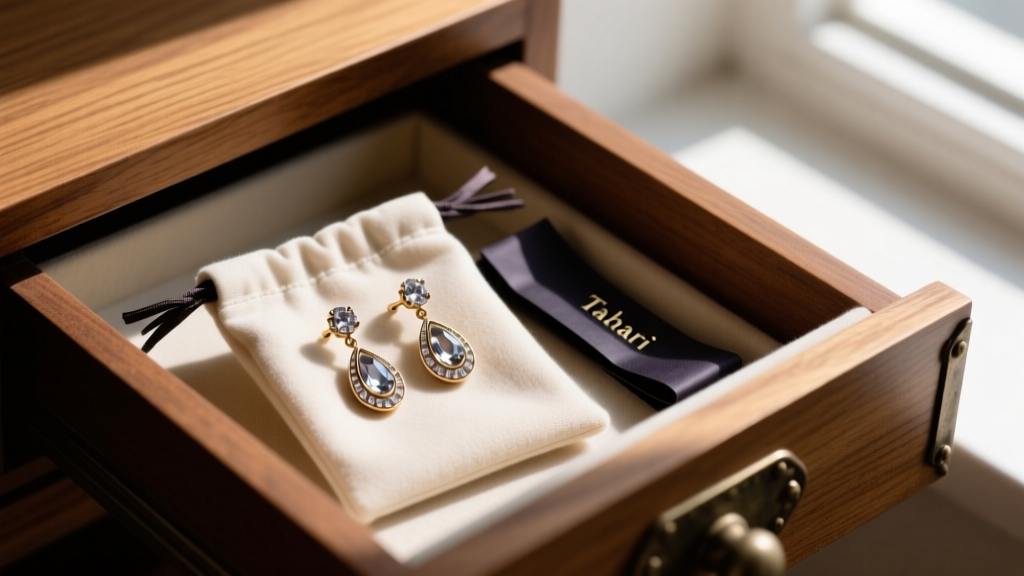
How you store your Tahari earrings is just as important as how you clean them. The primary enemy of plated brass is ambient humidity and sulfur dioxide in the air.
The Micro-Environment Strategy
Never toss your earrings into a communal jewelry box where they can scratch one another and are exposed to circulating air. Instead, create a controlled micro-environment for each pair. Store every pair in an individual, airtight ziplock bag or a dedicated microfiber pouch. Inside each bag, include a 3M anti-tarnish strip. These strips absorb airborne sulfides and moisture, effectively neutralizing the tarnishing process for up to six months.
Climate Control
Avoid storing your jewelry in the bathroom. The extreme fluctuations in heat and humidity from daily showers will rapidly accelerate the oxidation of the base metals and weaken the stone adhesives. A bedroom drawer or closet shelf with a stable, cool temperature is ideal. Consider placing silica gel desiccant packets in your storage drawers to maintain a relative humidity level below 40%.
When to Seek Professional Repair
While meticulous home care will preserve your Tahari earrings, certain issues require professional intervention. If the gold plating has worn completely through to the brass on the high-friction areas (like the earring posts or the edges of hoops), a professional jeweler can polish the piece and apply a new layer of gold plating (replating). Additionally, if a cubic zirconia stone falls out, do not attempt to glue it back in with household superglue, which will cloud the stone and damage the metal setting. Take the piece to a jeweler who specializes in fashion jewelry repair; they possess the correct UV-cured, jewelry-grade epoxies and precision setting tools to restore the piece seamlessly.
By respecting the material limitations of fashion jewelry and adhering to these precise cleaning and storage protocols, your Tahari earrings will continue to deliver their signature sophisticated impact, wear after wear.


