Why Do My Earrings Smell Like Cheese? 2026 Gift Guide
Discover why your earrings smell like cheese and explore our 2026 gift guide featuring hypoallergenic titanium and gold jewelry for sensitive ears.

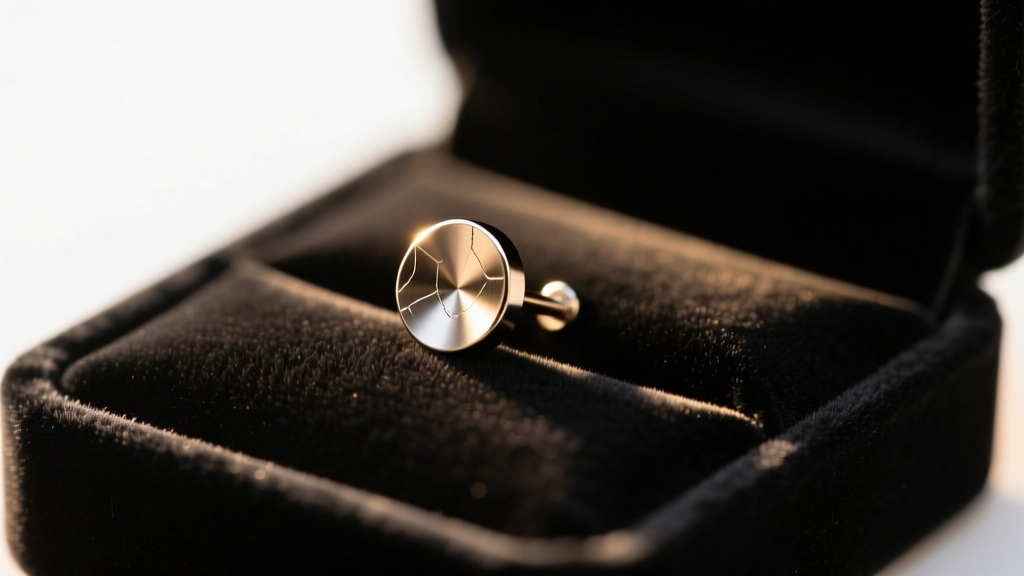
The Unspoken Jewelry Dilemma: Gifting a Fresh Start
We have all been there: you take out a pair of beloved earrings, only to be hit with an unmistakable, pungent odor. If your partner, friend, or family member has ever asked, why do my earrings smell like cheese, you are looking at the perfect opportunity for a highly practical, deeply appreciated gift. The phenomenon colloquially known as 'ear cheese' is not just a hygiene failure; it is often a direct result of poor-quality metals reacting with the body's natural chemistry. As we navigate the 2026 gifting season, moving away from cheap, mass-produced alloy jewelry and toward biocompatible, high-end alternatives is one of the most thoughtful upgrades you can offer a jewelry lover.
The Biology and Chemistry: Why Do My Earrings Smell Like Cheese?
To select the right gift, you must first understand the problem. The 'cheese' smell is primarily caused by a combination of sebum (natural skin oils), dead keratinocytes (skin cells), and sweat accumulating in the piercing fistula. When this organic matter mixes with naturally occurring bacteria on the skin—specifically Staphylococcus hominis and Corynebacterium—it breaks down into isovaleric acid and methanethiol. These are the exact same chemical compounds responsible for the odor of limburger cheese and foot sweat.
However, the metal itself plays a massive role. Cheap jewelry made from brass, nickel, or low-grade 'surgical steel' is highly porous at a microscopic level. These micro-abrasions trap dead skin and bacteria, making them impossible to clean fully. Furthermore, nickel and copper alloys cause low-grade contact dermatitis, which accelerates skin cell shedding and increases sebum production as the body attempts to protect itself from the irritant. According to the American Academy of Dermatology, nickel allergy is one of the most common causes of allergic contact dermatitis, directly contributing to the environment that causes odor.
The 2026 'Fresh Ears' Gift Guide by Occasion
If you want to solve this problem for your loved one, you need to gift jewelry made from mirror-polished, non-porous, and biocompatible materials. Here is how to match the right metal to the right occasion.
For the Anniversary: Solid 14k or 18k Gold Huggies
Gold is a classic, but for sensitive ears, it must be solid and properly alloyed. Avoid gold-plated or gold-vermeil jewelry, as the plating will eventually wear off, exposing the porous brass or silver base metal underneath, which will immediately restart the odor cycle. Gift a pair of solid 14k or 18k nickel-free gold huggies or seamless hoops. Brands like Maria Tada or BVLA (Body Vision Los Angeles) offer exquisite, hand-polished solid gold options that resist bacterial buildup. Price Range: $150 to $450 per pair.
For the Birthday: Implant-Grade Titanium Threadless Studs
For those with newly healed piercings or chronic sensitivity, titanium is the undisputed king. However, you must look for ASTM F-136 compliant implant-grade titanium, not just 'titanium-colored' steel. Implant-grade titanium is completely nickel-free and polished to a mirror finish, leaving zero microscopic pores for bacteria to hide in. NeoMetal and Industrial Strength offer incredible threadless titanium ends that snap securely into place without the need for messy, skin-tearing external threading. Price Range: $35 to $85 per piece.
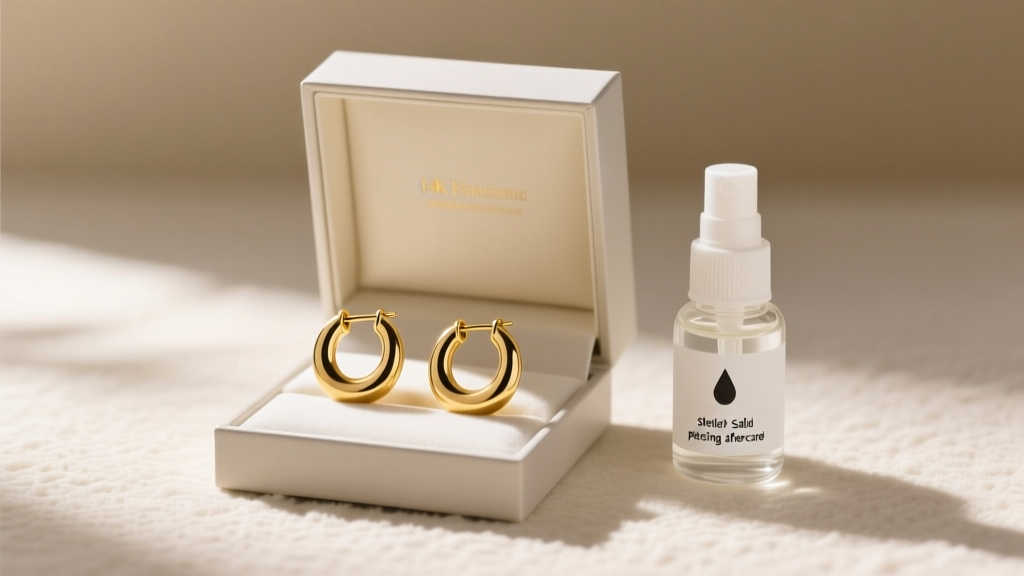
For the Cartilage Collector: Niobium or Platinum Clickers
Cartilage piercings (like the daith, rook, or conch) are notoriously difficult to clean, making them prime real estate for sebum buildup. Niobium is a highly biocompatible, lightweight metal that can be anodized into stunning colors without using reactive dyes or platings. Platinum is the ultimate luxury upgrade—completely inert, incredibly dense, and naturally hypoallergenic. A platinum or niobium hinged clicker from Intrinsic Body makes an unforgettable, high-end gift that guarantees a fresh, odor-free healing environment. Price Range: $80 (Niobium) to $800+ (Platinum).
Material Matrix: Choosing the Right Metal for Sensitive Ears
When shopping for your gift, use this quick-reference matrix to ensure you are buying a metal that prevents odor and irritation. The Association of Professional Piercers (APP) strictly recommends only a handful of materials for long-term wear.
| Material | Standard / Grade | Porosity & Polish | Odor Risk | Best Occasion |
|---|---|---|---|---|
| Implant-Grade Titanium | ASTM F-136 | Non-porous, mirror polish | Extremely Low | Birthdays, Healing Piercings |
| Solid 14k/18k Gold | Nickel-Free Alloy | Low porosity, high polish | Low | Anniversaries, Milestones |
| Niobium | Unalloyed (Pure) | Non-porous, anodized | Extremely Low | Cartilage Gifts, Color Lovers |
| 'Surgical' Steel | 316L / ASTM F-138 | Moderate porosity | Moderate | Budget Gifting (Proceed with Caution) |
| Brass / Nickel Alloys | None (Costume) | Highly porous, reactive | Extremely High | Avoid Completely |
Sizing the Perfect Gift: Gauge and Post Length Specifications
Buying high-quality metal is only half the battle; if the earring does not fit the piercing correctly, it will create pressure points that trap dead skin. To gift the perfect stud or post, you need to know their gauge and required length.
- Standard Earlobes: Usually pierced at 20g (0.81mm) or 18g (1.0mm). Standard post lengths are 6mm (1/4') for healed lobes, or 8mm (5/16') if they prefer a slightly looser fit or have thicker tissue.
- Cartilage (Helix, Conch, Flat): Typically pierced at 16g (1.2mm) or 14g (1.6mm). Cartilage requires precise post lengths, usually ranging from 5mm to 8mm depending on the exact anatomy and swelling.
- Threadless vs. Internally Threaded: Always avoid externally threaded jewelry (where the screw is on the post that passes through the skin), as the threads scrape the fistula and create micro-tears that harbor bacteria. Gift threadless (push-pin) or internally threaded jewelry for a smooth, hygienic insertion.
The Ultimate Add-On Gift: Ultrasonic Jewelry Cleaners
If your recipient already has a collection of high-end jewelry, the perfect complementary gift is a way to maintain it. Even implant-grade titanium needs occasional cleaning to remove everyday lotions, hairspray, and sebum. An ultrasonic jewelry cleaner uses high-frequency sound waves to create microscopic cavitation bubbles in water, which gently blast away organic buildup from the tiny crevices of earring clasps and gemstone settings without the need for harsh chemical scrubbing.
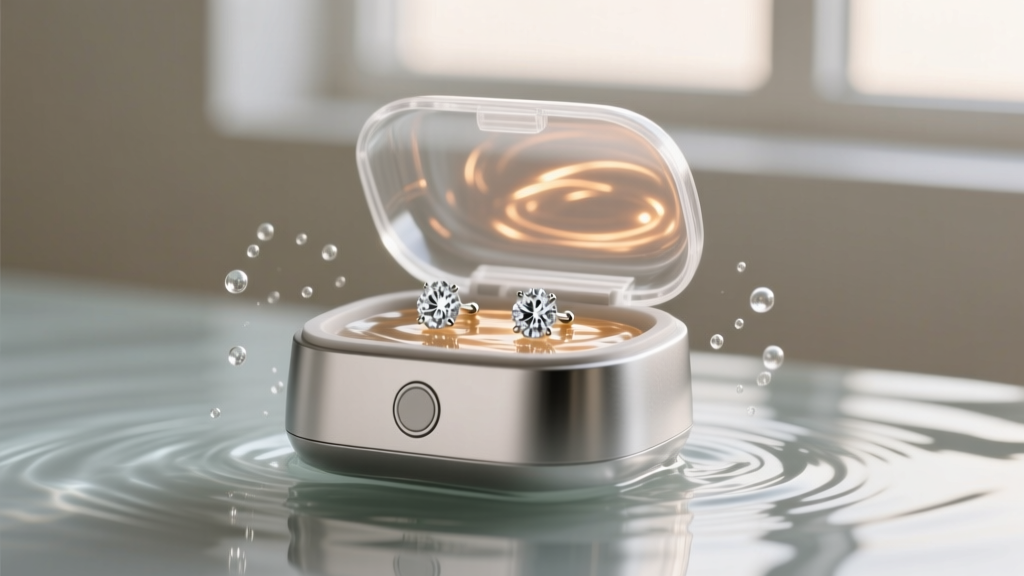
Pair a compact, high-frequency ultrasonic cleaner (like those from Blitz or Magnasonic, priced between $35 and $60) with a bottle of sterile, additive-free wound wash saline. This combination shows that you are not just giving them a piece of jewelry; you are giving them a complete, professional-grade ear care ecosystem.
What to Write in the Gift Card: Care Instructions
To tie your gift together, include a small, beautifully written card with a gentle care routine to ensure their new jewelry stays as fresh as the day they opened it. Recommend the following routine:
The 'Fresh Ears' Daily Routine:
1. When showering, let warm water and mild, fragrance-free soap gently wash over the earrings.
2. Once a week, soak the jewelry in a small cup of sterile saline for 5 minutes to soften any buildup.
3. Never sleep in butterfly-back earrings, as the tight backing restricts airflow and creates a breeding ground for bacteria. Always opt for flat-back labrets or secure huggies for 24/7 wear.
By understanding the science behind the odor and selecting biocompatible, precision-machined jewelry, you are giving a gift that elevates their daily comfort. The next time they reach for their earrings, the only thing they will notice is the brilliant shine of high-quality metal—never the smell of cheese.


