Ear Hugger Earrings: 2026 Trend Analysis & Fit Guide
Discover the 2026 trends for ear hugger earrings. Learn exact gauge sizes, hinge mechanics, material grades, and how to style cartilage and lobe huggies.

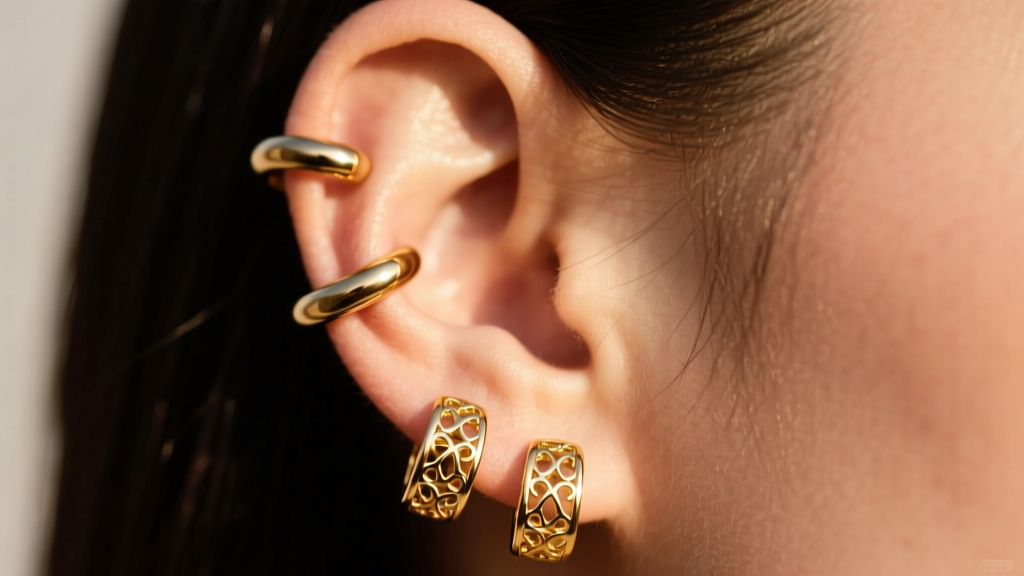
The jewelry landscape in 2026 has decisively moved away from the oversized, heavy statement pieces of the early 2020s, pivoting toward precision-engineered, anatomical aesthetics. At the forefront of this shift are ear hugger earrings—a versatile category that bridges the gap between delicate minimalism and architectural edge. Unlike traditional drop earrings or large hoops, ear huggers are designed to trace the natural contours of the ear, offering a secure, streamlined silhouette that works seamlessly with both lobe and cartilage piercings.
However, the term "ear hugger" is frequently misused. In professional jewelry design, it encompasses two distinct sub-categories: lobe huggies (tight-fitting hinged hoops for standard lobe piercings) and cartilage cuffs (seamless or hinged rings designed to hug the helix, tragus, or conch without excessive movement). Understanding the mechanical and stylistic differences between these variations is critical for both styling and long-term wearability.
The Anatomy of the Perfect Fit: Gauge, Diameter, and Hinge Mechanics
The most common failure point for ear hugger earrings is improper sizing, which leads to metal fatigue, hinge snapping, or tissue irritation. A hugging earring must account for the natural swelling of the piercing channel and the curvature of the ear's anatomy. According to the Association of Professional Piercers, selecting the correct gauge and inner diameter is non-negotiable for cartilage health and jewelry longevity.
Sizing Matrix for Lobe vs. Cartilage Huggers
| Piercing Zone | Ideal Gauge | Inner Diameter | Hinge Type | Primary Failure Mode |
|---|---|---|---|---|
| Standard Lobe | 20g (0.8mm) or 18g (1.0mm) | 10mm - 14mm | Snap-Hinge / Clicker | Clasp loosening from ear friction |
| Helix / Upper Cartilage | 16g (1.2mm) or 14g (1.6mm) | 6mm - 8mm | Seamless / Threadless | Warping during insertion/removal |
| Tragus / Conch | 16g (1.2mm) | 6mm - 10mm | Flat-Back Clicker | Post irritation from shallow angles |
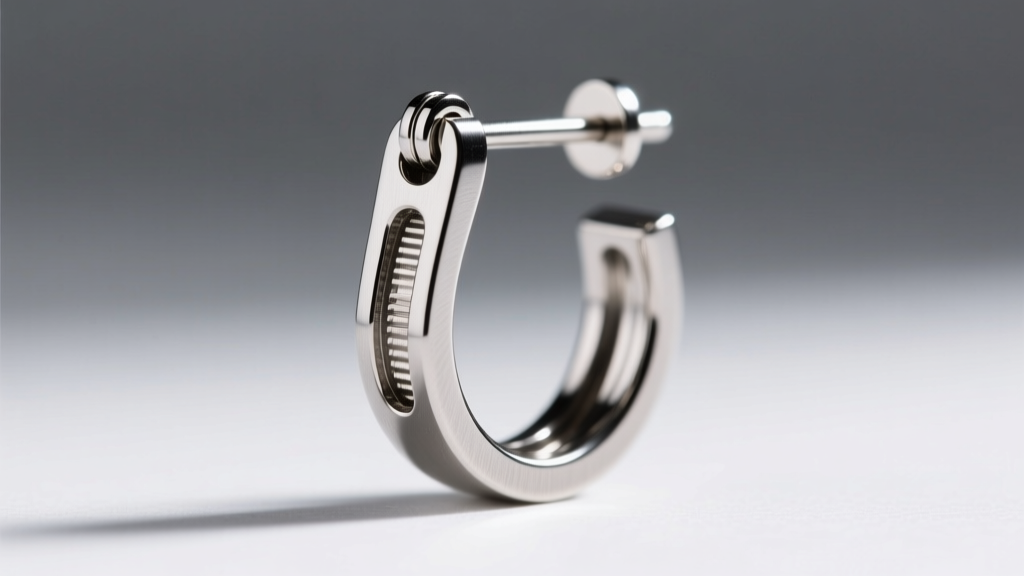
For cartilage placements, 16-gauge (1.2mm) is the industry standard for ear hugger earrings. Thinner gauges (like 20g) create a "cheese-cutter effect" in cartilage, where the thin wire slowly migrates through the tissue under pressure. For the hinge mechanism, premium brands utilize a barrel-clicker or precision snap-hinge, which produces an audible click when closed, ensuring the internal pin is fully seated. If your huggie relies on simple friction to stay closed, it is highly likely to fail within six months of daily wear.
2026 Trend Forecast: What’s Dominating the Cartilage and Lobes
This year's styling paradigms are defined by texture contrast and anatomical wrapping. The clean, polished gold hoops of 2023 have evolved into more complex, tactile designs.
The "Liquid Metal" Helix Wrap
Designers are utilizing high-carat gold alloys and advanced casting techniques to create ear hugger earrings that look like molten metal frozen around the helix. These asymmetrical, organic shapes rely on a hidden threadless post system, allowing the visible front to wrap seamlessly around the ear's edge without the visual interruption of a traditional hinge. This trend heavily favors 14k and 18k yellow gold, prioritizing fluid lines over geometric perfection.
Micro-Pavé and Mixed Metal Stacking
Stacking remains relevant, but the execution has become highly curated. The 2026 approach involves mixing oxidized silver or black rhodium-plated huggies with bright 18k gold diamond pavé pieces. According to the Gemological Institute of America, the shift toward lab-grown diamonds has allowed designers to increase the total carat weight in micro-pavé huggies without inflating retail prices, resulting in ear huggers that offer maximum light return and brilliance at accessible price points.
Material Integrity: Why Your Ear Huggers Are Turning Green or Snapping
Because ear hugger earrings sit tightly against the skin, they are subjected to continuous exposure to sebum, sweat, and cosmetic products. Material degradation is a primary concern for daily wearers.
- Implant-Grade Titanium (ASTM F136): The undisputed champion for cartilage huggers. It is entirely nickel-free, highly resistant to corrosion, and possesses the tensile strength required for thin-gauge seamless rings. It is the only recommended material for fresh or easily irritated piercings.
- Solid 14k and 18k Gold: Ideal for lobe huggies with snap-hinges. The alloy mix provides the necessary "memory" and spring-back required for the hinge pin to stay secure. 24k gold is too soft and will warp, causing the clasp to fail.
- Gold Vermeil vs. Gold Plated: Many budget ear huggers are marketed as "gold," but are merely brass with a microscopic flash plating. For longevity, seek out vermeil, which legally requires a base of sterling silver and a minimum of 2.5 microns of gold plating. Standard plated brass huggers will expose the base metal within weeks, leading to contact dermatitis.
Troubleshooting Hinge Failure: If your gold lobe huggie constantly pops open, do not attempt to squeeze the clasp tighter with pliers. This work-hardens the metal and will cause the pin to snap. Instead, apply a microscopic drop of jewelry-safe resin to the internal pin, or return it to a bench jeweler to have the tension plate adjusted.
Styling Framework: Building the Ultimate Ear Hugger Constellation
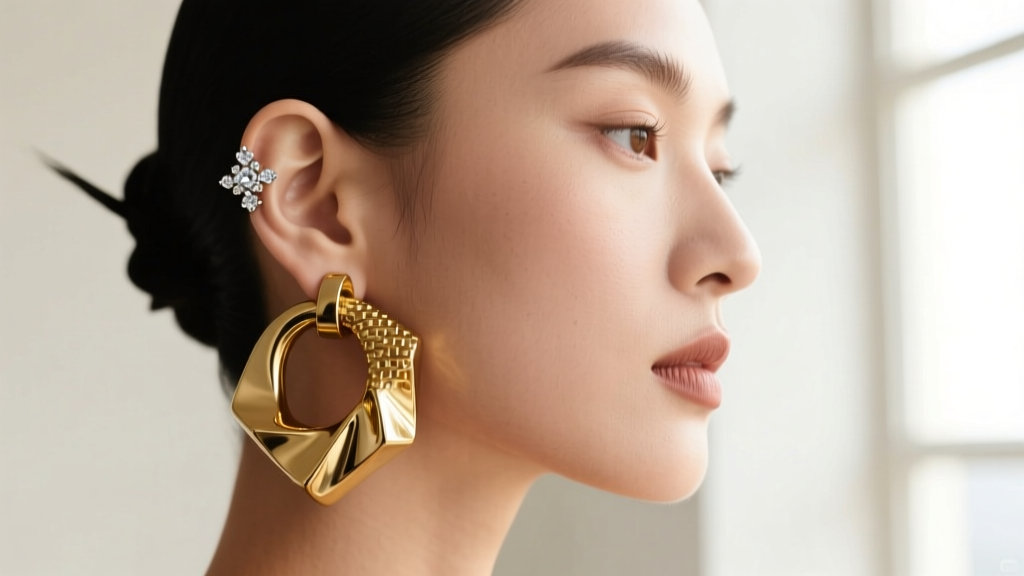
Styling ear hugger earrings in 2026 requires a shift from "matching sets" to "curated constellations." The goal is to guide the eye upward along the ear's natural ridge.
- The Anchor (Lobe): Start with a slightly wider, textured ear hugger on the primary lobe piercing. A 12mm inner diameter with a hammered or fluted finish provides a solid visual base.
- The Bridge (Upper Lobe / Lower Helix): Transition to a tighter, 10mm huggie featuring a contrasting metal or a singular bezel-set gemstone. This creates a stepping-stone effect.
- The Apex (Helix): Finish with a 6mm or 8mm seamless cartilage cuff. If using a non-pierced ear cuff for the apex, ensure it features an adjustable tension band lined with silicone to prevent slippage and skin pinching.
"The golden rule of the modern ear stack is negative space. If every millimeter of your ear is encased in metal, the individual beauty of the ear hugger earrings is lost. Let the anatomy of the ear breathe between the pieces." — Master Bench Jeweler & Stylist
Investment Guide: Price Tiers and Brand Benchmarks
When investing in ear hugger earrings, you are paying for precision engineering as much as raw materials. Here is a breakdown of what to expect across different market tiers in 2026:
Tier 1: Fashion & Vermeil ($25 - $65)
Expect sterling silver bases with heavy gold vermeil. Hinges are usually basic friction-fit. Ideal for occasional wear or testing out cartilage placements before committing to fine jewelry. Watch out for nickel alloys in the hinge pins.
Tier 2: Demi-Fine & Gold-Filled ($75 - $180)
This tier offers the best value for daily wearers. Brands utilize 14k gold-filled wire (which contains 100x more gold than standard plating) and upgraded barrel-clicker hinges. These pieces can withstand daily showers and friction without immediate degradation.
Tier 3: Fine Jewelry & Solid Gold ($250 - $800+)
Crafted from solid 14k or 18k gold, often featuring VS-clarity lab-grown or natural diamond pavé. The hinges are hand-assembled and tension-tested. At this price point, you are also paying for the brand's proprietary ergonomic curves, designed specifically to sit flush against the earlobe without drooping forward.
Ultimately, the resurgence of ear hugger earrings is a testament to the modern consumer's demand for jewelry that is both highly aesthetic and functionally resilient. By prioritizing correct gauge sizing, premium metallurgy, and anatomical styling, you can build an ear curation that remains relevant, comfortable, and striking for years to come.


