The Beginner’s Guide to Buying Authentic Chalcedony Earrings
Discover everything you need to know about chalcedony earrings. Learn how to spot dyed fakes, choose the right metal settings, and care for your gems.

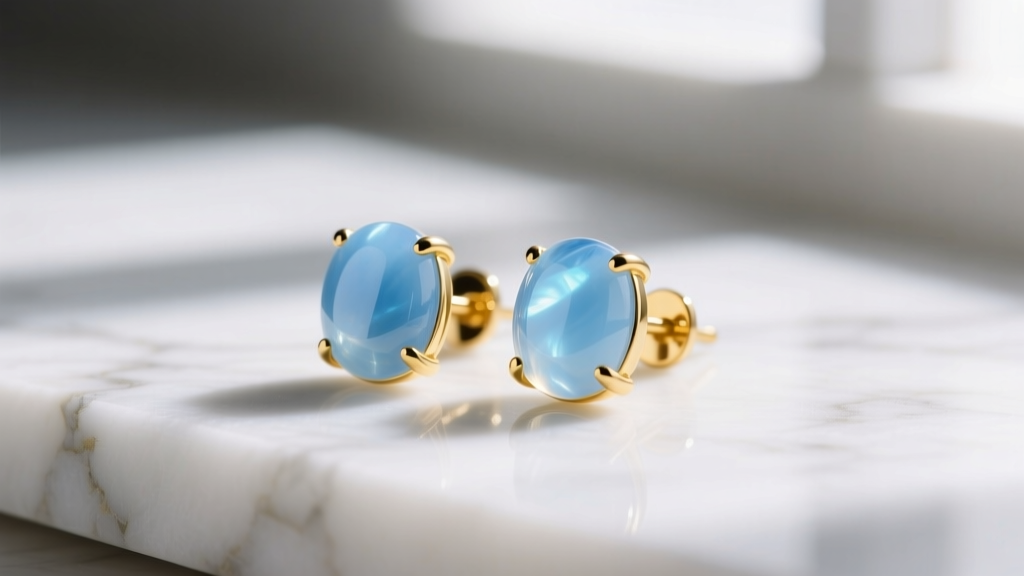
If you are stepping into the world of gemstone jewelry, chalcedony earrings are often the first colorful piece collectors buy. Prized for their ethereal, waxy luster and soothing translucency, these stones offer a sophisticated alternative to traditional faceted gems. However, the market is flooded with dyed imitations, fragile settings, and overpriced commercial pieces. As a beginner, navigating the nuances of cryptocrystalline quartz can feel overwhelming.
This comprehensive guide will teach you exactly how to evaluate chalcedony, spot artificial treatments, select the right metal hardware for your ear piercings, and care for your earrings to prevent structural damage. Whether you are looking for everyday studs or statement drops, understanding the mineralogy and market realities of chalcedony will save you money and frustration.
What Exactly is Chalcedony? The Mineral Breakdown
Chalcedony is not a single mineral, but rather a broad category of cryptocrystalline quartz. Unlike amethyst or citrine, which form large, visible crystals (macrocrystalline), chalcedony is composed of microscopic quartz crystals intergrown with moganite. This dense, interlocking structure gives the stone its signature waxy luster and impressive durability.
On the Mohs hardness scale, chalcedony ranks between 6.5 and 7, making it highly resistant to scratching from everyday dust and debris. Its specific gravity sits at 2.58 to 2.64, giving it a satisfying, substantial weight when held. According to the Gemological Institute of America (GIA), the term "chalcedony" in the commercial gem trade usually refers specifically to the translucent, solid-colored varieties, most notably the beloved blue chalcedony.
The Chalcedony Family Tree
Many famous gemstones are technically chalcedony. If you are buying earrings, you might encounter these varieties:
- Blue Chalcedony: The most popular for earrings; ranges from grayish-lavender to soft sky blue.
- Agate: Characterized by distinct, concentric color banding.
- Onyx: Parallel banded chalcedony, usually dyed black in commercial jewelry.
- Carnelian: Translucent, iron-rich chalcedony ranging from orange to reddish-brown.
- Chrysoprase: The rarest and most valuable variety, colored apple-green by nickel inclusions.
The Dye Deception: Spotting Treated vs. Natural Stones
The most critical skill for a beginner buying chalcedony earrings is identifying dye treatments. Because chalcedony is highly porous, it has been dyed for centuries. The ancient Romans used sugar solutions and sulfuric acid to darken stones, while modern lapidaries use aniline dyes to create vivid, unnatural colors.
Natural blue chalcedony is exceptionally rare in vivid, saturated hues. Authentic stones typically display a soft, dusty, grayish-blue or lavender-blue tone. If you see a pair of earrings featuring neon "London blue" or hot pink chalcedony, you are almost certainly looking at a dyed stone. While dyeing is an accepted industry practice (and does not necessarily ruin the stone's value), you should never pay natural-stone prices for dyed material.
How to Inspect Your Stones
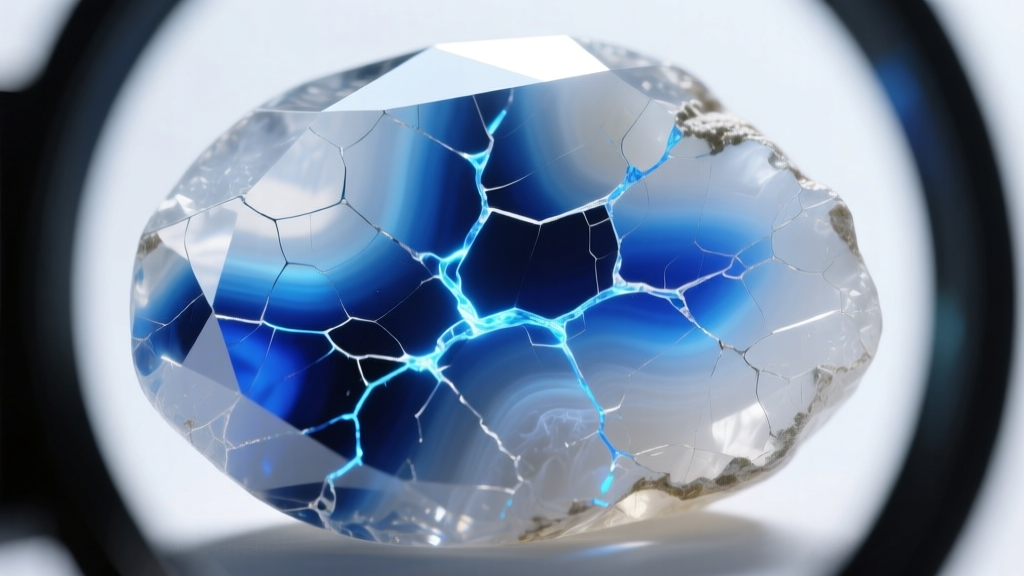
Use a 10x jeweler's loupe to examine the surface of the cabochon. In dyed chalcedony, the color will pool and concentrate along the microscopic fractures and grain boundaries, creating a spiderweb or network effect. Natural, untreated chalcedony will display a smooth, even distribution of color without dark, concentrated veins. For deeper mineralogical data on quartz structures and porosity, Mindat.org provides extensive crystallographic profiles.
| Feature | Natural Blue Chalcedony | Dyed Commercial Chalcedony |
|---|---|---|
| Color Saturation | Soft, dusty, grayish-lavender blue | Vivid, neon, or highly saturated blue/pink |
| Loupe Inspection | Even color distribution | Color pooling in fractures (spiderwebbing) |
| Price Point | $50 - $200+ per pair | $15 - $40 per pair |
| UV Reaction | Inert to weak | Often fluoresces brightly under UV light |
Hardware & Settings: Protecting Your Stones and Ears
The way a chalcedony stone is set into an earring drastically impacts both its longevity and your ear health. Chalcedony lacks cleavage (meaning it won't split along flat planes like a diamond), but it can chip or abrade if struck against hard surfaces.
Bezel vs. Prong Settings
For beginners, bezel settings are vastly superior to prong settings. A bezel wraps a thin rim of metal entirely around the girdle (edge) of the cabochon, protecting the stone from lateral impacts. Prong settings leave the edges exposed, making them highly susceptible to chipping if you accidentally brush your hair or drop the earring on a tile floor.
Metal Alloys and Sensitive Ears
The metal touching your piercing is just as important as the stone. Here is the hierarchy of earring hardware:
- ASTM F136 Implant-Grade Titanium: The absolute gold standard for hyper-sensitive ears or fresh piercings. It is nickel-free and highly biocompatible. However, it is rarely paired with high-end natural chalcedony due to manufacturing costs.
- 14k or 18k Solid Gold: Excellent for everyday wear. 14k gold (58.5% pure gold) offers the perfect balance of durability and hypoallergenic properties, provided it is alloyed with silver or palladium rather than nickel.
- Sterling Silver (925): A classic pairing that complements the cool tones of blue chalcedony. Ensure it is rhodium-plated to prevent tarnishing, which can leave dark residue on your earlobes.
Standard Gauge Sizes for Earring Posts
When buying studs or drops, pay attention to the post thickness. The standard lobe piercing is 20-gauge (0.81mm) or 18-gauge (1.02mm). Most commercial chalcedony studs use 20g friction posts. If you have slightly stretched lobes or prefer a sturdier post that won't bend under the weight of a heavy cabochon, specifically seek out 18g posts. For drop earrings utilizing French wire hooks, 20g is the industry standard to ensure the wire glides smoothly through the fistula without causing micro-tears.
Pricing Tiers: What Should You Actually Pay?
Understanding the pricing matrix prevents you from overpaying for commercial-grade jewelry masquerading as fine jewelry. The cost of chalcedony earrings is driven by three factors: the origin and treatment of the stone, the metal hardware, and the brand markup.
| Tier | Stone Quality | Metal Setting | Expected Price Range |
|---|---|---|---|
| Commercial / Fast Fashion | Heavily dyed, opaque, mass-cut | Sterling silver (thin plating) or brass | $15 - $45 |
| Artisan / Mid-Market | Natural color, good translucency, custom cabochons | Solid 925 Silver or 10k/14k Gold Vermeil | $60 - $150 |
| Fine Jewelry / Designer | Gem-grade, rare varieties (e.g., Chrysoprase, Gem Silica) | Solid 14k/18k Gold, Platinum, Diamond Accents | $250 - $800+ |
Pro Tip: If a vendor is selling "natural Namibian blue chalcedony" earrings in a sterling silver bezel for $25, they are either lying about the origin, the treatment, or the metal content. True natural blue chalcedony with high translucency commands a premium from lapidaries.
Everyday Care: Avoiding the "Cloudy" Trap and Crazing
Chalcedony is durable, but it is not invincible. The most common failure mode for beginners is crazing—a network of internal fractures caused by thermal shock or harsh chemicals. Because the stone is porous, it can absorb chemicals from your environment, leading to a permanent cloudy appearance.
Never use an ultrasonic jewelry cleaner on chalcedony earrings. The high-frequency vibrations can exploit microscopic internal fissures, causing the cabochon to crack entirely in half or shatter the dye bonds, resulting in patchy color loss.
The Safe Cleaning Protocol
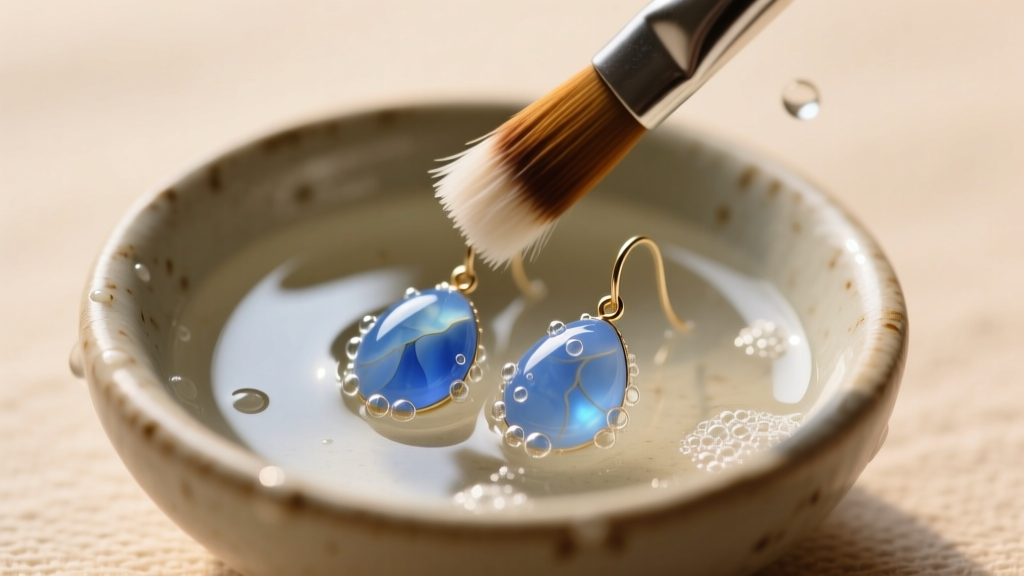
- Mix a few drops of mild, phosphate-free dish soap into a bowl of lukewarm (never hot) water.
- Submerge the earrings for 3 to 5 minutes to loosen body oils and cosmetics.
- Gently agitate the water or use a baby-soft toothbrush to lightly sweep the back of the stone and the earring post.
- Rinse under a gentle stream of room-temperature water.
- Pat dry immediately with a microfiber cloth. Do not let water air-dry on the stone, as hard water minerals will leave a stubborn white film on the waxy surface.
Storage and Environmental Hazards
Always store your chalcedony earrings in a dark, fabric-lined jewelry box. Prolonged exposure to direct sunlight and high heat (like leaving them on a bathroom vanity near a window) will cause dyed stones to fade rapidly and can dehydrate natural stones, dulling their luster. Furthermore, apply your perfumes, hairsprays, and lotions before putting on your earrings to prevent chemical buildup on the porous surface.
Final Verdict for First-Time Buyers
Chalcedony earrings are a phenomenal entry point into the world of colored gemstones. They offer a unique, understated elegance that faceted stones simply cannot match. By prioritizing bezel settings, verifying the metal purity of your posts, and learning to spot the tell-tale signs of dye concentration, you can build a jewelry collection that is both beautiful and structurally sound.
Start with a simple pair of 14k gold or rhodium-plated sterling silver bezel-set studs in a natural, dusty blue hue. They will serve as a versatile, everyday staple that bridges the gap between casual wear and elevated office attire, all while teaching you how to properly care for cryptocrystalline quartz.


