How to Style Seashell Earrings Gold: A Step-by-Step Guide
Master the art of wearing seashell earrings gold styles. Learn step-by-step how to choose, style by face shape, and clean organic gems.

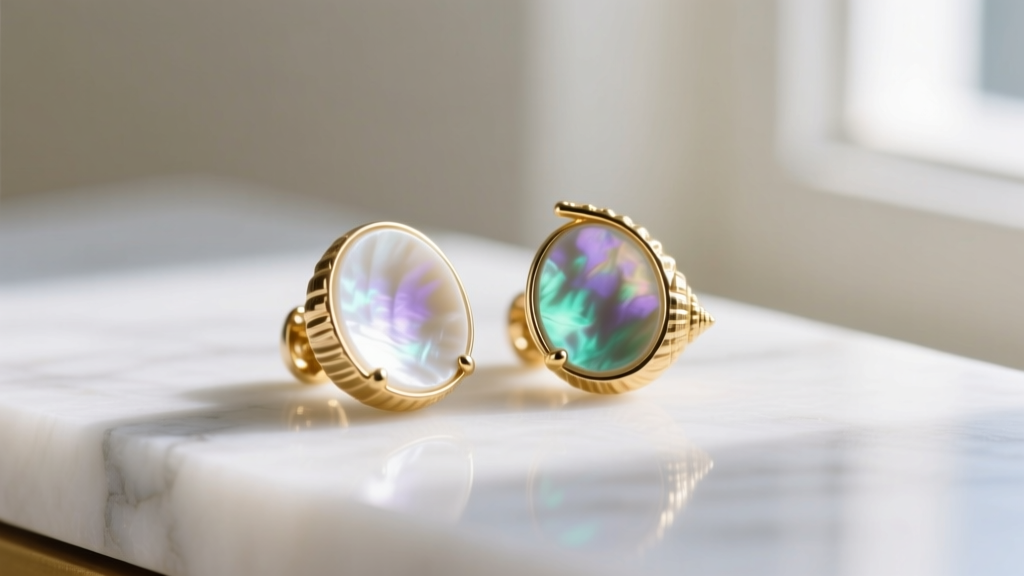
As we navigate the jewelry trends of 2026, the 'coastal grandmother' and 'siren core' aesthetics have matured into refined, everyday luxury. At the center of this evolution are seashell earrings gold designs, which blend organic textures with the timeless warmth of precious metals. However, styling and maintaining organic gemstones requires a vastly different approach than caring for traditional faceted stones or solid metal hoops. Shells are delicate, porous, and sensitive to environmental stressors.
This comprehensive, step-by-step guide will teach you how to select the right gold purity, map earrings to your specific ear anatomy, style them for your face shape, and clean them without causing irreversible damage to the nacre.
Step 1: Selecting the Right Gold Purity and Shell Type
Not all gold is created equal, especially when it is tasked with holding a fragile organic gemstone. When shopping for seashell earrings gold settings, you must balance the aesthetic warmth of the metal with its structural integrity.
The Gold Purity Matrix
- 14k Solid Gold (58.5% Pure): This is the optimal choice for prong-set or bezel-set shell earrings. Because it is alloyed with metals like copper and zinc, 14k gold has a Mohs hardness of roughly 3.5 to 4.0. This rigidity ensures that prongs will not easily bend and release the shell during daily wear. Expect to pay between $250 and $800 for high-quality artisan pieces.
- 18k Solid Gold (75% Pure): While it offers a richer, deeper yellow hue, 18k gold is softer. If your seashell earrings utilize delicate prongs, 18k gold is prone to snagging on sweaters and bending, which can lead to stone loss. Best reserved for bezel settings or cast designs where the shell is embedded in a solid metal frame.
- Gold Vermeil (2.5+ Microns over Sterling Silver): A fantastic entry point ($60 to $150), but the sterling silver base can oxidize if exposed to saltwater or heavy perspiration, potentially degrading the adhesive used to bond the shell to the metal.
Understanding Organic Gemstone Durability
According to the GIA Gem Encyclopedia, organic gems like mother of pearl, abalone, and conch shell are primarily composed of calcium carbonate and conchiolin (an organic protein). They rank between 2.5 and 3.0 on the Mohs scale. This means that the 14k gold setting is actually harder than the shell itself. If stored improperly, the gold can easily scratch the iridescent nacre surface.
Step 2: Matching Seashell Earrings Gold to Your Ear Anatomy
The structural demands of your ear piercing dictate which styles of seashell earrings gold you can comfortably wear. Weight distribution is the primary factor, as shells are surprisingly dense.
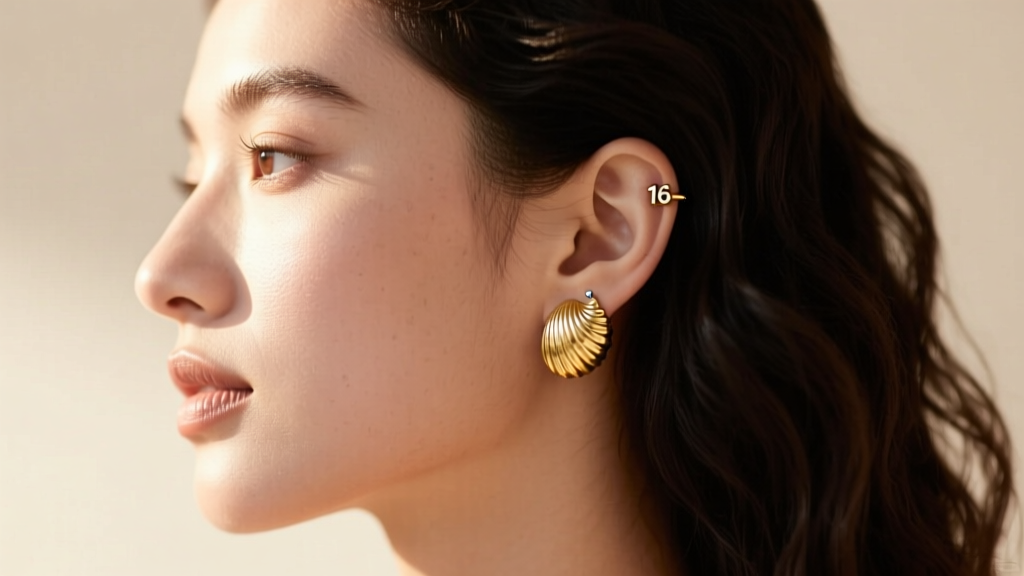
Lobe Piercings (Standard 20G or 18G)
Standard lobe piercings (0.81mm to 1.02mm) can support the weight of medium-to-large mother of pearl drops. However, heavy shell pendants can cause 'earlobe droop' over time, stretching the fistula. Pro Tip: Always use silicone earring backers or specialized support patches (like BlingWraps) to distribute the weight of heavy gold and shell drops across a wider surface area of the lobe.
Cartilage and Helix Piercings (16G or 14G)
Cartilage piercings (1.29mm to 1.63mm) are less forgiving of weight and movement. For the upper ear, avoid long dangling shell earrings that can catch on hair and cause trauma to the cartilage piercing. Instead, opt for 16-gauge gold seashell huggies, flat-back studs with inlaid paua shell, or ear cuffs that require no piercing at all. Cartilage is prone to irritation bumps if subjected to the constant swinging weight of heavy organic gems.
Step 3: Styling Frameworks for Different Face Shapes
Seashell earrings gold styles come in a myriad of silhouettes, from asymmetrical conch shapes to perfectly symmetrical scallop fans. Use this framework to balance your facial proportions.
| Face Shape | Ideal Shell Silhouette | Gold Style Recommendation | Styles to Avoid |
|---|---|---|---|
| Round | Elongated drops, teardrop abalone | 14k gold chain drops ending in a tapered shell | Wide, circular scallop studs |
| Square | Curved huggies, soft spiral shells | Gold hoop huggies with small, rounded shell charms | Geometric, angular shell inlays |
| Oval | Most styles, especially wide fans | Statement mother-of-pearl fan studs in 18k gold | Overly long drops that elongate the face further |
| Heart | Bottom-heavy teardrops, conch shapes | Gold chandeliers with shell accents at the base | Top-heavy, wide fan earrings |
When styling for the office or formal events, the 'quiet luxury' approach to seashell earrings gold involves choosing small, bezel-set mother of pearl studs with a brushed or matte gold finish. This reduces the glare and keeps the focus on the subtle iridescence of the nacre rather than the flash of the metal.
Step 4: The Proper Cleaning Protocol (Avoiding Shell Crazing)
The most common mistake jewelry owners make is treating organic gems like diamonds or sapphires. Never put seashell earrings in an ultrasonic cleaner. The high-frequency sound waves create microscopic cavitation bubbles that will cause 'crazing'—a network of fine, irreversible cracks in the nacre layers. Furthermore, harsh chemical dips will strip the shell of its natural luster.
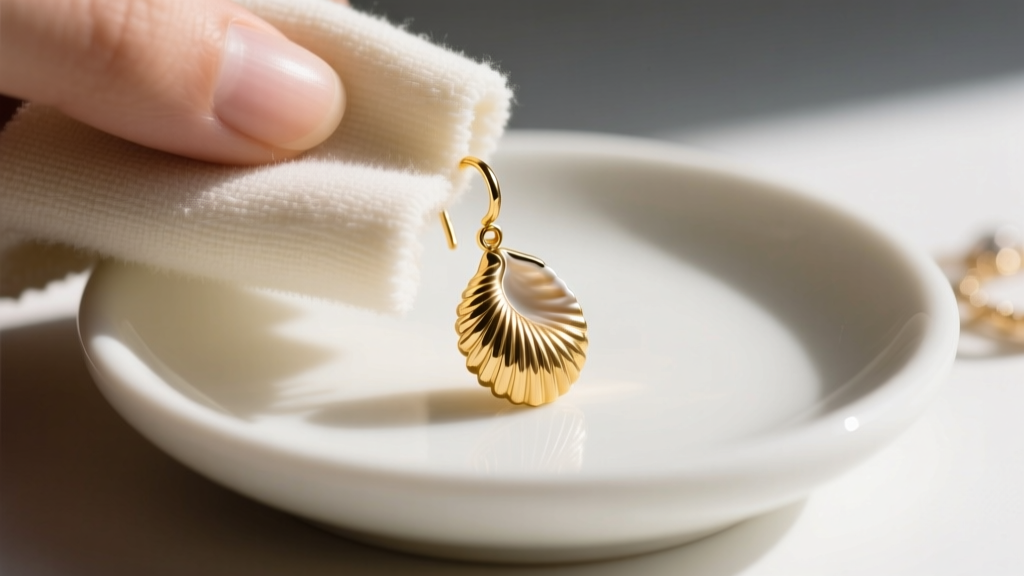
Step-by-Step Cleaning Routine
- Prepare a Gentle Solution: Mix lukewarm distilled water with a single drop of pH-neutral baby shampoo or castile soap. Avoid tap water, as the chlorine and heavy minerals can react with the calcium carbonate in the shell.
- Target the Gold Only: Dip a soft-bristled baby toothbrush into the solution and gently scrub the gold settings, prongs, and earring posts. This removes sebum, dead skin cells, and hair product buildup that can harbor bacteria.
- Wipe the Shell: Do not submerge the shell. Instead, dampen a lint-free microfiber cloth with the soapy water and gently wipe the surface of the shell to remove oils. Prolonged water exposure can degrade the conchiolin protein matrix, leading to peeling.
- Dry Immediately: Pat the earrings completely dry with a separate, clean microfiber cloth. Ensure no moisture is trapped between the gold bezel and the shell edge.
Note on Allergies: If you experience itching around your piercing, it may not be the shell, but the gold alloy. According to the American Academy of Dermatology, nickel is a common alloy in lower-karat golds and white gold. If you have a known nickel allergy, ensure your seashell earrings gold settings are specifically cast in nickel-free 14k yellow gold or titanium.
Step 5: Troubleshooting Prong and Glue Failures
Because shells cannot always be drilled without shattering, many jewelers rely on specialized epoxies or UV-cured resins to bond the shell to the gold backing. Over time, exposure to humidity, perfumes, and body heat can degrade these adhesives.
How to Spot Early Adhesive Failure
Gently tap the shell with a wooden toothpick. If you hear a hollow 'click' or feel any lateral movement, the adhesive bond has broken. Do not attempt to glue it back yourself using household superglue (cyanoacrylate). Superglue cures brittle and will leave a white, frosty residue that permanently ruins the nacre's iridescence. Instead, take the piece to a professional jeweler who can clean the gold backing with acetone (carefully avoiding the shell) and re-bond it using a flexible, jewelry-grade two-part epoxy.
Preventing Prong Snagging
If your shell is held by gold prongs, inspect them monthly under a magnifying glass. Because 14k and 18k gold can wear down or lift when caught on silk blouses or knitwear, use a jewelry polishing cloth to gently press the prong tips back over the shell's edge. If a prong is severely lifted, a jeweler can re-tip it using a laser welder, which is safe for organic gems as it localizes the heat, unlike traditional torch soldering which would scorch and crack the shell.
The Golden Rule of Storage: Always store your seashell earrings gold pieces in individual anti-tarnish flannel pouches. Keep them away from direct sunlight and high heat, which will dehydrate the organic proteins in the shell, causing it to warp, crack, or lose its vibrant color over time.
By following these meticulous steps, your seashell earrings gold collection will remain a luminous, structurally sound staple in your jewelry wardrobe for decades, effortlessly bridging the gap between coastal nostalgia and modern sophistication.


