How to Fix Fake Double Piercing Earrings Slipping
Stop your fake double piercing earrings from slipping or pinching. Expert troubleshooting for ear cuffs, chain links, and cartilage comfort.


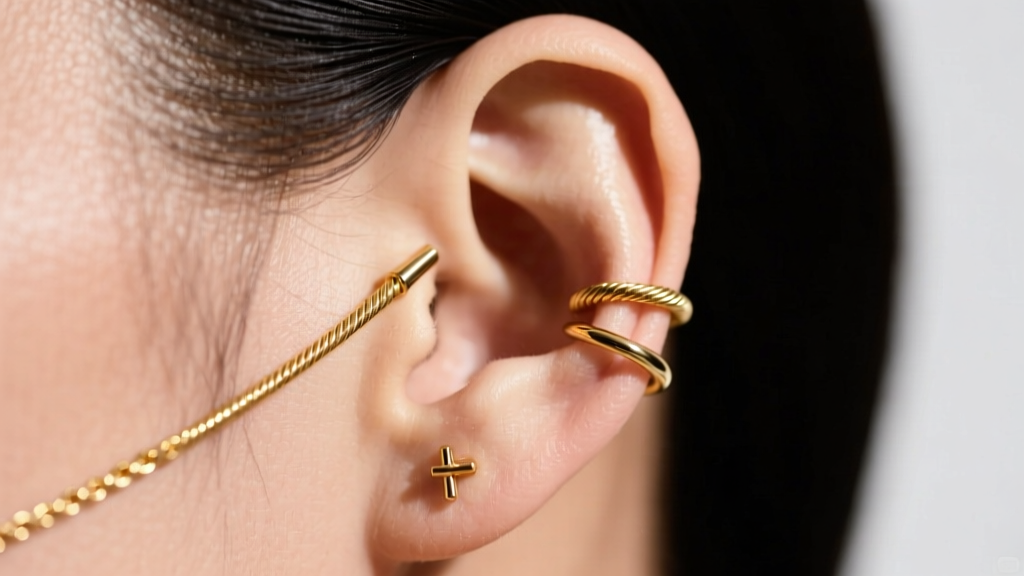
The aesthetic of a curated ear stack no longer requires a needle. Fake double piercing earrings have surged in popularity, offering the illusion of a lobe-to-helix piercing setup through a combination of a standard lobe earring, a delicate connecting chain, and a tension-based ear cuff. However, the physics of non-pierced jewelry present unique mechanical challenges. Because the ear cuff relies entirely on friction and tension against the cartilage ridge rather than a secure post and backing, wearers frequently encounter slipping, pinching, and chain snagging.
If your fake double piercing earrings constantly slide down your helix or cause cartilage fatigue, the issue usually stems from improper tension calibration, incorrect chain gauge, or poor material malleability. This comprehensive troubleshooting guide breaks down the exact engineering flaws of non-pierced ear stacks and provides actionable, expert-level solutions to keep your jewelry secure and comfortable.
The Anatomy of a Fake Double Piercing Setup
Before troubleshooting, it is essential to understand the structural components of fake double piercing earrings. A standard setup consists of three elements:
- The Lobe Anchor: A traditional stud, hoop, or huggie that secures the bottom of the chain. This piece bears the downward gravitational pull.
- The Connector: A delicate chain, typically ranging from 1.5 to 3 inches, that bridges the lobe and the upper ear.
- The Helix Cuff: A non-pierced ring that clamps onto the outer cartilage ridge (the helix) to anchor the top of the chain.
The primary failure point in this system is almost always the helix cuff. The average human helix ridge varies wildly in thickness, typically measuring between 3.5mm and 6.0mm. If your cuff's internal diameter does not precisely match your specific cartilage thickness, gravity and the weight of the connecting chain will drag the entire setup downward.
Problem 1: The Helix Cuff Keeps Sliding Down
Slipping is the most universally reported issue with fake double piercing earrings. This occurs when the kinetic energy of your head movements, combined with the static weight of the chain, overcomes the friction holding the cuff in place.
Tension Adjustment Techniques
Most wrap-around ear cuffs are made from a continuous loop of metal with a small gap. To fix slipping, you must manually reduce the internal diameter of the cuff. Using a digital caliper, measure the thickest part of your helix ridge. You want the internal gap of the cuff to be exactly 0.5mm to 1.0mm smaller than your cartilage to ensure a snug fit without cutting off circulation.
To adjust the tension safely, place a microfiber polishing cloth over the cuff to prevent scratching. Using two pairs of nylon-jaw jewelry pliers, gently squeeze the sides of the cuff inward. Never use bare metal pliers, as they will mar the finish and create microscopic burrs that can catch on your hair or skin. If your cuff is made of niobium or dead-soft 14k gold, it will bend easily. If it is made of surgical steel or titanium, it will have significant 'spring-back' memory, requiring you to over-bend it slightly to achieve the desired tension.
Silicone Grips and Adhesives
If your cartilage is exceptionally narrow (under 3.5mm) and you cannot find a cuff small enough, you can introduce artificial friction. Apply a microscopic dot of clear, skin-safe silicone ear grip adhesive to the inner curve of the cuff before sliding it on. Alternatively, slip a tiny piece of clear silicone earring backing tubing over the ends of the open cuff to increase the surface area and grip against the skin.
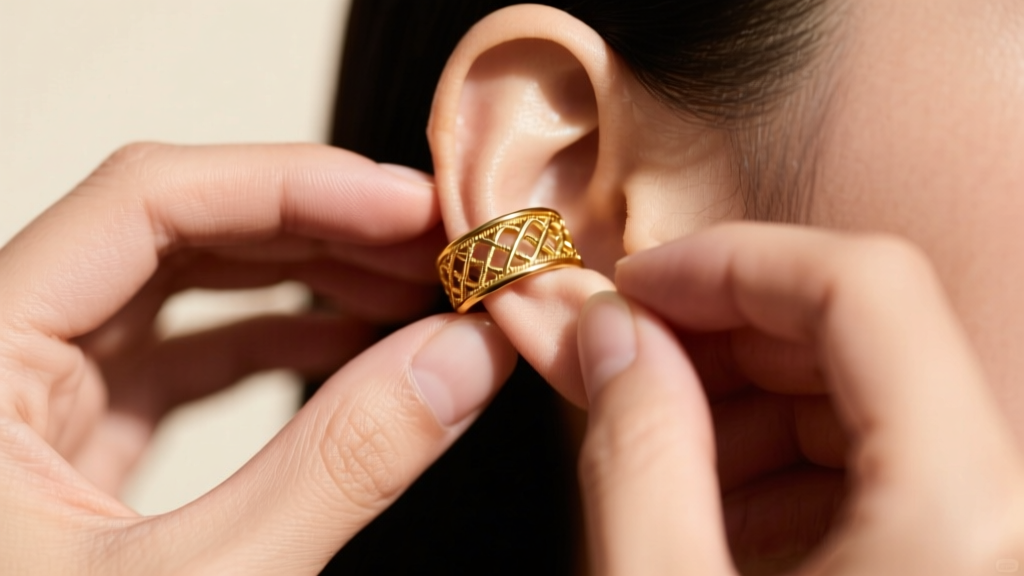
Problem 2: Cartilage Pinching and Pain Fatigue
While a loose cuff slips, an overly tight cuff causes ischemia—a restriction of blood flow that leads to throbbing pain, redness, and eventually, cartilage bruising. Because fake double piercing earrings pull the skin taut via the chain, a tight cuff will compound the pressure.
The design of the cuff's backing dictates its comfort level over long wear periods. Below is a comparison of the three most common cuff mechanisms and their troubleshooting profiles:
| Cuff Mechanism | Comfort Level | Troubleshooting Fix |
|---|---|---|
| Open Tension (Wrap-Around) | Moderate | Adjust the gap to be 1mm smaller than cartilage. Take breaks every 4 hours to restore blood flow. |
| Hinged with Clasp | High | Fixed diameter. If it pinches, you must buy a larger size. Pad the inner clasp with jewelry wax. |
| Snap-Fit / Clicker | Low (for cuffs) | Designed for actual piercings, not cartilage ridges. Avoid using these as fake cuffs entirely. |
If you experience sharp, shooting pains radiating from the helix down to your jawline, you are compressing the auricular nerve branches. Remove the cuff immediately and switch to a hinged design with a fixed internal diameter of at least 8mm to 10mm to accommodate the natural swelling of the cartilage ridge.
Problem 3: The Chain Link Snagging Hazard
A beautiful fake double piercing setup can quickly become a liability if the connecting chain catches in your hair or clothing. Snagging doesn't just ruin the aesthetic; it violently yanks the helix cuff, accelerating metal fatigue and causing the cuff to warp open over time.
Optimal Chain Lengths and Gauges
The gauge (thickness) of the chain is critical. Many mass-produced fake double piercing earrings use heavy 16-gauge or 18-gauge rope chains. These are far too heavy for a tension cuff to support. You should opt for a 20-gauge or 22-gauge cable chain or box chain. These links lie flat against the skin and possess enough tensile strength to hold the pieces together without acting as a weighted pendulum that drags the cuff downward.
Furthermore, avoid rope or snake chains entirely. Their interwoven, textured surfaces act like microscopic combs that trap fine hair. A smooth, polished 20-gauge box chain allows hair to slide off effortlessly.
To determine the correct chain length, measure the distance from your lobe piercing to your desired helix placement while your head is tilted slightly forward. Add exactly 3mm to 5mm of slack. If the chain is perfectly taut when your head is upright, looking down or sleeping will place immense shear stress on the cuff.
Problem 4: Metal Allergies in Non-Pierced Jewelry
A common misconception is that because fake double piercing earrings do not penetrate the skin, material quality does not matter. This is dangerously false. The outer ear is highly susceptible to allergic contact dermatitis, especially when metal is clamped tightly against the skin, trapping sweat and heat.
Many affordable ear cuffs are cast from brass or nickel-silver alloys and finished with a microscopic layer of flash plating. As the cuff rubs against the cartilage ridge, the plating wears off within weeks, exposing the base metals. According to the American Academy of Dermatology, nickel is one of the most common culprits for contact dermatitis, causing severe itching, blistering, and hyperpigmentation on the ear.
Expert Material Rule: When sourcing fake double piercing earrings, treat the ear cuff with the same material scrutiny as a fresh piercing. Demand ASTM F136 implant-grade titanium, solid 14k/18k gold, or pure niobium. The Association of Professional Piercers provides an excellent baseline for safe body jewelry materials that apply equally to high-tension external cuffs.
If you already own a brass or steel cuff that you love but it causes irritation, you can coat the inner curve with a liquid silicone jewelry barrier or clear nail polish. However, this is a temporary fix that must be reapplied every few weeks as the friction of the cartilage ridge will eventually wear the coating away.
Sourcing High-Quality Fake Double Piercing Earrings
To avoid the troubleshooting nightmares outlined above, invest in modular fake double piercing earrings rather than pre-attached, one-piece sets. Purchasing the lobe stud, the helix cuff, and the connector chain separately from specialized body jewelry brands allows you to customize the gauge, length, and internal diameter to your exact anatomical measurements.
Look for brands that offer 'dead-soft' metals for their cuffs, as these allow for repeated tension adjustments without snapping. By understanding the biomechanics of your ear and the metallurgy of your jewelry, you can achieve a flawless, secure double-piercing illusion without ever enduring the healing process of a real helix piercing.


