The Complete Care and Cleaning Guide for Aqua Earrings
Learn expert cleaning, maintenance, and storage tips for aqua earrings. Protect your aquamarine and blue topaz gems from damage and dullness.

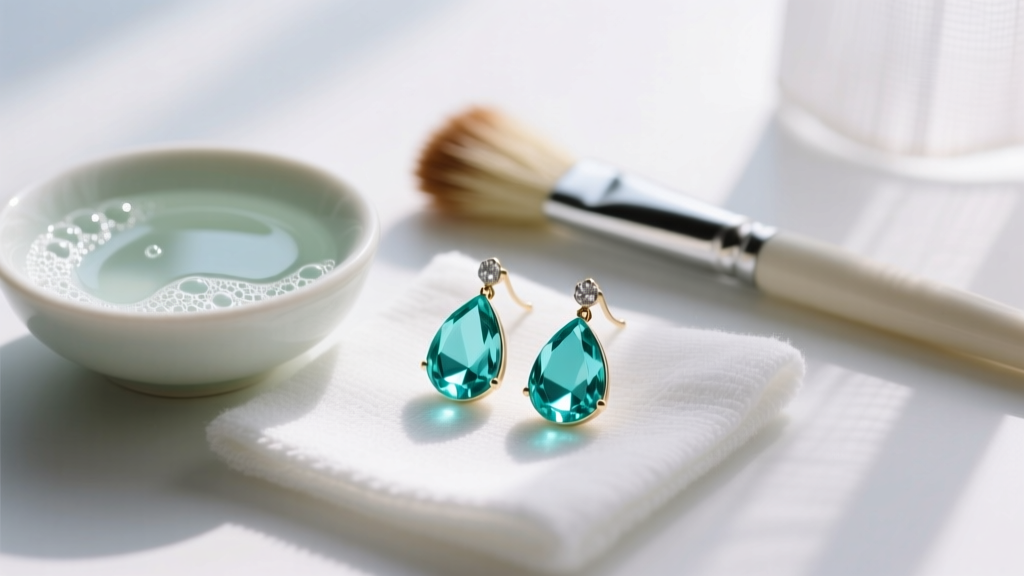
Aqua earrings—whether they feature natural aquamarine, irradiated blue topaz, aqua-toned sapphires, or vibrant vitreous enamel—bring a refreshing, oceanic brilliance to any jewelry collection. However, the visual appeal of these cool-toned gems is highly dependent on their clarity and the reflectivity of their metal settings. Over time, sebum, cosmetic residues, and environmental pollutants can create a filmy barrier on the pavilion (underside) of the stones, drastically reducing their refractive index and making them appear cloudy or dull.
As a jewelry care specialist, I frequently see aqua earrings damaged by well-intentioned but fundamentally flawed cleaning methods. This comprehensive guide will walk you through the exact gemological properties of aqua stones, provide a safe, step-by-step cleaning protocol, and detail the specific maintenance required for the precious metals that hold them.
The Gemology of Aqua: Understanding Your Stones
Before applying any cleaning solution, you must identify the exact material of your aqua earrings. The term "aqua" in jewelry typically refers to three distinct materials, each with unique structural vulnerabilities.
- Aquamarine: A variety of beryl with a Mohs hardness of 7.5 to 8.0. While relatively durable, it can have internal inclusions (liquid or gas-filled fractures) that make it susceptible to thermal shock and ultrasonic vibrations.
- Blue Topaz: Most aqua-blue topaz on the market (like London or Swiss Blue) is colorless topaz treated with irradiation and heat. It has a Mohs hardness of 8.0 but possesses perfect basal cleavage. This means a single hard knock or the high-frequency vibrations of an ultrasonic cleaner can cause the stone to split or fracture along its crystal planes.
- Aqua Enamel: Vitreous enamel is essentially fused glass powder. It is highly sensitive to thermal shock, harsh chemicals, and abrasive scrubbing, which can cause micro-scratches or crazing (a network of fine cracks).
Material Safety Matrix
| Material | Mohs Hardness | Cleavage / Structure | Ultrasonic Safe? | Steam Safe? |
|---|---|---|---|---|
| Aquamarine | 7.5 - 8.0 | Poor Cleavage / Brittle | No (Risk to inclusions) | No (Thermal shock risk) |
| Blue Topaz | 8.0 | Perfect Basal Cleavage | Strictly No | Strictly No |
| Aqua Enamel | 5.0 - 6.0 | Amorphous / Glassy | Strictly No | Strictly No |
Expert Insight: Never use commercial jewelry dips or ultrasonic cleaners on blue topaz or enamel earrings. According to the Gemological Institute of America (GIA), the vibrations from ultrasonic machines can easily exploit the perfect cleavage planes of topaz, resulting in catastrophic internal fracturing.
The Step-by-Step Aqua Earring Cleaning Protocol
To safely restore the brilliance of your aquamarine or blue topaz earrings without risking structural damage, follow this manual cleaning method. This process focuses on removing lipid buildup from the pavilion facets, which is the primary culprit behind cloudy gemstones.
1. Preparation and Solution Mixing
Fill a small glass bowl with lukewarm distilled water. Avoid tap water, as the dissolved minerals (calcium and magnesium) can leave microscopic hard-water spots on the gem's table facet. Add two drops of a pH-neutral, lotion-free dishwashing liquid (such as original blue Dawn). Avoid soaps with added moisturizers or citrus degreasers, which can leave a residual film or degrade certain metal alloys.
2. The Soak
Submerge your aqua earrings in the solution for exactly 5 to 10 minutes. This brief soak is sufficient to soften sebum and cosmetic buildup without allowing water to penetrate any microscopic surface-reaching fractures in the aquamarine.
3. Targeted Agitation
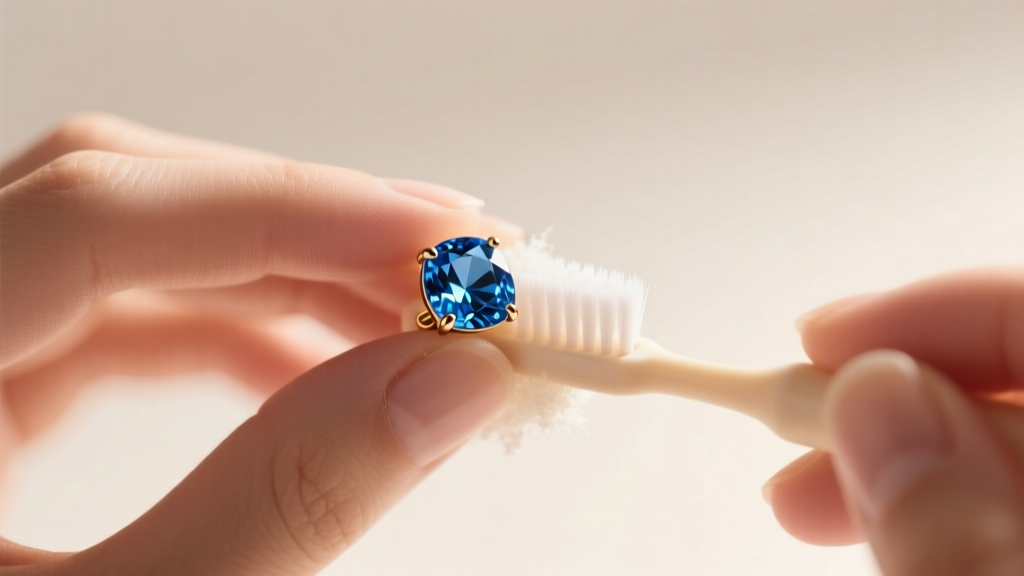
Using an ultra-soft baby toothbrush (never a standard adult toothbrush, as the bristles are too stiff and can scratch the metal setting or enamel), gently brush the stone. Focus 80% of your effort on the pavilion (the underside of the gem) and the gallery wire. This is where skin oils and lotions accumulate, blocking light return. Brush in gentle, circular motions, taking care not to apply lateral pressure to the prongs.
4. The Rinse and Dry
Rinse the earrings under a gentle stream of lukewarm distilled water. Pat them dry with a lint-free microfiber cloth. Avoid using cotton swabs or tissue paper, as the cotton fibers can easily snag on the prongs of dangle earrings or get trapped in the earring clutch.
Metal Maintenance: Preserving the Setting
The metal holding your aqua gemstone plays a massive role in the overall color contrast. Cool aqua stones look best in white metals, but these metals require specific maintenance to prevent visual clashing.
White Gold and Rhodium Plating
Most white gold aqua earrings are plated with rhodium to achieve a bright, silvery-white finish. Over time, friction and exposure to acidic skin pH will wear this plating away, revealing the natural pale-yellow hue of the white gold alloy underneath. This yellowing severely clashes with the cool blue tones of aquamarine or topaz. If your settings look yellowish, they need to be professionally re-rhodium plated. Clean them gently in the meantime, as harsh polishing cloths will strip the remaining rhodium even faster.
Sterling Silver and Tarnish
Sterling silver (925) is highly prone to sulfide tarnishing. A layer of dark tarnish on the bezel or prongs will cast a gray shadow over the lower facets of your aqua stone, making it look muddy. To remove light tarnish, use a dedicated silver polishing cloth on the metal only. Never rub the polishing cloth over the aquamarine or topaz, as the mild abrasives in the cloth will dull the gem's polish over time.
Wire, Post, and Clutch Care
Care extends beyond the gemstone to the structural components that keep the earring securely in your ear. Most aqua drop or dangle earrings utilize 20-gauge or 22-gauge wire for the ear hook or French wire.
- Preventing Metal Fatigue: When cleaning dangle earrings, do not bend the ear wire back and forth. Repeated flexing of 22-gauge gold or silver wire causes work hardening and metal fatigue, eventually leading to a clean snap right at the loop.
- Sanitizing Posts: For stud earrings, the post and the friction clutch (butterfly back) harbor bacteria and dead skin cells. Wipe the post with a cotton pad soaked in 70% isopropyl alcohol before wearing. Do not submerge pearl-accented or enamel aqua earrings in alcohol, as it can degrade organic gems and strip enamel finishes.
- Clutch Replacement: If your friction clutches feel loose, do not try to squeeze them tighter with pliers, as this can warp the internal tubing. Replace them with high-quality silicone or double-notched metal clutches for better security.
Safe Storage and Daily Wear Rules
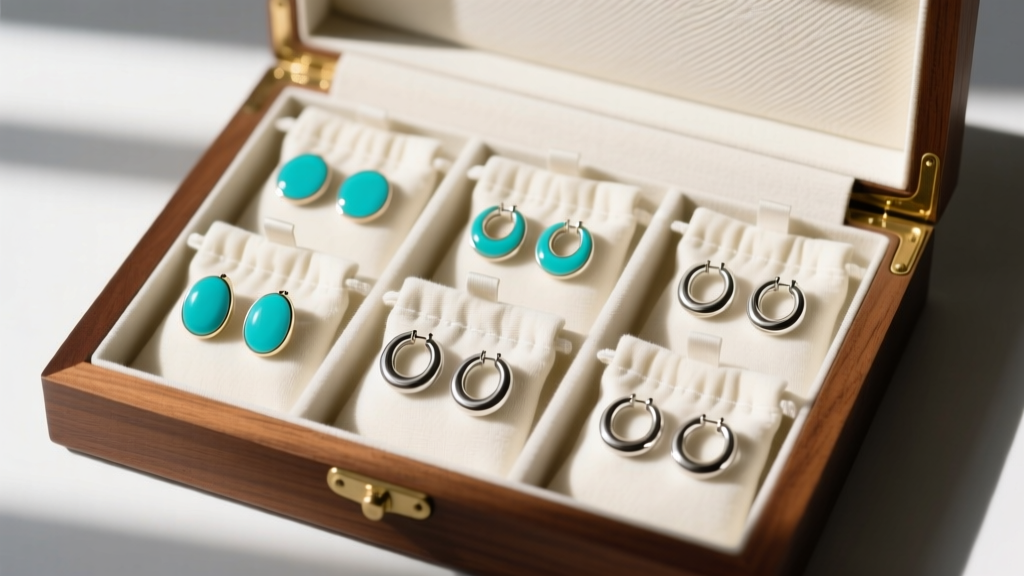
Proper storage is the final pillar of aqua earring maintenance. Because blue topaz has perfect cleavage and aquamarine is brittle, these stones must be protected from hard impacts and contact with harder gems.
The "Last On, First Off" Rule
Always put your aqua earrings on after applying hairspray, perfume, and makeup. Aerosolized cosmetics create a stubborn, cloudy film on gemstones that is difficult to remove without aggressive scrubbing. Take them off first when you get home to minimize their exposure to environmental pollutants and skin oils.
Compartmentalized Storage
Never toss aqua earrings into a communal jewelry box. Diamonds (Mohs 10) and sapphires (Mohs 9) will easily scratch the surface of aquamarine, topaz, and enamel. Store each pair in an individual anti-tarnish flannel pouch or a separate compartment in a fabric-lined jewelry box. For dangle earrings, hang them from a dedicated jewelry stand or fasten the clutch to prevent the ear wires from getting tangled and bent.
Troubleshooting Common Issues
My aquamarine still looks cloudy after cleaning.
If manual cleaning doesn't restore brilliance, the stone may have a buildup of hardened cosmetic resin or hairspray trapped under the gallery wire. Take it to a professional jeweler who can safely remove the stone from the setting to clean the pavilion, or use specialized, gem-safe solvent techniques.
The stone rattles in the setting.
This indicates worn or lifted prongs. Stop wearing the earring immediately. Aquamarine and topaz are highly susceptible to chipping at the girdle (the widest edge of the stone) if they are loose. A jeweler can perform a simple prong re-tipping to secure the gem.
By understanding the specific gemological traits of your stones and adhering to this meticulous care routine, your aqua earrings will maintain their oceanic brilliance and structural integrity for decades. For further reading on beryl and topaz durability, consult the comprehensive care guides provided by the Gemological Institute of America (GIA).


