The Ultimate Cleaning & Care Guide for Teddy Bear Earrings
Learn how to safely clean, store, and repair your teddy bear earrings. Expert tips on protecting enamel, resin, and glued gemstones from damage.

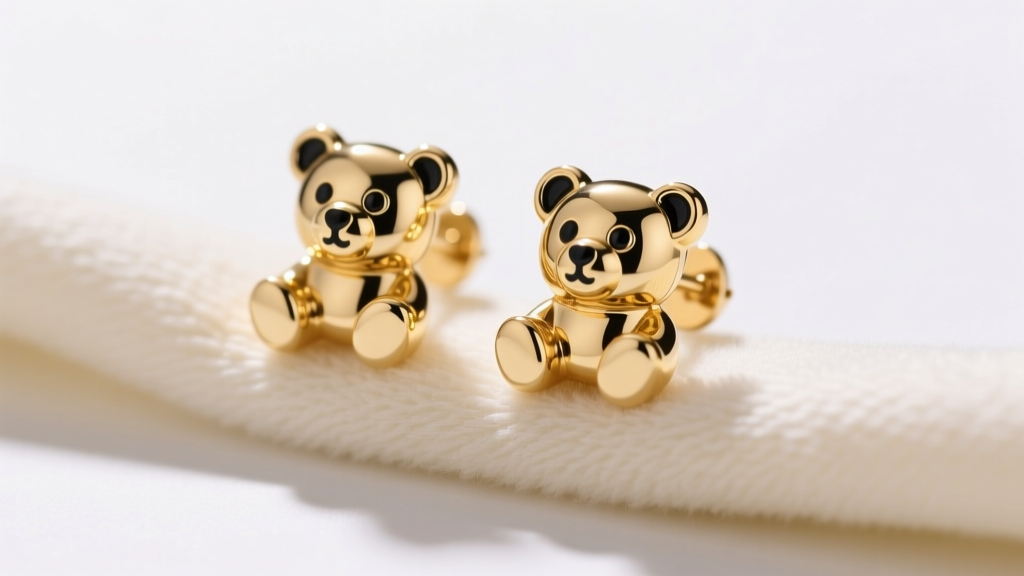
Teddy bear earrings are a beloved staple in novelty and fine jewelry collections alike, offering a playful yet sophisticated aesthetic. Whether you own a pair of 14k solid gold bear studs, gold-plated brass huggies with enamel detailing, or hand-poured resin dangles, these multi-material accessories require highly specialized maintenance. Unlike simple metal hoops or solitaire studs, teddy bear earrings often combine base metals, delicate plating, vitreous or cold enamel, and micro-pavé or glued-in gemstone eyes. This complex anatomy makes them uniquely vulnerable to chemical damage, ultrasonic vibrations, and physical snagging.
In this comprehensive 2026 care guide, we break down the exact cleaning protocols, storage solutions, and repair techniques needed to preserve the structural integrity and visual charm of your teddy bear earrings for years to come.
Why Teddy Bear Earrings Require Specialized Care
The primary challenge in maintaining teddy bear earrings lies in their mixed-media construction. According to the Jewelers of America, jewelry featuring organic materials, porous resins, or glued-in stones must never be subjected to standard commercial cleaning solutions. Many novelty bear earrings utilize a brass or zinc-alloy base coated in a microscopic layer of gold or rhodium plating. The facial features—such as the eyes, nose, and inner ear details—are frequently crafted from cold enamel (an epoxy-based paint) or UV-cured resin, while the 'eyes' may be tiny cubic zirconia (CZ) or glass cabochons affixed with cyanoacrylate adhesives.
Exposing these components to harsh chemicals like ammonia, bleach, or isopropyl alcohol will instantly cloud the resin, dissolve the adhesive holding the gemstone eyes, and strip the gold plating down to the base metal, resulting in irreversible tarnish and skin discoloration.
The Anatomy of Novelty Earring Failure
Understanding how and why teddy bear earrings degrade is the first step in preventing damage. Below is a diagnostic table outlining the most common failure modes associated with novelty animal studs and drops.
| Component | Common Failure Mode | Primary Cause | Prevention Strategy |
|---|---|---|---|
| Gemstone Eyes (CZ/Glass) | Stones falling out or shifting | Ultrasonic vibrations dissolving cyanoacrylate glue | Never use ultrasonic cleaners; hand-wash only |
| Enamel/Resin Details | Clouding, yellowing, or chipping | Alcohol-based cleaners and UV photo-oxidation | Use pH-neutral soap; store in dark, UV-blocking boxes |
| Gold/Rhodium Plating | Fading, flaking, or turning skin green | Friction, sweat acidity, and ammonia exposure | Wipe after wear; avoid contact with perfumes and lotions |
| Earring Post (20G/18G) | Bending or snapping at the solder joint | Forcing thick butterfly clutches onto thin 20G posts | Use silicone O-ring backs or gently slide metal clutches |
Step-by-Step Cleaning Protocol for Teddy Bear Studs
To safely remove sebum, dead skin cells, and environmental pollutants without damaging delicate enamel or glued stones, follow this strict hand-washing protocol. The Gemological Institute of America (GIA) consistently recommends mild, non-detergent surfactants for mixed-media jewelry.
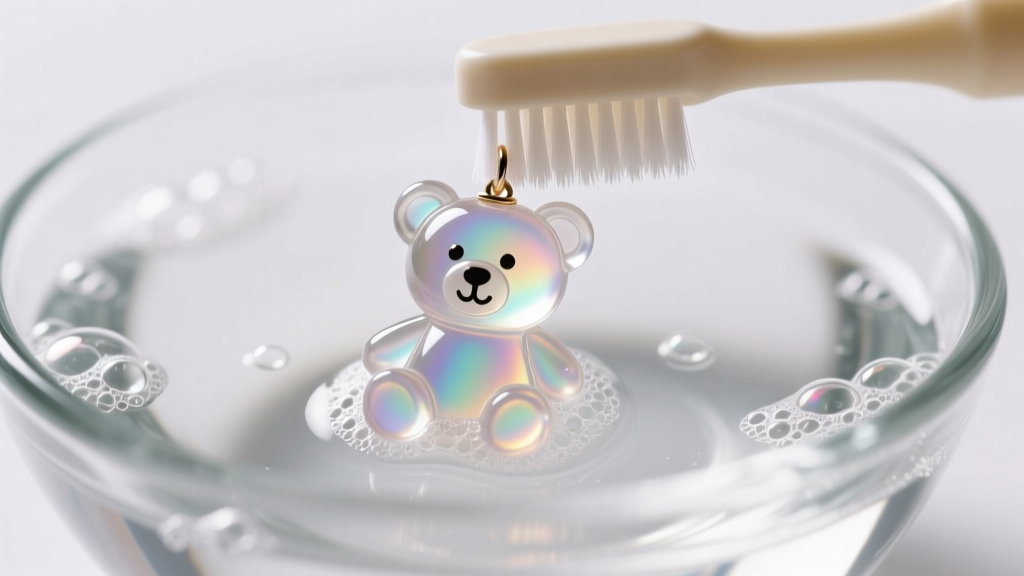
1. The Prep and Soak
Fill a small glass bowl with lukewarm (never hot) distilled water. Add two drops of a mild, lotion-free dish soap, such as original blue Dawn. Submerge your teddy bear earrings for exactly 3 to 5 minutes. This brief soak softens accumulated oils without giving water enough time to seep beneath the gemstone settings and compromise the adhesive.
2. The Agitation
Using an extra-soft baby toothbrush or a dedicated, clean makeup blending brush, gently sweep the bristles across the metal surfaces. Do not scrub the enamel or resin features. Instead, lightly dab the soapy water over the bear's face and ears. If debris is trapped in the micro-pavé settings around the bear's outline, use a wooden toothpick to gently dislodge it—never use metal needles, which will scratch the plating.
3. The Rinse and Dry
Rinse the earrings under a very gentle stream of lukewarm distilled water. Immediately pat them dry with a lint-free microfiber cloth. To ensure no moisture remains trapped behind the gemstone eyes or in the crevices of the bear's snout, use a hairdryer on the 'cool' and 'low' setting, holding it at least 12 inches away from the jewelry.
Material-Specific Maintenance Tricks
Enamel and Resin Bear Earrings
Cold enamel and UV resin are highly susceptible to photo-oxidation, which causes the material to yellow and become brittle over time. To maintain the crisp black or brown details on your bear's face, store these earrings away from direct sunlight. If your resin bears have lost their high-gloss finish due to micro-scratches, you can restore the shine by applying a microscopic drop of jewelers' polishing compound (like Renaissance Wax) using a cotton swab, buffing it gently once it hazes.
Gold-Plated and Sterling Silver Bear Earrings
For sterling silver teddy bear earrings, oxidation (tarnish) is inevitable, especially in the deep recesses of the bear's fur texture. Use a dedicated silver polishing cloth impregnated with anti-tarnish agents. However, never rub the polishing cloth over oxidized detailing that was intentionally blackened by the jeweler to provide contrast, as this will strip the dark patina and leave the bear looking flat and one-dimensional. For gold-plated pieces, the Federal Trade Commission notes that plating thickness varies wildly; wipe gold-plated bears with a damp cloth after every wear to remove acidic sweat that accelerates the wearing of the gold layer.
Post and Backing Maintenance: Protecting the Solder Joint
Most novelty teddy bear studs are manufactured with 20-gauge (0.81mm) or 18-gauge (1.0mm) posts to keep the overall weight of the earring low. The solder joint where the post meets the flat back of the bear is a critical stress point. When pushing the earring through your lobe, never grip the bear's head and push; instead, grip the post as close to the base as possible to prevent bending. Furthermore, standard metal butterfly clutches can become tight over time. Forcing them on and off a thin 20G post will eventually snap the post entirely. Swap metal clutches for soft silicone O-ring backs or friction discs, which slide on smoothly and hold the earring securely without stressing the solder joint.
Safe Storage to Prevent Enamel Chipping and Tarnish
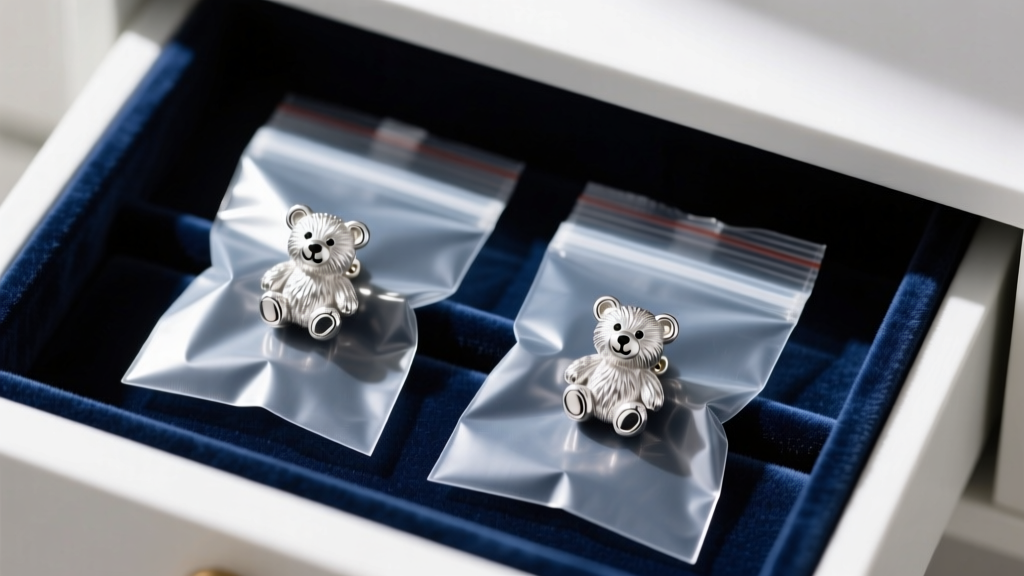
Tossing teddy bear earrings into a communal jewelry box is a recipe for chipped enamel and scratched resin. The protruding features of the bear—specifically the snout, ears, and paws—act as snag points that will catch on chains and other studs.
- Individual Compartments: Store each pair in its own dedicated slot in a velvet-lined jewelry box.
- Anti-Tarnish Strips: Place a 3M anti-tarnish strip in the drawer to absorb sulfur compounds in the air that cause silver and base metals to oxidize.
- Travel Pods: When traveling, use a hard-shell EVA jewelry pod. Soft pouches allow the earrings to be crushed by other items in your luggage, which can easily snap the delicate posts or crack vitreous enamel.
Troubleshooting: Reattaching Fallen 'Eyes' and Noses
Despite your best efforts, the tiny CZ or glass eyes on teddy bear earrings may eventually loosen and fall out due to natural adhesive degradation. Do not attempt to reattach them with standard household super glue (cyanoacrylate), as it emits fumes that will permanently 'fog' the surface of the gemstone and the surrounding enamel.
Expert Repair Tip: For reattaching micro-gemstones to novelty earrings, use a specialized jewelry adhesive like GS Hypo Cement or a two-part clear epoxy resin (e.g., Devcon 5-Minute Epoxy). Apply a microscopic dot using the tip of a sewing needle, carefully seat the stone with tweezers, and let it cure undisturbed for 24 hours in a low-humidity environment.
By understanding the unique material vulnerabilities of novelty jewelry and adhering to these strict, gentle cleaning protocols, your teddy bear earrings will remain a pristine, charming, and structurally sound part of your collection for decades.


