Expert Care Guide: Cleaning Double C Earrings Safely
Learn how to safely clean double C earrings without damaging gold plating, rhinestones, or enamel. Expert maintenance tips for designer costume jewelry.

The Anatomy of Double C Earrings: Why Standard Cleaning Fails
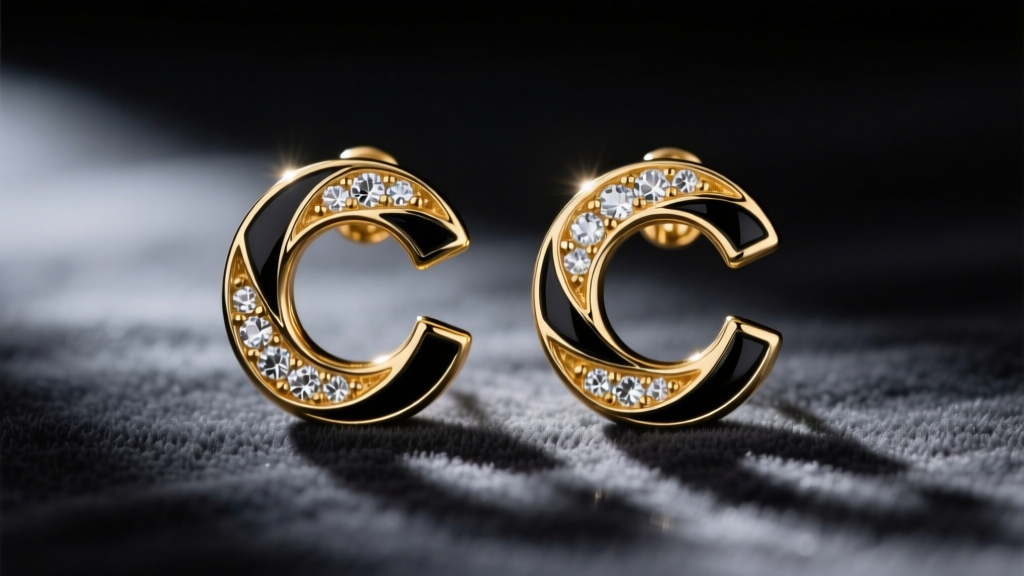
When investing in luxury designer costume jewelry, particularly the iconic double C earrings made famous by heritage fashion houses, you are not purchasing solid gold or platinum. You are acquiring a masterful composition of base metals, micron-thick gold plating, poured glass, and delicate foiled rhinestones. Understanding this anatomy is the first step in proper care, maintenance, and cleaning. Standard jewelry cleaning methods designed for fine jewelry will irreparably destroy these intricate pieces.
Base Metals and Micron Plating
Unlike fine jewelry cast in solid 14k or 18k gold, designer double C earrings are typically crafted from brass, bronze, or Zamak (a zinc-aluminum alloy). These base metals are then electroplated with a microscopically thin layer of gold or rhodium—usually between 1 and 3 microns thick. When exposed to liquid jewelry dips, ultrasonic vibrations, or harsh chemical polishes, this thin plating can blister, peel, or dissolve entirely, exposing the reactive base metal underneath.
Foiled Rhinestones and Gripoix Glass
The brilliance of designer costume jewelry often comes from high-quality glass, such as Gripoix (poured glass) or Swarovski crystal chatons. Crucially, many of these stones are 'foil-backed,' meaning a microscopic layer of metallic foil is glued to the back of the stone to reflect light. The settings are often secured with specialized jewelry adhesives rather than tight metal prongs. If water or liquid cleaners seep under the setting, the foil backing oxidizes instantly, turning the once-brilliant stone cloudy, grey, or black. Once the foil is compromised, the stone must be replaced by a specialist.
The Ultimate Dry-Cleaning Protocol for Designer Costume Jewelry
To maintain the luster of your double C earrings without risking galvanic corrosion or adhesive failure, you must adopt a strict 'dry-first' cleaning protocol. According to conservation standards for historical costume pieces, minimizing moisture exposure is paramount to preserving both the metal finish and the integrity of the gemstone settings.
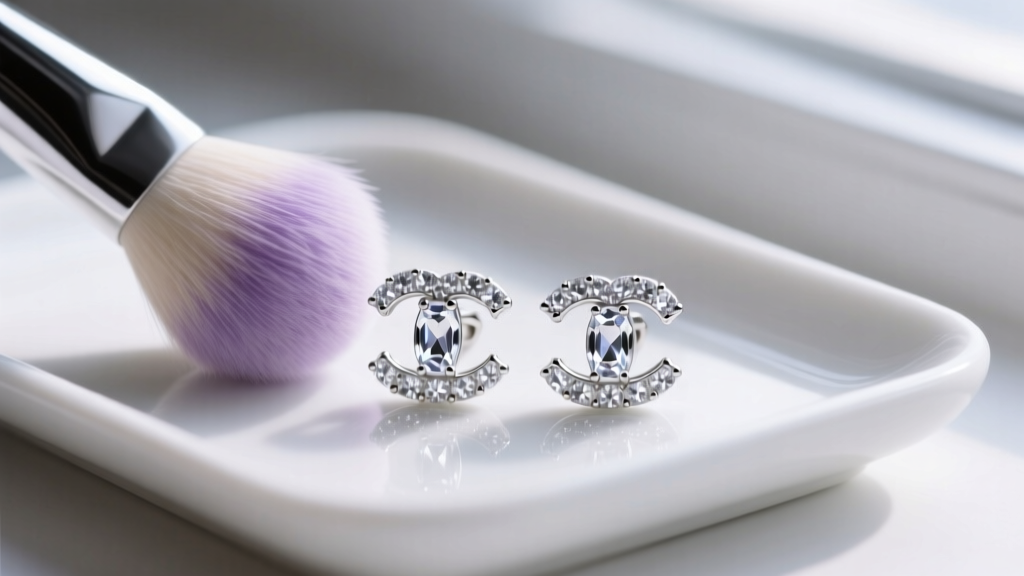
- Surface Dusting: Use a clean, soft-bristled makeup brush (such as a goat-hair blending brush or a dedicated jeweler's dusting brush). Gently sweep the bristles across the surface of the earrings, paying special attention to the crevices around the interlocking C logos where skin cells and cosmetic powders accumulate.
- Targeted Metal Polishing: For the gold-plated metal areas, use a dry, untreated microfiber cloth. Gently buff the metal using circular motions. Never use treated silver-polishing cloths, as the mild abrasives embedded in them will strip the gold micron plating.
- Enamel and Resin Care: If your earrings feature black or white enamel (or modern cold enamel/resin), avoid any alcohol-based solutions. Alcohol can cause cold enamel to craze, crack, or yellow over time. Use a dry cotton swab to gently lift debris from the enamel borders.
- Safe Moisture Application (Only if Necessary): If there is stubborn buildup (like hairspray or lotion) on the metal, slightly dampen a cotton swab with distilled water—never tap water, which contains chlorine and minerals. Wipe the affected metal area and immediately dry it with a microfiber cloth. Keep the swab far away from any rhinestone or pearl settings.
Material-Specific Troubleshooting Chart
Even with meticulous care, double C earrings interact with the wearer's body chemistry and environment. Below is a troubleshooting guide for common issues, detailing the exact chemical causes and actionable solutions.
| Issue | Underlying Cause | Actionable Solution |
|---|---|---|
| Green Crust (Verdigris) | Copper in the brass base metal reacting with sweat, humidity, and oxygen to form copper carbonate. | Gently scrape the green crust away using a wooden toothpick. Do not use liquid cleaners. Apply a micro-thin layer of clear nail polish to the earring post to create a barrier against skin acidity. |
| Cloudy or Dark Rhinestones | Moisture or lotion has breached the setting, oxidizing the delicate metallic foil backing. | Stop wearing the earrings immediately. Dry brushing will not fix oxidized foil. Take the piece to a professional costume jewelry repair specialist to have the affected chatons replaced. |
| Dull Faux or Coated Pearls | Acidic sweat eroding the pearlescent coating or damaging real pearl accents often used in luxury designs. | Wipe gently with a dry microfiber cloth after every wear. As noted by the Gemological Institute of America (GIA), pearls and pearl-like coatings are highly sensitive to acids and must never be exposed to vinegar or ultrasonic cleaners. |
| Peeling or Flaking Gold | Friction, chemical degradation, or exposure to sulfur compounds in the air breaking down the 2-micron plating. | Retire the piece from rotation. Seek a professional electroplating service that specializes in costume jewelry restoration to re-plate the brass base. |
Proper Storage to Prevent Oxidation and Scratching
How you store your double C earrings is just as critical as how you clean them. Base metals are highly susceptible to atmospheric oxidation, and the hard glass crystals can easily scratch the soft gold plating of adjacent pieces.
Anti-Tarnish Environments
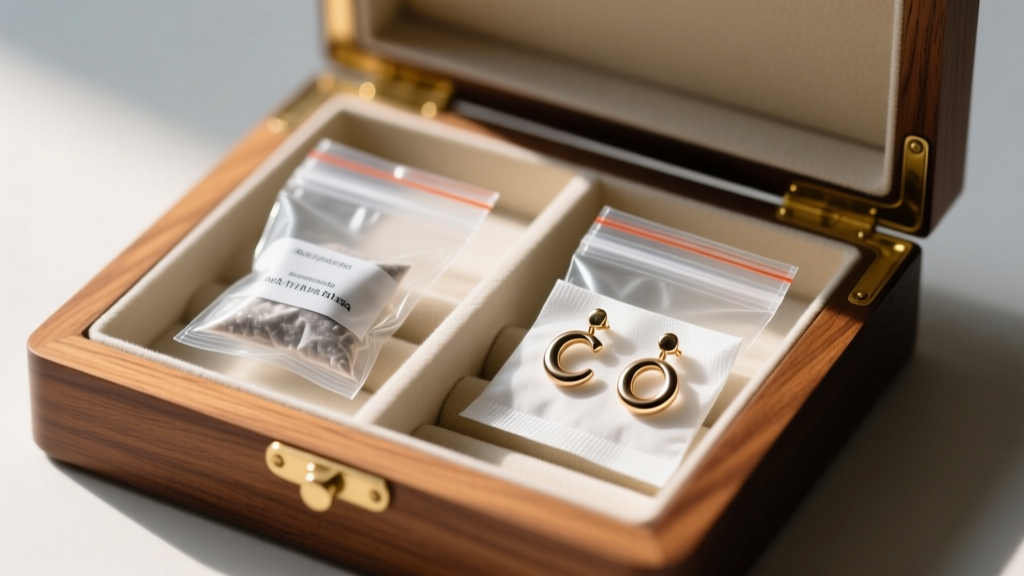
Never store designer costume jewelry in open-air trays or humid bathrooms. The ideal storage environment requires strict humidity control. Place each pair of earrings in an individual, airtight polyethylene zip-lock bag. Inside each bag, include a fresh silica gel packet to absorb ambient moisture, alongside a 3M anti-tarnish strip. These strips actively absorb sulfur compounds and hydrogen sulfide from the air, which are the primary catalysts for silver and base-metal tarnishing.
Physical Separation
Always wrap the earrings in acid-free, unbuffered tissue paper before placing them in the bag. This prevents the sharp edges of the rhinestones or the metal clasps from scratching the gold plating or the delicate enamel work. If the earrings feature clip-on mechanisms or heavy drops, store them flat to prevent stress on the soldered joints, which can weaken over time due to gravity and metal fatigue.
What to Absolutely Avoid (The 'Never' List)
To preserve the structural and aesthetic integrity of your investment, commit these critical prohibitions to memory:
- Never use ultrasonic cleaners: The high-frequency acoustic cavitation bubbles will shatter Gripoix glass, strip aurora borealis (AB) coatings off crystals, and violently shake loose glued settings.
- Never use commercial silver dips or liquid gold polishes: These contain harsh acids and thiourea, which will instantly strip the micron-thin gold plating and cloud resin elements.
- Never wear them in water: Chlorine in swimming pools and salt in ocean water will cause rapid galvanic corrosion, pitting the base metal and turning the jewelry permanently black.
- Never apply perfume or hairspray while wearing them: The alcohol and aerosol propellants will degrade cold enamel and leave a dull, cloudy film over the rhinestones that is nearly impossible to remove without damaging the foil backing.
Expert Insight: The longevity of luxury costume jewelry relies entirely on preventative care. By treating your double C earrings as delicate, museum-quality artifacts rather than everyday accessories, you ensure that the plating remains intact and the stones retain their original fire for decades. For further reading on the vulnerabilities of organic and coated gem materials often found in designer pieces, consult the GIA Gem Encyclopedia.


