How to Clean Multiple Earrings Without Irritation
Learn how to safely clean multiple earrings and multi-pierced ears. Discover material-specific routines, rotation tips, and infection prevention.

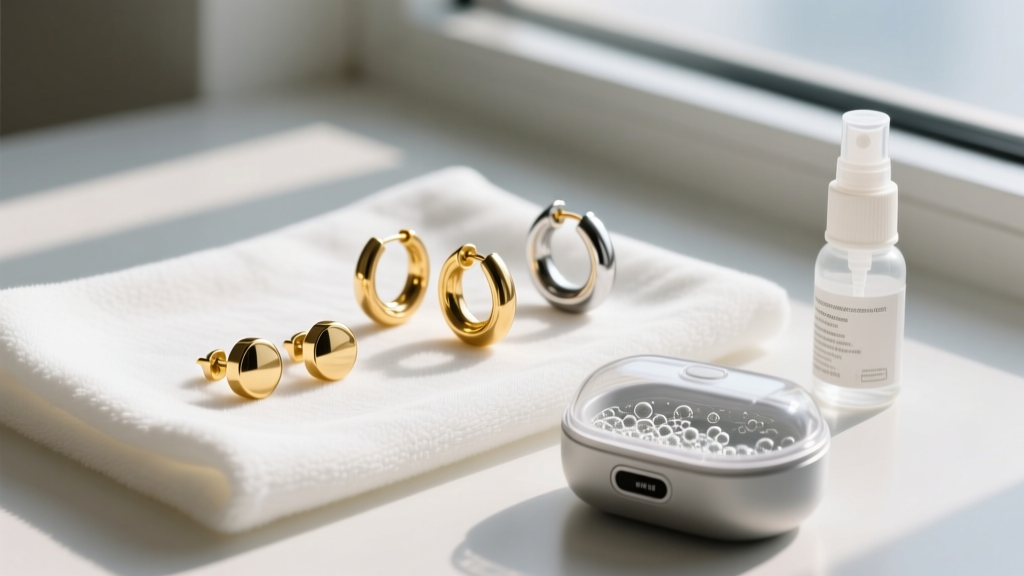
The Unique Challenge of Curated and Stacked Piercings
The modern "curated ear" trend has transformed how we approach jewelry, moving beyond single lobe piercings to intricate constellations of studs, huggies, and flat-back labrets. However, wearing multiple earrings simultaneously introduces a complex biological and metallurgical challenge. Each piercing creates a fistula—a tunnel of healed skin that continuously sheds dead epidermal cells and secretes sebum. When you wear five or more earrings per ear, you are managing five distinct micro-environments that are highly susceptible to cross-contamination, moisture trapping, and localized contact dermatitis.
According to the Association of Professional Piercers (APP), improper hygiene in multi-pierced ears is a leading cause of hypertrophic scarring and delayed healing. The proximity of stacked piercings means that bacteria from one irritated fistula can easily migrate to adjacent jewelry. To maintain a healthy, vibrant stack in 2026, you must adopt a rigorous, material-specific cleaning protocol that addresses both the jewelry and the biology of the ear.
Material-Specific Cleaning Protocols for Stacked Lobes
Not all metals react the same way to the acidic environment of human sebum and the chemicals found in hair care products. When managing multiple earrings, segregating your cleaning methods by material grade is non-negotiable.
Implant-Grade Titanium (ASTM F136) & Niobium
Titanium is the undisputed champion of multi-pierced ears due to its biocompatibility and lack of nickel. Because it is non-porous and highly resistant to corrosion, titanium jewelry can withstand aggressive cleaning methods. You can safely use a 40kHz ultrasonic cleaner for 3-5 minutes to dislodge microscopic sebum buildup from the threads of internally threaded labrets. Follow this with a warm water rinse and a thorough dry using a lint-free microfiber cloth.
Solid Gold (14k/18k) & Platinum
While 14k and 18k gold are excellent for long-term wear, the alloy metals (like copper and zinc) used to give gold its hardness can tarnish when exposed to sulfur compounds in sweat and dead skin. Never use ultrasonic cleaners on gold jewelry set with soft or porous gemstones like opals, emeralds, or pearls. The high-frequency vibrations can cause micro-fractures in these stones. Instead, soak solid gold pieces in a solution of warm water and a few drops of mild, phosphate-free dish soap (like Dawn) for 10 minutes, then gently agitate with a baby-soft toothbrush.
Sterling Silver & Vermeil (The Tarnish Trap)
Sterling silver (925) is notoriously reactive. In a stacked ear setup, silver earrings closest to the neck and hairline will tarnish rapidly due to contact with hair products and ambient moisture. Vermeil (gold-plated silver) poses an even greater risk; the microscopic friction of taking multiple earrings in and out can wear away the gold plating, exposing the underlying silver or brass base metals, which frequently triggers allergic contact dermatitis. If you must wear silver in a multi-pierced setup, polish it weekly with a dedicated jeweler's rouge cloth and store it in anti-tarnish ziplock bags.
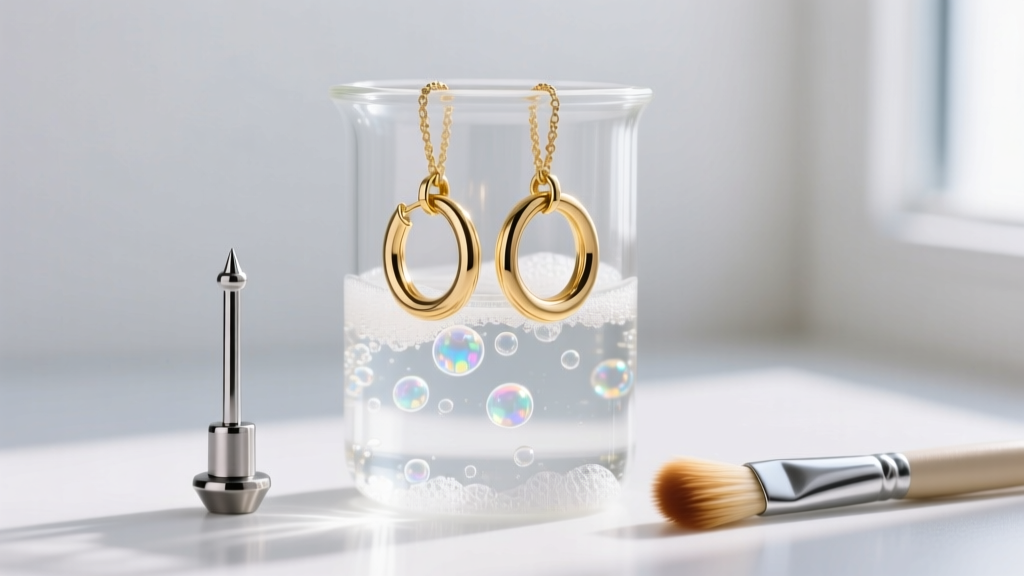
The 5-Step Deep Cleaning Routine for Earring Collections
When you own a large collection of multiple earrings, batch cleaning is the most efficient way to maintain hygiene without damaging your pieces. Perform this routine bi-weekly.
- Segregate and Inspect: Group your jewelry by metal type and gemstone durability. Inspect the prongs on diamond studs and the threading on flat-back labrets for stripping or looseness.
- The Ultrasonic Bath (Metals Only): Place bare titanium, platinum, and diamond-set pieces into an ultrasonic cleaner filled with distilled water and a drop of jewelry-specific surfactant. Run for exactly 180 seconds.
- The Gentle Soak (Delicates): Submerge gold, vermeil, and porous gemstone pieces in a glass beaker of warm, soapy water. Allow them to soak for 10 minutes to loosen keratin and sebum bonds.
- Targeted Agitation: Use a specialized, ultra-soft jewelry brush to gently sweep the posts, threading, and clasp mechanisms. Pay special attention to the groove where a huggie hoop clicks shut, as this hinge traps the most debris.
- Rinse, Dry, and Sanitize: Rinse all pieces under distilled water to prevent hard water spotting. Pat dry with a microfiber cloth. Before reinserting them into your ears, mist the posts with a 70% isopropyl alcohol spray and let them air dry completely to ensure the fistula is not exposed to moisture upon insertion.
Rotation, Sleep, and Cross-Contamination Risks
Wearing multiple earrings to bed is a primary catalyst for irritation bumps and the dreaded "cheese cutter" effect, where heavy jewelry slowly migrates through the lobe tissue. The type of earring back you use dramatically dictates your maintenance needs and sleep safety.
| Jewelry Type & Backing | Sleep Safety | Pressure & Snag Risk | Cleaning Frequency |
|---|---|---|---|
| Push-Pin or Threadless Labret | Excellent | Minimal (Flat disc rests flush) | Bi-weekly deep clean |
| Butterfly Back Studs | Poor | High (Traps debris, digs into neck) | Daily wipe-down required |
| Seamless Hoops / Huggies | Moderate | Moderate (Can warp if slept on heavily) | Weekly hinge flushing |
| Lever-back Dangles | Very Poor | Extreme (High snag risk on pillows) | Remove nightly; clean weekly |
To mitigate sleep damage, consider investing in a specialized piercing pillow with a central cavity that relieves pressure on the side of your head. If you refuse to take out your multiple earrings at night, you must strictly limit your sleep stack to threadless titanium flat-backs and small, continuous hoops that lack protruding clasps.

Troubleshooting: Smells, Irritation Bumps, and Tarnish
Even with a meticulous routine, multi-pierced ears can develop localized issues. Understanding the root cause is vital for effective troubleshooting.
The "Ear Cheese" Phenomenon
That distinct, unpleasant odor associated with unworn or heavily worn earrings is not an infection; it is a mixture of oxidized sebum, dead skin cells (keratin), and naturally occurring skin bacteria. In multiple earrings setups, this buildup occurs faster because the constant presence of jewelry prevents the fistula from naturally shedding debris. The Fix: Incorporate a gentle, fragrance-free glycerin soap into your shower routine, massaging it directly over the piercings to break down lipid bonds. Never use harsh antibacterial soaps, which strip the skin's acid mantle and invite worse pathogens.
Hypertrophic Bumps and Contact Dermatitis
If you notice small, fleshy, non-pus-filled bumps forming near the exit holes of your stacked piercings, you are likely dealing with hypertrophic scarring caused by mechanical pressure or an allergic reaction. The Mayo Clinic notes that nickel is the most common culprit for allergic contact dermatitis. If your butterfly backs or cheap alloy huggies are causing itching and flaking, discard them immediately. Switch entirely to ASTM F136 titanium or 14k/18k nickel-free gold. To reduce existing bumps, apply sterile, non-woven gauze soaked in a sterile 0.9% sodium chloride saline solution as a warm compress for 5 minutes daily.
When to Retire a Piece from Your Daily Stack
Not all jewelry is meant to be worn indefinitely. As a curator of multiple earrings, you must know when a piece has reached the end of its functional life. Retire or professionally repair any earring that exhibits the following failure modes:
- Stripped Threading: If an internally threaded ball or flat-back disc no longer screws on tightly, the microscopic metal threads are compromised. Forcing it can cause metal shavings to enter the fistula.
- Worn Hinges: Huggies and clickers that no longer "snap" securely shut pose a massive loss risk and can harbor bacteria in the widened hinge gap.
- Porous Gemstone Clouding: If your opal or moonstone studs have lost their fire and appear cloudy, moisture has breached the stone's micro-fissures. They can no longer be safely sterilized and should be relegated to occasional, dry-environment wear only.
By treating your collection of multiple earrings with the same precision as a fine watchmaker treats horology, you ensure that your curated ear remains a stunning, irritation-free expression of personal style for decades to come. For more detailed insights on gemstone durability, consult the Gemological Institute of America (GIA) gem care guides before exposing your favorite pieces to ultrasonic vibrations.


