Expert Buying Guide: Selecting Hoop Chain Earrings
Discover how to choose the perfect hoop chain earrings. Our expert buying guide covers metal grades, link durability, gauge sizes, and clasp mechanics.

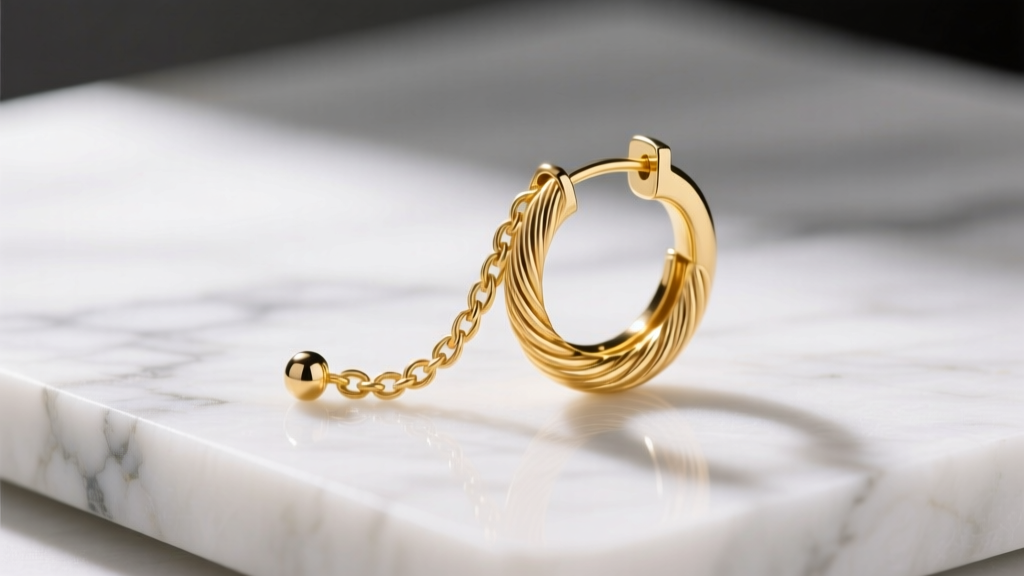
The Evolution of the Hoop Chain Hybrid
Hoop chain earrings represent one of the most versatile intersections in modern jewelry design, merging the continuous geometry of a classic hoop with the fluid movement and texture of chain links. As we navigate the jewelry landscape in 2026, the demand for these hybrid pieces has surged, driven by a desire for ear curation that feels both structured and effortlessly dynamic. However, the structural complexity of integrating chains into hoop silhouettes introduces unique failure points that generic earrings simply do not possess.
Before investing in a pair, it is critical to understand that "hoop chain earrings" generally refer to two distinct categories: Chain-Link Hoops (where the hoop itself is constructed from interlocking chain links, such as Cuban or rope chains) and Chain-Connector Hoops (often called ear jackets or threaders, where a delicate chain drapes from a front stud to a rear cuff or helix piercing). This guide will dissect the metallurgy, structural mechanics, and buying benchmarks required to select a piece that will survive daily wear without compromising your piercings.
Metallurgy and Hypoallergenic Realities
The metal grade of a chain hoop dictates not only its hypoallergenic properties but its sheer physical durability. Chains are subjected to constant micro-friction as the links rub against one another. According to the Gemological Institute of America (GIA), the alloy composition of gold drastically affects its hardness and wear resistance.
- 14k Gold (58.5% pure gold): The optimal choice for chain-link hoops. The higher percentage of alloy metals (like copper and silver) increases the Vickers hardness, meaning the links will resist stretching, warping, and friction wear far better than higher-karat options.
- 18k Gold (75% pure gold): While richer in color and value, 18k gold is inherently softer. Thin 18k chain links in a hoop configuration are prone to ovaling (stretching out of shape) under the weight of the earring.
- Sterling Silver (925): An affordable entry point, but highly susceptible to tarnish and friction-induced thinning. If buying silver chain hoops, ensure they are rhodium-plated to delay oxidation.
- Implant-Grade Titanium (ASTM F136): While rarely used for the decorative chain links due to manufacturing complexity, titanium is the absolute gold standard for the post or wire that passes through the piercing. The Association of Professional Piercers (APP) strongly recommends ASTM F136 titanium for anyone with nickel sensitivities or healing piercings.
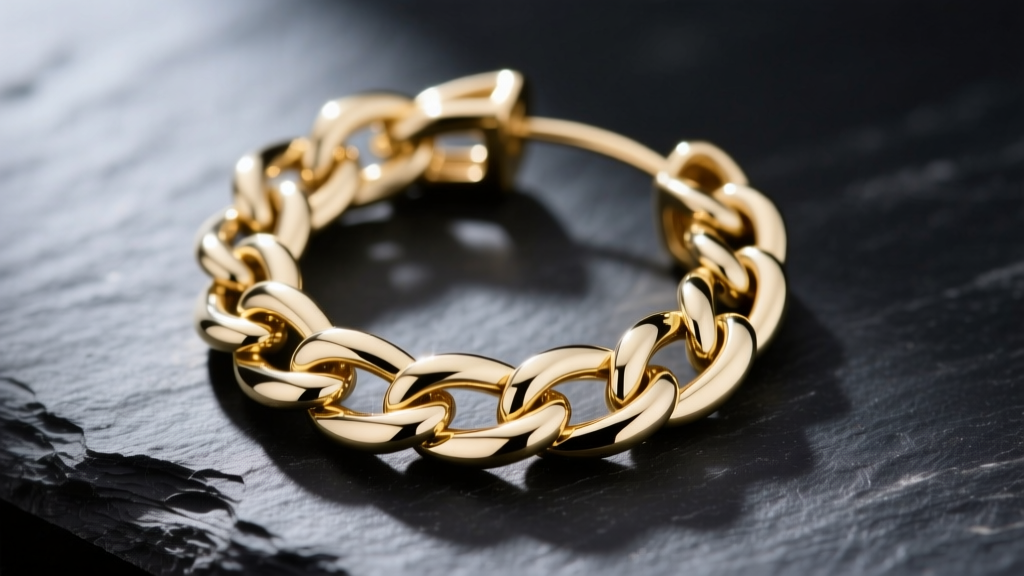
Chain Link Anatomy and Durability Matrix
Not all chains are engineered to support their own weight in a circular hoop formation. The structural integrity of a chain-link hoop relies entirely on the geometry of the link and whether the jump rings are soldered (laser-welded closed) or unsoldered. Unsoldered links in a hoop over 15mm in diameter will inevitably pull apart under the gravitational stress of the earring's weight.
| Link Style | Structural Durability | Snag Risk | Best Application |
|---|---|---|---|
| Curb Link | High (Flat, interlocking) | Low | Everyday hoops, heavy wear |
| Cable Link | Low to Medium (Delicate) | High | Chain-connector ear jackets |
| Rope Link | Very High (Twisted, dense) | Medium | Statement hoops, textured looks |
| Box Link | Medium (Prone to kinking) | Low | Geometric, modern hoops |
A Note on Diamond-Cut Chains: Many manufacturers use a diamond-cutting technique to shave facets into the metal links, creating a high-sparkle effect without gemstones. Be warned: this process removes metal mass, creating microscopic weak points. For everyday hoop chain earrings, a high-polish solid link will outlast a diamond-cut link by a factor of 3:1 in friction-heavy environments.
Gauge Sizing, Weight, and Clasp Mechanics
The gauge (thickness) of the wire that passes through your earlobe is a critical, often overlooked specification. The vast majority of standard hoop chain earrings are manufactured at 20-gauge (0.81mm). While perfectly fine for lightweight chain-connector styles, a 20-gauge wire is entirely inadequate for heavy, solid-gold Cuban link hoops. The weight of the chain will cause the thin wire to bend, warp, and eventually slice through the earlobe tissue (a phenomenon known as the "cheese-cutter effect").
For any chain-link hoop exceeding 20mm in diameter or weighing more than 4 grams per earring, you must seek out 18-gauge (1.02mm) or even 16-gauge (1.29mm) posts.
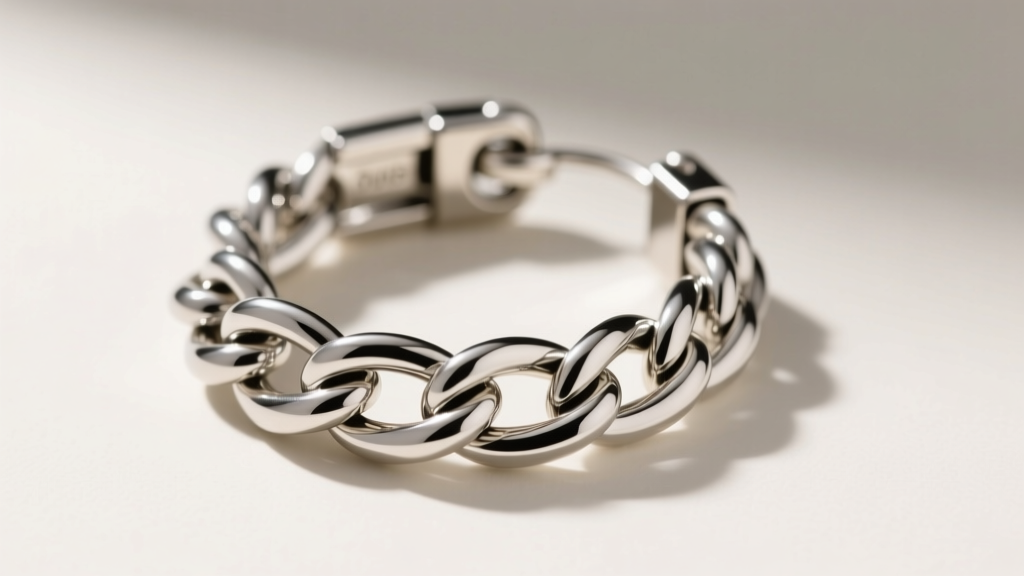
The Clasp: Your Earring's Weakest Link
Continuous (endless) hoops look seamless but are notorious for bending out of shape and losing their tension fit. When buying chain-link hoops, prioritize the following clasp mechanisms:
- Hinged Snap Clasp (Clicker): The gold standard for chain hoops. A hinged segment clicks securely into a hidden groove, maintaining the perfect circular geometry of the hoop while ensuring it cannot accidentally open.
- Latch-Back (Saddle): Common in vintage or thicker rope chain hoops. The wire swings up and locks into a V-shaped saddle. Secure, but can catch on long hair.
- Friction Post (For Chain-Connectors): If you are buying a front-to-back chain drape, ensure the front stud uses a screw-back or a heavy-duty silicone friction back to prevent the weight of the back-cuff from pulling the earring out of your lobe.
Price Tiers and Value Benchmarks
Understanding the market pricing for hoop chain earrings in 2026 will protect you from overpaying for plated metals disguised as solid gold.
- Entry-Level ($25 - $80): Typically 925 sterling silver or brass with heavy gold vermeil. Expect unsoldered jump rings and higher snag risks. Suitable for occasional wear, but the plating will wear off the friction points of the chain links within 6 to 12 months.
- Mid-Tier ($150 - $450): Solid 10k or 14k gold, or high-quality gold-filled chains. This tier introduces laser-welded links, secure hinged clasps, and 18-gauge posts. This is the sweet spot for everyday durability and long-term value.
- Fine Jewelry ($600 - $2,500+): Solid 14k or 18k gold, hand-assembled links, custom diamond-cut detailing, and integrated gemstone bezels. At this level, you are paying for master-level chain smithing and flawless clasp integration.
Maintenance and Snag Troubleshooting
Chain hoops require specific maintenance routines to prevent permanent damage. Never sleep in chain-link hoops; the pressure of your head against a pillow will easily crush box links or kink cable chains beyond repair. Furthermore, avoid putting chain-link hoops in ultrasonic jewelry cleaners if they feature tension-set gemstones or delicate diamond-cut facets, as the high-frequency vibrations can loosen settings or fracture weakened metal points.
To clean your hoop chain earrings, use a soft-bristled baby toothbrush dipped in a solution of warm water and mild dish soap. Gently brush between the links to remove sebum and lotion buildup, which can dull the metal and accelerate tarnishing in silver pieces. Always store them flat in a dedicated compartment or hang them from a jewelry stand; tossing chain hoops into a communal jewelry box guarantees a frustrating, time-consuming knotting experience.
By prioritizing laser-welded links, appropriate gauge thickness, and secure hinged clasps, you can invest in a pair of hoop chain earrings that perfectly balances avant-garde styling with heirloom-level durability.


