Clip On Star Earrings: The 2026 Celestial Trend Guide
Discover the 2026 celestial trend with our deep dive into clip on star earrings. Explore tension mechanics, styling tips, and top material choices.
The Celestial Shift: Why Clip On Star Earrings Dominate 2026
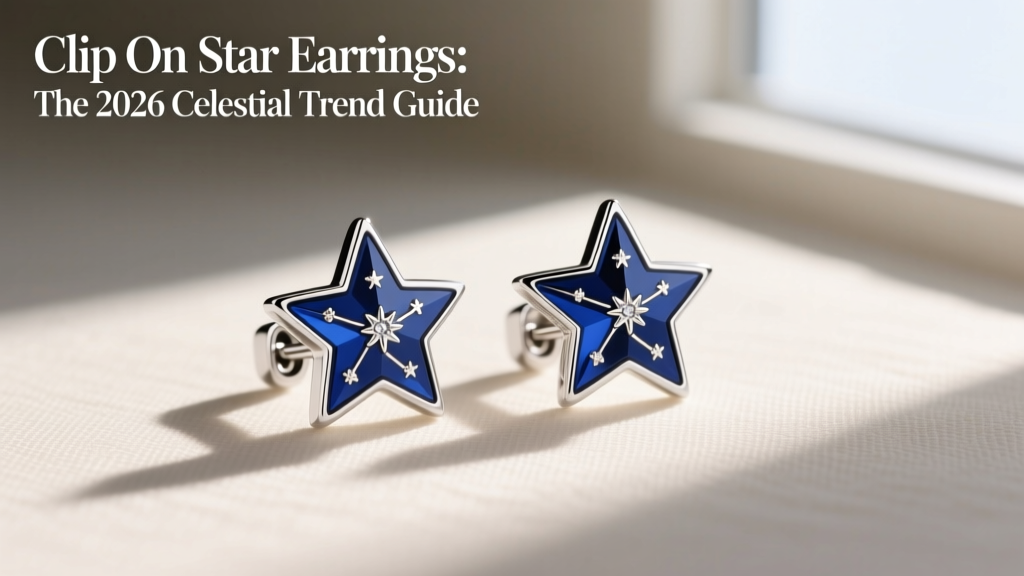
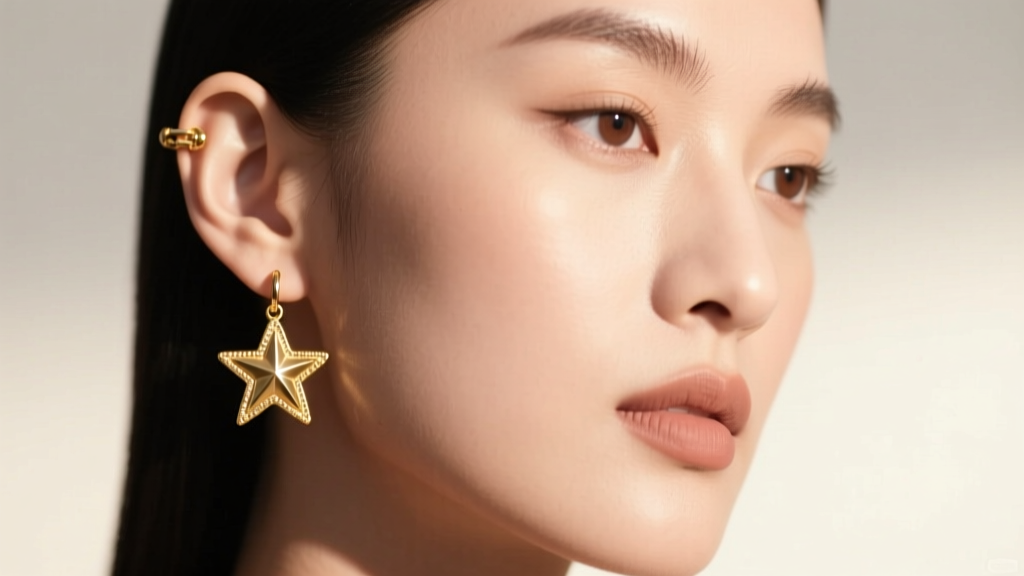
The non-pierced jewelry renaissance has officially reached the stratosphere. As we navigate the 2026 style landscape, the ubiquitous clip on star earrings have transitioned from a nostalgic Y2K novelty into a cornerstone of the "Quiet Celestial" movement. According to industry forecasters at JCK Online, the heavy, literal zodiac motifs of the early 2020s have been replaced by refined, kinetic, and abstract astronomical designs. Today's celestial trends favor asymmetric shooting stars, micro-hinged starbursts, and delicate wire-wrapped constellations that catch the light without overwhelming the wearer.
For the 30% of adults who avoid traditional ear piercings due to keloid scarring, workplace restrictions, or simple preference, this trend is a revelation. However, the modern consumer demands more than just aesthetics; they require engineering that defies the historical stigma of clip-on pain. In this comprehensive guide, we dissect the metallurgy, tension mechanics, and styling frameworks that define the 2026 clip-on star market.
The Engineering of Comfort: Clip-On Mechanics Explained
The primary failure point of any non-pierced earring is the clasp mechanism. A beautifully crafted 18-karat gold star is useless if it induces earlobe fatigue within twenty minutes. The secret to comfortable clip on star earrings lies in the structural wire and the tension distribution.
High-end manufacturers utilize 16-gauge (1.2mm) or 14-gauge (1.6mm) beryllium copper wire for the clip's spine. Beryllium copper possesses exceptional "spring memory," meaning it can be flexed open repeatedly without permanently warping. Conversely, fast-fashion alternatives often use 18-gauge or 20-gauge brass. Brass lacks this memory; after a few wears, the wire bends outward, the tension drops, and the earring inevitably falls off.
Mechanism Comparison Chart
| Clip Mechanism | Max Weight Tolerance | Best Star Style | Comfort Level (1-10) |
|---|---|---|---|
| Spring/Hinge Clip | 10 - 14 grams | Minimalist wire stars, small studs | 7 |
| Screw-Back | 20 - 25 grams | Chunky Y2K stars, gemstone drops | 9 (when calibrated) |
| Omega/Paddle Back | 12 - 18 grams | Medium starbursts, vintage styles | 8 |
| Magnetic | 4 - 6 grams | Micro-pave star studs | 6 (slippage risk) |
The Crucial Role of Silicone Pads
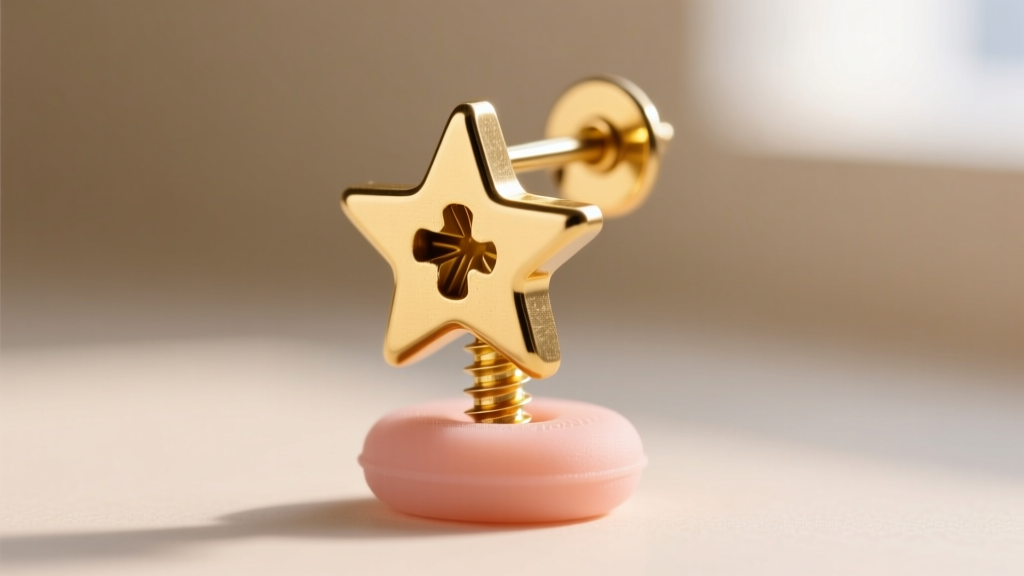
Tension is only half the equation; surface area is the other. The Gemological Institute of America (GIA) notes that metal allergies and pressure necrosis are the top complaints in non-pierced jewelry. To combat this, 2026's premium clip on star earrings feature interchangeable silicone comfort pads.
- Smooth Pads: Best for lightweight, delicate star studs. They provide a flush fit but can slip on oily skin.
- Shark-Tooth Pads: Essential for heavier drop earrings (like elongated shooting stars). The micro-ridges grip the natural topography of the earlobe, distributing up to 30% more surface pressure and preventing the "pinch" effect.
Material Grades & Hypoallergenic Realities
A common misconception is that clip-on wearers do not need to worry about metal allergies since the earlobe is not punctured. This is false. Prolonged skin contact with nickel-heavy base metals can trigger contact dermatitis, resulting in red, itchy earlobes.
When sourcing clip on star earrings, scrutinize the entire piece, not just the decorative face. Many brands craft the star motif in hypoallergenic sterling silver but solder it to a nickel-plated brass clip. For sensitive skin, demand surgical-grade stainless steel (316L), solid titanium, or vermeil (gold plated over sterling silver) for both the decorative element and the tension wire. If you are investing in fine jewelry, 14k or 18k solid gold remains the ultimate standard for both the star face and the Omega back.
Styling Framework: Face Shapes & Star Proportions
The geometry of a star earring can dramatically alter the perceived proportions of your face. Because clip-ons sit slightly further from the earlobe than pierced posts (due to the clasp hardware), they naturally add width. Here is how to map star styles to specific face shapes in 2026:
Round Faces
The Goal: Elongation and vertical lines.
The Pick: Asymmetric shooting star drops. Look for designs where the star motif is suspended from a delicate chain or a vertical bar. Avoid wide, chunky 5-point star studs, which will emphasize facial width.
Square Faces
The Goal: Softening strong jawlines.
The Pick: Curved, rounded starbursts or celestial hoops with dangling star charms. The circular motion of a hoop combined with a star element breaks up angularity. Avoid sharp, geometric wire stars.
Heart-Shaped Faces
The Goal: Balancing a wider forehead with a narrower chin.
The Pick: Bottom-heavy star clusters or inverted triangle constellations. Clip-ons that feature a small stud at the top and a wider, multi-star arrangement at the bottom draw the eye downward, adding visual weight to the jawline.
Oval Faces
The Goal: Maintaining natural balance.
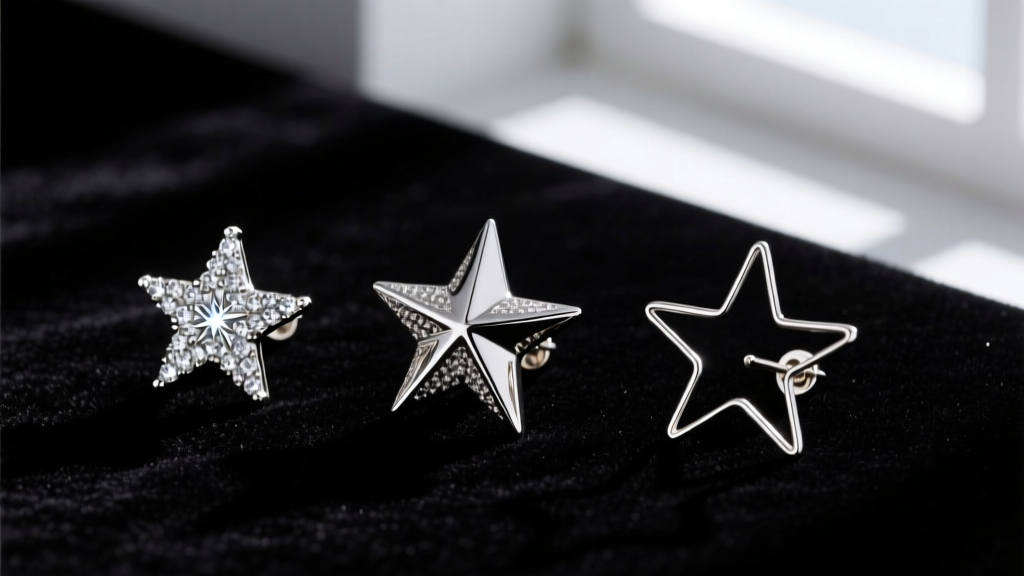
The Pick: Virtually any style, but 2026's trending "exploding" starbursts (where wires radiate outward in 3D) look exceptionally striking, adding a touch of avant-garde volume without disrupting facial harmony.
Sourcing & Price Tiers: Where to Invest
The market for clip on star earrings is highly stratified. Understanding where your money goes helps in making informed purchasing decisions.
- Entry Tier ($25 - $60): Dominated by Etsy artisans and boutique brands. You will find gold-plated brass with standard spring clips. Pro Tip: Buy a pack of aftermarket silicone pads to upgrade the comfort immediately.
- Mid Tier ($90 - $250): Brands like Mejuri and Missoma offer sterling silver and heavy vermeil options. Here, you start seeing Omega backs and screw-back mechanisms, which drastically improve security and comfort.
- Fine & Vintage ($400+): Solid 14k/18k gold. The vintage market (especially 1980s and 90s Chanel or Dior) is a goldmine for intricate, heavy clip-on star designs that utilize robust, adjustable screw-backs engineered to last a lifetime.
Care & Tension Maintenance
Even the finest beryllium copper wire requires occasional maintenance. If your clip on star earrings begin to feel loose, do not simply squeeze them shut with standard steel jewelry pliers. Steel pliers will mar the gold plating and can easily snap the wire if too much torque is applied.
Master Jeweler's Tip: "Always use nylon-jaw pliers to adjust clip-on tension. Grip the base of the hinge gently and squeeze inward by no more than 2 millimeters. Test the tension on your earlobe. It should feel secure but should not induce a throbbing sensation after five minutes. If it throbs, you've over-tightened the spring memory."
Furthermore, always remove your clip-ons before sleeping or showering. Water exposure degrades the adhesive holding the silicone comfort pads in place, and sleeping in them will permanently warp the tension wire, ruining the structural integrity of the clasp.
Final Verdict
The 2026 celestial trend has successfully redefined non-pierced jewelry, proving that clip on star earrings are no longer a compromise, but a deliberate style choice. By prioritizing 16-gauge beryllium copper mechanisms, hypoallergenic materials, and face-shape-specific geometries, you can embrace the cosmos with absolute comfort and security. Whether you opt for a micro-pave shooting star or a bold, vintage starburst, the right engineering ensures your celestial statement stays exactly where it belongs.


