Clover Gold Earrings: 2026 Trend Analysis & Style Guide
Discover the 2026 style trends for clover gold earrings. Explore material grades, pricing tiers, and expert styling tips for lobe and cartilage piercings.

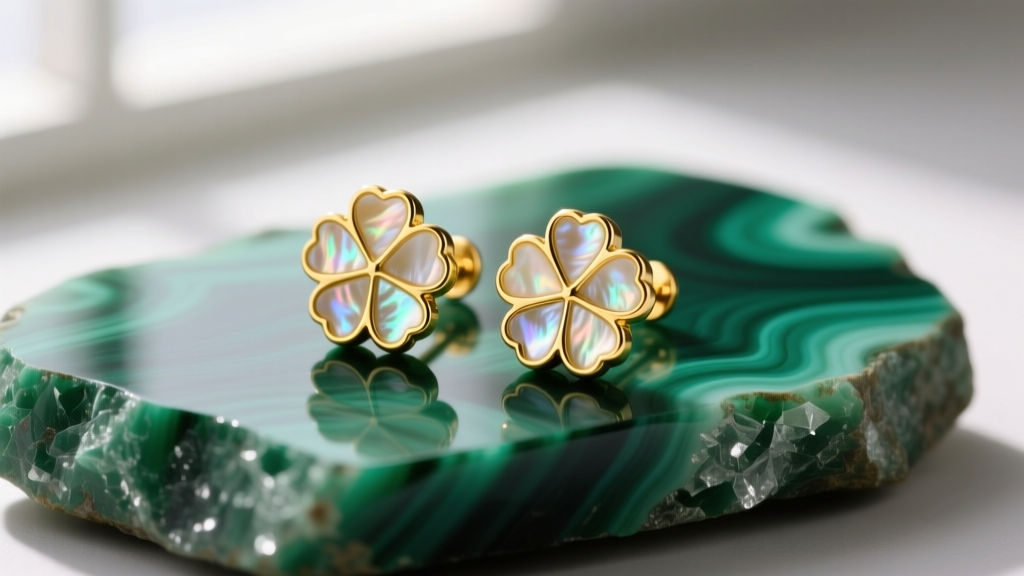
The 2026 Resurgence: Why Clover Gold Earrings Are Dominating
The four-leaf clover motif, historically popularized by Van Cleef & Arpels in 1968, has experienced a massive resurgence in 2026. However, the modern iteration of clover gold earrings has shifted away from the heavy, high-pronged settings of the past decade. Today’s aesthetic is firmly rooted in the intersection of "quiet luxury" and "nature-core." Jewelry designers are favoring low-profile bezel settings, matte gold finishes, and modular designs that allow the wearer to transition seamlessly from a corporate boardroom to an evening event.
Unlike the oversized, diamond-encrusted clover hoops of the early 2020s, the 2026 trend prioritizes architectural minimalism. We are seeing a surge in petite 5mm to 8mm clover studs designed specifically for curated ear projects, as well as elongated, articulated clover drops that move fluidly with the wearer. This shift reflects a broader consumer demand for versatile, everyday fine jewelry that carries symbolic meaning—luck, health, wealth, and love—without feeling ostentatious.
Material Breakdown: Solid Gold vs. Vermeil vs. Plated
When investing in clover gold earrings, understanding the metallurgical differences is crucial for longevity, especially for pieces worn in cartilage piercings where moisture and friction are prevalent. The market is currently segmented into three primary tiers:
| Material Grade | Composition | 2026 Avg. Price Range | Best For | Durability Rating |
|---|---|---|---|---|
| 14k Solid Gold | 58.5% Pure Gold, 41.5% Alloy | $180 - $450 | Everyday lobe & cartilage wear | High (Resists bending) |
| 18k Solid Gold | 75% Pure Gold, 25% Alloy | $350 - $850+ | Primary lobe statement pieces | Medium (Prone to scratching) |
| Gold Vermeil | Sterling Silver base, 2.5µm+ Gold | $65 - $140 | Occasional wear, trend-testing | Low-Medium (Wears over time) |
| Gold Plated | Brass/Copper base, <0.5µm Gold | $25 - $60 | Fast fashion, highly temporary | Very Low (Tarnishes quickly) |
For 2026, 14k gold remains the undisputed champion for everyday clover studs. The alloy mixture (often copper and zinc) provides the structural integrity needed to keep delicate clover prongs from catching on hair or clothing. Conversely, 18k gold offers a richer, buttery yellow hue that pairs beautifully with warm skin tones, but its softer nature means it requires more meticulous care.
Inlay Options: Gemstones vs. Enamel vs. Solid Metal
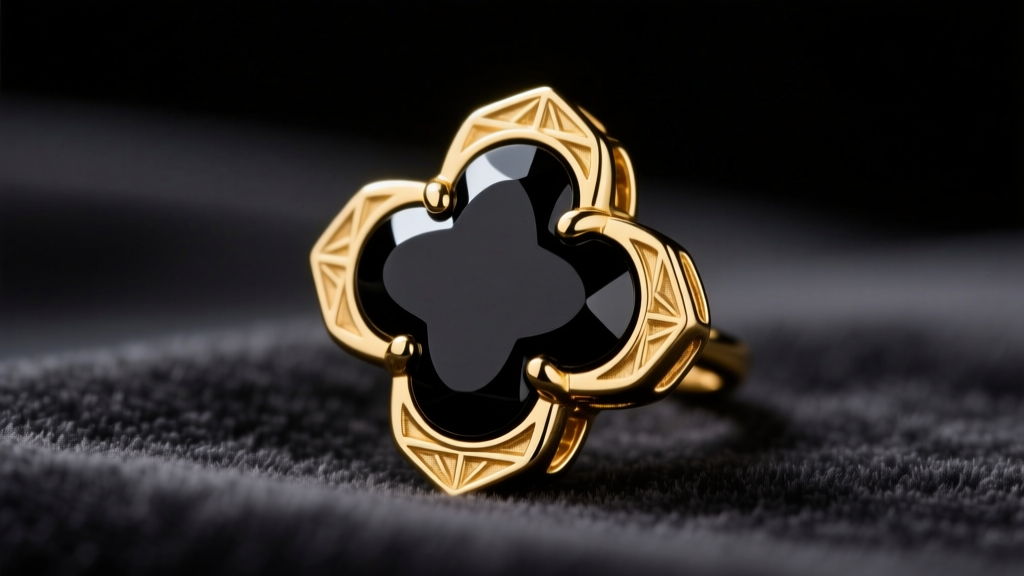
The visual impact of clover gold earrings is heavily dictated by the inlay material. In 2026, we are seeing a distinct move away from synthetic rhinestones toward authentic, organically sourced gemstones and artisanal enameling.
Mother of Pearl & Malachite
Mother of Pearl (MOP) provides a luminous, iridescent finish that catches the light beautifully. However, according to the GIA Gem Encyclopedia, MOP ranks between 2.5 and 4.5 on the Mohs hardness scale, making it highly susceptible to scratching. Malachite, prized for its vivid green banding, is similarly soft (3.5 to 4) and highly porous. Earrings featuring these stones must be kept away from perfumes, lotions, and acidic sweat, which can dull their polish and degrade the stone's surface over time.
Black Onyx & Lapis Lazuli
For buyers seeking high-contrast, durable inlays, Black Onyx is the superior choice. Ranking at a 7 on the Mohs scale, onyx is highly resistant to scratching and maintains its deep, glassy luster even with daily wear. Lapis Lazuli (5 to 6) offers a striking royal blue with natural pyrite flecks, bridging the gap between durability and vibrant color.
Guilloché Enamel
A major 2026 trend is the return of guilloché enamel—a technique where translucent enamel is applied over an intricately engraved metal base. This creates a mesmerizing, textured depth within the clover petals that flat, cold enamel simply cannot replicate. Vitreous (kiln-fired) enamel is far more durable than epoxy resin alternatives and will not yellow with UV exposure.
Sizing, Gauge, and Piercing Placement Guide
One of the most common failures when styling clover earrings is ignoring the relationship between the jewelry's weight, the post gauge, and the piercing placement. A heavy 15mm clover drop on a thin 22-gauge wire will inevitably tilt forward, causing discomfort and an unflattering silhouette.
- Standard Lobe (20G / 0.81mm or 18G / 1.02mm): This is the most versatile canvas. You can comfortably wear 10mm to 15mm clover studs, as well as medium-weight clover dangles. The thicker tissue of the primary lobe supports the weight of solid gold and stone inlays without stretching.
- Upper Lobe & Flat (18G / 1.02mm or 16G / 1.29mm): For secondary piercings, scale down to 5mm to 8mm clover studs. Cartilage tissue is thinner and more prone to irritation bumps if subjected to heavy, swinging jewelry.
- Helix & Forward Helix (16G / 1.29mm): Opt for clover-shaped huggies or threadless push-pin clover ends. Ensure the backing disc is flat and smooth (3mm to 4mm) to prevent embedding while sleeping.
Expert Tip: If you are purchasing clover dangles for a fresh or semi-healed piercing, ensure the jump ring connecting the clover to the ear wire is soldered shut. Open jump rings are a primary failure point that leads to lost jewelry.
Face Shape Pairings for Clover Motifs
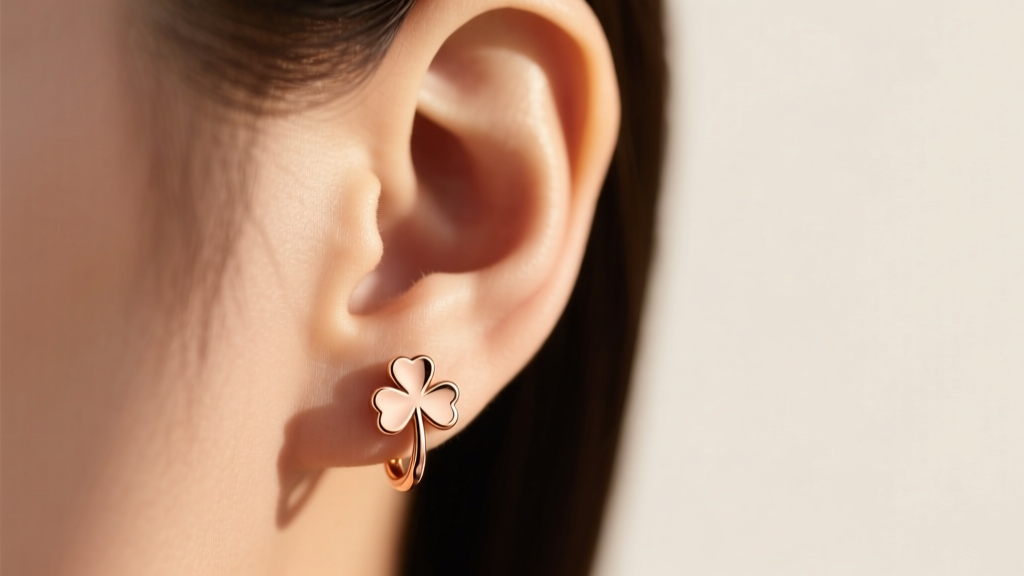
The symmetrical, slightly geometric nature of the four-leaf clover makes it a unique shape to style. Unlike perfect circles or harsh squares, the clover offers soft curves with distinct directional points. Here is how to pair them with your face shape in 2026:
- Round Faces: Elongate your features by opting for articulated clover drop earrings or vertical clover dangles. The downward movement draws the eye and creates the illusion of a longer jawline.
- Square Faces: Soften strong jawlines with rounded clover huggies or solid gold, bezel-set clover studs. Avoid sharp, angular geometric earrings; the soft curves of the clover motif will naturally complement your bone structure.
- Heart-Shaped Faces: Balance a narrower chin with wider, statement-making clover hoops or chandelier earrings that add volume at the lower half of the ear.
- Oval Faces: The universal canvas. Oval faces can pull off virtually any clover variation, from oversized vintage-inspired clips to minimalist cartilage cuffs.
Expert Care & Tarnish Prevention
Proper maintenance is non-negotiable for preserving the integrity of both the gold and the delicate inlays. The Jewelers of America consistently advises against using ultrasonic cleaners on porous gemstones or enameled jewelry. The high-frequency vibrations can easily shatter malachite, fracture lapis lazuli, and strip vitreous enamel from its gold base.
"The most common damage we see to clover earrings isn't to the gold itself, but to the inlay. A simple soak in warm water with a drop of pH-neutral dish soap, followed by a gentle wipe with a microfiber cloth, is all that is needed to restore brilliance without risking structural damage." — Master Jeweler & Gemologist
For solid 14k and 18k gold clover earrings without gemstones, a commercial gold polishing cloth can be used monthly to remove oxidation and skin oils. Always store your earrings individually in soft pouches or a lined jewelry box to prevent the gold from scratching the softer gemstone inlays of adjacent pieces. By adhering to these care protocols, your clover gold earrings will remain a timeless staple in your rotation well beyond the current trend cycle.


