The Beginner Guide to Wearing Large Heart Earrings
Learn how to choose, style, and comfortably wear large heart earrings. Discover weight limits, gauge sizes, and face-shape tips.

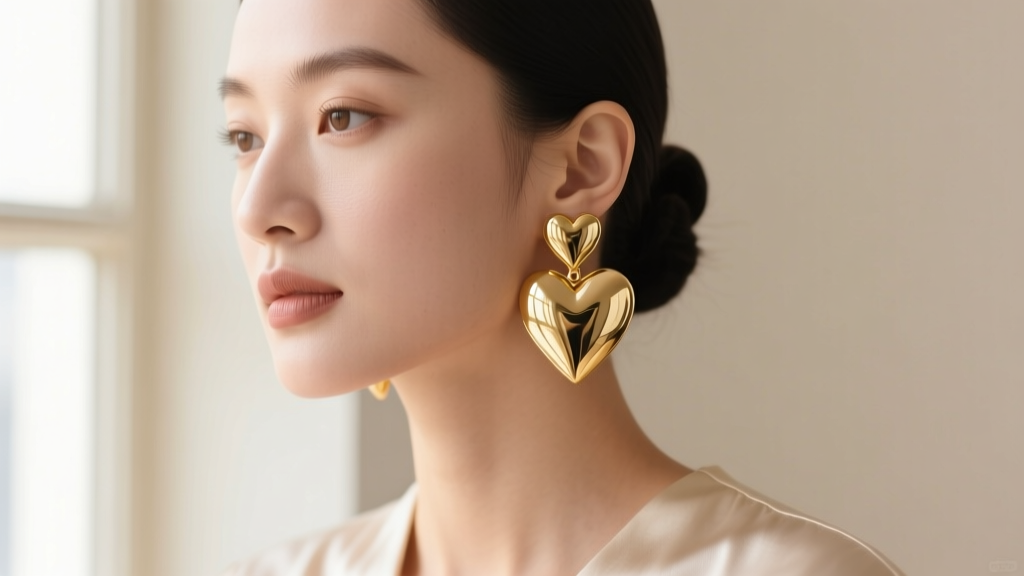
The Resurgence of the Statement Heart
Maximalist jewelry has firmly cemented its place in contemporary fashion, and few silhouettes capture the bold, romantic energy of the current era quite like large heart earrings. While delicate studs have their place in everyday capsule wardrobes, oversized heart motifs offer an immediate focal point that elevates even the simplest outfit. However, transitioning from lightweight, subtle jewelry to substantial statement pieces requires a fundamental understanding of earlobe anatomy, weight distribution, and material science. This beginner-friendly explainer will equip you with the technical knowledge needed to wear heavy, dramatic earrings without sacrificing comfort or compromising your piercing health.
The Physics of Comfort: Weight and Gauge Explained
The most common mistake beginners make when purchasing oversized jewelry is ignoring the physical metrics of the piece. A beautiful design can quickly become unwearable if the engineering is flawed. When dealing with large heart earrings, you must evaluate two critical specifications: the total gram weight and the post gauge (thickness).
Understanding the Cheese-Cutter Effect
If a heavy earring is suspended on a thin wire, gravity will continuously pull the metal downward against the delicate tissue of your piercing hole. Over time, this creates what professional piercers call the "cheese-cutter effect," where the thin wire slowly migrates through the lobe, causing irreversible stretching or tearing. According to guidelines from the Association of Professional Piercers, standard fashion earrings typically utilize 20-gauge (0.8mm) or 22-gauge (0.6mm) posts. For any earring exceeding 10 grams, you should actively seek out 18-gauge (1.0mm) or 16-gauge (1.2mm) posts to distribute the physical load across a wider surface area of tissue.
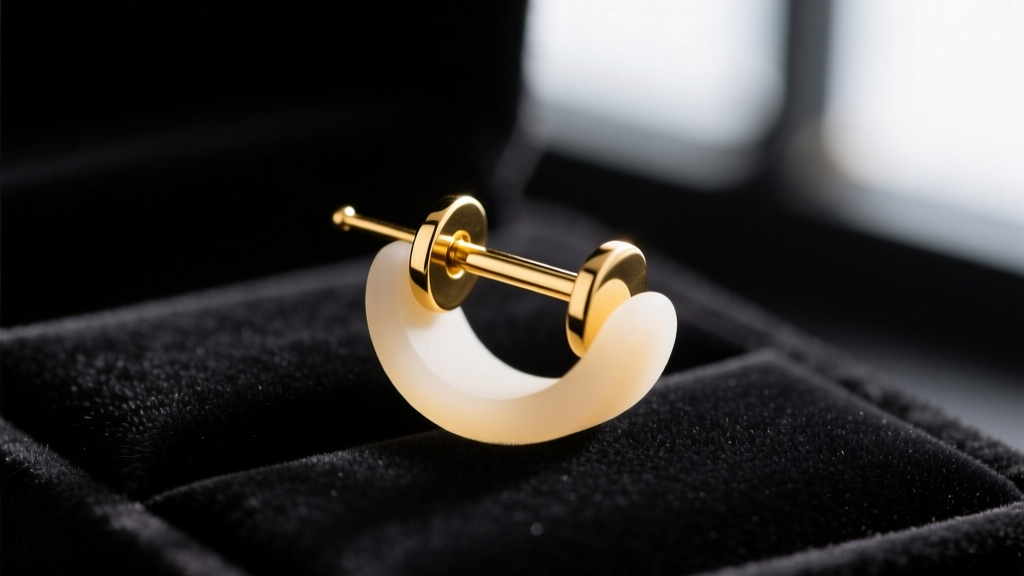
Weight Thresholds and Backing Requirements
Not all earlobes are created equal, but general comfort thresholds can help you shop smarter. Use the table below as a quick reference guide when evaluating the specifications of your next purchase.
| Earring Weight (Per Piece) | Comfort Level | Required Backing Type |
|---|---|---|
| Under 7g | All-Day Comfort | Standard Push-Back (Butterfly) |
| 7g - 14g | Moderate (4-6 Hours) | Screw-Back or Silicone Discs |
| 15g+ | Heavy (Event Wear Only) | Jumbo Silicone Patches + 16G Post |
Material Science: Choosing Metals for Sensitive Lobes
When the surface area of an earring increases, so does the amount of metal resting against your skin. This makes material selection paramount, especially for those prone to contact dermatitis. The American Academy of Dermatology notes that nickel is the most common culprit behind jewelry-induced allergic reactions, a metal frequently used as a hardening alloy in cheap brass or low-karat gold bases.
- Implant-Grade Titanium (ASTM F136): The gold standard for hypersensitive skin. It is entirely nickel-free, incredibly lightweight (reducing the overall gram weight of large hearts), and highly resistant to tarnish.
- 14k or 18k Solid Gold: Excellent for heirloom-quality statement pieces. 14k is slightly harder and more durable for heavy items that might get bumped, while 18k offers a richer color but is softer. Always ensure the piece is solid, not gold-plated over a brass core.
- 316L Surgical Stainless Steel: A budget-friendly option that is generally well-tolerated, though it does contain trace amounts of nickel. It is heavier than titanium, which is a crucial consideration for oversized designs.
The Face Shape Pairing Framework
Styling large heart earrings is not just about the outfit; it is about balancing your natural facial geometry. Because the heart shape is inherently top-heavy and tapers to a point, it interacts differently with various face shapes. Here is a practical framework for finding your perfect proportion.
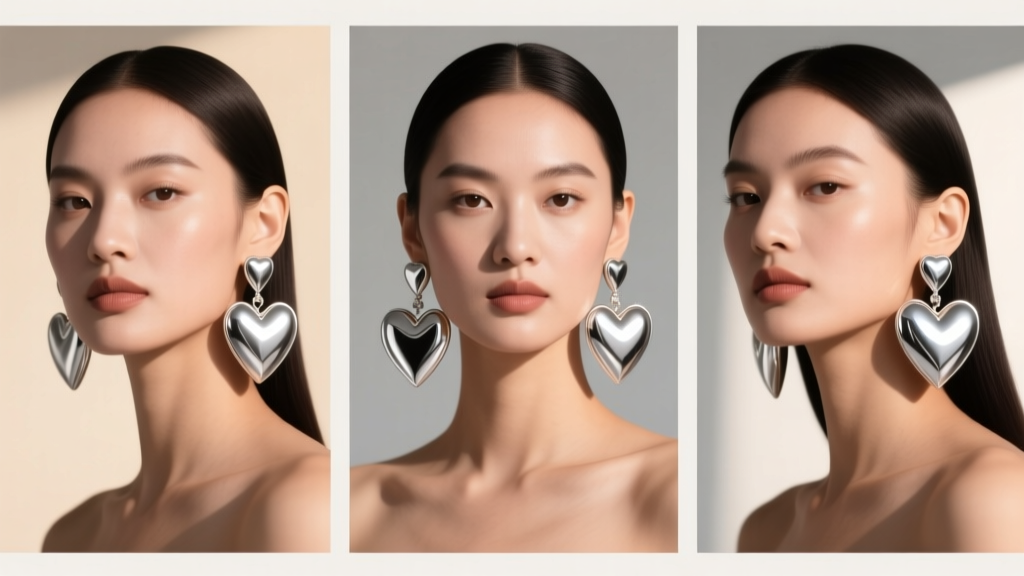
Round and Square Faces
If you have a round or square face shape, your goal is to create vertical elongation and soften angular jawlines. Avoid wide, puffy 3D hearts that add horizontal volume. Instead, opt for elongated heart drop earrings or hearts suspended from a delicate chain. The downward taper of the heart will draw the eye vertically, creating a slimming, lengthening illusion.
Heart and Diamond Faces
For those with wider foreheads and narrower chins, wearing a traditional top-heavy heart can exaggerate the natural triangle of your face. Look for inverted heart designs, geometric wire-wrapped hearts, or styles where the visual weight sits at the bottom of the earring. Chandelier-style large heart earrings that flare outward at the bottom will beautifully balance a narrow chin.
Oval Faces
Oval faces possess naturally balanced proportions, meaning you can pull off almost any variation of the trend. Chunky, solid metal puffy hearts, wide acrylic statement pieces, and classic hoop-and-heart combinations will all harmonize with your bone structure without overwhelming your features.
Pro Hacks for Preventing Lobe Fatigue
Even with the correct gauge and metal, gravity is a relentless force. If you plan to wear 15-gram statement pieces for an eight-hour event, you need mechanical assistance. Here are the industry-standard tricks used by stylists and jewelry collectors:
The Silicone Disc Trick: Replace traditional metal butterfly backs with wide, flat silicone friction discs. These discs measure up to 12mm in diameter and act as a shock absorber, spreading the downward pull of the earring across a much wider patch of skin on the back of your lobe.
For extreme statement pieces, invest in adhesive earring support patches (often sold under brand names like BlingDots). These are thin, skin-toned, medical-grade adhesive pads with a pre-punched hole for the earring post. You apply the patch directly to the back of your earlobe before inserting the earring. The adhesive grips the skin, effectively transferring the weight of the large heart earrings from your fragile piercing hole to the structural integrity of your outer ear tissue. This single hack transforms unwearable, heavy novelties into comfortable, all-day staples.
Maintenance and Storage for Oversized Shapes
Finally, large heart earrings require specific storage solutions to maintain their structural integrity. Because of their broad surface area, they are highly susceptible to deep scratching and bending if tossed loosely into a jewelry box. Always store solid gold or silver hearts in individual microfiber pouches. If the earrings feature a high-polish mirror finish, keep them away from harder gemstones like diamonds or sapphires, which will easily gouge the softer metal upon contact. By treating your statement pieces with technical care, you ensure they remain a vibrant, comfortable part of your rotation for years to come.


