Mother Of Pearl Flower Earrings: 2026 Trend Analysis & Style Guide
Discover 2026 trends for mother of pearl flower earrings. Expert style analysis, material grades, nacre thickness, and botanical jewelry styling.

The 2026 Botanical Shift: Romantic Maximalism
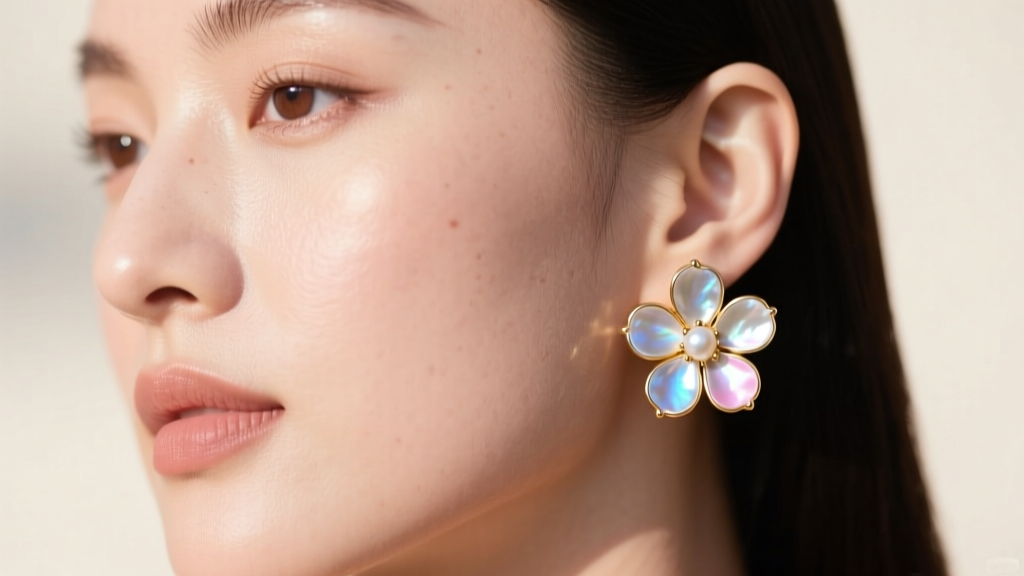
As we navigate the jewelry landscape of 2026, the industry is witnessing a definitive pivot away from the stark, ultra-minimalist aesthetics that dominated the early 2020s. In its place, 'romantic maximalism' and 'botanical core' have taken root, driving an unprecedented surge in demand for nature-inspired adornments. At the absolute center of this movement are mother of pearl flower earrings. No longer relegated to vintage costume jewelry or simplistic beachwear souvenirs, these botanical pieces have been elevated by fine jewelers who are leveraging advanced lapidary techniques and ethical sourcing to create heirloom-quality statements.
The appeal lies in the material's inherent optical properties. Unlike synthetic enamel or opaque gemstones, mother of pearl (MOP) offers a dynamic, living canvas. The way light interacts with the microscopic layers of the shell creates an iridescent glow that shifts with the wearer's movements, making floral motifs appear almost lifelike. This trend analysis breaks down the material science, construction standards, and styling frameworks you need to know to navigate the 2026 market for MOP floral earrings.
Material Science: Nacre Thickness and Aragonite Quality
To evaluate mother of pearl flower earrings with a professional eye, one must understand the material at a microscopic level. Mother of pearl is the iridescent inner lining of mollusk shells, primarily composed of hexagonal platelets of aragonite (a crystalline form of calcium carbonate) bound together by an organic protein called conchiolin. According to the Gemological Institute of America (GIA), it is the precise layering of these aragonite platelets that causes light to diffract, producing the material's signature 'orient' and overtone colors.
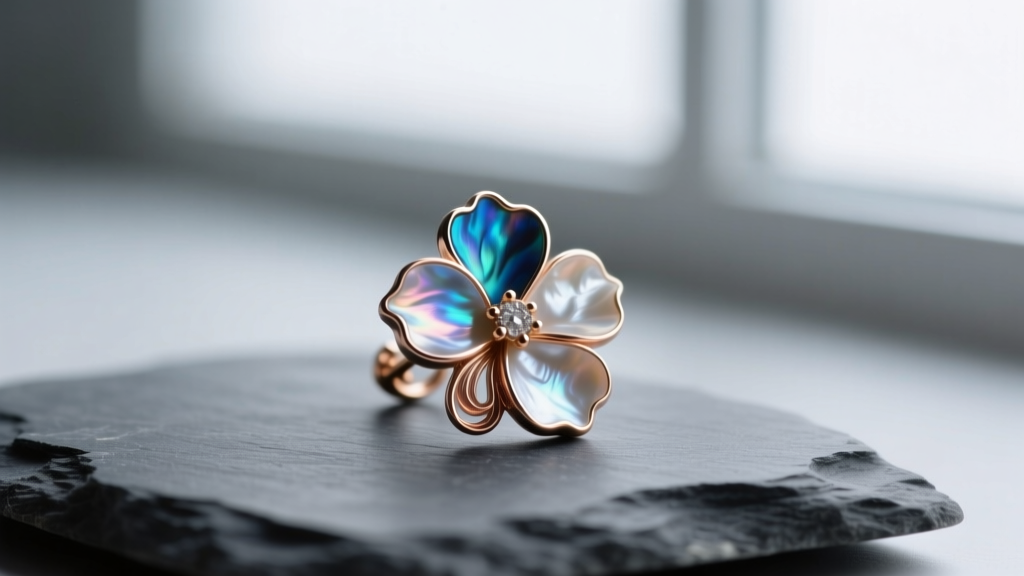
When shopping for high-end MOP earrings in 2026, nacre thickness is your primary indicator of longevity and visual depth. Commercial-grade earrings often utilize thin veneers of MOP (less than 0.5mm) glued over resin or plastic bases. These lack depth and are prone to delamination. Fine jewelry standards dictate a minimum nacre thickness of 1.5mm to 2.0mm for carved floral components. This substantial thickness allows master carvers to create three-dimensional, multi-layered petals with deep relief, catching light from multiple angles and ensuring the structural integrity of delicate edges.
Sourcing and Ethical Considerations
The provenance of the shell matters immensely. The most prized MOP for fine floral carvings comes from the Pinctada maxima (South Sea pearl oyster) and the Haliotis (abalone) family. South Sea MOP provides a creamy, luminous white-to-silver palette ideal for classic daisy or camellia motifs, while abalone offers vibrant, peacock-like flashes of blue and green, perfect for exotic orchid or hibiscus designs. In 2026, top-tier brands are increasingly providing blockchain-verified sourcing to ensure shells are harvested as byproducts of the food industry or from sustainable aquaculture, rather than through destructive wild dredging.
Structural Integrity: Bezel vs. Prong Settings
A critical failure point in botanical jewelry is the setting. Mother of pearl ranks between 2.5 and 4.5 on the Mohs hardness scale, making it relatively soft and highly susceptible to chipping, especially at the thin, tapered edges of carved flower petals. Understanding how the MOP is secured to the metal framework is essential for long-term wearability.
- Bezel Settings (Recommended): A full or partial bezel wraps a rim of metal (usually 14k or 18k gold) tightly around the perimeter of the MOP flower. This is the gold standard for durability, as it completely shields the vulnerable edges from lateral impacts. Modern 2026 designs often use 'scalloped' bezels that mimic the natural curve of the petals while maintaining protection.
- Prong Settings (High Risk): While prongs allow more light to enter the stone and offer a delicate aesthetic, they leave the edges of the MOP exposed. If a prong catches on a sweater and bends, the MOP can easily pop out or chip upon contact with a hard surface. If you choose prong-set MOP flower earrings, ensure they feature V-prongs at the tips of the petals for added reinforcement.
- Channel and Inlay Settings: Often used in huggie hoops, MOP is cut into precise geometric floral segments and inlaid flush with the metal. This offers excellent protection but requires a master setter to ensure the adhesive and tension are perfectly balanced to prevent the MOP from cracking under temperature changes.
Design Matrix: Gauge, Weight, and Style Variations
The versatility of mother of pearl flower earrings in 2026 is reflected in the diverse array of silhouettes available. However, the weight of the carved MOP directly impacts the required hardware, specifically the wire gauge and post thickness. Below is a structural comparison of the most prominent styles currently dominating the market.
| Earring Style | Typical MOP Weight | Recommended Post/Hoop Gauge | Best For / Use Case |
|---|---|---|---|
| Carved Studs | 1.5g - 3.0g per ear | 18g (1.0mm) or 16g (1.2mm) | Everyday wear, office environments, minimalists wanting a touch of romance. |
| Floral Huggies | 2.5g - 4.5g per ear | 16g (1.2mm) or 14g (1.6mm) | Cartilage or lobe stacking; provides a continuous botanical vine effect. |
| Articulated Drops | 4.0g - 8.0g per ear | 18g (1.0mm) leverback or French wire | Evening wear, bridal jewelry; maximizes light refraction through movement. |
| Statement Dangles | 8.0g - 15.0g+ per ear | 16g (1.2mm) reinforced omega clip | Editorial fashion, galas; requires robust hardware to prevent lobe tearing. |
For articulated drops and dangles, the inclusion of silicone or metal 'earring backs' with wide surface areas (like La Pousette or jumbo friction backs) is non-negotiable in 2026 to distribute the weight of the MOP flowers and prevent earlobe stretching over time.
Styling Framework: Face Shapes and Metal Pairings
Styling mother of pearl flower earrings requires balancing the visual weight of the botanical motif with the wearer's facial architecture and skin undertones. The iridescent nature of MOP makes it uniquely adaptable, but the metal housing it acts as the primary framing device.
Face Shape Synergies
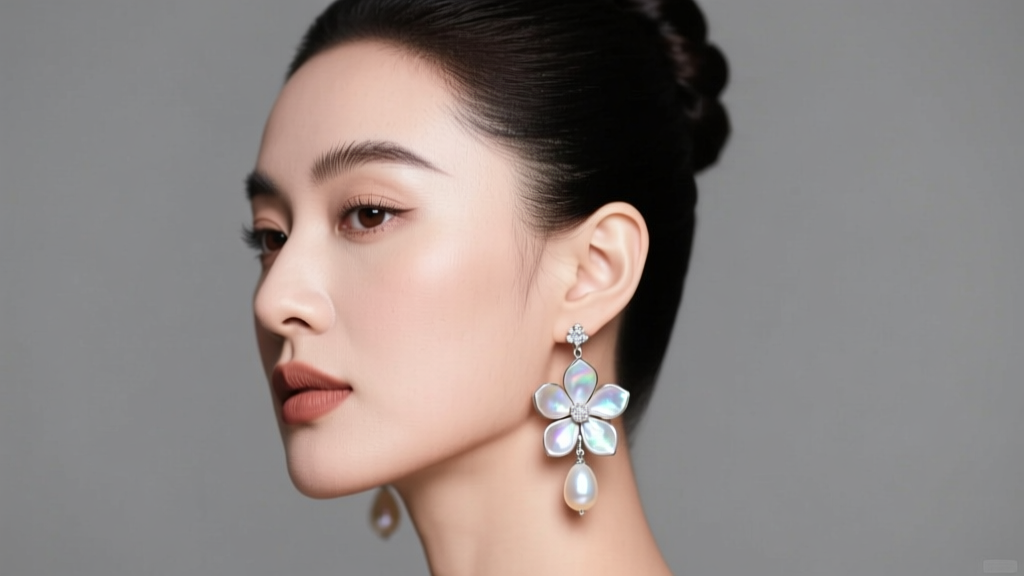
- Round Faces: Opt for elongated floral drop earrings, such as cascading wisteria or orchid motifs. The vertical line draws the eye downward, creating an illusion of length. Avoid wide, circular daisy studs which can exaggerate facial roundness.
- Angular/Square Faces: Soften strong jawlines with curved, multi-petal floral clusters or rounded camellia studs. The organic, sweeping lines of the carved MOP contrast beautifully with sharp bone structure.
- Heart-Shaped Faces: Chandelier-style MOP flower earrings that are wider at the bottom help balance a narrower chin and broader forehead.
Metal Synergies
The overtone of the MOP should dictate your metal choice. Creamy, warm-toned South Sea MOP pairs exceptionally well with 18k yellow gold or rose gold, enhancing its vintage, romantic warmth. Conversely, cooler, silver-lipped MOP or vibrant abalone finds its perfect counterpart in platinum, white gold, or recycled sterling silver, which amplifies the material's glassy, aquatic flashes. In 2026, mixed-metal settings—such as a yellow gold stem with a platinum bezel holding a white MOP petal—are highly sought after for their bespoke, artisanal appearance.
Market Pricing and Investment Tiers
The market for mother of pearl flower earrings is highly stratified. Understanding these tiers prevents overpaying for commercial goods disguised as fine jewelry. Pricing in 2026 is primarily driven by the origin of the shell, the complexity of the 3D carving, and the karat of the precious metal setting.
- Commercial / Fashion Tier ($40 - $120): Typically features thin MOP veneers glued to brass or sterling silver bases. Floral motifs are often laser-cut flat rather than hand-carved. Excellent for trend-driven styling, but lacks heirloom longevity.
- Bridge / Contemporary Fine Tier ($250 - $800): Brands like Missoma or Anita Ko operate here. You will find solid 14k gold settings, 1.5mm+ thick MOP with hand-finished beveling, and secure bezel or partial-bezel constructions. This is the sweet spot for everyday luxury.
- High Jewelry / Artisan Tier ($1,500 - $5,000+): Reserved for master lapidaries. These pieces feature rare shells (like rare pink conch or premium gold-lip MOP), intricate 3D micro-carving, and are often accented with pave diamonds or colored sapphires acting as the flower's stamen. These are verifiable investment pieces.
Preservation: Combating Nacre Degradation
Despite its breathtaking beauty, mother of pearl is an organic gemstone that requires meticulous care. The conchiolin protein binding the aragonite platelets is highly sensitive to acids and extreme dehydration. According to antique jewelry conservation guidelines outlined by Lang Antiques, improper storage and exposure to cosmetics are the leading causes of nacre 'crazing' (micro-cracking) and loss of luster.
Expert Conservation Rule: Always apply perfumes, hairsprays, and acidic skincare serums at least 15 minutes before putting on your MOP flower earrings. The alcohol and volatile organic compounds in these products can chemically etch the surface of the nacre, permanently dulling its iridescent orient.
When not in use, store your earrings in a soft, unbleached cotton pouch. Avoid airtight plastic bags, as organic gems require a minimal amount of ambient humidity to prevent the conchiolin from drying out and shrinking away from the metal setting. To clean, use only a damp, lint-free microfiber cloth—never ultrasonic cleaners or harsh chemical dips, which will instantly destroy the delicate surface polish of the carved petals.
By understanding the intricate material science, demanding superior structural settings, and styling them with intentional precision, you can fully embrace the 2026 resurgence of mother of pearl flower earrings, transforming a fleeting trend into a permanent fixture of your curated jewelry wardrobe.